 592 m
Otagi Nenbutsu-ji Temple592 m
Over 1,200 statues.
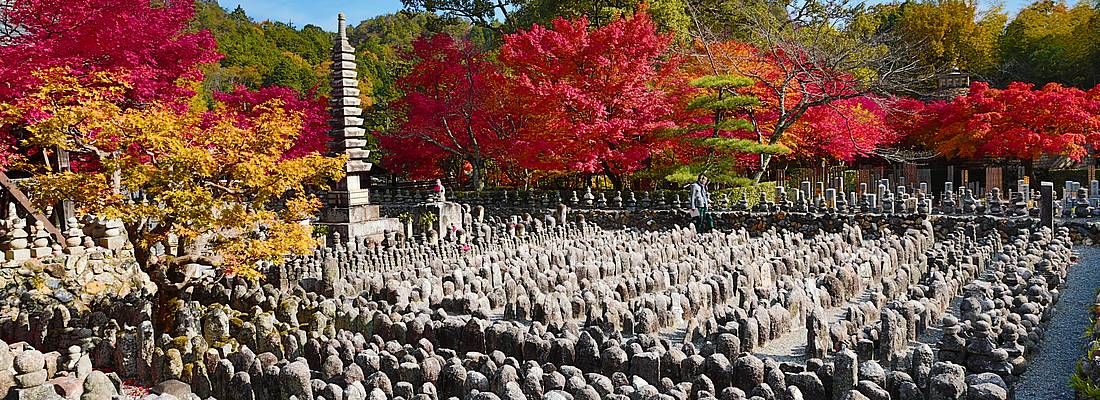
A small temple tucked into the trees on a hillside at the edge of Arashiyama, set a little apart from the district’s famous temples and sights, which is exactly why not many tourists find their way here. Adashino Nenbutsu-ji is a quiet place to get away from the crowds at the big attractions for a while, and it’s also one of the most unusual temples in Kyoto, with more than 8,000 statues filling its grounds.
The famous monk Kobo Daishi founded Adashino Nenbutsu-ji in 811 as a resting place for the dead. The area known as Adashino had been the site of a large mass grave and cemetery since ancient times. Back then it lay far outside the city, and it was where the lower classes, the poor and ordinary people, buried their loved ones. The stone markers on the graves were roughly carved with Buddhist images or symbols, which is why the temple today looks less like a cemetery than a huge field of sculptures, no two alike. A prayer hall where people could pray and chant sutras for the dead was only added a few centuries later.
Not all of the statues you see today are where they started out, though. Between the late 1800s and the early 1900s they were gathered one by one from the surrounding fields and hills and brought to the center of the temple, an area called Sai no Kawara. In Buddhist tradition, that’s the riverbed where the souls of dead children wait. It’s also why the field looks so orderly and packed: these are the muen-botoke, the dead with no one left to remember them.
It might seem a bit eerie, but Adashino Nenbutsu-ji is actually full of charm. You wander along narrow paths that wind between the statues, and the whole place feels calm and peaceful. It gets even more atmospheric during the Sento Kuyo ceremony.
Every summer, on the evenings of August 23 and 24, the temple holds the Sento Kuyo ceremony to honor the souls of the dead. The whole temple is lit by the faint glow of countless candles, with sutra chanting and prayers for the dead.
The temple’s main building hosts a special exhibition of flowers and artworks celebrating the seasons. Outside, the natural beauty is just as striking, with cherry blossoms in spring, bright green bamboo in summer and leaves in vivid shades of red in fall.
When they reach the back of the field of stones, almost everyone turns around and heads back. Do the opposite and keep climbing. A narrow bamboo path, deep green and about 50 meters long, climbs the hill in a series of gentle steps. It feels just like walking through the Arashiyama bamboo grove, only with nobody around.
At the top, just before the cemetery, you’ll find the six-faced Jizo: six figures carved from a single block of stone, one for each of the six realms where, in Buddhist tradition, souls are reborn. People who come to pray pour a ladle of water over each face, moving clockwise. It’s a simple gesture, and on its own it’s worth the climb.
Just before you reach the temple, take a little time to walk up Saga-Toriimoto, a sloping street known for its torii marking the entrance to the sacred area and for the traditional wooden houses that line it, which are home to small souvenir shops and restaurants.
The temple is in the upper part of Sagano, where Arashiyama empties out. From JR Saga-Arashiyama Station it's about a 25-minute walk, and a pleasant one, up the old Saga-Toriimoto street past traditional wooden houses.
If you'd rather save your legs, take a bus bound for Kiyotaki from one of the Arashiyama stops and get off at Toriimoto. From there it's 5 minutes uphill.
The bus from central Kyoto gets you here without changing, but during the day it only runs about once an hour, so check the timetable before you set off.
This place is on MarcoMaps
Adashino Nenbutsu-ji
My map of Japan: over 4,000 places I've tried myself, each with photos, rating, and hours. Filter by category and rating, find veg-friendly spots and places near you with GPS. No sign-up, right from your phone.


Adashino Nenbutsu-ji - nearby you will find:

