Aizu
Set in a beautiful valley in Fukushima Prefecture, Aizu is a city known for its sake, its craft traditions and a gripping history of wars and samurai.
Its narrow streets still have a traditional look, with well-preserved old wooden houses, onsen and little shops selling local products, and the mountains rising around the city give you plenty of chances for outdoor sports in every season. If you love the feel of old Japan and want somewhere to unwind in nature, far from the rush and the lights of the big cities, welcome to Aizu.
Contents
Samurai country
Aizu is the heart of samurai culture in Japan, and some of the most important events in the country’s history happened here. Toward the end of the feudal era, the powerful Aizu clan that ruled the region chose to stay loyal to the shogun, even after he lost power at the start of the Meiji Restoration. That made Aizu the last samurai stronghold to hold out against the government, and it became a battleground in a violent civil war known as the Boshin War. Plenty of places in the city still bring that past to life, starting with Tsuruga Castle. It was once the home of the Aizu clan, and today it’s the locals’ favorite spot for cherry blossoms in spring and for a lovely lantern festival in winter.
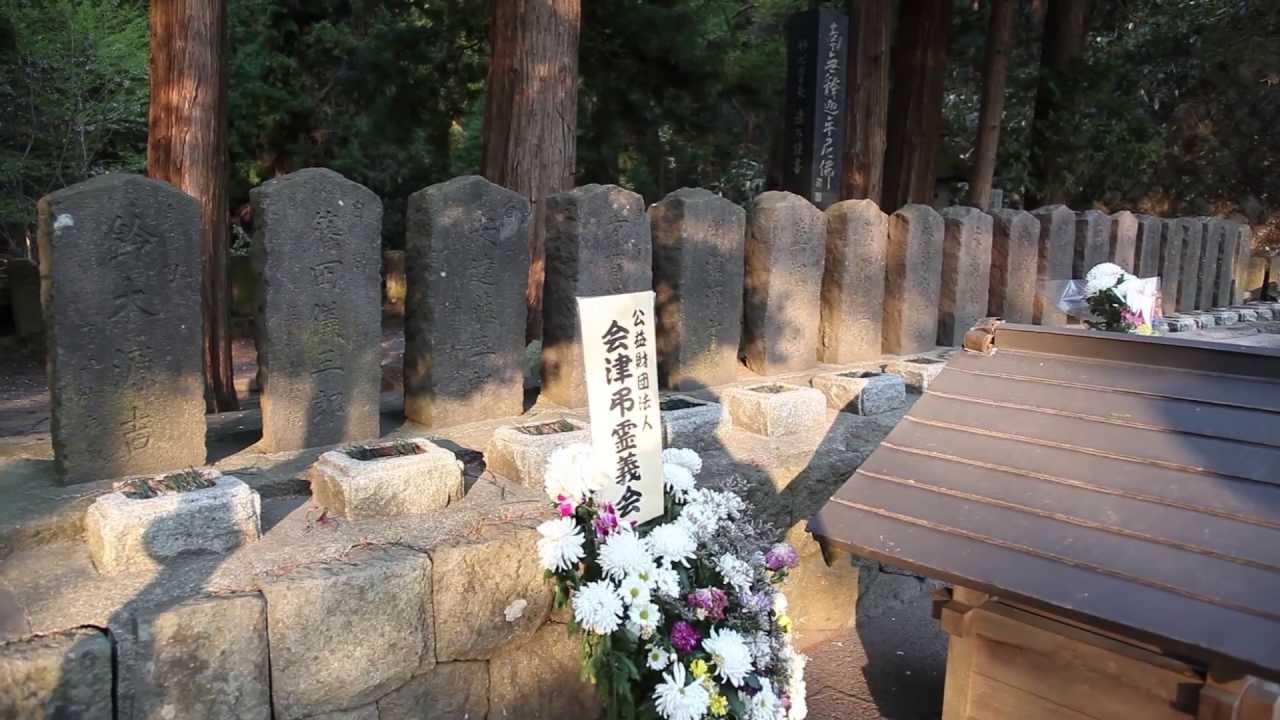
If you’re curious about how samurai lived day to day, visit the elegant Aizu Bukeyashiki residence. It’s one of the best preserved in the city, and it was home to high-ranking samurai. Another historic spot is Iimoriyama Hill, where you can visit a memorial to the “White Tiger Force,” a group of young samurai who took their own lives during the Boshin War. Tucked away just below the memorial is the Sazaedo, a hexagonal wooden tower from 1796 with a double spiral ramp inside. People going up never cross paths with people coming down, and you’ll find very few buildings like it anywhere in Japan.
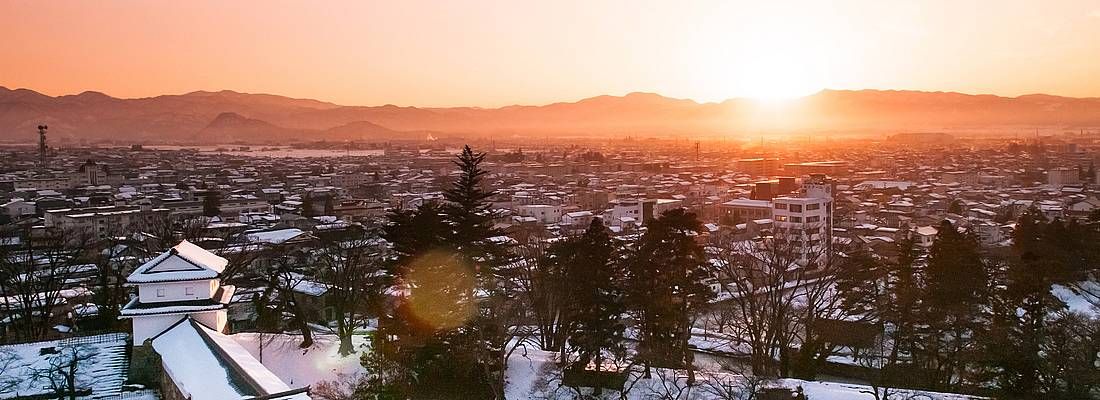
From the hill you can see across the city’s rooftops all the way to Tsuruga Castle. According to tradition, this is the view that convinced the boys of the White Tiger Force that the battle was lost.
Medicinal herb gardens
Among the city’s green spaces, Oyakuen Garden is well worth a visit. It’s a classic Japanese garden, with paths winding around a central pond and a teahouse where you can sit with a steaming cup of tea and look out over the garden. What makes Oyakuen special, though, are the medicinal herb beds inside it, which also give the garden its name: Oyakuen means “medicinal herb garden.”
Relaxing in the onsen
Just outside the city center is Aizu Higashiyama Onsen Village, with a great choice of ryokan and hotels that have both shared and private hot spring baths. Elegant old bathhouses dot the riverbanks, next to the teahouses where geisha once performed for samurai, artists and feudal lords.
Local arts and crafts
Aizu is especially famous for its crafts, above all its lacquerware, made in a style all its own called Aizu-nuri, with delicate hand-painted designs. Another local technique is “maki-e,” which involves “dusting” decorative pieces for the home and souvenirs with gold and silver powder. Some shops in town run workshops where you can make a souvenir by hand and take it home with you. Porcelain is another big industry in the region, and in the local shops you can buy beautiful tea sets and other porcelain pieces for the home.
Local food and specialties
Of course, you can’t visit Aizu without trying the local food. Plenty of traditional restaurants serve regional dishes featuring fish and meat, but above all delicious locally grown vegetables. If you have a sweet tooth, stop at a little shop for agemanju, a small fried doughnut filled with sweet bean paste. Local dishes to look out for include kozuyu, a light soup made with dried scallop broth, vegetables and mushrooms that people in Aizu make for special occasions, and wappameshi, rice steamed in a small cedar box and topped with fish, mushrooms or seasonal vegetables.
If you’re seriously hungry, order the sauce katsudon. It’s a pork cutlet dipped in sauce and served over rice, Aizu’s own take on katsudon and very different from the version made with egg.
Aizu is also proud of its craft sake, which you can taste in local bars and at the breweries in the area, including the well-known Suehiro Sake Brewery, which runs tours and tastings.
Old villages and the outdoors
If you have time, there are other interesting places around Aizu worth a visit. With its thatched-roof houses, the small town of Ouchijuku looks like an old postcard come to life, and the same goes for Kitakata, where you can wander among historic storehouses and homes and then stop for a bowl of delicious Kitakata ramen.
If you love nature, the area around Aizu is perfect for summer hiking, on trails that lead to beautiful mountain lakes. In winter, the slopes of Mount Bandai are the most popular spot around for snow sports.
Aizu through the seasons
The weather in Aizu changes a lot, and each season gives the city a different look. The cherry blossoms bloom late, around mid-April. When the petals have already fallen in Tokyo, the castle park is still pink, and its thousand cherry trees bring the whole town out.
Summer on the valley floor is hot and muggy, but you only need to head a few kilometers toward the mountains to find cool air and shade. Fall may be the best time of all. Between late October and early November the fall colors light up the hills around the city, and the gardens fill with reds and yellows.
Winter here is the real thing, with heavy snow that stays on the ground for weeks. The city goes quiet, the roofs and gardens turn white, and in the evening nothing beats a steaming hot spring bath.
Getting There
From Tokyo it takes just under three hours. You take the Tohoku Shinkansen to Koriyama and change there to the local train on the JR Banetsu West Line to Aizu-Wakamatsu, and the whole trip is covered by the Japan Rail Pass.
If you don't have the pass, direct buses leave from Shinjuku. They take about four and a half hours but cost a lot less.
Once you get there, the castle and the old streets lined with shops are too far to walk to from the station, so it's best to get straight on the loop buses, which leave from the plaza in front of the main exit.
Useful Info
- Aizu-Wakamatsu Station (JR Banetsu West Line, Tadami Line): where the sightseeing buses start and end
- Haikara-san and Akabe loop buses: they go around the castle, Iimoriyama and Nanokamachi; a single ride is 250 yen and a one-day pass is 700 yen
- Nishi-Wakamatsu Station (Aizu Railway): trains heading south leave from here, including the ones to Ouchijuku
Map
This place is on MarcoMaps
Aizu
My map of Japan: over 4,000 places I've tried myself, each with photos, rating, and hours. Filter by category and rating, find veg-friendly spots and places near you with GPS. No sign-up, right from your phone.
- 4,000+ places
- Rating, photos, and hours
- Veg friendly
- Near me (GPS)
- Favorites without login
- Works offline