Akabane
Akabane is one of those neighborhoods that tourists almost always skip and that people who live in Tokyo would rather keep to themselves. It sits at the city’s northern edge, the last stop before you cross into Saitama, and it has a very specific reputation: it’s where people drink a lot, spend little and have a good time.
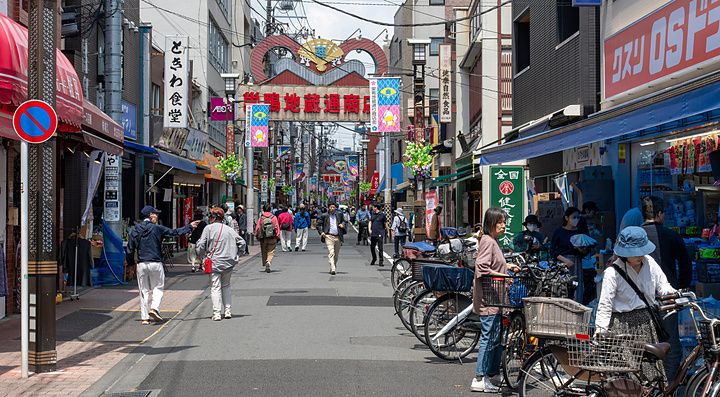
Its narrow streets and covered arcades packed with izakaya belong to an old-school Tokyo you won’t find around Shibuya anymore. Here people start drinking in the middle of the afternoon and nobody bats an eye, and that’s exactly why I like it. When I bring someone here, I’m showing them a rougher side of the capital, and a more honest one. Below I’ll cover how to get around and what to actually expect.
Contents
Nearby neighborhoods
Daytime drinking
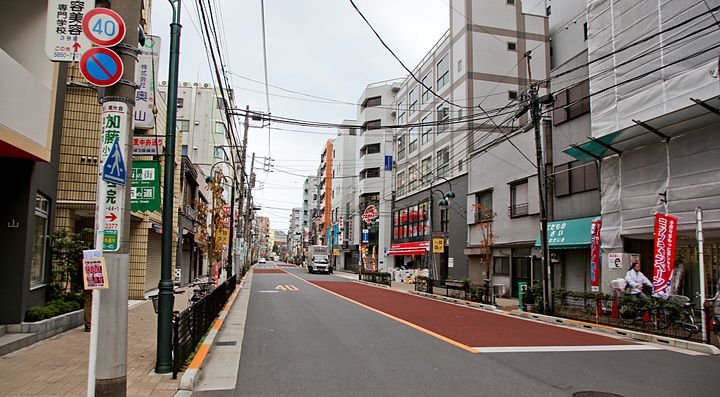
Akabane is known as a mecca for senbero, the Tokyo word for drinking on around 1,000 yen, which gets you a drink and two or three small bites. The streets around the station are lined with several dozen bars, many of them open during the day too, and seeing people at the counter with a mug in hand while it’s broad daylight outside is part of the fun.
Everything centers on the Ichibangai arcade, and from there you can duck into OK Yokocho, a very narrow alley where you drink standing up, elbow to elbow. Before you dive in, keep a few things in mind:
- Tiny spaces: with just a few stools or only a standing counter, you walk in and drink.
- Low prices: still, always check what the set includes before you order.
- Long-established bars: some won’t let in anyone who’s already tipsy, so make them your first stop.
- Evenings are a different story: the area fills up with people just off work and the chatter gets a lot louder.
Don’t come here looking for stylish shops or postcard views. People come to Akabane to be in the thick of the crowd, so my advice is simple: show up hungry and in no rush to leave.
From black market to bar alleys
None of this drinking came out of nowhere. After the war a black market spread out in front of the station, and that’s where the web of alleys you walk through today came from. Ichibangai runs for just under half a kilometer with about a hundred shops and bars, while OK Yokocho is a cramped passage less than a hundred meters long that squeezes in around thirty of them.
If the bars look jammed in, it’s because their size hasn’t changed since then: a two-meter counter, the kitchen behind it, and that’s it. The oldest places are over seventy years old, and it shows in the shape they’re in.
The red floodgate
There’s a reason Akabane grew the way it did, and you’ll get it if you walk about twenty minutes north to the river. That’s the Arakawa, and right here at Iwabuchi, in response to the great floods of 1910, the government launched a project to divert part of the river into a man-made channel and keep the water out of Tokyo.
The spot is marked by the old Iwabuchi floodgate, which everyone calls Akasuimon, the red water gate. Today the old red gate is purely decorative, but when you look out from the embankment you can see why the area grew up around the water and the old warehouses. The gate was designed by Aoyama Akira, the only Japanese person who had worked on the Panama Canal, and when it was finished in 1924 it was the centerpiece of the whole project. The gate wasn’t originally red, by the way. It was painted red much later, and that’s where the nickname came from. These days the new floodgate, which is blue and far less photogenic, holds back the water, while the old one stands there like a monument.
If you have an hour to spare after making the rounds of the bars, I’d walk to the river. The open air feels good after the closed-in alleys, and it’s a nice way to wrap up an afternoon in Akabane without having to get back on a train.
Drinks and bar food
The one ritual you shouldn’t skip is dashiwari. At the oden counters you order shochu or sake and then have it cut with hot broth straight from the pots. It costs next to nothing and warms you right up. Everyone here does it, while elsewhere you’d get funny looks.
The rest of the food is counter fare: offal skewers, oden, fried fish. The long-established places also serve carp and eel, river fish that say a lot on their own about how much the water has mattered around here.
Getting There
Getting here by train is easy. From Ikebukuro it's about ten minutes, and from Shinjuku or Ueno it's a little over fifteen, all on JR lines.
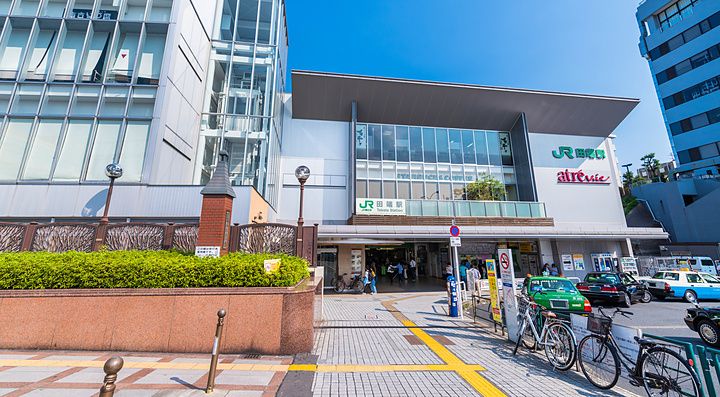
At Akabane Station take the east exit. The entrance to Akabane Ichibangai is a couple of minutes from the ticket gates, and that's where the alleys of counter bars start. On the west side you'll find the bus plaza and a quiet residential area.
If you're heading straight for the old red lock gate on the Arakawa, take the Namboku subway line to Akabane-Iwabuchi. From there it's a fifteen-minute walk, compared with a good twenty minutes from the JR station.
Useful Info
Name: Akabane
Time needed: A couple of hours to wander the alleys and bar counters, half a day if you add the walk to the river
Tips: Don't park yourself in one bar. Here people hop from place to place, one drink and move on, and three or four stops cost about as much as a regular dinner. Make the long-established bars your first stop, because some of them won't let you in if you're already tipsy.
Getting there:
- Akabane Station (JR Keihin-Tohoku, Saikyo, Shonan-Shinjuku, Utsunomiya and Takasaki lines): take the east exit for the bar alleys
- Akabane-Iwabuchi Station (Namboku subway line): the most convenient for the lock gate on the river
- City buses also leave from the plaza on the west side of the JR station
Map
MarcoMaps100% free
This place is on MarcoMaps
Akabane
My map of Japan: over 4,000 places I've tried myself, each with photos, rating, and hours. Filter by category and rating, find veg-friendly spots and places near you with GPS. No sign-up, right from your phone.
- 4,000+ places
- Rating, photos, and hours
- Veg friendly
- Near me (GPS)
- Favorites without login
- Works offline

