
Akasaka
In Akasaka, a glass skyscraper and a shrine with a tunnel of red torii are only a few minutes’ walk apart, and to me that’s the reason to come.
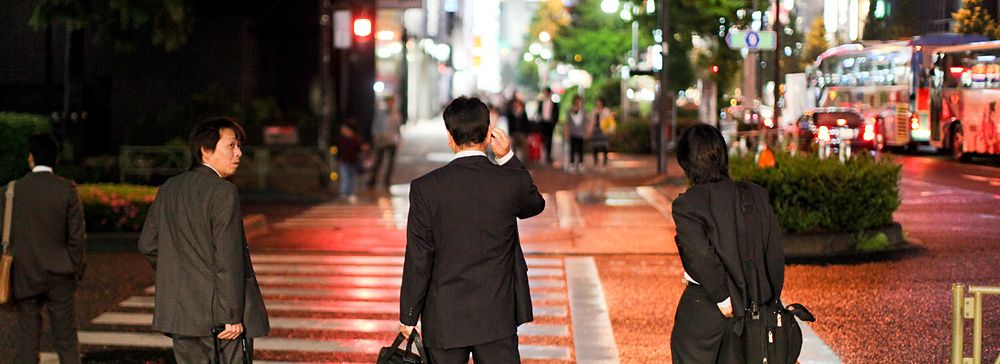
It’s a district of offices, high-rise hotels and corporate headquarters. On one side you’ve got TBS’s headquarters and the Akasaka Sacas theaters, and on the other, narrow alleys full of izakaya that fill up when the workday is over.
It’s not the Tokyo of huge, tourist-packed intersections, and that’s exactly why I like it. You come here for a good dinner or a quiet walk more than for shopping. Here’s what the neighborhood is like by day and by night, and what to really expect.
Contents
What to see
Restaurants
Nearby neighborhoods

Aoyama
Nishi-Azabu
Day and night
During the day Akasaka is all people in suits going in and out of offices, and everything revolves around lunchtime. That’s when plenty of good restaurants that charge business-district prices at night serve lunch specials that are much more affordable. If you want to eat well without spending much, come at noon.
In the evening the pace changes.
The alleys behind the main streets light up with signs, and tucked between the buildings you’ll find small izakaya where white-collar workers stop for a drink after work. There’s also a pocket with quite a few Korean restaurants, something that isn’t all that common in the rest of central Tokyo. That’s no accident. Akasaka’s first Korean places grew out of the kitchens that fed visiting South Korean diplomats, and over the years a Korean community grew up around them, with family restaurants, yakiniku and karaoke. Don’t expect the feel of Shin-Okubo, though: there are no K-pop shops or lines of teenage girls here. These are more grown-up places, where people take their time over dinner, and it’s often a good idea to get a table.
Don’t expect loud nightlife either. People here take their time eating and drinking, and an evening in Akasaka suits people looking for peace and quiet better than anyone who wants noise and crowds.
Sacas and the cherry trees
Akasaka Sacas is the part of the neighborhood that grew up around the TBS headquarters, with an open plaza, the TV studios and the TBS Akasaka ACT Theater, which hosts musicals and concerts. On weekdays there’s a steady stream of office workers and people lining up for a show, and the plaza often has small markets or events tied to the network’s programs.
The name comes from the cherry trees. About a hundred of them, in eleven different varieties, line the slope alongside the complex, and the varieties were picked so they don’t all bloom at once. The season starts in mid-February with the bright pink kawazuzakura and ends in late April with the double-flowered yaezakura. At night the lights from the buildings keep the branches lit, and it’s a very urban hanami, with no tarps spread on the ground and no crowds.
Torii on the hill
Hie Shrine sits on a hill between Akasaka’s offices and the government buildings of Nagatacho, a short walk from the National Diet Building. The main way up is a staircase, but there’s also an escalator on one side, which comes in handy if your legs are tired or you have kids with you.
What sticks with you most is the tunnel of red torii lined up one after another on the side of the hill. It’s far less crowded than the famous one in Kyoto, so it’s easier to photograph in peace.
In June the shrine is the starting point of the Sanno Matsuri, one of Tokyo’s major historic festivals, with costumed processions. If you’re in town then, it’s worth the detour. If not, the shrine is still a green break in one of the most built-up parts of the city. One thing to know about the Sanno Matsuri, though: the main procession, with hundreds of people in court dress and floats crossing Nagatacho and Ginza, only runs in even-numbered years. In odd-numbered years the festival still happens, but on a smaller scale, with rituals inside the shrine and the neighborhood mikoshi, and it’s much less of a show on the streets.
Getting There
You can get around all of Akasaka on foot, so the station you pick only decides where you come up. On the Chiyoda Line, get off at Akasaka and in a couple of minutes you're in the restaurant alleys and in front of Sacas, since exit 3b comes out practically inside it.
If you're heading straight for Hie Shrine, the stop you want is Tameike-Sanno. From exit 7 it's three minutes along Sotobori-dori, and you end up at the foot of the escalator without having to climb the steps.
If you're coming from Ginza or Shinjuku on the Ginza or Marunouchi line, use Akasaka-mitsuke, the most convenient station for the hotels in the area. From there you can keep walking to Roppongi in about twenty minutes.
Useful Info
Name: Akasaka
Time needed: A couple of hours for Hie Shrine and a wander through the alleys, or a whole evening if you stay for dinner
Closed: It's an office district: many restaurants close on Sundays, and quite a few on Saturdays too, when the neighborhood empties out
Tips: At Hie Shrine, on either side of the main hall, there are two monkey statues instead of the usual guardian lion-dogs. They're the messengers of the mountain god. The one on the left holds a baby, and people pray to it for children and family, and to the one on the right for work. Almost nobody notices them.
Getting there:
- Akasaka Station (Chiyoda): exit 2 for Hie Shrine, exit 3b for Sacas
- Tameike-Sanno Station (Ginza, Namboku): exit 7, the closest to the shrine
- Akasaka-mitsuke Station (Ginza, Marunouchi): exit 11, handy for the hotels
Map
MarcoMaps100% free
This place is on MarcoMaps
Akasaka
My map of Japan: over 4,000 places I've tried myself, each with photos, rating, and hours. Filter by category and rating, find veg-friendly spots and places near you with GPS. No sign-up, right from your phone.
- 4,000+ places
- Rating, photos, and hours
- Veg friendly
- Near me (GPS)
- Favorites without login
- Works offline


