Anabuki Tei
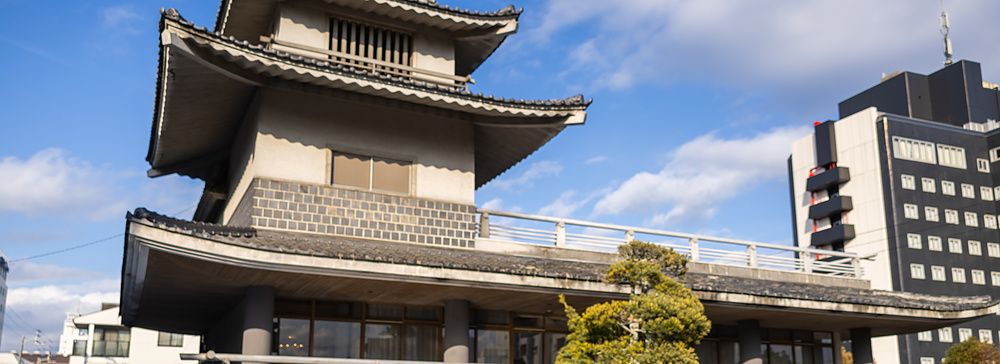
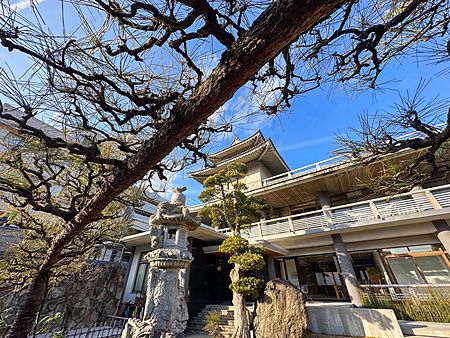
Not a ryokan, not a hotel, but a big private Japanese house in the middle of Takamatsu’s old castle town, where you rent the whole place for the night. It has a garden with a century-old pine, a turret on the roof, a sauna and an outdoor tub, and in the morning a chef comes in to cook breakfast just for you.
Anabuki Tei is the owner’s family home, and the owner plays host in person. It works for a couple who want a night to remember, but it’s at its best with a small group of friends or two families traveling together.
Contents
The rooms
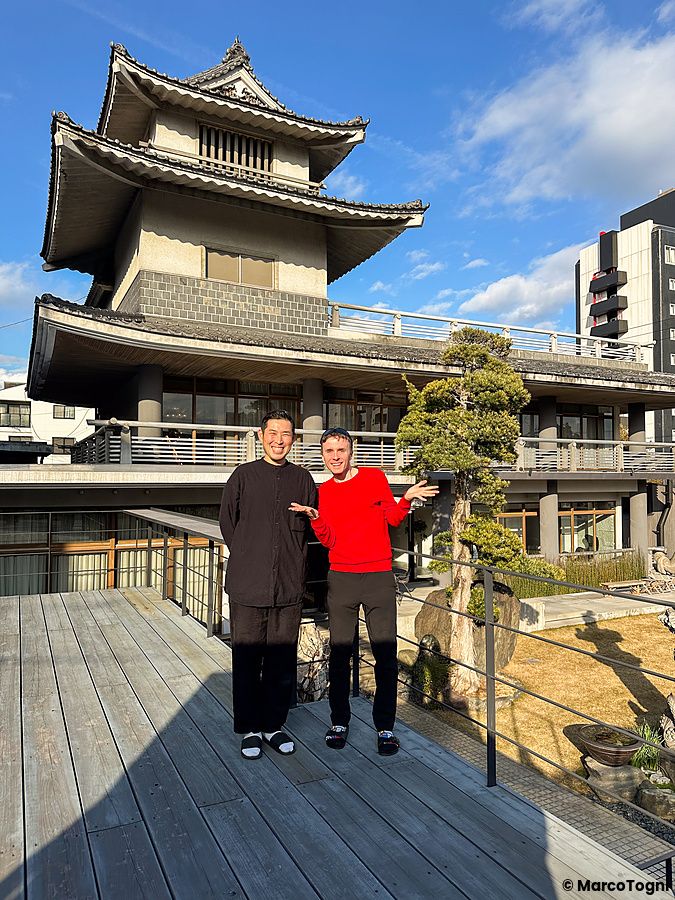
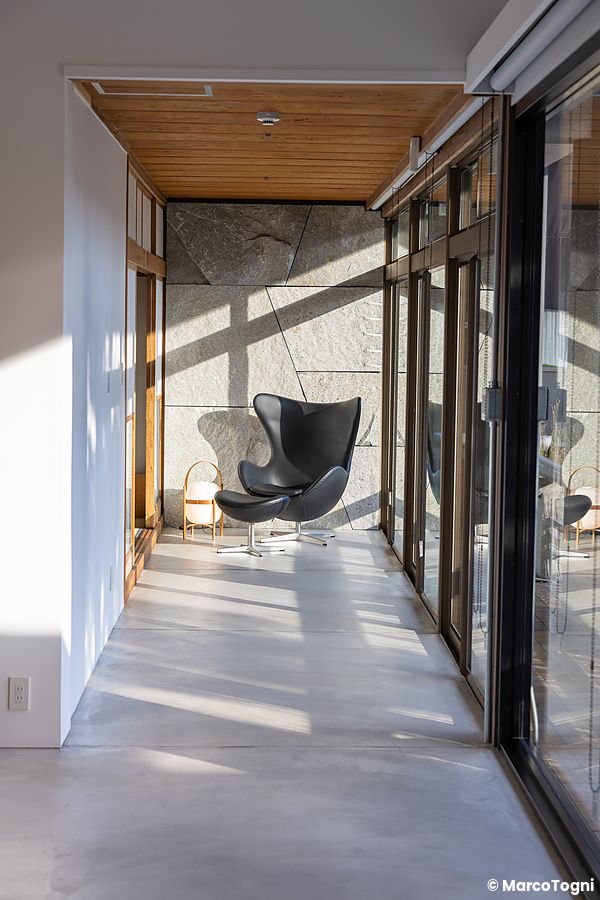
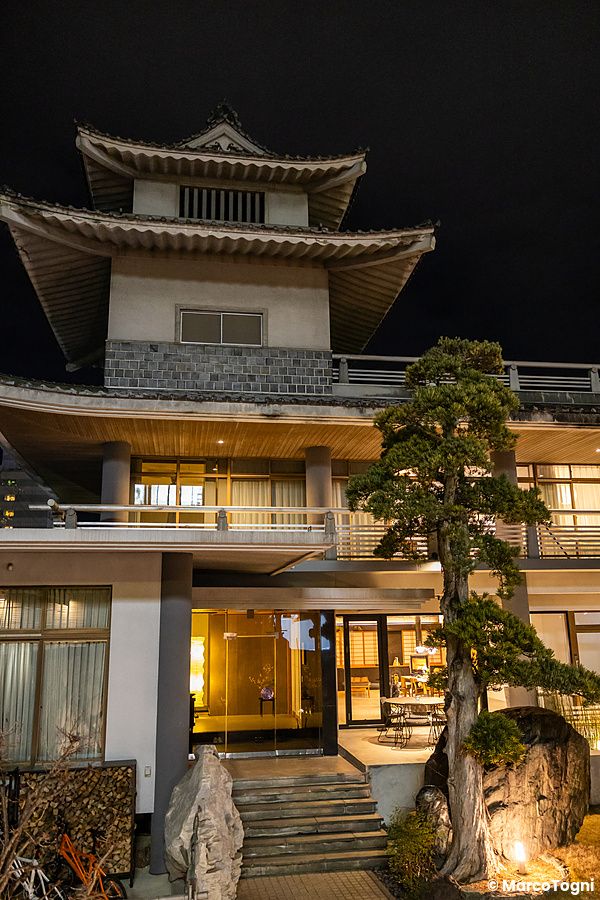
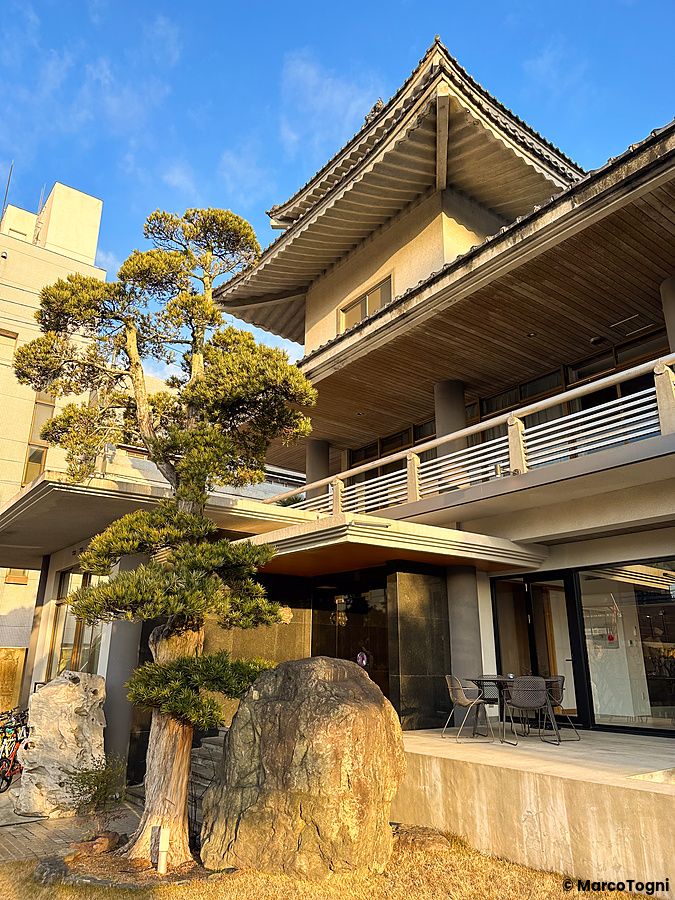
The house was built in the 1970s by the current owner’s grandfather, a carpenter who went on to become one of Japan’s leading builders, and it shows. In the tatami rooms, the wooden joinery, ceilings and sliding doors were made by someone who really knew the trade. From outside, with its pitched roof and the turret on top, it looks like a small castle. Inside, though, it’s been remodeled with Scandinavian furniture, polished concrete floors, rough stone walls and Isamu Noguchi’s Akari lamps, the paper globes that give off a soft, warm light.
The first thing you notice when you walk in is the contrast. In the hallway the sun casts sharp shadows on the concrete, and at the far end, against the stone wall, there’s an armchair that looks like it was put there for sitting down with a book.
Since it’s not a hotel, you don’t pick a room. You take the whole house, for up to nine people, and here’s how it’s laid out:
- The living and dining room, on the ground floor: with the big table where you eat, the wood stove with armchairs in front of it and the glass doors onto the garden, this is where the group gets together.
- The bedrooms, on the ground floor and upstairs: three large suites, each with its own bathroom, and a smaller room with a single bed. Room 1, on the ground floor, is the most comfortable one, with a walk-in closet, so give it to the couple in the group or to whoever is staying more nights.
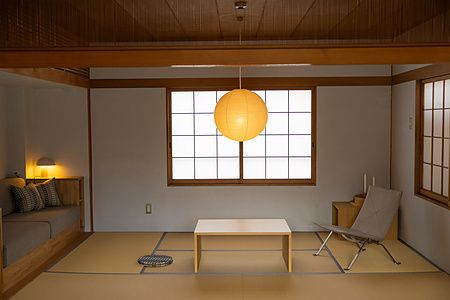
- The tatami room: paper shoji screens along the walls, a low wooden table, a built-in bench and a paper lamp hanging from the ceiling. It’s the most Japanese part of the house, and people on their first trip to Japan spend more time here than anywhere else.
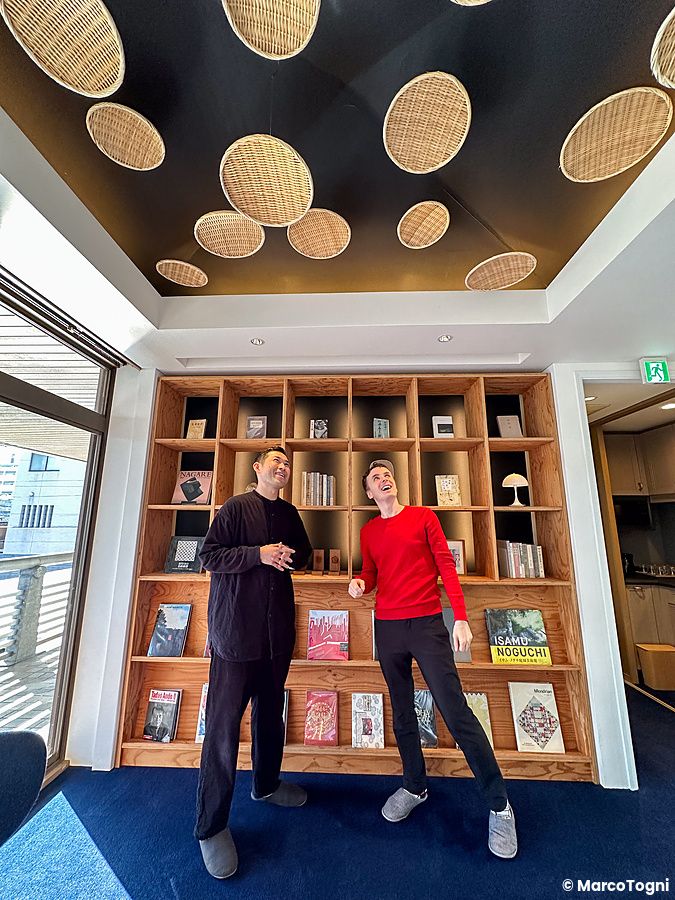
- The upstairs library: a wooden bookcase covering an entire wall, filled with books on Kagawa and its art, and wicker hoops hanging from the ceiling. From here you step out onto the upstairs terrace.
The beds are real beds, not futons. In the suites they’re king size, and if you’re traveling with friends you can have them split into two twin beds. Ask when you book, and say how many people are sleeping in each room, so the beds are already set up when you arrive.
Each of the three suites has a private bathroom, so nobody has to wait their turn in the morning, and the outdoor tub is always there too.
The bathroom amenities are by Three, a Japanese natural cosmetics brand, and there are bathrobes, comfy loungewear and slippers for everyone. There’s no TV, and you won’t miss it, because in the evening you hang out in the living room or outside.
The kitchen belongs to the chef, and guests don’t use it. If you don’t book the chef for dinner, the owner will recommend a restaurant in town and make the reservation for you.
If you want a hotel with a front desk open all night, a bar and room service, you won’t find that here. It’s a house, and that’s exactly why people come. There’s also a washing machine, which comes in handy for a group that’s halfway through a trip.
I’ll be straight with you about the price. You’re renting an entire villa with a chef, a sauna and a garden, and it costs about as much as a night in a suite at a big luxury hotel. Split among eight or nine friends, though, the cost per person drops a lot, and for a small group it’s within reach for a birthday, an anniversary or the last night of a trip around Shikoku.
They only take one group per night, so dates go fast. It’s best to book well in advance and avoid the busiest times of year, like cherry blossom season, Golden Week, Obon and New Year’s.
When someone asks me for a special place to stay in Shikoku, Anabuki Tei is the first name I give. It’s a real Japanese house that one family lived in for decades, and you get it all to yourself, from the garden to the sauna, without running into any other guests.
Sauna and outdoor tub
Behind the house is the part that makes the trip to Takamatsu worth it all on its own. On a slatted deck, enclosed by wooden walls and covered with white canvas stretched taut like sails, there’s a square outdoor tub that’s always hot, with jets, and right next to it a Finnish sauna.
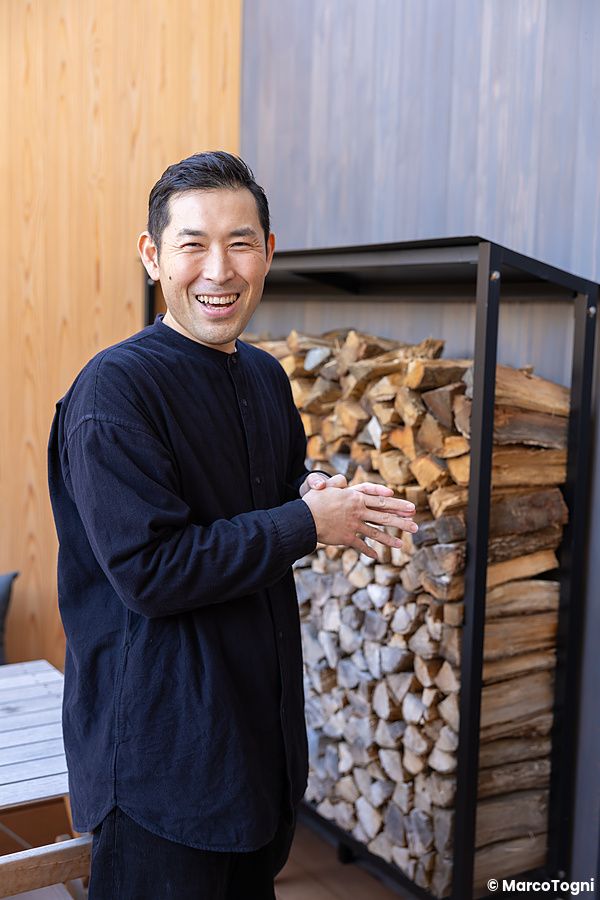
Inside the sauna, the walls are lined with pale wooden slats, the stove is packed with dark stones held in a wooden grille, and a yellow light shines on the bench from below, so it’s easy on the eyes. The stones are Aji, the Kagawa granite used to make garden lanterns, and the sauna is heated with wood, with a neat stack of logs in a black iron rack beside it.
You go into the sauna, come out, jump in the tub, stretch out on the lounge chairs in the outdoor relaxation area, and then start all over again. The sauna and the tub are included in the price, and like the rest of the house, they’re yours alone.
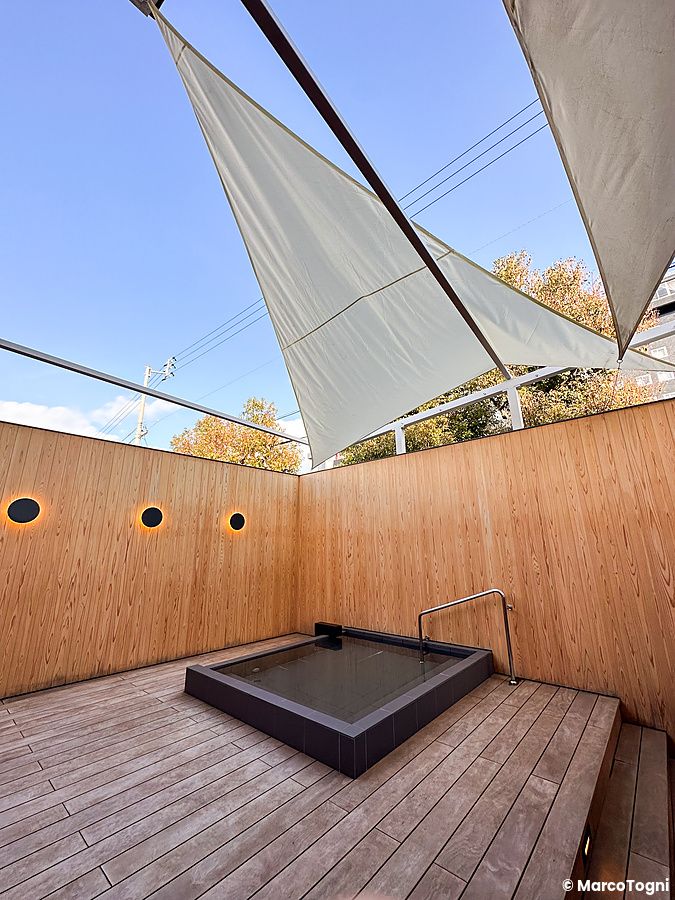
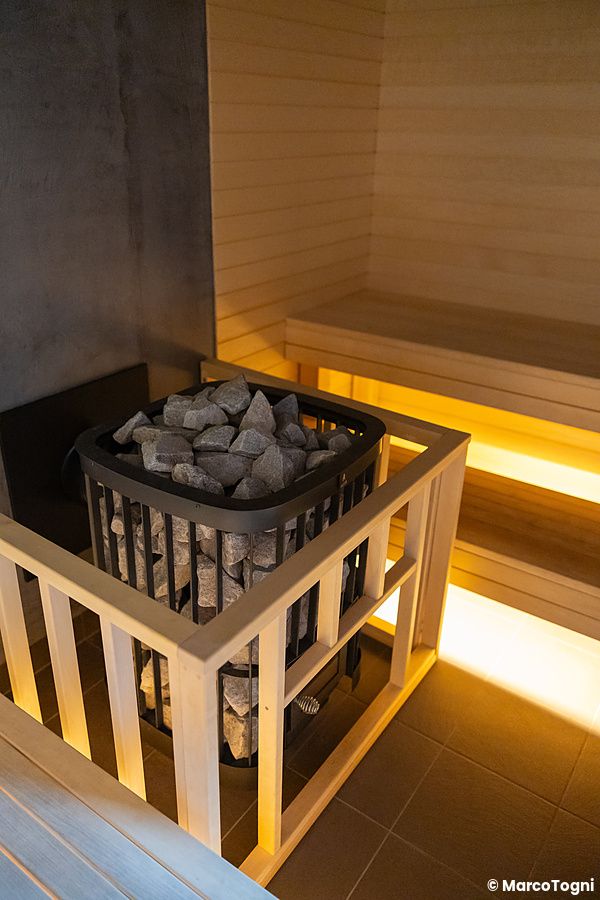
After dinner you soak under the open sky, with the lit-up garden a few meters away. The sauna, on the other hand, has to be loaded with wood and fired up, so if you want it for the evening, let the owner know ahead of time.
Breakfast with the chef
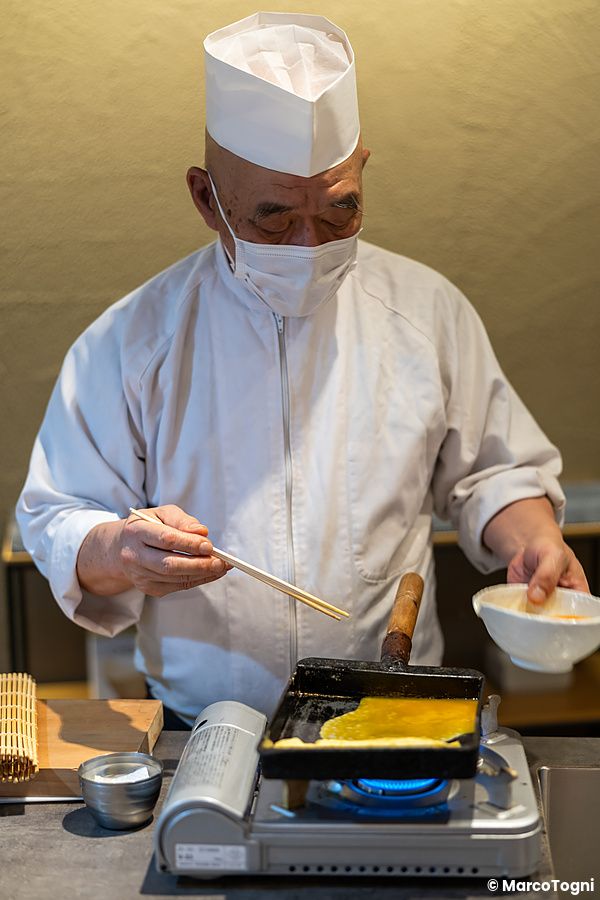
In the morning a local chef comes to the house, gets to work at the stove and cooks right in front of you. Dressed in whites, the chef turns the rolled omelet with chopsticks in the rectangular dashimaki tamago pan, getting everything else ready at the same time.
Breakfast is Japanese and light, made with fish from the Seto Inland Sea and vegetables from local gardens. There’s rice, soup, small vegetable side dishes, fish, and nyumen, which is a hot soup with somen, the famous thin noodles from Shodoshima, the island just across the water.
You eat at the big table in the living room, with the glass doors onto the garden and the pine right in front of you. The chef brings the dishes out one after another, as if a restaurant had closed just for you.
The same chef, or another one the owner picks from the best cooks in town, can also come in the evening to make dinner, either Japanese or Italian, always with seasonal ingredients. You book it along with the house, and with a group it’s my favorite option, because nobody has to go out and you have dinner at the same table where you eat breakfast in the morning.
The garden and the owner
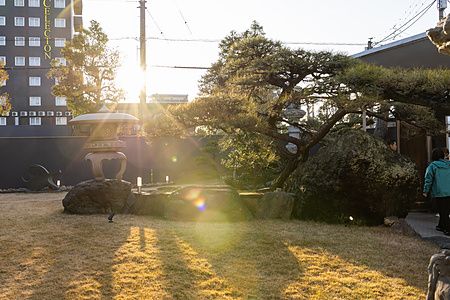
You come in through the main gate and find yourself in the Japanese garden. There’s a hundred-year-old black pine that’s been patiently shaped, big boulders, a stone lantern carved with animal figures, and paths winding around it all. From the living room you step straight out onto a wooden deck with a swing seat, where you can sit and look at the garden.
In the evening the garden glows with warm lights from below, and from the far end of the lawn you can see the turret lit up above the roof. From the upstairs terrace you can see Takamatsu’s modern buildings beyond the wall, and seeing them from there makes being inside this house feel even more strange and wonderful.
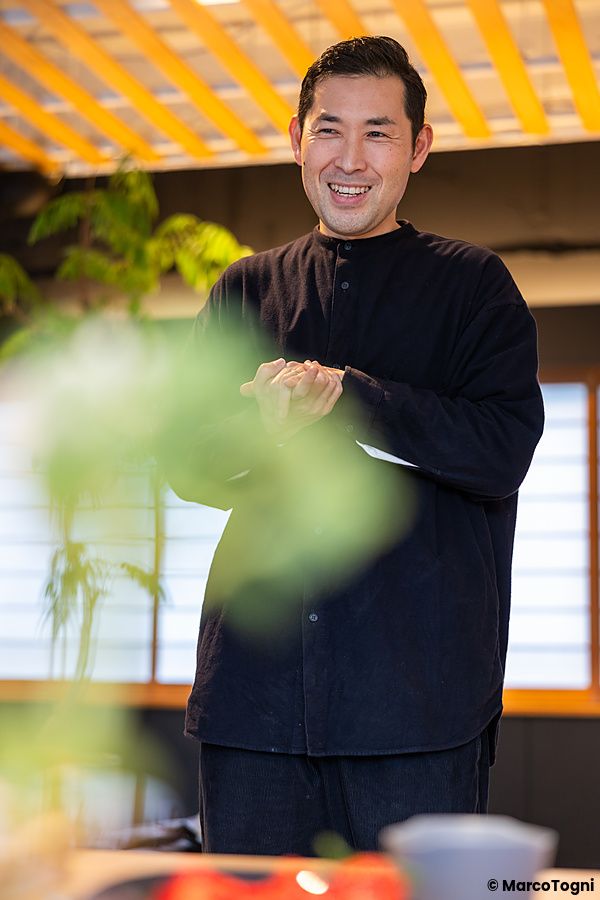
The owner welcomes you in person and takes you around the house, explaining how it was remodeled, opening the cabinets, showing you the Kagawa lacquerware and telling you the family’s story, with lots of smiles and obvious pleasure at having guests who take an interest. The owner speaks calmly and answers every question, from where to eat and what to see to how to plan the next day.
The owner can also set up things you wouldn’t find on your own: a bonsai lesson with a master, making wasanbon, Kagawa’s little sugar sweets, or a private boat trip on the Inland Sea to art islands like Naoshima. If any of this interests you, ask when you book, so there’s time to put it together.
Outside the gate is central Takamatsu, the old town that grew up around the castle. The street is lined with houses and small buildings, and in the evening, once the gate is shut behind you, no noise gets in except the occasional car in the distance.
For dinner or a stroll you walk to the long covered shopping arcades and the nightlife area, and late at night you head home along a quiet street.
At a glance
Pros:
- A historic Japanese house all to yourself, with a garden and a century-old pine
- Private outdoor tub and wood-fired Finnish sauna
- Japanese breakfast cooked in front of you by a chef, and the owner showing you around the house
Cons:
- Luxury-villa prices that only become reasonable when a group splits them
- No front desk, no TV and no kitchen for guests to use
Best for: a small group of friends or two families, up to nine people, or a couple who want one special night on their trip
Atmosphere: wood, paper, stone and Scandinavian furniture, the glow of Noguchi lamps, quiet, and the garden lit up at night
Final thoughts
When you leave, one scene stays with you. It’s evening, you’ve just come out of the sauna and you’re wrapped in a bathrobe on the wooden deck, with steam rising off the tub and the lit-up pine in front of you, while your friends chat in the living room behind the glass. Then the next morning at the table, there’s the smell of the omelet the chef is rolling.
It feels like you’re the guests of a Japanese family that has lent you its home for the night, and in a way that’s exactly what’s happening. Get the right friends together, pick a date and book that night in Takamatsu.
Getting There
From Kotoden's Kataharamachi Station it's about a 5-minute walk through the streets of the old castle town.
From JR Takamatsu Station it's about 5 minutes by taxi. If you're flying in, the drive from Takamatsu Airport takes about 40 minutes.
On request, the owner can arrange a paid transfer from the station or the airport. If you're driving, the house has its own parking on the grounds.
Useful Info
- Kataharamachi Station (Kotoden Kotohira and Nagao lines): about 5 minutes on foot
- JR Takamatsu Station (Yosan and Kotoku lines, Marine Liner): about 5 minutes by taxi
Map
This place is on MarcoMaps
Anabuki Tei
My map of Japan: over 4,000 places I've tried myself, each with photos, rating, and hours. Filter by category and rating, find veg-friendly spots and places near you with GPS. No sign-up, right from your phone.
- 4,000+ places
- Rating, photos, and hours
- Veg friendly
- Near me (GPS)
- Favorites without login
- Works offline

