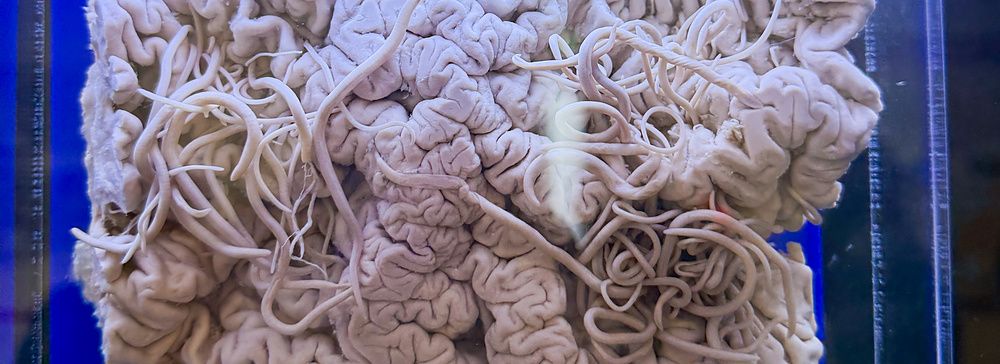
Anisakis and Anisakiasis
Anisakis is one of the most feared parasites around, because it poses several health risks to anyone who eats raw or undercooked fish infected with it. As sushi has taken off worldwide and people eat more raw fish, anisakis has become one of the best-known parasites in the world, and cases of anisakiasis have gone up. Still, a lot of people aren’t clear on what anisakis is or what kind of infection it can cause, so I’ve put together this short explainer.
Contents
What it is
Anisakis is a genus of nematode worms. These are parasites that pass through several hosts and end their life cycle in the abdomen of marine mammals. The eggs pass into the sea in the mammals’ feces, then develop into larvae that small crustaceans eat. When fish feed on infected crustaceans, they swallow the parasite too, and it moves from one host to the next until it reaches the stomach of a marine mammal such as a dolphin, whale or seal, where its life cycle ends.
Marine mammals’ intestines work much like ours, which is why the parasite can infect the human body when we eat raw or undercooked fish that contains anisakis larvae.
Symptoms and treatment
Anisakis is a risk to human health in two ways. You can get a parasitic infection (anisakiasis) by eating fish that contains the larvae, or you can have an allergic reaction to the chemicals the larvae release into the fish’s flesh.
Anisakiasis is common in countries that eat a lot of raw fish, like Japan, the South American countries along the Pacific coast and the Netherlands. As Japanese restaurants have grown more popular, some cases have also been reported in the United States and Europe.
So what happens in your body when you eat infected fish, and how can you tell it’s anisakiasis? The larvae try to burrow through the intestinal wall, and your digestive system responds with an immune reaction that causes severe abdominal pain, vomiting and nausea. Sometimes the larvae come out when you vomit, and if they can’t burrow into the intestinal wall, they die within 48 hours anyway. Some people feel an itch in their mouth or throat while eating fish or afterward. That’s the worm moving around, and you should try to pull it out or cough it up.
If the larvae do reach the intestinal tract, the body sets off an eosinophilic and granulomatous immune response, usually one to two weeks after infection. It causes symptoms similar to Crohn’s disease: fever, vomiting, diarrhea and so on.
Doctors usually diagnose it with a gastroscopy, which shows whether there are any larvae and lets the doctor remove them. Other options are an X-ray or a biopsy, where samples of tissue are removed and examined.
In the most serious cases, when the intestine is blocked or perforated, surgery is unavoidable. The good news is that anisakis larvae generally can’t survive inside the human body, so the infection clears up with symptomatic treatment alone.
Anisakiasis also can’t be passed from one person to another.
Allergic reactions
Anisakis larvae can be dangerous even in cooked fish. They release chemicals into the surrounding tissue of the infected fish, and these can trigger mild or severe allergic reactions, such as hives and anaphylactic shock, sometimes along with gastrointestinal symptoms. How often people get allergic symptoms after eating fish has led to the hypothesis of an allergic reaction called gastroallergic anisakiasis. The allergic conditions seen in people who work in fish processing, such as asthma, contact dermatitis and conjunctivitis, seem to back this up.
Prevention
You can avoid anisakiasis by being careful about cooking and storing fish properly. Eating only fish that’s been cooked properly (to 60°C) is one of the most effective ways to lower your risk. If you don’t want to give up raw fish and delicious sushi, though, you have to freeze the fresh fish before you eat it.
Fortunately, EU regulations now require restaurants and supermarkets to freeze any food meant to be eaten raw ahead of time (at -20°C for at least 24 hours), though not every business follows them. If you want to prepare raw fish at home, it’s best to freeze it for at least 7 days before eating it.
Whenever you eat raw fish, stick to supermarkets, fish markets and restaurants you trust, so you can be more confident the fish has been stored and prepared properly.
Anisakis in Japan
In Japan everyone knows about anisakis (here they call it anisakisu). According to Japan’s Ministry of Health, it has been the leading cause of food poisoning by number of reported incidents for years, and some studies based on health data estimate around 20,000 cases a year.
The seafood most likely to carry larvae is mackerel (saba), especially when it’s marinated as shime saba, plus bonito (katsuo), squid and sanma. The salmon used for sushi, on the other hand, is almost always farmed salmon. It’s raised on feed, so it’s practically free of larvae.
Unlike in Europe, Japan has no requirement to freeze fish that’s eaten raw. Safety relies on how fresh the fish is, on gutting it right away (once the fish dies, the larvae move from the guts into the muscle), and on the visual checks chefs make as they slice it.
Keep in mind, too, that vinegar, soy sauce and wasabi don’t kill the larvae. Still, considering the huge amount of sashimi people eat in Japan every day, cases remain very rare.