449 m
Anago Tamai449 m
The place for anago.
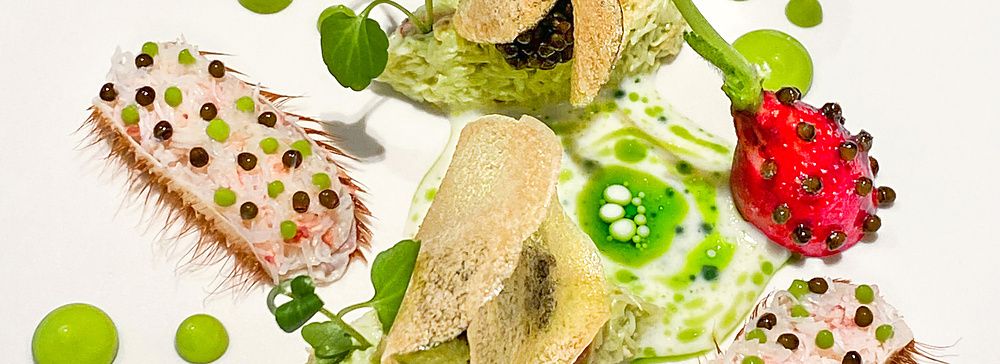
A top-tier French restaurant in Nihonbashi, Tokyo, where the meal goes on for hours and ends with a dessert cart you choose from one piece at a time. Asahina Gastronome has two Michelin stars, and the chef is Satoru Asahina, who ran the Robuchon group’s kitchens for years before going out on his own. He cooks classic French food, reworked with Japanese ingredients and plated with obsessive attention to detail.
This is a special-occasion restaurant, the place for a birthday or an anniversary, or a one-time treat you’ll remember for years. If you want a quick dinner, go somewhere else.
There’s a set menu, and at the start they hand you a sheet listing the courses in French and Japanese. The meal runs from amuse-bouches to desserts over about ten courses, so plan on a long meal and don’t book anything for the hours after.
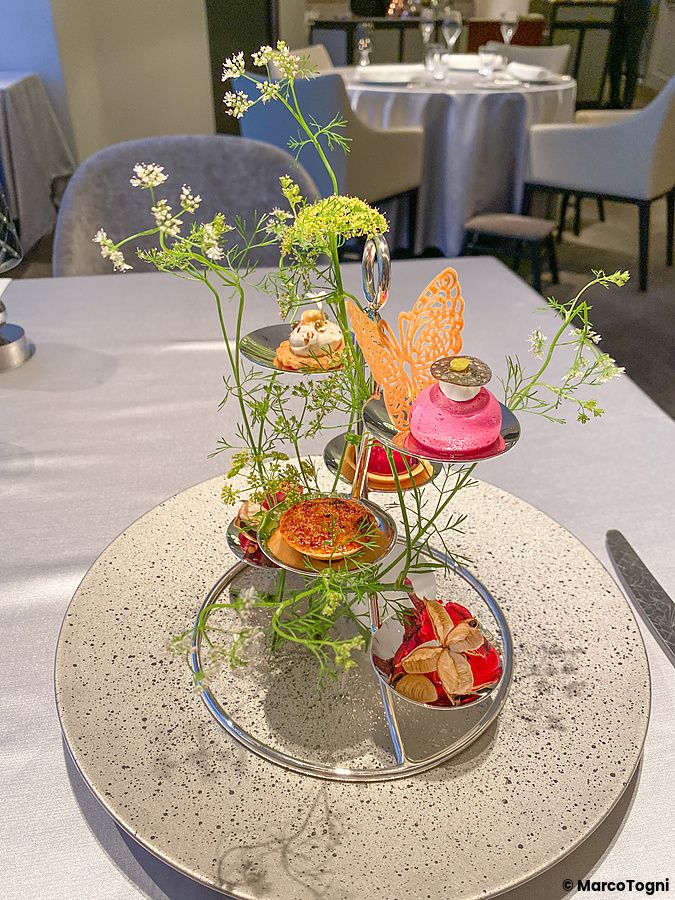
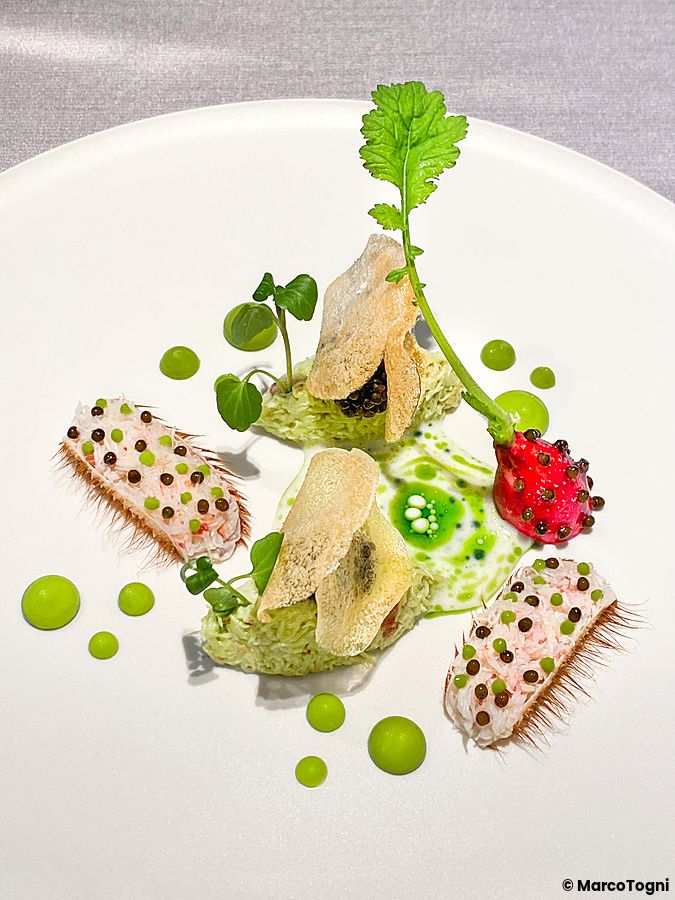
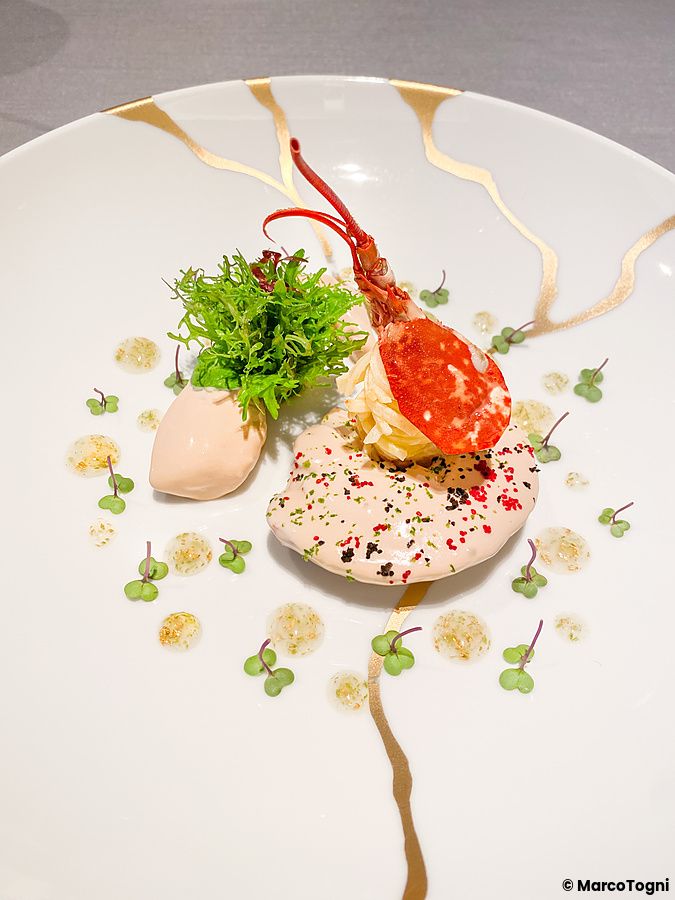
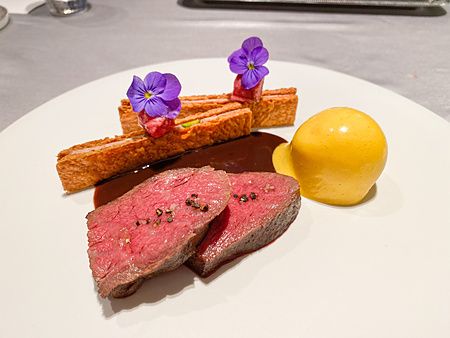
You rarely see this many top ingredients in one meal: caviar, lobster, black truffle, premium fish. Still, the kitchen doesn’t overload the plate to impress you. Each ingredient gets its own space, and none of them drowns out the others.
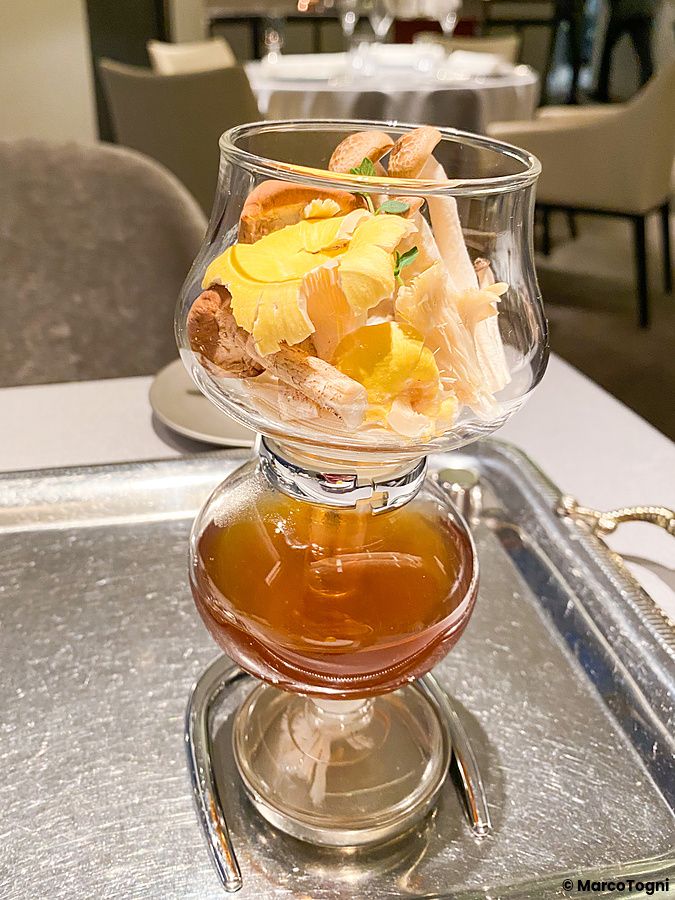
Of all the savory courses, that soup is the moment I remember best. The aroma reaches you while you’re still eating the previous course, and what ends up in the cup is so concentrated it reminds me of the broth served at the end of some Japanese meals, only with a thoroughly European flavor.
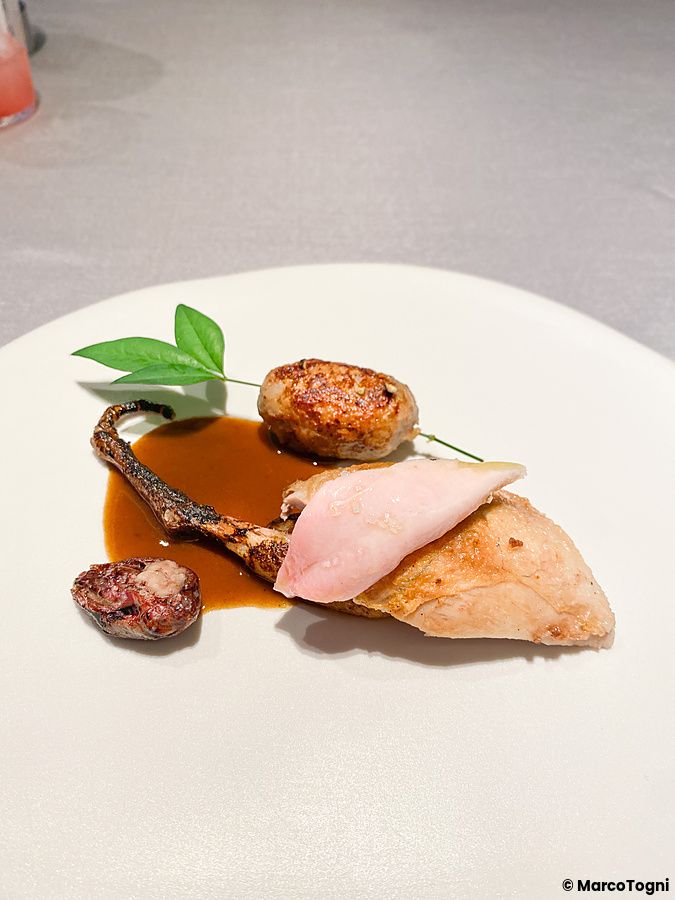
The whisky-flavored quail is the most traditional course of the meal: tender meat, a dark sauce and no presentation tricks. After so many elaborately built plates, it’s strange, and nice, to get something this straightforward.
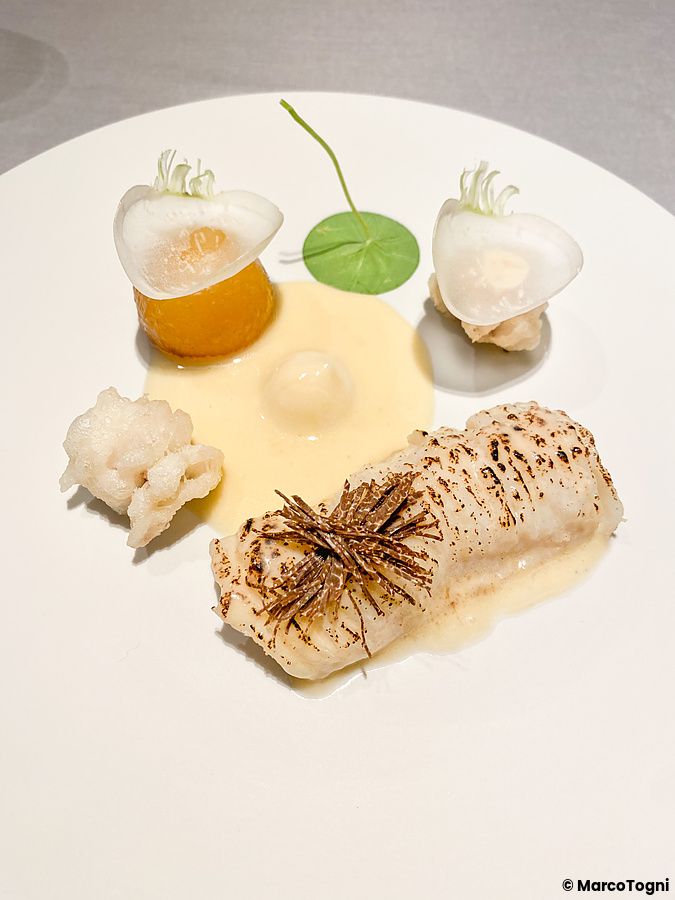
Some dishes have bold flavors. You can really taste the black truffle on the hamo, and if you’re used to more delicate Japanese cooking, you might find a few courses a bit over the top at first.
Lunch runs about 25,000–30,000 yen per person and dinner goes up to around 40,000–50,000, with a 10% service charge added to the bill. The wine pairing pushes the total higher still, and the wine list is huge, especially when it comes to Burgundy and Bordeaux.
It’s expensive, no point pretending otherwise, and it’s not an everyday kind of place. That said, given the skill behind every plate and the number of courses, I think it’s well worth the price. French restaurants in Europe with the same number of stars cost just as much and give you less.
When I want the kind of French dinner that stays with me for months, this is one of the first places I think of, because I know that from the first bite to the last little treat, nothing on the menu is filler.
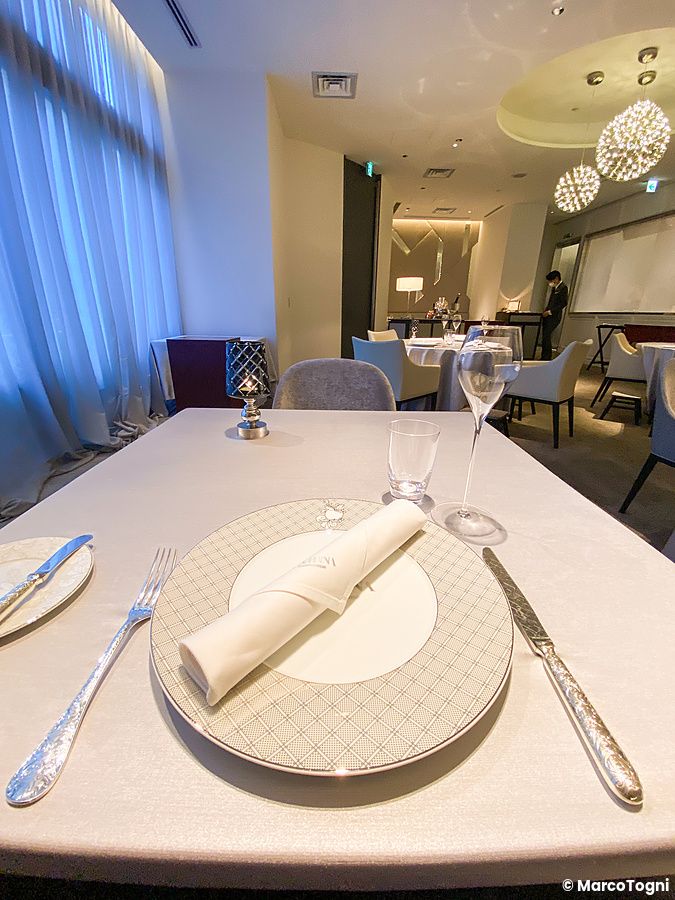
From the street you’d never guess what’s inside, which makes the contrast even sharper as soon as you walk in. The room is all white, gray and silver, and a large chandelier is the only showy thing in it.
On the table you’ll find a pale tablecloth, a napkin rolled up on your plate, heavy silver flatware, a row of glasses and a small lit candle. There are about twenty seats in all, plus a small private room if you’d rather have some privacy.
There’s real space between the tables, so you can talk without lowering your voice or feeling like your neighbors are on top of you. All you hear in the background is the clink of silverware and quiet conversation, with no music drowning it all out.
Dress up. In jeans and a T-shirt you’ll look out of place, and people will notice right away, because the other diners have made an effort for this dinner.
The hospitality is why I tell people about this place, even people who aren’t into French food. The staff look after you from the moment you sit down without ever making you feel watched, and every dish comes with an explanation of what’s in it, delivered naturally rather than recited by rote.
Even the small details tell you something. The butter they bring has the restaurant’s name stamped on it, and you only notice if you stop to look.
The pacing of the courses is well judged: you never wait too long between dishes, and nobody rushes you. The tableside soup and the cart at the end break up the meal at just the right points, right when a long dinner could start to drag.
The service is genuinely formal. If your idea of eating out is talking and laughing loudly, you’ll feel out of place here.
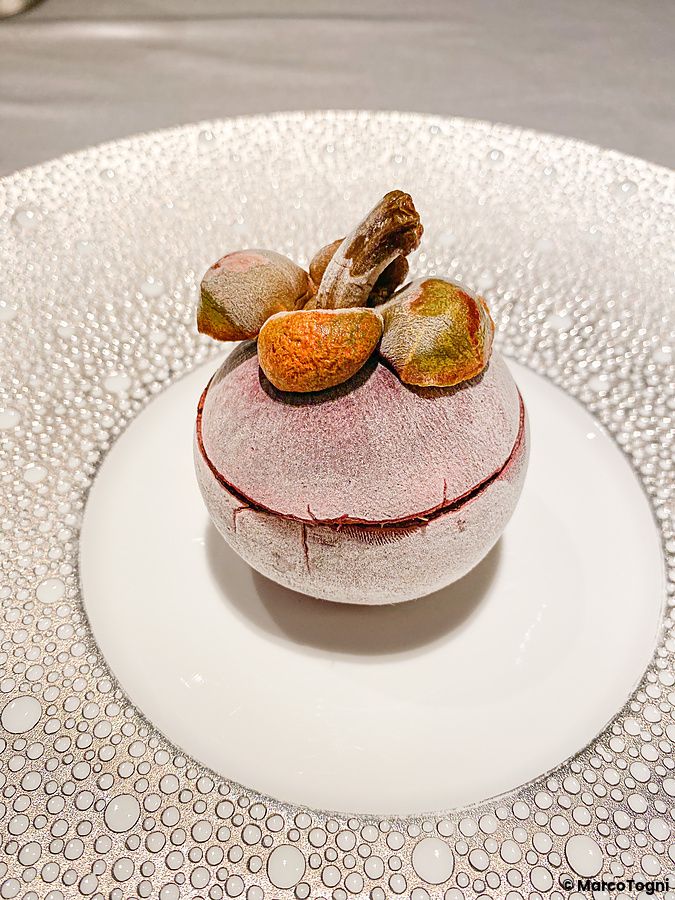
Before the real desserts comes a tangy course of mangosteen and pomelo, served on a round plate with a bubble decoration. It’s there to cleanse your palate of everything that came before, and it does the job perfectly: after that bite, your appetite comes back.
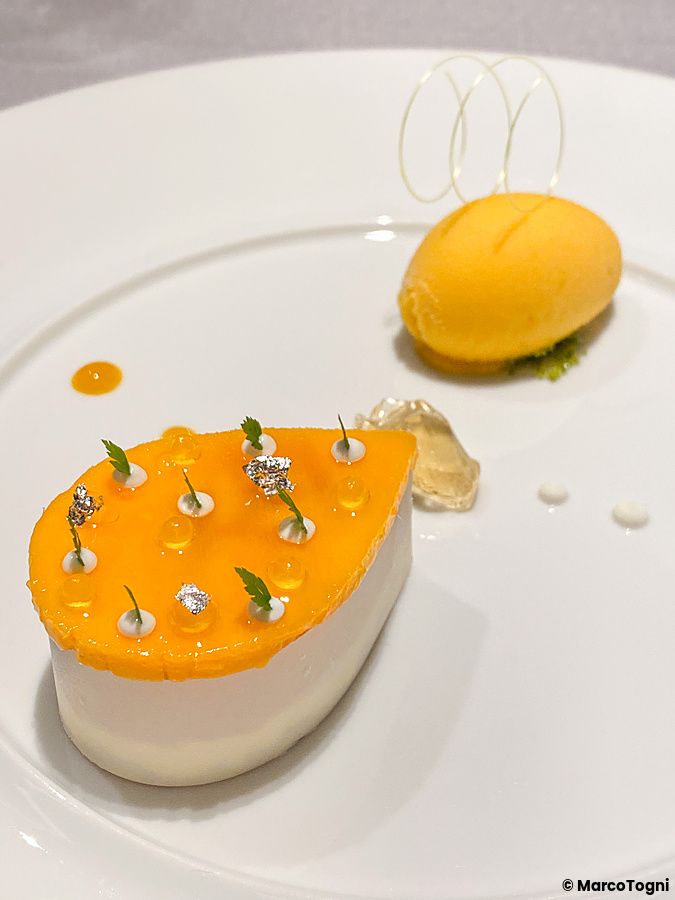
Next is Miyazaki mango with passion fruit, a white mousse covered in an orange-colored jelly. Miyazaki mangoes are already among the sweetest you can find in Japan, and here the kitchen works with the fruit without masking it. The passion fruit is only there to add the acidity the dessert needs.
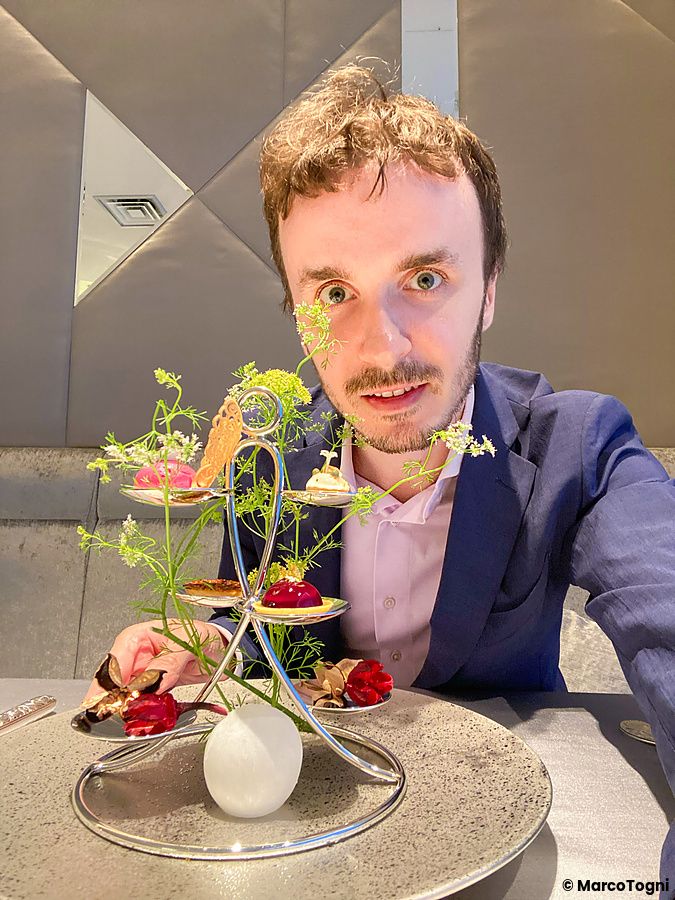
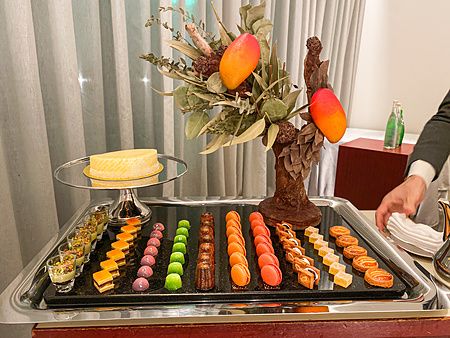
Then the cart arrives, and for me it’s the highlight of the whole evening. It’s a tray loaded with tartlets, macarons, canelés, individual dessert cups, shortbread and chocolates, with a chocolate sculpture of a tree in the middle, tropical fruit hanging from its branches.
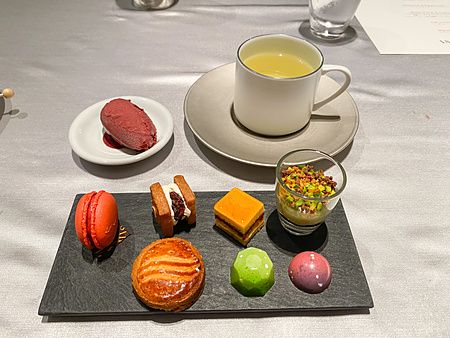
You pick whatever you want. I ask for a mix with a bit of everything, and none of those sweets is there for show. Each one is made as if it were the main dessert at another restaurant.
It comes on a slate board, with a scoop of sorbet and a hot herbal tea on the side. I’ve seen plenty of dessert carts in Japan and France, and this is the best I’ve ever come across.
Pros:
Cons:
Best for: memorable dinners, anniversaries and milestone birthdays, or anyone who wants to see what fine French dining can do in Tokyo
Atmosphere: a light-toned room with silver touches, well-spaced tables, low lighting and diners dressed for the occasion
Don’t miss: the mushroom soup made at the table, if it’s on that day’s menu
What stays with me from this dinner is the silence that falls as each dish arrives, that moment when nobody at the table talks because everyone is looking at what’s in front of them. The mushroom soup and the dessert cart are the two things you’ll talk about when you get home, but it’s all those moments together that make it a day you’ll remember down to the date.
When the tray of sweets arrives, don’t be shy: ask for a piece of everything, they’ll let you. You only get a few dinners like this in a lifetime, so go.
The restaurant is on the street level of the M-Square building in Kabutocho, the neighborhood around the Tokyo Stock Exchange. The most convenient station is Kayabacho, about a 4-minute walk from exit 10.
You can also walk from Nihonbashi Station, which takes 5–7 minutes on foot.
This place is on MarcoMaps
Asahina Gastronome
My map of Japan: over 4,000 places I've tried myself, each with photos, rating, and hours. Filter by category and rating, find veg-friendly spots and places near you with GPS. No sign-up, right from your phone.


Asahina Gastronome - nearby you will find: