34 m
Ichiran34 m
Great ramen chain.
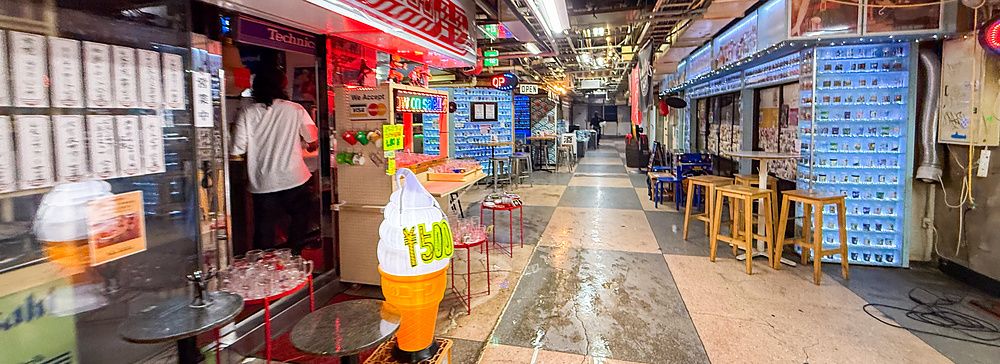
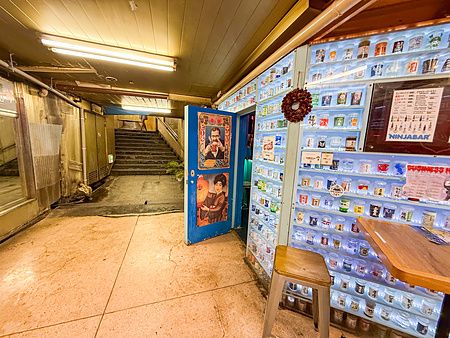
An underground shopping arcade in Asakusa, about fifty meters of never-renovated corridor beneath the station, with exposed pipes and cables across the ceiling, faded signs and around twenty businesses packed in side by side.
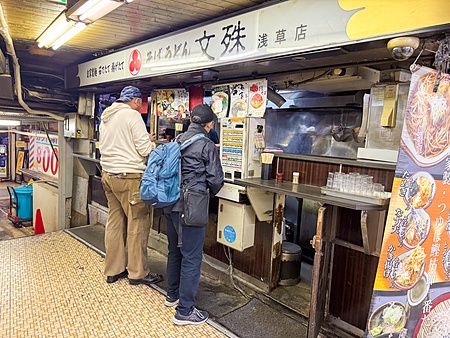
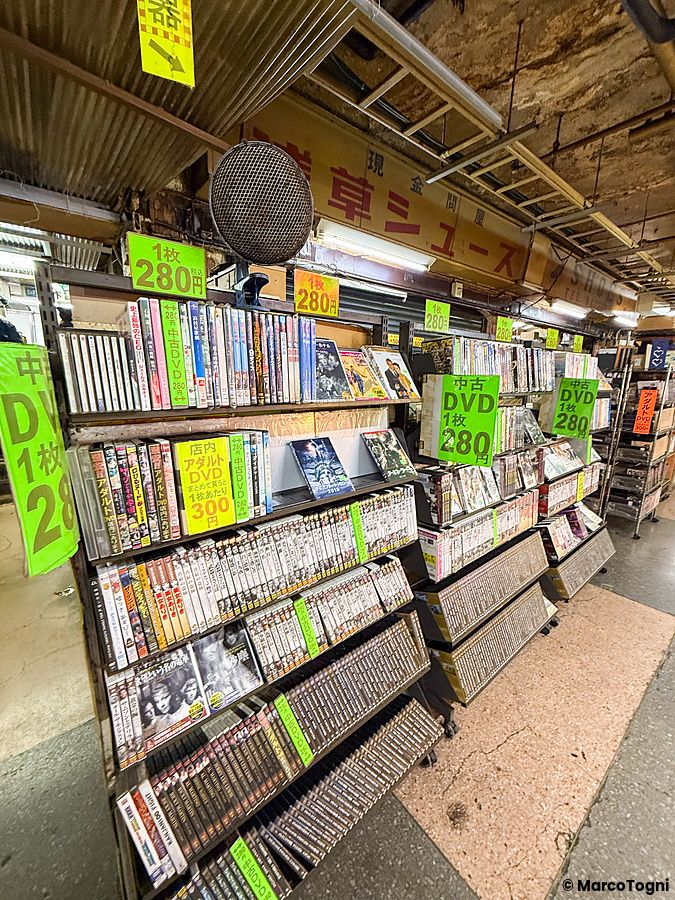
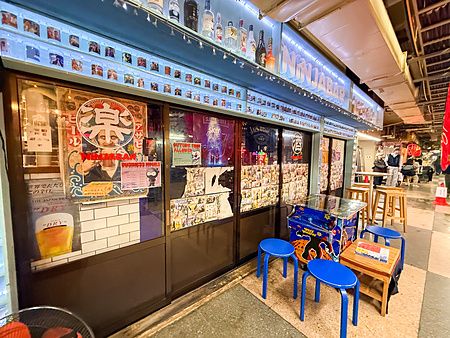
Asakusa Underground Street is the oldest one left in Japan, and you can tell the moment you come down the stairs. You eat yakisoba and soba standing at the counter, there’s a bar whose walls are lined with sake glasses, and you’ll find used records and DVDs, a barber and a fortune teller.
Come here if you like places that feel lived-in and a bit uncomfortable, and if, after the temple and the shopping street, you want a part of Asakusa that looks nothing like the rest.
Don’t expect an underground mall. It’s a corridor with doors on both sides, and the first thing your eyes go to is the ceiling.
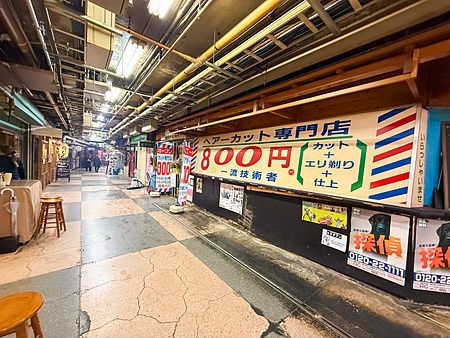
During the day, with half the shutters down, it looks abandoned, but it isn’t.
In some spots the ceiling really does drop, and if you’re tall you could hit your head, so look where you’re going, not up at the signs. And if you’re planning to go shopping, forget it before you even head down, because there’s nothing to buy here except a used record.
It only really offers one thing, but you won’t find it anywhere else in Tokyo: a piece of the postwar era where people still eat and drink, not a set dressed up for visitors to photograph. The smell of frying oil and dampness, the smoke coming off the griddles, the guys sitting outside the doors with a drink: it’s all real, and nobody has tried to make it pretty.
I come back every time I’m in Asakusa, even if it’s just to walk through from one entrance to the other, because I like that the barber is still there next to a bar serving sake to tourists.
The arcade opened in 1955, deep in the postwar years, and of all Japan’s underground shopping arcades it’s the oldest one left. It’s right up against the ticket gates of the Ginza Line, Asia’s oldest subway line, and Asakusa Station has been its historic terminus since 1927.
In the beginning it served commuters passing through and people from the neighborhood, back when Tokyo was growing fast. Everything above ground has changed since then, but down here nobody ever renovated anything, which is why it feels like a time capsule today.
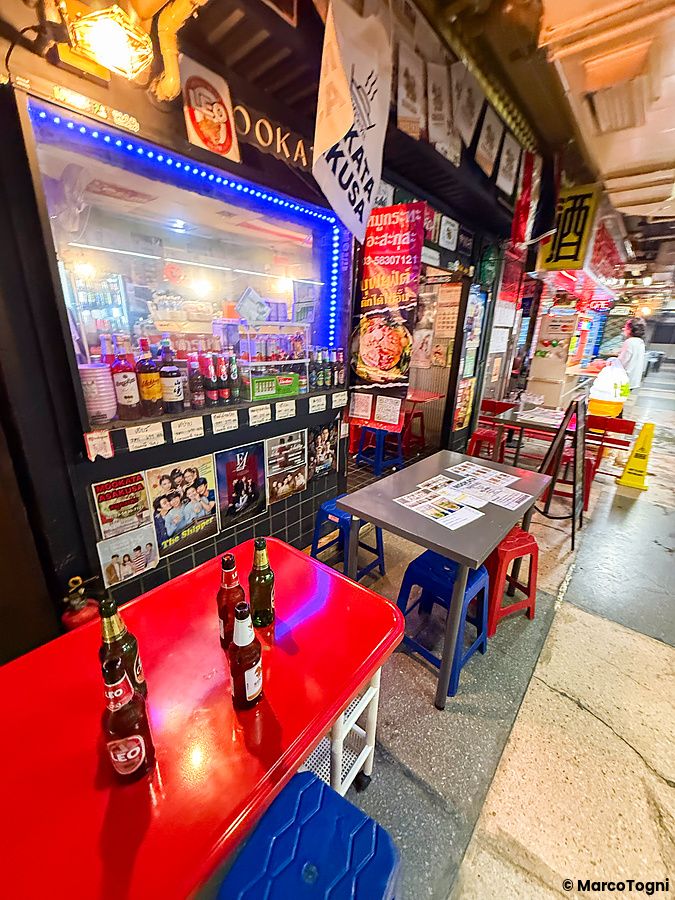
Evening is when the place comes alive. The bars are open, people stand outside the doors with a drink in hand, the corridor fills with voices and smoke, and the signs light up over the doors.
In mid-afternoon you get the ghost version, with two or three people in the whole corridor. In the morning it’s practically deserted, and if you want a good look at the ceiling, the signs and the writing on the walls without anyone in your way, that’s the time to go.
On weekdays there’s room to breathe, while on weekends the few places that are open get packed and there’s a wait at the Thai restaurant along the corridor.
The weather outside doesn’t matter at all. When it’s raining in Asakusa and the temple is a sea of umbrellas, this is the place to duck into and stay dry.
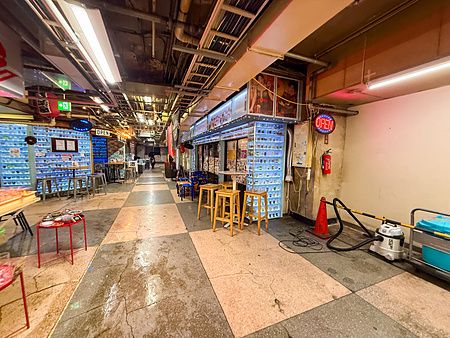
It’s all flat with no slopes, but it isn’t an easy corridor to get through. In places there’s only room for one person at a time, and where stools are set out in front of the bars and restaurants you have to turn sideways to squeeze past.
The floor is uneven and slippery in spots from water seeping in, and some of the leaks are patched up with plastic and duct tape. You can get a stroller through, but with all the chairs, the freestanding signs and the people hanging around, it’s not a place you’d choose to bring one.
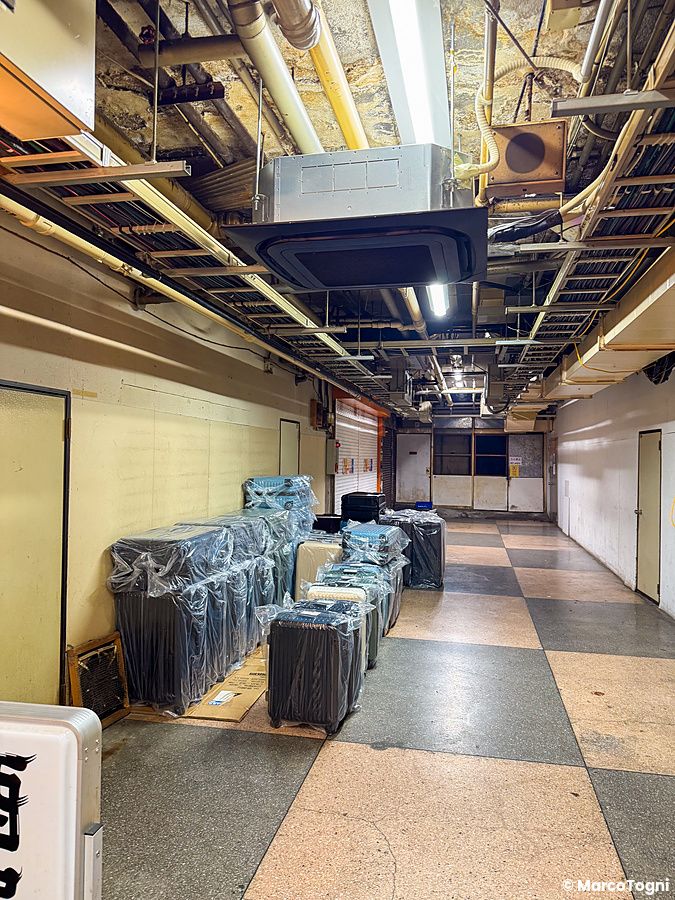
The stone stairs back up to the street are worn, and there’s no ramp. At the end of a side passage there are rows of stacked suitcases, wrapped up and pushed against the wall: the shops’ stock and storage. It feels more like a back room than a shopping arcade, and it’s one of my favorite parts.
The air doesn’t move and there’s no ventilation at all. If you can’t handle enclosed, low, stuffy spaces, you’re better off skipping it, and the same goes if you’re with a big group, because there’s just no room for one down here.
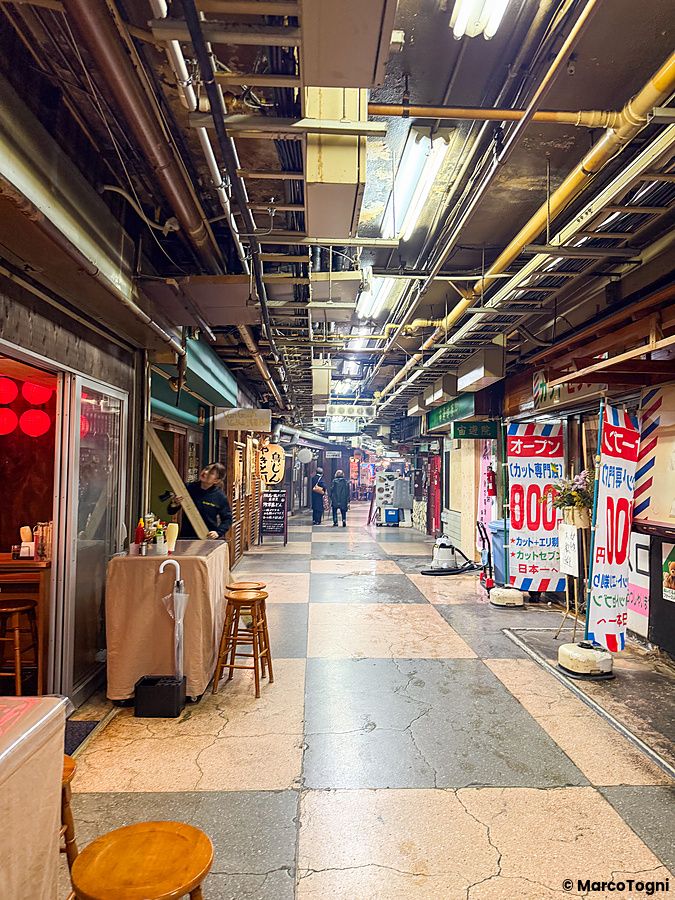
The people who work here are used to foreigners and don’t make a fuss. Ordering with gestures works fine, and some menus have English on them.
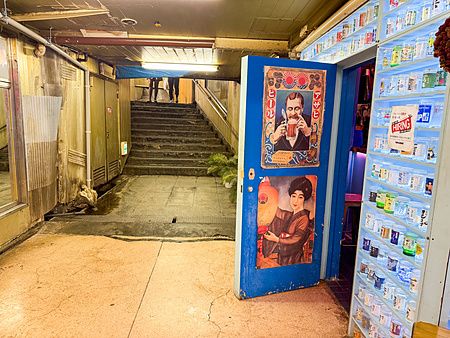
The place to stand is at the bottom of the stone staircase, looking down the corridor. Get the ceiling and its pipes, the row of lit signs and the Ninja Bar’s blue door on the right into the frame.
The other standout shot is the wall of sake glasses with the LEDs glowing behind them, and you can take it from outside without going in.
Evening photos come out better, because all the neon is on and there’s someone in the corridor to give a sense of scale. During the day the shot is cleaner, but half the signs are off. Nobody makes you line up to take pictures and nobody gives you dirty looks, as long as you don’t block the entrance to one of the bars.
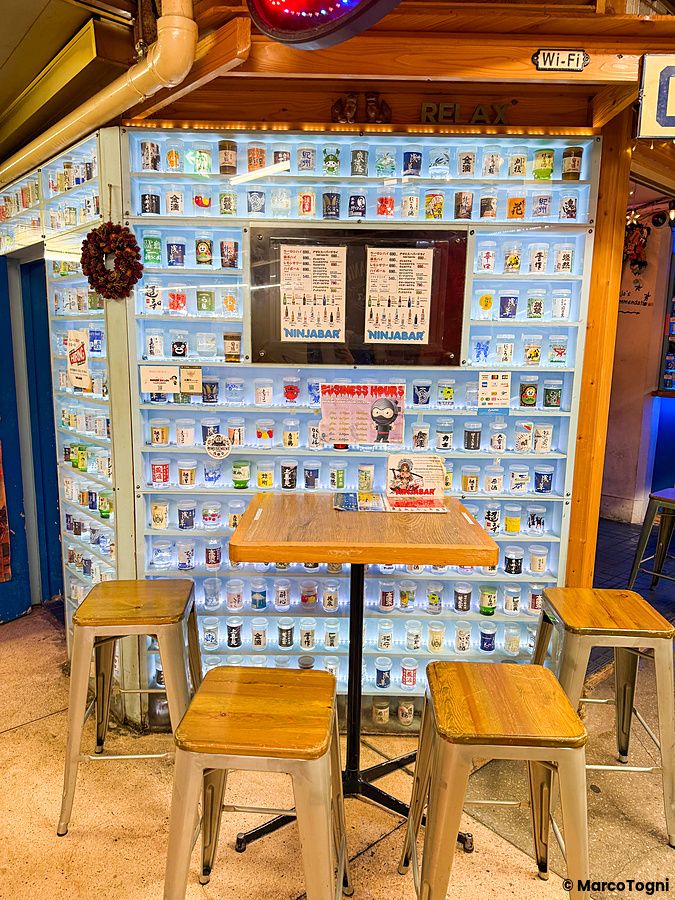
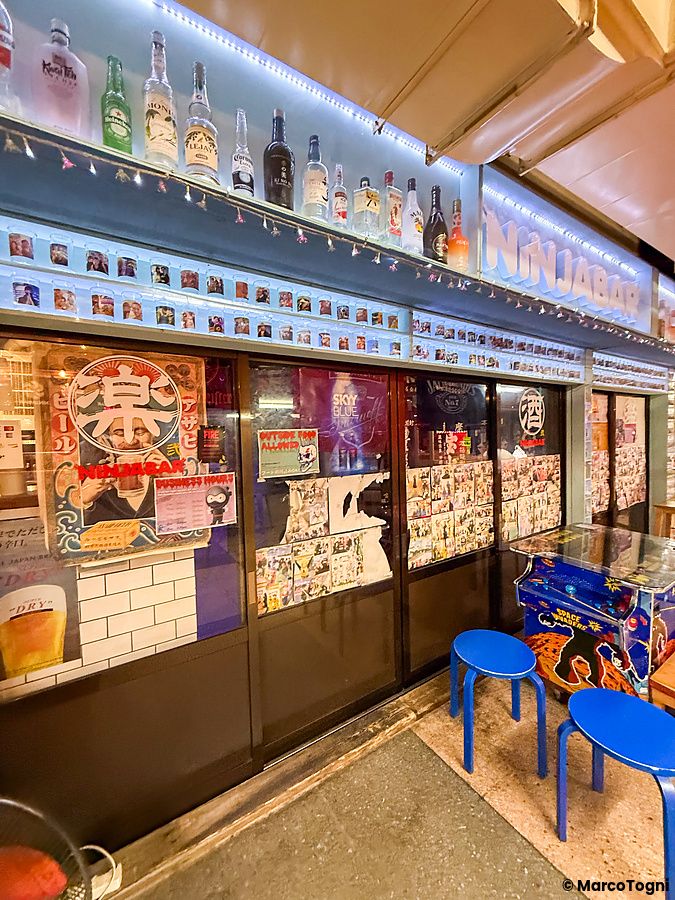
You don’t come here to see something beautiful. You come for the corridor and the people in it, and for me it’s worth the detour even just for a plate of yakisoba at the counter.
If you’re expecting shops, neatness and air conditioning, you’ll be disappointed, and if low ceilings make you anxious, you’re better off staying away.
For everyone else, it’s the most memorable thing to do in Asakusa after the temple, and in the evening, with the bars full, it’s in a different league from any retro street rebuilt for visitors.
This place is on MarcoMaps
Asakusa Underground Street
My map of Japan: over 4,000 places I've tried myself, each with photos, rating, and hours. Filter by category and rating, find veg-friendly spots and places near you with GPS. No sign-up, right from your phone.


Asakusa Underground Street - nearby you will find: