Awaji Hana Hotel
A business hotel right in the center of Minamiawaji, on Awaji Island, with a handful of clean, tidy rooms, a shared bath on the ground floor and food made with ingredients from the island. Awaji Hana Hotel has no pools, no terraces and no sea views, and it doesn’t promise them.
It’s at its best in the evening, when you sit down to Awaji beef or, in winter, to fugu farmed right here. It’s the right choice if you’re driving around the island and want to sleep well, have an even better dinner and head out in the morning with breakfast taken care of.
Contents
The rooms
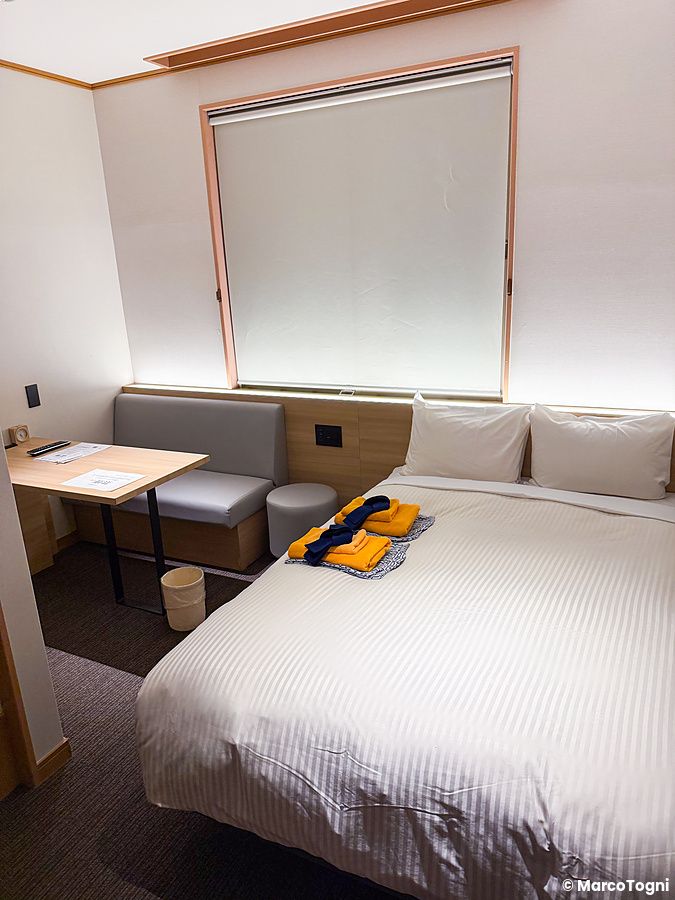
I booked a double room with one double bed, on the fourth floor. When you walk in, the first thing you see is the bed, made up with white pinstriped sheets, and on top of it two folded yukata with blue sashes, laid on orange towels. Next to the bed, under the window, there’s a little seating area with a wooden table and a small gray upholstered sofa.
That sofa seems like a minor detail, but it comes in handy at night: you can sit there and go over the island map for the next day instead of sitting on the bed. There isn’t much floor space in this room, and you have to open a big suitcase on the floor at the foot of the bed.
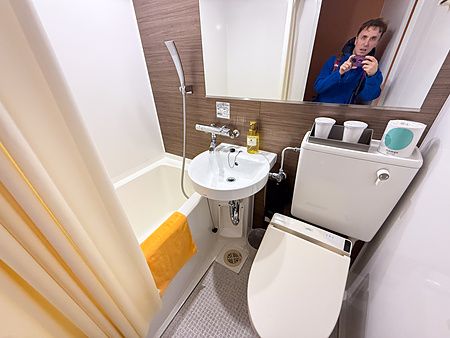
The bathroom is the classic Japanese prefab bathroom, all one piece, with a white sink right up against the tub, a wall mirror and a toilet with an electronic seat. You have to sit in the tub with your knees bent, but for a hot shower before bed it’s more than enough.
The Japanese-style rooms, on the other hand, have a separate bath and toilet.
These are the rooms you can choose from:
- Standard single and double: 12 to 16 square meters, with semi-double beds in the doubles, for solo travelers or couples who only use the room to sleep.
- Corner double and standard twin: 19 square meters, with a little more breathing room and, in the twin, two separate beds.
- Deluxe twin and triple: 26 square meters. The triple has a separate bath and toilet and sleeps up to four, so it works for families or groups of friends.
- Japanese-modern twin and Japanese-style room: 30 and 33 square meters, the second one with tatami, for anyone who wants real space or would like to sleep on a futon.
If you’re a couple with two big suitcases, ask for a twin or the corner double when you book. With a few extra square meters you can move around without having to close one suitcase to open the other. For a family with kids, the Japanese-style room is the one to get: the kids can play on the tatami, and at night you lay the futons out side by side.
The windows look out over the low-rise town, not the sea, so there’s no point asking for a particular side. The room has Wi-Fi, a fridge and the basics in the bathroom, and you can get a hair dryer and an iron from the front desk.
The price is low, what you’d expect from a small-town business hotel, and for that you get a clean room, a bed you sleep well in and parking right in front of the entrance. Whenever I’m in that part of the island, it’s where I stay. I know I’ll have Awaji beef for dinner without driving around in the dark looking for a restaurant, and that I’ll be back on the road early the next morning on a full stomach.
Dinner and breakfast
In the evening, the hotel restaurant is the reason people pick this place over the other hotels in the area. The kitchen cooks with ingredients from the island. One menu pairs an Awaji beef steak with shabu-shabu made from the same beef, and another has steamed abalone and a plate of local raw fish.
Winter brings three-year-old fugu, the pufferfish farmed in the waters around the island, served all sorts of ways in a whole dinner built around it, with a beef steak to finish. In summer hamo takes over, an eel-like fish that people around here eat in all kinds of ways. The hamo comes from the waters off Nushima, the small island just off the south coast, and here they also serve it raw: they cut through its fine bones with a knife, making the cuts very close together, and it’s a dish you won’t find just anywhere. The portions are generous, and after a day of driving between beaches and fishing harbors you leave the table happy.
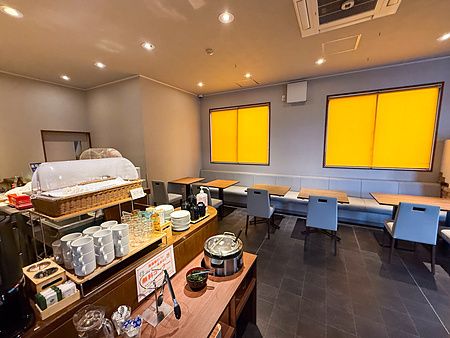
The breakfast room is on the ground floor, with dark tile floors and wooden tables with matching chairs lined up along a wall of windows with yellow curtains. On the left is the self-service corner, with wooden countertops, white plates, cups and glasses.
The simple breakfast is onigiri, miso soup, bread and coffee. It’s nothing fancy, but if you’re in a hurry to head out it’s all you need. If you’d rather sit down and take your time, you can have the full Japanese breakfast, served on a tray, with a rolled dashi omelet made in-house and grilled fish.
To me, the rolled omelet is the one thing not to skip: it’s soft, you can taste the dashi, and it’s just how Japanese grandmothers make it at home.
Shared bath and lobby
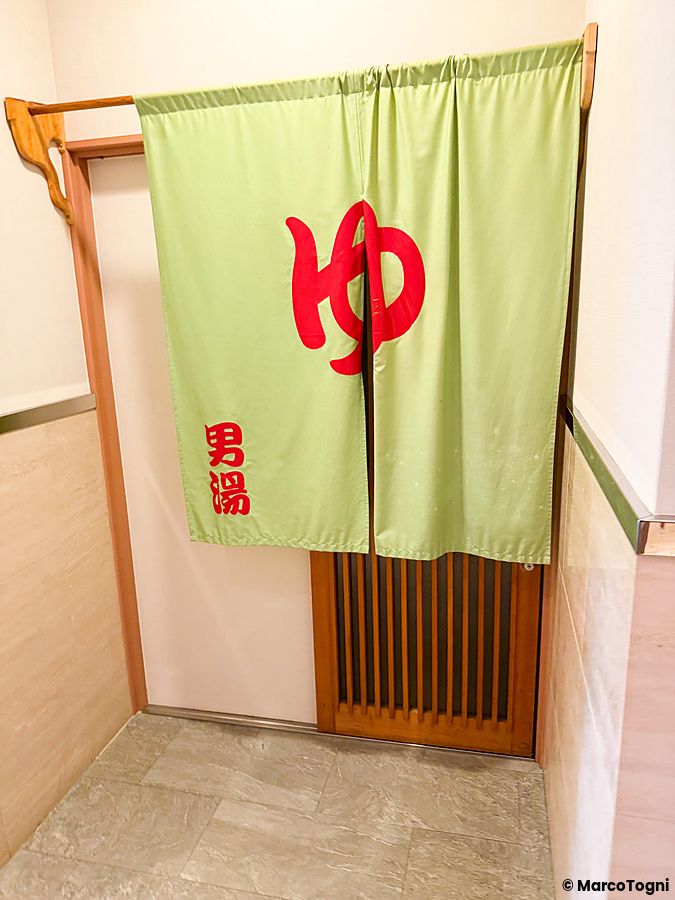
On the ground floor there’s a shared bath with separate sections for men and women, included for hotel guests. You’ll recognize the entrance by the green noren with red lettering, the fabric curtain that marks the way into the baths in Japan.
It isn’t an onsen, since the water isn’t from a hot spring, and the tub only fits a few people. You go down after dinner, wash yourself sitting on a stool, the way it’s done in Japan, warm up for ten minutes and head back upstairs in your yukata. If you’ve never tried a Japanese shared bath, this is a good place to start: there aren’t many people and nobody stares. The bath is only open from the afternoon until the evening and is closed in the morning, so if you like a hot soak, have it after dinner and don’t count on one before you leave.
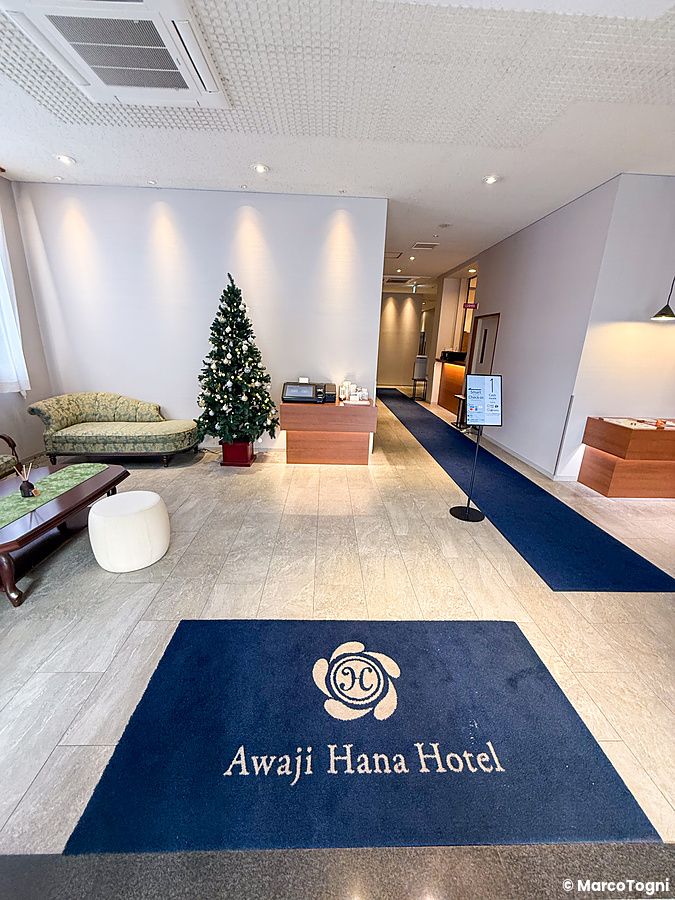
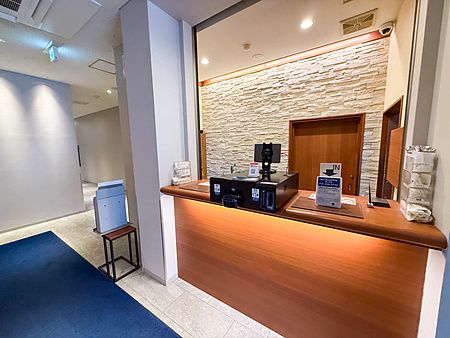
The lobby is the part of the hotel that stands out the most. You walk in over a blue mat with the hotel’s name on it, the floor is pale stone, and the front desk is a wooden counter lit with warm light along its base, set against a stone-clad wall.
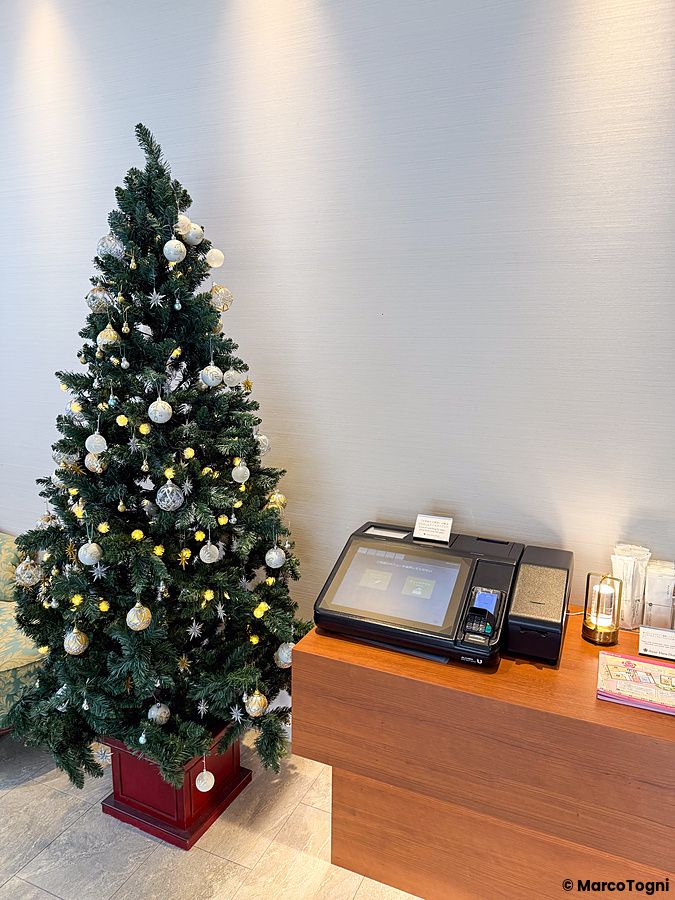
The lounge area has some classic-style sofas and others in green fabric around a low table, where a few guests sit and check their phones in the evening before going up. On the counter there’s a self-service payment machine, and the staff take their time explaining things, with a smile, even to guests who don’t speak Japanese. It’s the kind of friendliness you find at a small-town hotel, where by the third time you come through they already know you.
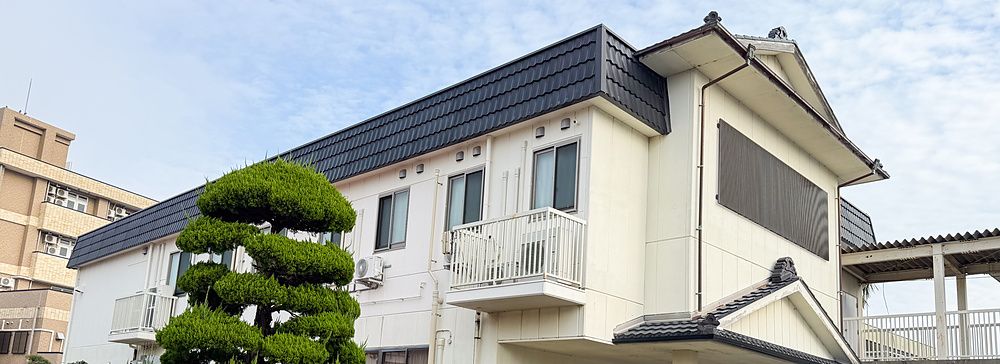
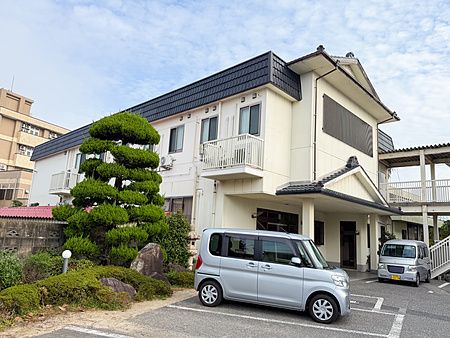
From the outside, the building has a dark roof and light walls, a pine pruned in the Japanese style next to the entrance and the parking lot out front. It looks more like a big Japanese house than a hotel.
The neighborhood
Minamiawaji is the town in the south of Awaji Island, the one known for onions, flat farmland and fishing harbors. The hotel is in the central area, surrounded by streets of low buildings, houses and shops, plus a supermarket and a few convenience stores you can walk to in the evening for something sweet, a beer or some fruit for the morning.
This isn’t an area for nighttime strolls. After dinner the streets empty out, the only lights come from convenience store signs, and in your room all you hear is the air conditioning.
If you don’t have a car, this hotel isn’t a great fit. You get around the island by car, and the best part of staying here is having the whole south within easy driving distance, from the whirlpools of the Naruto Strait to the sandy beaches on the southern coast and the town of Sumoto with its castle. It’s also not the hotel for anyone looking for a room with the sea right under the window or an open-air hot spring bath. For that, the island has the big hotels along the coast, with different prices and a different idea of a vacation.
People who work on the island, people driving across it, families who want to eat well without paying resort prices: those are the people you run into in the breakfast room in the morning.
At a glance
Pros:
- dinners with Awaji beef, fugu in winter and local fish, generous portions
- business hotel prices, parking in front of the entrance
- friendly staff, shared bath included, Japanese-style tatami rooms for families
Cons:
- no sea view and no hot spring water
- without a car, it’s hard to get around the area
Best for: anyone exploring the south of Awaji Island by car who wants an affordable base with good food
Room to ask for: the twin or the corner double for couples, the tatami room for families
Atmosphere: a tidy small-town hotel with a pale stone and wood lobby and quiet evenings
Final thoughts
What stays with you from Awaji Hana Hotel is the evening. You come back tired from the coast, sit down at the table when it’s already dark outside, and the beef arrives on a small burner right in front of you. Then comes the hot bath on the ground floor, the yukata and a bed waiting for you.
You don’t need anything else, and that’s exactly how to enjoy Awaji Island: slowly, with no rush to get anywhere. If your trip takes you through Minamiawaji, book your night here and your dinner along with it.
Getting There
The easiest way is to come by car. It's about 10 minutes from the Seidan-Mihara interchange and about 15 from the Sumoto interchange, and parking is free.
Without a car, take the highway bus from Sannomiya Station in Kobe to the Riku no Minato Seidan terminal (about 70 minutes). The hotel is about 15 minutes from there and there's no shuttle, so it's best to book a taxi.
Useful Info
- Riku no Minato Seidan terminal: highway buses from Kobe Sannomiya, then about 15 minutes by car
- Seidan-Mihara interchange (Kobe-Awaji-Naruto Expressway): about 10 minutes by car
Map
This place is on MarcoMaps
Awaji Hana Hotel
My map of Japan: over 4,000 places I've tried myself, each with photos, rating, and hours. Filter by category and rating, find veg-friendly spots and places near you with GPS. No sign-up, right from your phone.
- 4,000+ places
- Rating, photos, and hours
- Veg friendly
- Near me (GPS)
- Favorites without login
- Works offline

