Azabu-Juban
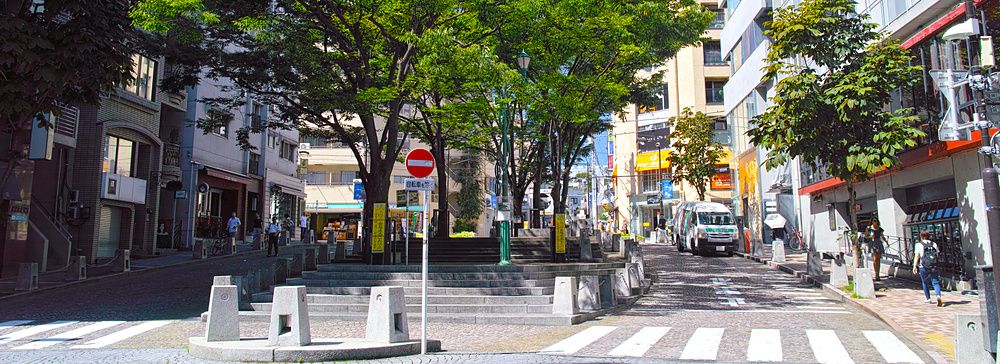
Azabu-Juban is one of the parts of Tokyo I keep coming back to when I feel like walking slowly, away from the crowds of Shibuya and Shinjuku. It sits right between Roppongi and Tokyo Tower, yet as soon as you come up from the subway the noise drops. You’re suddenly on a street lined with low-rise buildings, where old shops and new cafes sit side by side.
It’s an upscale neighborhood, with plenty of embassies around and prices on the high side, but there’s nothing standoffish about it. Local families come here, and so do the foreigners who live in the area and anyone looking for a slower corner of the city. Here’s how to get around, when to come and what’s just a short walk away.
Contents
Restaurants
Nearby neighborhoods

Nishi-Azabu
Toranomon
When to go
During the day the main street is quiet. You’ll see locals doing their shopping and a few tourists, and long-established shops stand next to places that opened more recently. It’s a good time to poke around the traditional sweet shops and cafes at your own pace.
In the evening the mood changes. The restaurant lights come on and the tables fill up, but the area still feels more low-key than the loud nightlife of Roppongi next door. Prices are often above average, though you can still find a few casual izakaya if you don’t want to spend too much.
If you’re in Tokyo around the end of August, the neighborhood holds its summer festival, the Noryo Matsuri. It runs for two days, with hundreds of stalls selling food and goods from local shops, and the whole street fills with hundreds of thousands of people. Honestly, it’s a wonderful thing to see, but be ready for the crowds. Most of the stalls are run by the shops and restaurants on the street, so the food is different from the usual festival takoyaki and yakisoba. There’s also a kids’ area with traditional games, and the lights stretch from one end of the street to the other. It’s the night you get to see the whole neighborhood at once.
Ten minutes on foot
You really can get around entirely on foot here, and that’s the main reason I recommend the area. Tokyo Tower is about ten minutes away, and Roppongi Hills is roughly a fifteen-minute walk uphill.
Here’s what you have nearby without getting back on the subway:
- Tokyo Tower: just under ten minutes on foot, for the classic photo and the view from the top.
- Roppongi Hills and its museums: fifteen minutes uphill, if you want to combine a stroll through the shops with a bit of art.
- Zenpukuji Temple: one of the oldest in the city, just off the main street, for when you want to get away from the traffic.
A fun fact if you grew up watching cartoons: Azabu-Juban is where much of the story of Sailor Moon is set, and fans come here specifically to pick out the real places.
It works as a base if you want somewhere quiet and central, but keep in mind that hotels here aren’t cheap. For a reasonably priced place to stay, I’d look in a more commercial area and come over by subway.
The old family shops
When I talk about old shops, I mean it literally. Some of the businesses here are more than a century old and still run by the same family. Naniwaya Sohonten has been making taiyaki since 1909, one at a time in an iron mold, and there’s often a line on the sidewalk.
Not far away is Mamegen, open since 1865, which sells nothing but mamegashi: beans and peanuts, roasted and seasoned, in dozens of different flavors from nori to wasabi.
That’s what makes this street special. Tiny shops, with just one shop window and often a single product, are still holding on next to today’s cafes and pastry shops. If you’re after a souvenir that’s different from the usual, this is where you’ll find it.
The Zenpukuji ginkgo
The temple is much older than it looks. Kobo Daishi founded it in 824, which makes it second only to Sensoji among Tokyo’s oldest temples. On the grounds stands a huge ginkgo they call sakasa icho, the upside-down ginkgo, because its branches droop toward the ground. It’s around seven hundred years old and is a designated natural monument.
There’s also a bit of history you wouldn’t expect at a temple. Starting in 1859, Zenpukuji housed the first American legation in Japan, and Townsend Harris lived here for years. Fukuzawa Yukichi, the founder of Keio University, is buried in the cemetery.
You can walk here from the shopping street in a few minutes, and the contrast is sharp: it’s almost completely silent just a block from the shop windows.
Sailor Moon locations
The connection is no accident. Naoko Takeuchi lived around here while she was working on the story, and the Juban in the manga is this exact neighborhood, with its shopping street and its slopes.
The place fans look for most is Azabu Hikawa Shrine, which gave its name to the shrine where Rei, Sailor Mars, lives. It’s small and tucked away among houses, so go in quietly. Nearby is Sendaizaka, the slope that leads to the shrine in the manga and that still has the same name today.
Don’t expect signs or statues, because nothing here was built for tourists. The fun is simply picking out the real places behind the drawings.
Getting There
From Roppongi it couldn't be easier: just one stop on the Oedo, or about ten minutes on foot down the hill.
From Shinjuku the Oedo also brings you here directly by way of Roppongi, and from Meguro and Shirokane-takanawa the Namboku gets you here in a few minutes.
One thing to know is that the Oedo platform sits more than thirty meters below the street. If you have luggage, look for the elevator right away instead of dealing with escalators and different levels. The exits are numbered 1 to 7 and they all come out right by the shopping street, so whichever one you take, you're already in the neighborhood.
Useful Info
Name: Azabu-Juban
Time needed: A couple of hours for the shopping street and the old family shops, or half a day if you add Zenpukuji Temple and the walk to Tokyo Tower
Tips: Don't stick to the main street, because the side slopes are the best part of the neighborhood. Stop at Patio Juban, the little square with the statue of Kimi-chan, the girl in red shoes from the old song. Almost everyone walks right past it without noticing.
Getting there:
- Azabu-Juban Station (Tokyo Metro Namboku, Toei Oedo): exits 1 to 7, all on the shopping street
- Roppongi Station (Toei Oedo, Tokyo Metro Hibiya): one stop away, or a ten-minute walk
- Toei city buses also stop in the area
Map
MarcoMaps100% free
This place is on MarcoMaps
Azabu-Juban
My map of Japan: over 4,000 places I've tried myself, each with photos, rating, and hours. Filter by category and rating, find veg-friendly spots and places near you with GPS. No sign-up, right from your phone.
- 4,000+ places
- Rating, photos, and hours
- Veg friendly
- Near me (GPS)
- Favorites without login
- Works offline

