Bears in Japan
Japan is bear country, and to me that’s one of the most fascinating things about it. An hour by train from the big cities, the mountains are home to animals that can weigh over 100 kilos. These aren’t a handful of survivors that somehow held on. There are tens of thousands of them, and their range keeps growing.
Accidents do happen, and some are serious, but they almost always happen in the same situations, in the same areas and in the same months. Once you understand that, fear turns into caution, which is far more useful. All you need to hike in the mountains without worrying is a few simple numbers and a handful of habits that everyone here follows.
Contents
Two different species
Japan has two kinds of bear, and you shouldn’t mix them up, because they differ in size, temperament and range. Honshu, the main island, and Shikoku are home to the tsukinowaguma, the Asian black bear, which you can recognize by the pale crescent-shaped patch on its chest. Males weigh between 50 and 120 kilos and measure just over a meter and a half in length.
It eats mostly plants, like shoots, leaves and fruit, plus some insects such as ants, and from late summer on it gorges on acorns. It climbs trees so easily that it surprises anyone who sees it for the first time, and in most cases, if it hears a person coming, it disappears before you even notice it.
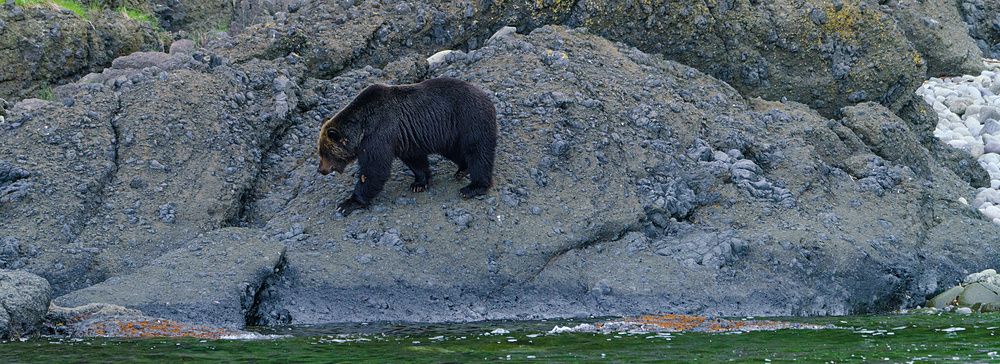
Hokkaido is a different story. The bear there is the higuma, the brown bear. Males reach two and a half meters in length and can weigh over 400 kilos, while females are smaller.
It also eats mostly plants, like butterbur, wild grapes and berries, and salmon is only a very small part of its diet, around five percent in the Shiretoko area. Even so, it’s an animal in a different league. A frightened black bear gets out of trouble by running away, and a brown bear might handle the same situation another way. That’s why all the safety rules in Hokkaido are stricter.
How many bears there are
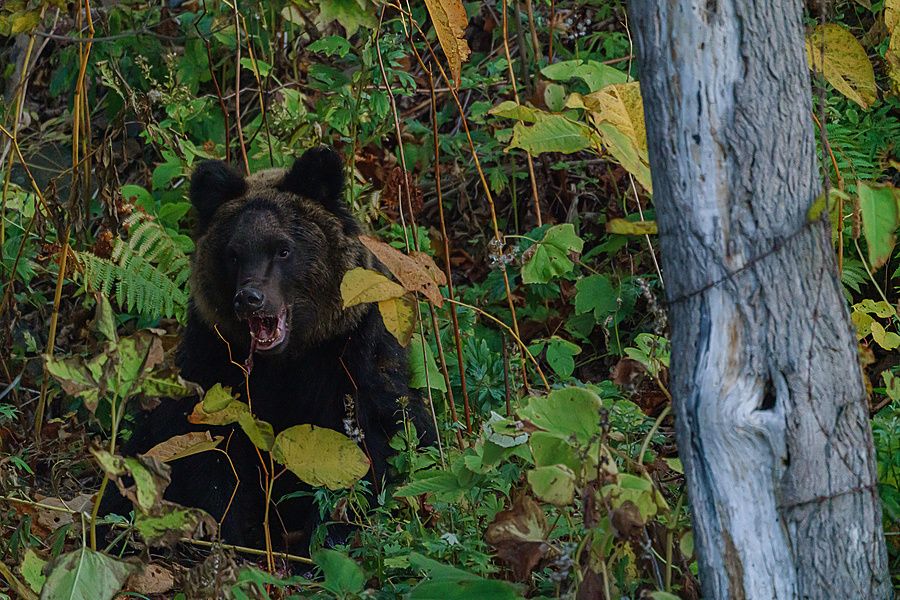
The numbers are striking. Hokkaido is estimated to have around 11,000 to 12,000 brown bears, more than double the number thirty years ago, and the area they live in has grown too.
On Honshu, black bears are firmly established in more than thirty prefectures, and their range has grown to about one and a half times its size in roughly fifteen years. Nagano Prefecture alone, home to the Japanese Alps, puts its median estimate at around 5,700 animals.
So this isn’t an endangered population. It’s growing and reclaiming territory, and the reasons are pretty clear. Anyone who lives in the countryside here hears them over and over.
People have left the mountains, abandoned fields have turned back into forest, and the strip of farmed hillside that used to separate villages from the forest is almost gone. There are fewer hunters every year and they keep getting older, so a young bear born today grows up in a world where humans are less of a threat and more of an easy source of food.
Where there are no bears
This part makes planning a trip a lot simpler. On Kyushu, bears have been considered extinct for decades, and Okinawa never had any. On Shikoku a tiny group survives, a few dozen animals, all concentrated around the Mount Tsurugi massif.
Shikoku’s situation is the opposite of what’s happening in the rest of the country. Its population is so small and isolated that it’s at real risk of disappearing, and there’s a project set up specifically to bring it back to at least a hundred animals. The group on the Kii Peninsula, which spans Nara, Wakayama and Mie, is also small and isolated.
That means a classic itinerary through Tokyo, Kyoto, Osaka, Hiroshima and Kyushu won’t take you anywhere bears are an issue. It’s a different matter if you head north to Tohoku, go to Hokkaido or hike in the mountains of central Japan.
When accidents happen
The number of people injured in Japan each year varies a lot. A normal year sees a few dozen cases, while in the worst years more than 200 people are injured and more than ten are killed. Over half of these cases happen in Tohoku, the northern part of Honshu, with Akita and Iwate prefectures always at the top, followed by Fukushima, Hokkaido and Nagano.
Accidents peak twice a year. The first peak runs from spring into early summer, when people go into the woods to gather bamboo shoots and sansai, the wild mountain greens. They’re bent over in thick vegetation, quiet, often alone, and suddenly the bear is right on top of them. The second comes in autumn, from September to November, when bears need to build up fat before hibernation and move around much more than usual.
When you look at who gets hurt, the picture is always the same: foragers, farmers and local people working at the edge of the forest, often elderly. Facial injuries are the most common, because a bear rears up on its hind legs and swipes with its front paws at head height.
Very few foreign hikers end up in these statistics, and it’s not because they’re more skilled. They just don’t do the riskiest activities.
Why bears come into towns
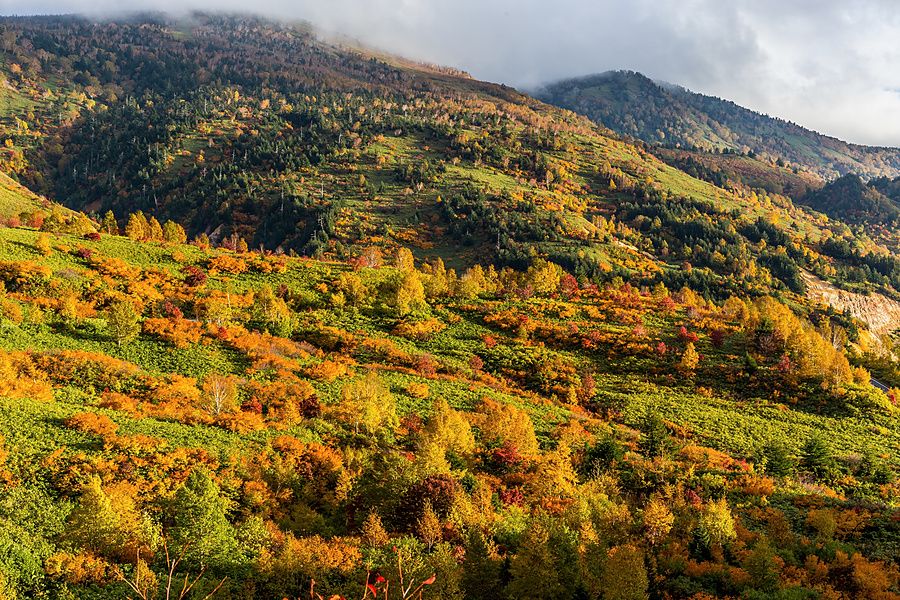
It all comes down to acorns. Beech, Mongolian oak and other oak species don’t produce the same amount every year. They alternate bumper years with lean ones, and when several species fail at the same time, the forest doesn’t have enough food for everyone.
That’s when bears start moving and head wherever there’s food: orchards nobody has harvested, cornfields, rice paddies, dumpsters, dog bowls left outside. The classic lure is persimmons left on the tree behind a house, which nobody picks anymore because whoever lived there is elderly or has moved away.
The real trouble starts after that. A bear that has eaten well near houses comes back, and the next time it’s less afraid.
That’s why mountain towns keep insisting on things that sound trivial: pick your fruit even if you don’t want it, keep food waste sealed, put electric fences around vegetable gardens. It also explains why, in years when lots of bears come down from the mountains, culls reach several thousand animals, with all the arguments you’d expect between people who live there and people watching from far away. Autumn 2025 was the most extreme case on record. Bear reports topped 50,000 in a single year, and bears made it right into urban areas, getting as far as supermarkets, schools and parking lots in Tohoku cities like Akita.
To deal with this, municipalities can now authorize the emergency shooting of bears inside towns and cities, which used to be almost impossible, and in Akita even the military stepped in, though only for logistical support.
The risk for travelers
I’ll be honest with you. If your trip is all cities, trains, temples and neighborhoods, the chances of seeing a bear are practically zero, and it’s not something to think about while you pack.
The risk only starts to go up in very specific situations, and those are the ones where I’d tell you to pay more attention:
- Hiking alone at dawn or dusk, which is when bears are most active.
- Taking quiet side trails in Tohoku, Hokkaido or the Japanese Alps instead of the busy main routes.
- Camping and cooking near your tent, then leaving trash or food out overnight.
- Pushing into thick undergrowth off the trail, where you can’t see five meters ahead and a bear can’t hear you coming.
- Ignoring the sighting notices at trailheads, which here really are kept up to date and aren’t just for decoration.
If you avoid these, you’re already part of the vast majority of visitors who will never run into anything.
Bears in Tokyo
This one surprises almost everyone I tell. Tokyo is one of the very few capitals in the world with wild bears inside its borders. They live in the western part of the prefecture, in the forests of Okutama, Hinohara, Ome, Akiruno, Hinode and the mountainous part of Hachioji, and estimates put them at a few hundred, with numbers on the rise.
They’re not downtown, obviously. But the train from Shinjuku Station to the Okutama trails takes just over an hour and a half, and once you’re there you’re already in bear territory.
Even around Mount Takao, the most popular day trip from the city, sightings are reported regularly on the quieter side of the mountain and along the ridges toward the nearby peaks. On the main route, the one with the soba shop and the Sunday crowds, there haven’t been any incidents.
If you leave Trail No. 1 and hike over to the neighboring mountains, though, I wouldn’t think twice about clipping a bear bell to your pack.
Bear bells, spray and your voice
Here in Japan, bear bells actually work, which isn’t a given. In Europe they don’t do much, because bears there have learned to link the sound of cowbells with livestock, and so with food. In Japan, trail cameras show bears moving off as soon as they hear one. A bell is there to let bears know you’re coming, not to protect you.
The same goes for your voice. On tight bends in the trail, along noisy streams or where the vegetation is tall, talking loudly or knocking your poles together works better than a bell, because the sound of rushing water drowns out everything else.
Bear spray is something else entirely. It’s a last resort, it only reaches a few meters, and you need to keep it in your hand or on your belt, not in your pack. It isn’t cheap to buy: a can costs between 10,000 and 20,000 yen, and it expires after a few years.
If you’re planning to do some serious mountain hiking, here’s what to know before you go:
- You can’t take it on a plane, either in carry-on or checked baggage, and you can’t ship it by courier either, because it’s classified as dangerous goods.
- You can rent one cheaply at outdoor gear shops and visitor centers, often for around 1,000 yen a day plus a deposit you get back if you don’t use it.
- In Hokkaido you’ll also find it for rent near the big parks and at places around Shiretoko, so you can rent one there the morning you set out.
- Carrying it without ever reading how it works won’t do you much good. Ten minutes to figure out the safety, wind direction and distance is the bare minimum.
If you run into a bear
The official advice is simple, and it’s worth going over until it becomes second nature. If you see a bear in the distance and it hasn’t noticed you, quietly move away the way you came, without shouting and without running.
If it’s close, the rule is to back away slowly while watching it, talking in a low, steady voice and never turning your back on it. Running is the worst thing you can do. A bear chases anything that runs, and on a slope it’s much faster than any person.
Sometimes a bear takes a couple of determined steps toward you and then stops dead. That’s a bluff charge, a warning, and in most cases it ends there if you keep calmly backing away. Don’t try to climb a tree, because bears are better climbers than we are, and don’t get closer to take a photo. It’s the dumbest way to ruin a vacation.
In the worst case, meaning actual contact, what they teach here is to lie face down with your hands covering the back of your neck, legs spread so the bear can’t roll you over, and to protect your face as much as you can.
Hokkaido and Shiretoko
Shiretoko, in northeastern Hokkaido, has one of the highest densities of brown bears anywhere. That makes it the only place in Japan where seeing a bear is a real possibility rather than a fantasy. You can sometimes spot them from the road, from the boats that run along the peninsula or from tour buses, and that’s exactly why the rules are strict.
You don’t get out of the car, you don’t go near them, you never leave food behind and you never feed them, for any reason. A bear that learns to link people with food is, sooner or later, a dead bear.
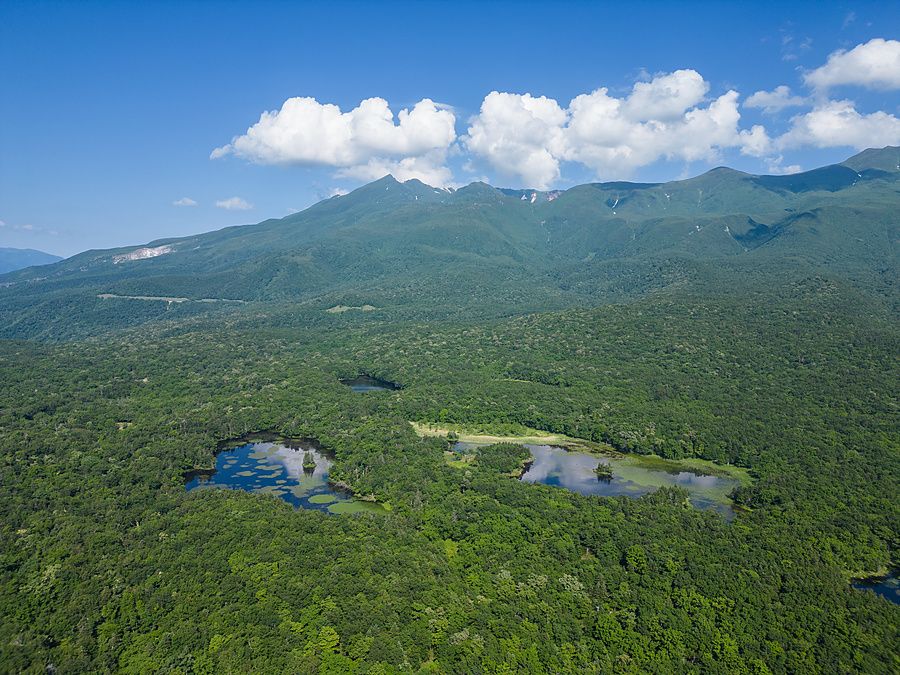
The Five Lakes walk is well organized, and it helps to understand how it works before you go. An elevated boardwalk, free and open to everyone, takes you out to the first lake and a wide-open view of the mountains. It’s about a kilometer and a half round trip, and it’s protected by an electrified wire.
The ground-level trail that loops around all five lakes works differently. When bears are at their most active, you can only walk it with a registered guide. The tour takes about three hours and costs around 5,000 yen per person, but check current prices before you go. Personally, I’d take a guide at other times of year too. It costs a bit, but you won’t have to worry about a thing.
Stories everyone here knows
The Japanese treat bears with respect, not as mascots, and a few incidents that everyone here knows about explain why. In 1915, a brown bear weighing more than 300 kilos broke into homes in Sankebetsu, a village in Hokkaido, and killed seven people over a few days. It’s still the worst attack in the country’s history, and there have been books and movies about it.
In 1970, three students from a university hiking club died in the Hidaka Mountains, also in Hokkaido, because of a bear that kept coming back to their camp to go after their backpacks. And in 2016, in the mountains of Akita, four people gathering bamboo shoots were killed in the same area within a few weeks.
These are rare cases, and I’m not bringing them up to scare anyone. They explain why, in some mountain towns, people don’t go into the woods without making noise, and why schools in the north give kids special classes about bears.
Here, a bear isn’t some abstract idea from a documentary. For quite a few people, it’s the next-door neighbor.
My advice
Bears aren’t a good reason to stay away from Japan’s mountains, which I think are the most beautiful part of the country, and the least visited too. They’re a good reason to act like someone who’s done their homework: keep a bell on your backpack, skip side trails alone at dawn, keep your food sealed up, and talk loudly when you can’t see what’s ahead.
If it were up to me, I’d go to Tohoku or Hokkaido without a second thought, maybe with a local guide the first time.
And if one day you see one in the distance, crossing a clearing and disappearing into the forest without so much as a glance your way, you’ll realize it’s one of the most beautiful things Japan can give you. Then back away slowly, okay?