Spring in Japan
Cherry blossoms and much more.
 ©Yasushitanikado - Dreamstime
When people start planning a trip to Japan, the first thing they usually ask is what the best time to visit is. The answer is that it depends, but for the average visitor the best seasons are generally spring, from mid-March to mid-May, and fall, from late September to late November.
Summer is hot and very humid, but it’s still doable, and it’s the season of matsuri and fireworks. Winter brings clear, sunny days, with heavy snow in the north and in the mountains around Nagano.
This article gives you a quick overview of the whole year, but I’ve also written detailed articles on the different times of year:
Cherry blossoms and much more.
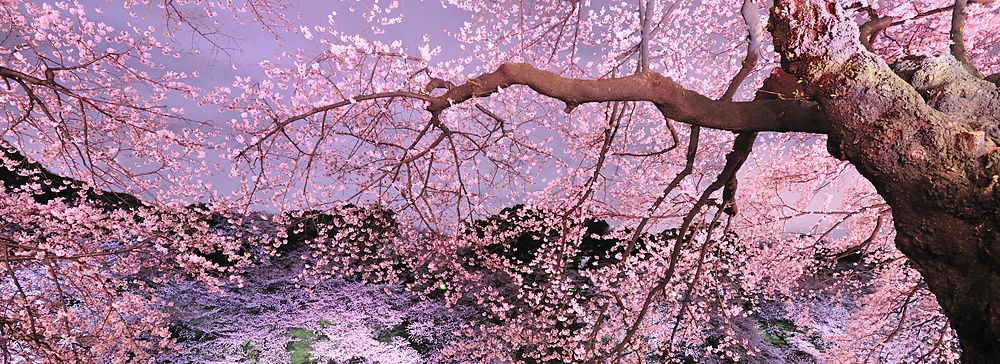
Spring, from mid-March to mid-May, is probably the best season to go. If you can, try to be in Japan when the cherry blossoms are at their peak, because it’s a sight you won’t forget. The trees bloom at different times depending on latitude, so they flower later in the north than in the south. As a rough guide, the blossoms usually reach Tokyo and Kyoto between late March and early April, Tohoku well into April, and Sapporo not until early May.
Peak bloom only lasts a few days, barely a week if the weather holds, and the dates shift quite a bit from year to year depending on how cold the winter was. If you’re coming specifically for the blossoms, you’ll have to take your chances with the forecasts. Also keep in mind that Golden Week falls in the first week of May, when finding a room in Kyoto or other very touristy places can be hard, so I’d book ahead.
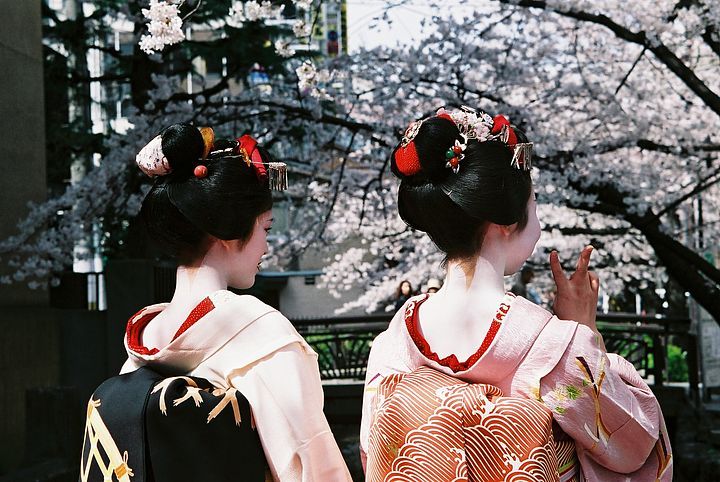
Two geisha admiring the cherry blossoms in Kyoto. Photo:  Kate Nevens
A lot of people get scared by what they read online about summer in Japan. It’s hot, but the trip is doable! We’ve taken hundreds of people to Japan on our group tours, nobody has ever died, and we’ve always done the full itinerary without any real trouble from the heat. Obviously it’s hot and very humid, but summer is also packed with traditional festivals and gives you plenty of chances you won’t get at other times of year. So don’t worry about it too much.
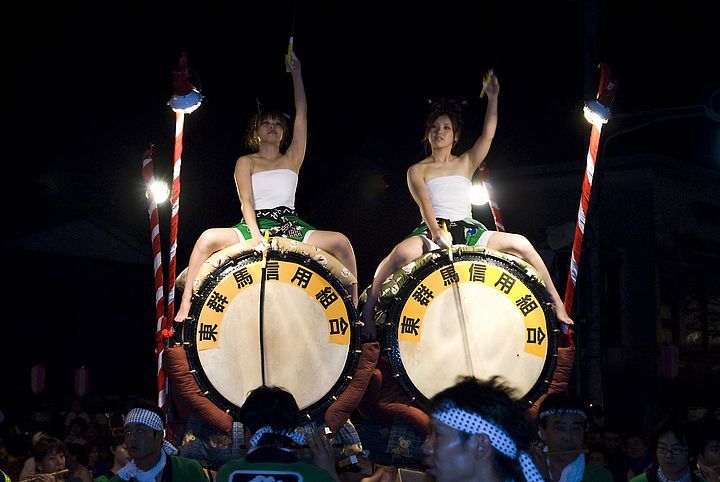
Two girls at the famous Nebuta festival in Aomori (first week of August). Photo: © Willi Setiadi/Dreamstime
From early June to mid-July, most of Japan goes through tsuyu, the rainy season. Don’t picture weeks of nonstop downpours. The rain comes and goes, often at night or for a few hours at a time, and you’ll lose fewer days than you might fear. What you really notice is the humidity, which makes the air feel heavy even when it isn’t that hot.
There are two big exceptions: Hokkaido has no tsuyu at all, and in Okinawa it starts and ends about a month earlier. If you’re in Japan during these weeks, focus on gardens and temples surrounded by greenery, because the moss and trees are at their best in the rain.
The colors of fall in Japan are gorgeous. At Kyoto’s temples the leaves turn every shade you can think of, and you can take some really striking photos. Nature parks and cultural spots like Nikko are at their best this time of year.
The leaves follow latitude too, but the opposite way from the cherry blossoms: they start in the north and work their way south. Hokkaido gets its colors as early as late September and into October, the central mountains and Nikko toward late October, while in Kyoto and Tokyo the best time is mid- to late November. The season is longer and more predictable than cherry blossom season, so it’s much easier to plan around.
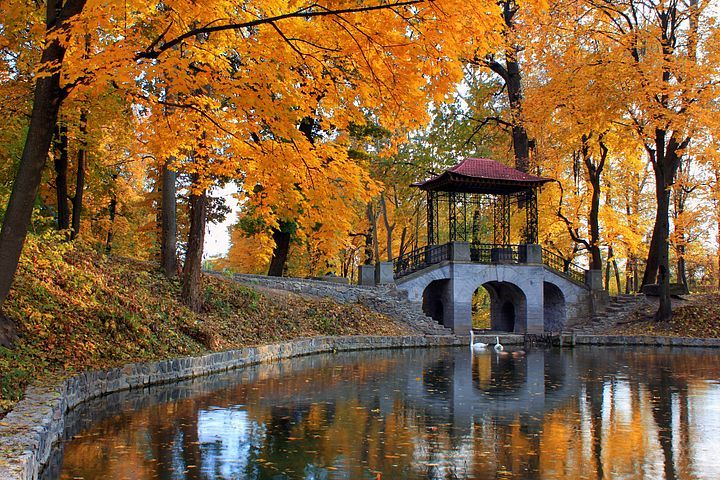
A Japanese garden in the fall. Photo: © Anton Petrus/Dreamstime
Typhoon season runs roughly from May to October, peaking in August and September. Okinawa and southern Kyushu are the most exposed and get quite a few every year. Far fewer reach Honshu, and in Hokkaido the risk is really low.
That’s no reason to call off your trip. You’ll know a typhoon is coming days in advance, and the worst of it lasts one or two days, when trains and flights stop and you’re better off staying indoors. If one does hit, the real headache is reworking your itinerary, not your safety. Japan is completely used to this kind of thing.
In Tokyo the temperature sometimes drops below freezing, but winters aren’t all that harsh. The north is a different story, especially Hokkaido, where it’s often below freezing, with fairly strong winds and heavy snow. Covered in snow, Kyoto’s temples take on an atmosphere that makes them especially tempting to visit.
Keep in mind that winter in Japan has two sides. On the Pacific side, where Tokyo and Kyoto are, the sky is almost always clear and snow is the exception. On the Sea of Japan side, cold winds blowing in from the mainland dump huge amounts of snow on places like Kanazawa, Takayama and the Tohoku mountains. That’s why, a few hours by train from a dry, sunny city, you’ll find meters of snow and villages with their roofs buried.
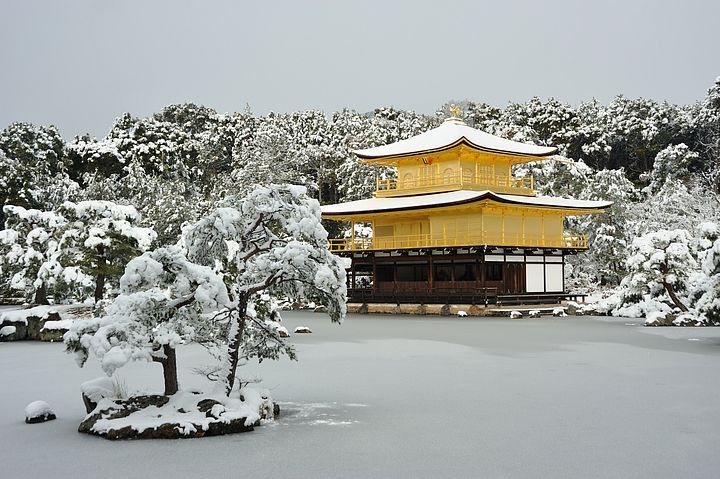
Kinkakuji in winter. Photo: Takeshi Kuboki
Here are climate charts for some of Japan’s main cities, to give you an idea of the average temperatures and seasonal precipitation, along with the number of rainy days you can usually expect each month. In each box: average high on top, average low below (°C) Source: based on data from the Japan Meteorological Agency (JMA) In each box: rainy days (at least 1 mm) on top, total rainfall in millimeters below Source: based on data from the Japan Meteorological Agency (JMA)
Weather aside, there are three times of year when half of Japan is on the move and getting train seats and hotel rooms gets tricky: Golden Week in late April and early May, Obon in mid-August, and the stretch from Christmas into the first days of January.
During those weeks hotel prices go up, train seats sell out, and the most famous destinations are packed with Japanese travelers as well as foreigners. That’s no reason to rule them out. Obon and New Year’s actually have rituals and an atmosphere you won’t find the rest of the year. You just need to book well in advance and not leave anything to the last minute.

