Buying Pokémon Cards in Japan
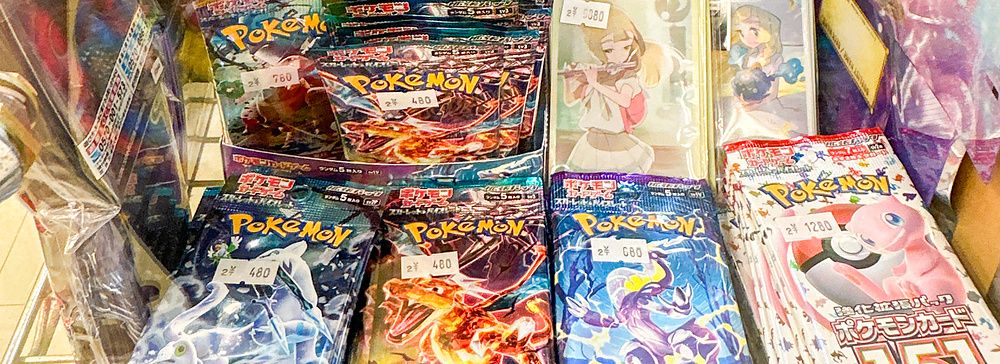
In Japan, Pokémon cards are more than a game. They’re pop culture, collecting, nostalgia and business too. If you’re into this world, sooner or later you’ll want at least one Japanese pack. The card scene here is much bigger and more organized than you’d expect, though, and if you walk into a random shop and grab a couple of packs, you could end up disappointed.
I’ll explain where to find the cards, which shops are the best, how the new and used market works, what to look for as a collector, how rarities and events work, and how to make sure you don’t get ripped off.
Contents
- Where to buy Pokémon cards in Japan
- The best Pokémon card shops in Tokyo and Osaka
- How Japanese card rarities work
- Pokémon Centers: worth it for cards?
- Where to play: card stations and duel spaces
- Secondhand cards are worth the hunt
- Oripa, the shop-made packs
- Japanese expansions differ from international ones
- Pokémon lotteries in Japan
- Bringing Pokémon cards home
- Buying Pokémon cards online from Japan
- Fake cards and resealed packs
- Common mistakes
Where to buy Pokémon cards in Japan
The first mistake is assuming you can find them anywhere. In theory you can, because Pokémon cards are everywhere in Japan. In practice, packs disappear fast, especially from the latest expansions.
These are the places that usually carry new packs:
- Big chain stores (like Aeon, Ito Yokado, Yodobashi and Bic Camera)
- Convenience stores (Lawson, 7-Eleven, FamilyMart)
- Toy stores (like Toys “R” Us or the toy sections in department stores)
- Official Pokémon Centers (if you’re lucky)
The catch is that a lot of places sell out within a few days, and they often set strict limits: one pack per person, no full boxes, reservation-only sales.
So my advice is not to rely too heavily on konbini or department stores. Head to specialist shops or the secondhand market instead.
The best Pokémon card shops in Tokyo and Osaka
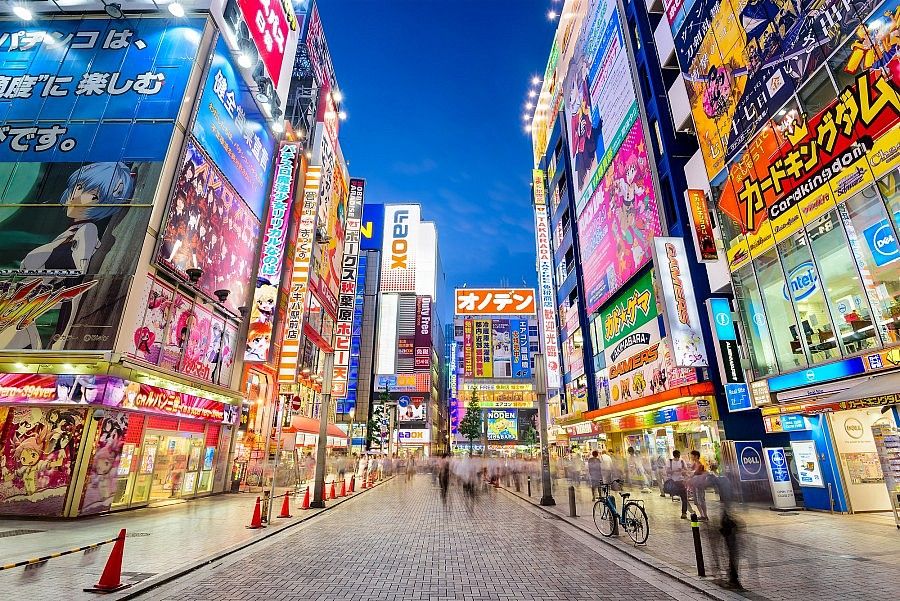
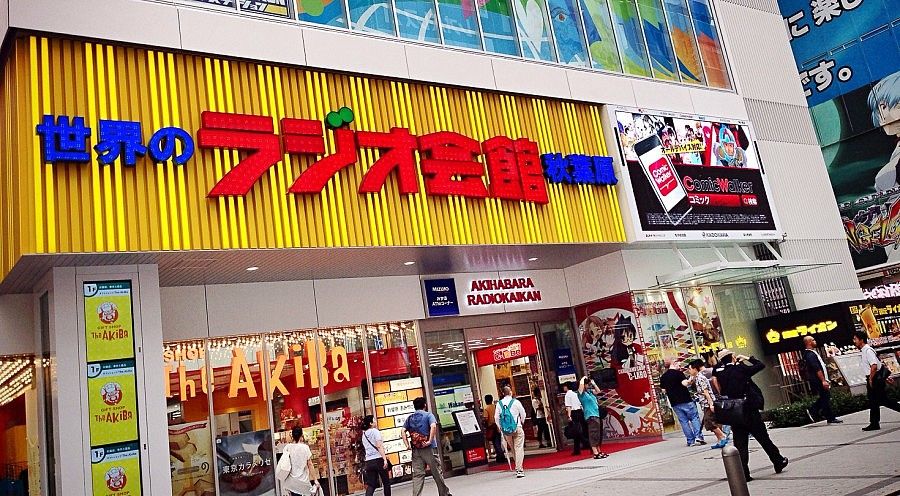
- Akihabara: it’s packed with specialist shops, from Card Labo and Dragon Star to big stores like Surugaya and Mandarake. You’ll find everything here: new packs, singles, rare editions, accessories, binders and even very old cards in great condition.
- Nakano Broadway: if you’re a collector, this place is paradise. There are more than 10 different shops and lots of independent sellers, and you’ll often find rare cards at competitive prices.
- Ikebukuro: it’s especially popular with female fans of the brand, but there are great shops here too, plus a few Pokémon Centers nearby.
In Osaka:
- Nipponbashi (Den Den Town): this is the Kansai version of Akihabara. Mandarake, Jungle, Card Shop Oasis, Fullcomp… there are plenty of them, and they’re very well stocked.
These shops also sell used cards. Often, though, they’re in perfect condition, sleeved and sorted by rarity, so they’re perfectly fine even if all you want is one card as a souvenir.
How Japanese card rarities work
Japanese cards aren’t just nice to look at. They follow a precise rarity system that’s much clearer than the Western one. These are the main codes you’ll see on the cards:
- C = common
- U = uncommon
- R = rare
- RR / RRR = double rare / triple rare
- SR / HR / UR = super rare, hyper rare, ultra rare
On top of those there are AR (Art Rare), SAR (Special Art Rare) and the newer series with gorgeous artwork, which are the real reason collecting has exploded in Japan.
SARs are the most sought-after, and some of them can hit very high prices right from release day.
If you just want a nice souvenir, look for an Art Rare or an SR you like, even from an old set. If you’re thinking of investing or reselling, though, you need deeper knowledge and a trained eye. You’ll find the code at the bottom of the card, next to the collection number: two tiny characters that tell you right away what you’re looking at. Japanese shops use the same codes to organize their binders and their drawers of singles, so once you can recognize them, you’ll save time in front of the display cases.
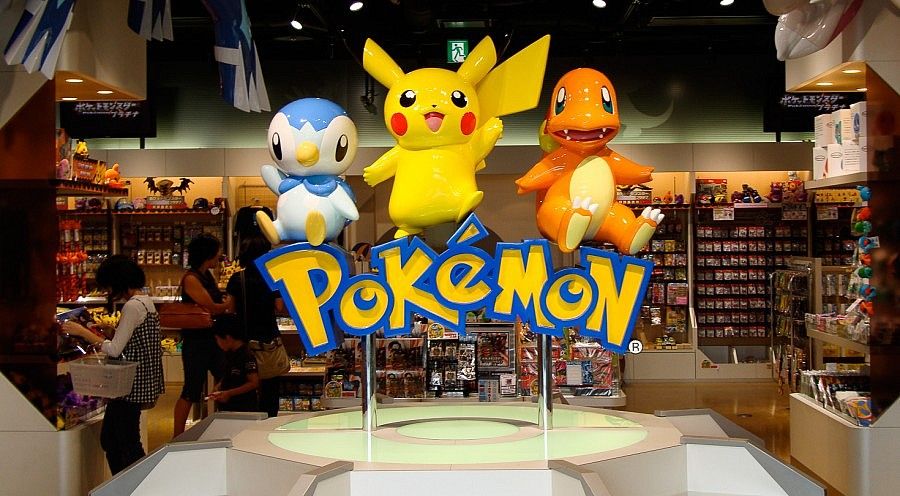
Pokémon Centers: worth it for cards?
- A lot of the time they have no cards for sale at all.
- When they do, the packs sell out immediately.
- You often have to enter an online lottery just to reserve a purchase.
So if you happen to stop by and find something, grab it on the spot. Just don’t count on these stores too much. The fun part is the merch: card boxes, preconstructed decks and accessories.
Where to play: card stations and duel spaces
In Japan you don’t have to stop at buying cards. You can also play them on the spot. The bigger Pokémon Centers, like the one in Ikebukuro, have a Pokémon Card Station, an area with tables where people play casual games and where events run every day, from serious tournaments to games for people who’ve never played before.
Almost every specialist shop has its own duel space too, often upstairs, with tables, playmats and people playing for hours. You don’t need to speak Japanese. All you need is a deck, and you can get by with gestures, because the game itself is a shared language. The experience stays with you a lot longer than a pack you bought in a rush.
Secondhand cards are worth the hunt
Used cards in Japan are neatly organized, categorized, sleeved and sold with almost obsessive care. They’re often in perfect or near-perfect condition, and the prices are clearly marked.
The shops I recommend most are:
- Surugaya: a huge selection, great prices, and frequent discounts on bulk lots of common cards.
- Mandarake: it’s aimed more at serious collectors, but you’ll find some incredible gems.
- Small independent card shops: they often let you trade or sell cards too.
Check the condition carefully, though. Japanese grading is precise (Mint, Near Mint, Excellent…), but you should still look over every card closely. People in Japan are honest. It just always pays to take a good look.
Oripa, the shop-made packs
As you go from shop to shop, you’ll see walls of plain packs with a flat price and no official logo. These are oripa, “original packs” that the shop puts together itself by mixing single cards. You pay a fixed price without knowing what you’ll get, just like a gacha.
Some stores sell them from vending machines, others keep them behind the counter, and almost all of them use the display case to show off the top hits you can pull. They’re fun, but the average value of what you pull is almost always below what you paid. Treat them as a game, not a bargain, and decide ahead of time how much you’re willing to spend.
Japanese expansions differ from international ones
A common mistake is thinking that buying Japanese cards gets you the same cards that come out later in the rest of the world. In fact, Japanese expansions are often different, in both their names and their contents.
Japan gets:
- Lots of exclusive mini-expansions
- Promo editions tied to certain events or shops
- Theme decks with cards that have never been released outside Japan
If you’re into collecting, this is where the real gems are. Many sets will never come out outside Japan, and some artwork stays exclusive to Japan. If you actually play rather than just collect, there’s one thing you should know: Japanese cards aren’t allowed at official tournaments in Europe, which only accept cards in the circuit’s official languages. They’re fine for games with friends, but if you’re dreaming of showing up at one of those tournaments with that deck, they’ll turn you away. It works the other way around too: tournaments in Japan are played with Japanese cards.
Pokémon lotteries in Japan
Lotteries are one of the lesser-known (but most frustrating) parts of the Japanese Pokémon card world. I’m not talking about winning money. These are draws for the right to buy certain products.
When highly anticipated expansions, exclusive decks or limited boxes come out, many shops, the Pokémon Center included, don’t sell them directly and make you enter a lottery instead. Here’s how it works:
- You sign up online with a Japanese account (you often need a local phone number)
- You choose the product you want
- If you’re picked, you get an email with a code to buy it
Most tourists can’t enter, because the forms are only in Japanese and ask for a Japanese phone number and address. So it’s common for people who are right there in Tokyo on release day to come away with nothing.
Luckily, some resellers act as middlemen. But if you want my honest advice, never fly out thinking “I’ll buy that box when I’m in Japan.” If it works out, great. Just be ready to change plans.
Bringing Pokémon cards home
One of the most common worries is how to get everything home in your suitcase without damaging it or running into trouble at customs.
Let’s start with keeping the cards physically safe. My advice:
- Bring a small case or a rigid binder from day one
- Buy toploaders (rigid plastic holders) and sleeves (clear plastic covers) once you’re there
- Never leave cards loose in your backpack or among your clothes
Japanese shops also sell very sturdy deck boxes that are great for traveling. Some look like lunch boxes, but they’re perfect for protecting even the most delicate cards.
Customs rules depend on your country. A few packs or cards for personal use normally aren’t an issue, but if you come home with 10 sealed boxes or 300 rare cards, you risk customs stopping you because they think you’re planning to sell them.
So:
- Always keep your receipts, if you have them
- Don’t bring too many copies of the same card
- Avoid coming home with large amounts of new sealed product
If it’s for personal use, you shouldn’t run into trouble, as long as it actually looks that way. And if you can, keep the cards in your carry-on so they don’t get damaged.
Buying Pokémon cards online from Japan
This is where things get more complicated. In many cases, the best Japanese shops don’t ship abroad. Even big ones like Surugaya, Cardrush and Fullcomp often run online stores for the domestic market only.
You do have a few options:
- Mercari.jp: a secondhand app that’s hugely popular in Japan. It has every kind of card, often at competitive prices, but you can’t use it directly from abroad.
- Yahoo Auctions Japan: a classic. It still works very well, especially for bulk lots and singles.
- Amazon Japan: in rare cases some sellers ship internationally, but watch out for shipping costs and customs fees.
- eBay: there are reliable Japanese sellers who already act as middlemen, but they charge a markup.
The best way to do it is through a proxy.
A Japanese proxy is a service that buys from Japanese sites on your behalf and then ships everything to your home. The best known are:
- Buyee
- ZenMarket
- FromJapan
- Japan Rabbit
With these you can:
1. Find the card on Mercari, Yahoo or another site
2. Order it through the proxy’s website
3. Have it shipped to their warehouse
4. Get it delivered to your door by courier
The upside is that you can buy pretty much anything. The downside is that the fees add up, and if you’re not careful, you can end up paying a lot more than you would in a physical store.
I’d only recommend these services if you know exactly what you want to buy and can’t come to Japan to hunt for it yourself.
Fake cards and resealed packs
In Japan’s specialty shops, fake cards are extremely rare. Shops that buy and resell used cards check every single one, and for a long-established store, a counterfeit would be a huge blow. The real risk is elsewhere: street stalls and flea markets, private sellers online and some of the stands in the most touristy areas.
If you’re not sure about a card, look at the back. On fakes the blue looks dull, the text is blurry and the white border is uneven. A real card also feels distinctly stiff in your hand, and it doesn’t bend like thin cardboard.
Also watch out for resealed packs, ones that someone has opened, pulled the good cards from and sealed back up. If a pack feels too soft or the seal looks crooked, leave it where it is.
Common mistakes
A lot of tourists hunting for Pokémon cards in Japan make the same mistakes. Here are the most common ones:
- Waiting too long to buy, because the good stuff goes fast
- Not knowing the shop rules (no photos, purchase limits, etc.)
- Buying cards without checking their condition
- Buying without knowing what you’re after, just because a card looks “rare”
- Getting ripped off by tourist shops charging crazy prices
Keep in mind that the more touristy the area, the more likely a shop’s prices are inflated. If you find a card you like but it’s expensive, check out other stores before you decide.