 322 m
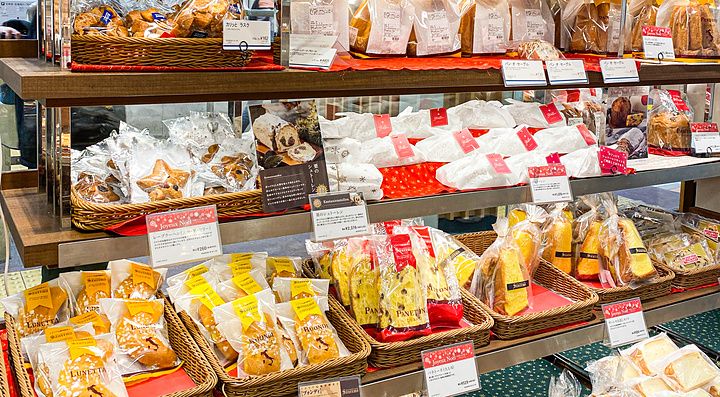
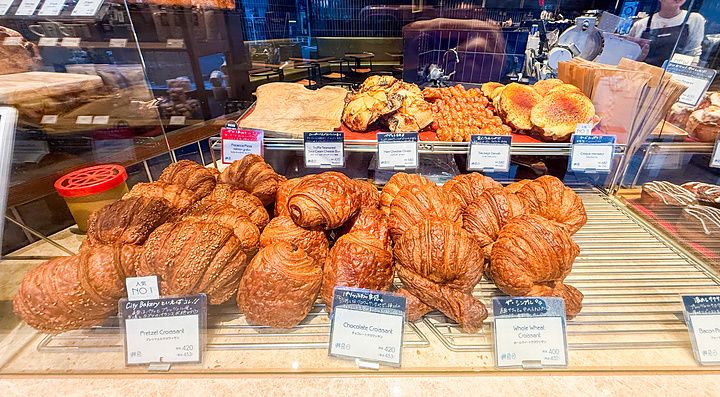
The City Bakery322 m
Hearty breakfasts.
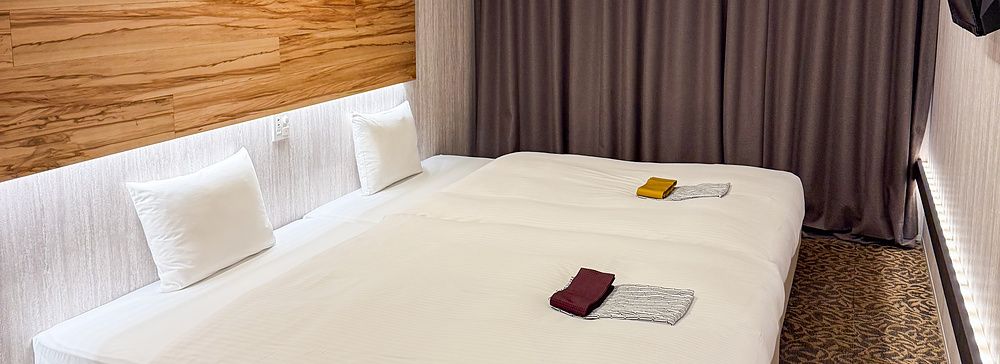
A small hotel in Kyoto, between Kawaramachi and Gion, with more style than you’d expect: pale wood, dark stone, bamboo, and Japanese art everywhere you look. Carta Hotel Kyoto Gion has only a few rooms, all with a bathtub, and from here you can explore the old city on foot.
It’s the right place if you’re visiting Kyoto as a couple or with a friend, want to walk back after dinner, and would rather spend your money on restaurants and temples than on your room, but still don’t want to sleep in a faceless box.
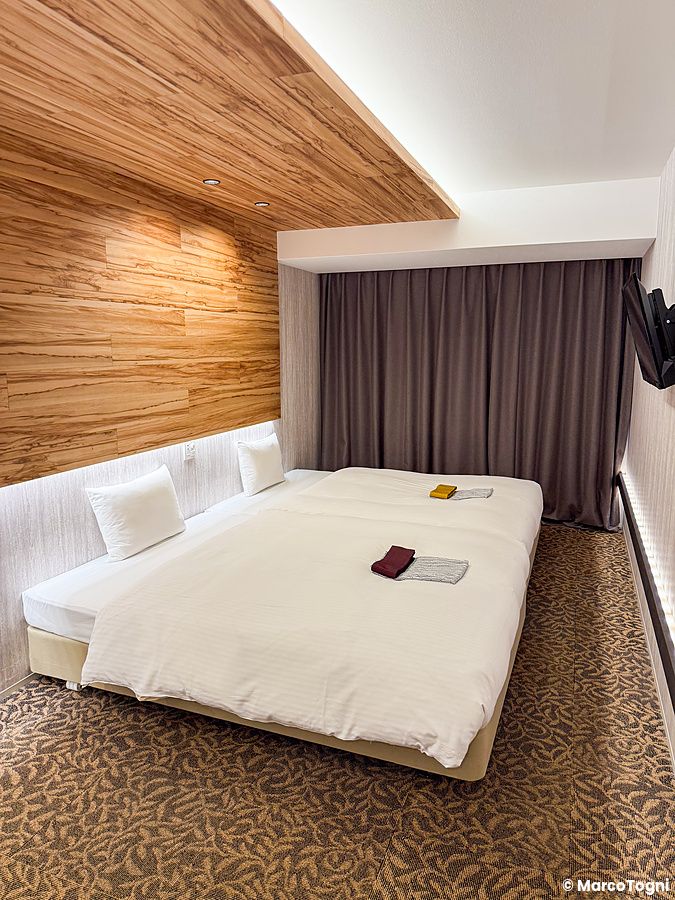
There are about twenty rooms in total, and they’re all pretty similar: white linens, a wall of natural wood slats behind the bed, and brown carpet with geometric patterns. Nothing flashy, but the wood warms up the room, and at night, with the lights down low, it feels more like a modern ryokan than a business hotel.
These are small rooms, and you should take them for what they are: a place to sleep well and get cleaned up at your own pace. The bed takes up a good part of the room, and a big suitcase is easier to open on the floor at the foot of the bed than in a corner.
Here’s what you can choose from:
The bathroom is the part you wouldn’t expect. There’s a real white bathtub, deeper than the ones in business hotels, with a shower over it, and the sink is mounted on the wall to leave you room to move. A wall the color of dark wood breaks up all the white and makes it feel less like a prefab bathroom.
After a day of walking around Kiyomizu and Higashiyama, filling the tub before going out to dinner is what makes all the difference. In the room you’ll find yukata, slippers, a kettle and tea, a fridge, and a safe, and the bathroom has shampoo, conditioner, body wash, and a toothbrush.
When you book, the large double is the one to ask for if there are two of you with two suitcases. A couple of extra square meters count for a lot when you both want to open your suitcase at the same time.
If you’d rather sleep separately, there’s the twin, but the two beds are pushed right up against each other with no gap in between, so it’s really a double bed split in two. Keep that in mind if you’re traveling with a coworker rather than your partner.
This isn’t a hotel for people who want room service, a suite, and a bellhop to carry their bags. Here the money went into the wood and the artwork, not into services.
Compared to what hotels between Kawaramachi and Gion usually cost, it’s cheap, sometimes surprisingly so. You pay about what you’d pay at a chain business hotel, and in return you get a room full of wood, a bathtub, and a lobby that feels like a small art gallery.
When someone asks me where to stay in Kyoto without spending a lot, this is the first name I give them. I head out in the morning and I’m already in the middle of the old city, and in the evening, after a soak, I come back to a room that has character.
Kyoto books up very early, though, so for cherry blossom season, fall foliage, Golden Week, and New Year’s, book well in advance. With so few rooms, the hotel sells out fast.
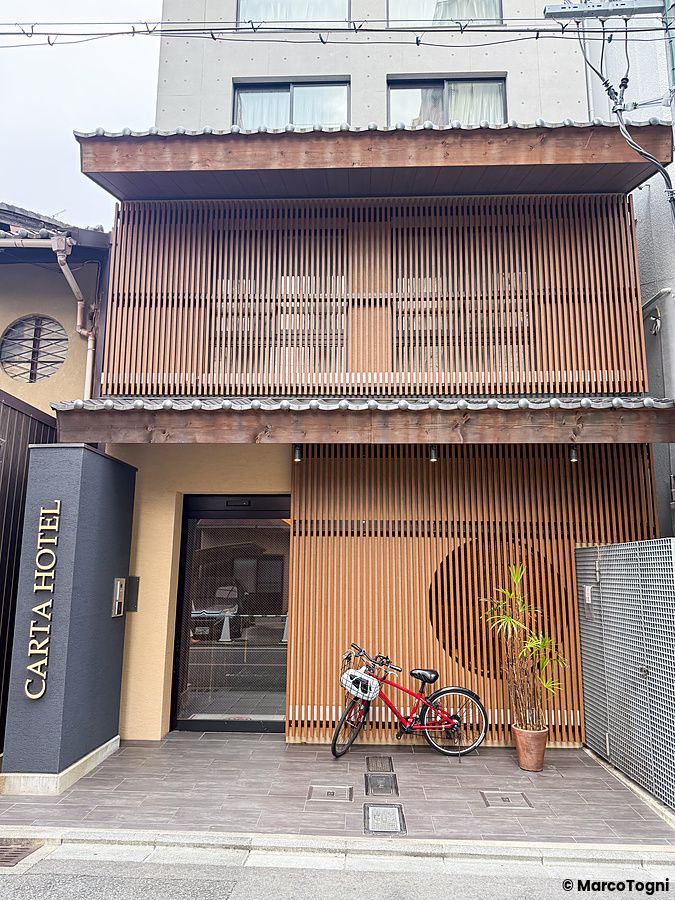
The facade already tells you this isn’t just another business hotel: vertical wooden slats, a section of Japanese-style roof, and a simple entrance with no huge signs. It stands out even from the avenue, among the shops and concrete buildings.
Inside, the floor is dark stone, and along the hallway there’s a wall made of dark bamboo poles set upright side by side. Across from it hangs a painting of samurai armor.
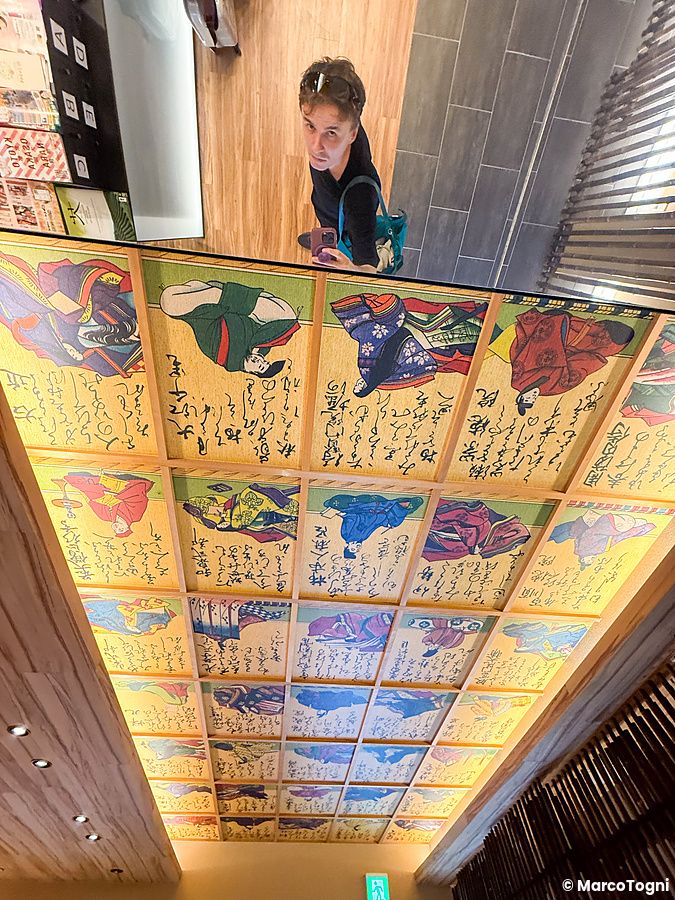
Look up. The ceiling is made of decorated panels in a traditional style, and a mirrored surface reflects them, so you end up seeing yourself surrounded by the designs. It’s the kind of detail that makes you stop for a moment before heading up to your room.
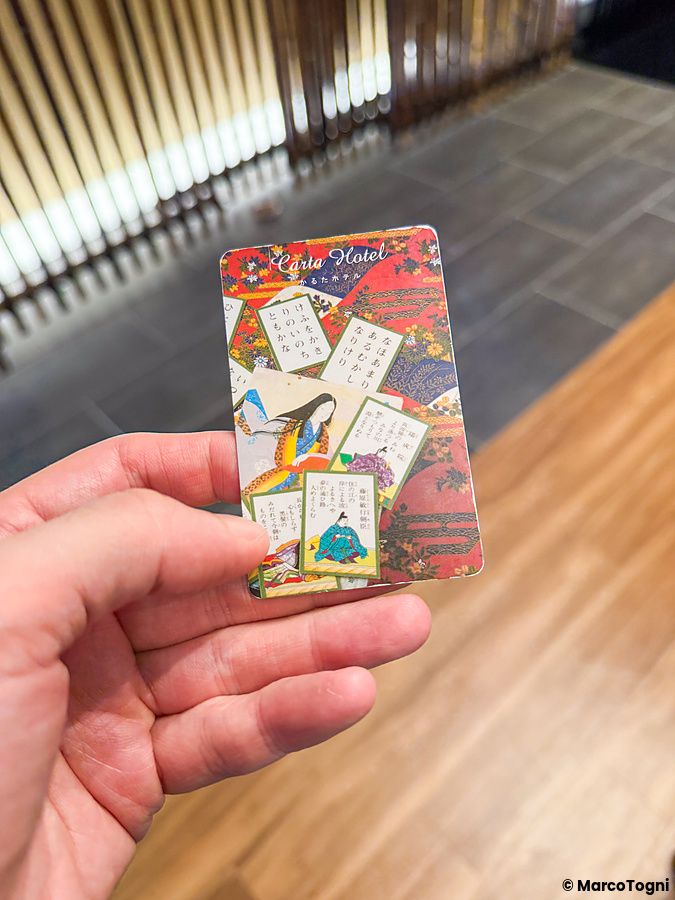
Even the room key card is illustrated, with figures in period dress and Japanese motifs. It looks like an old playing card, and in fact traditional Japanese playing cards are called karuta, a word that came from the Portuguese carta. That’s where the hotel gets its name.
On the ground floor there’s a common room with wooden tables, black chairs, and a wall of wood and rough stone. You can sit there to write a couple of postcards, look over the map before heading out, or eat something you picked up at the konbini, since there’s a microwave and hot water.
There aren’t many staff, but whoever’s on duty has no trouble speaking English, can hold your bags if you arrive early, and answers your questions with a smile, without the stiffness you get at big hotels.
There’s no restaurant, and no breakfast room either. That’s totally fine. In Kyoto, going out for breakfast is one of the pleasures of the day, and there are cafés and bakeries on every corner around here.
The hotel is on Kawaramachi, the avenue that runs parallel to the Kamo River, on the quieter stretch that runs down toward Gojo. When you step out in the evening, the street is lively but not hectic: a few shops still open, konbini lit up, people walking home.
Walk up toward Shijo and you’re in the busiest part of the city, with the department stores, the covered shopping arcades of Teramachi and Shinkyogoku, and Nishiki Market. Between the avenue and the river are the narrow streets of Kiyamachi and Pontocho, full of bars and izakaya that stay open late.
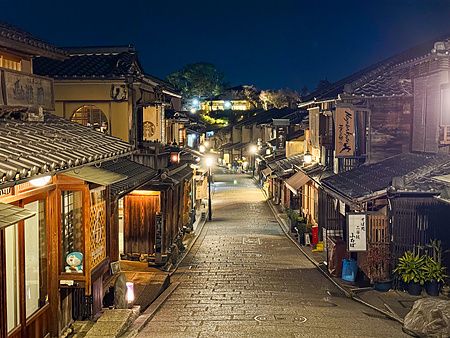
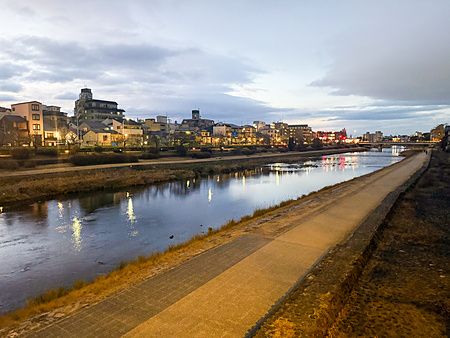
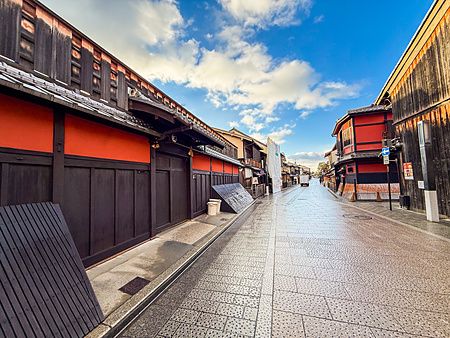
Gion starts on the other side of the river. If you’re staying here, the walk I recommend is to cross the bridge in the evening and head up to Yasaka Shrine, where the pavilion is covered in hundreds of glowing white paper lanterns.
From there you can keep going to Higashiyama, Ninenzaka, and Sannenzaka. Early in the morning, before the tour groups show up, is when you really get to see these streets, and staying in this area means you can enjoy them without crossing half the city.
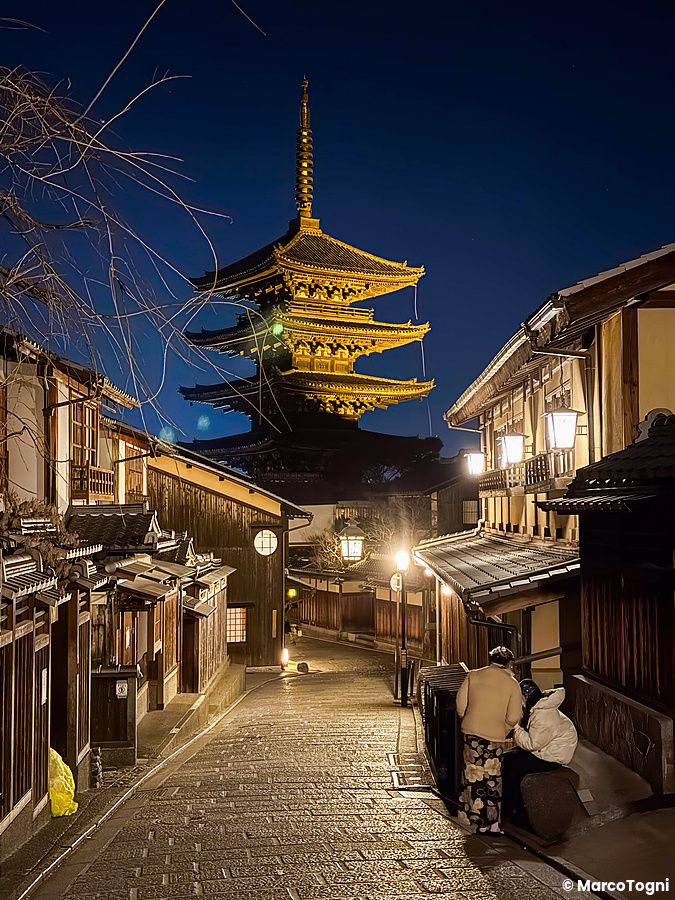
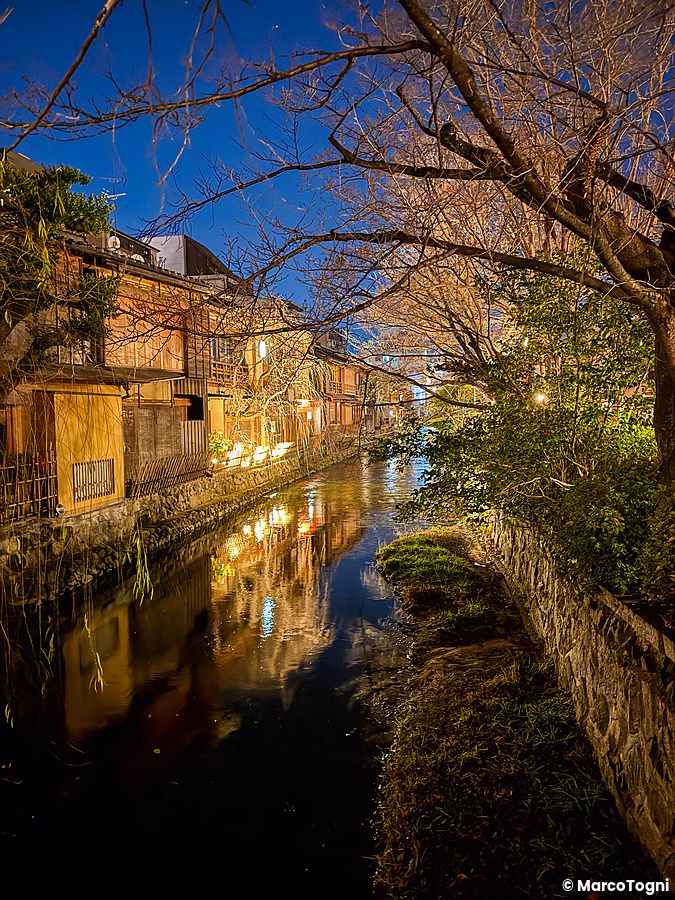
When you come back at night, the stretch of Kawaramachi in front of the hotel empties out quickly, and up in your room you can’t hear the city at all. After dinner in Pontocho, you can walk back along the river, which is one of the most beautiful parts of Kyoto at night.
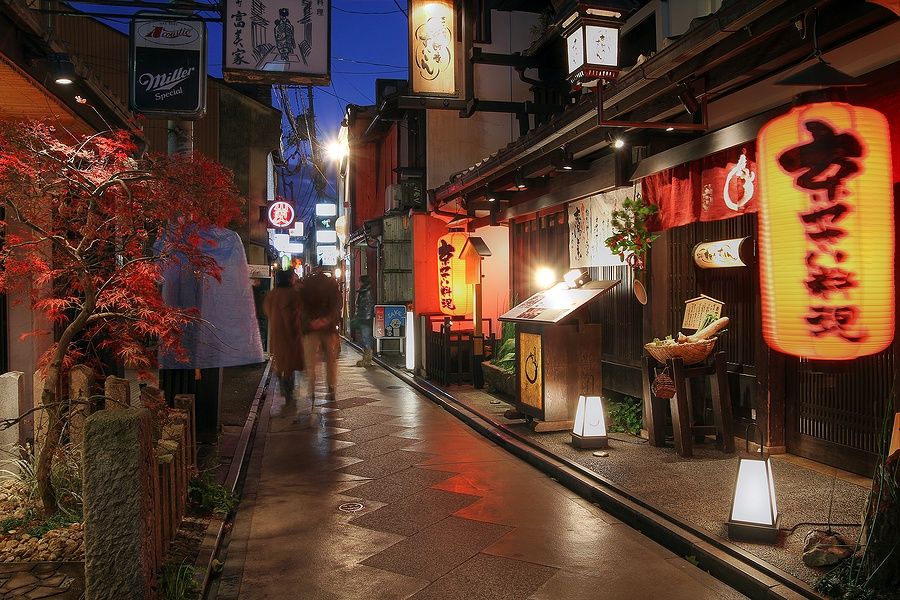
It’s the right hotel for a couple or two friends visiting Kyoto for a few days who are out all day and want a hot bath at night, plus a bed in a room that doesn’t look like every other one. It also fits well into a multi-stop trip, when after Tokyo or Osaka you’re looking for two or three nights in central Kyoto without blowing your budget.
If you’re traveling with young kids or there are three of you, look elsewhere, because the rooms are designed for two people and there’s no space for an extra bed. The same goes if you want a breakfast buffet at the hotel, a spa, or a top-floor bar. There’s none of that here, and it isn’t meant to be.
If you like places where you can tell someone chose the wood, the stone, and the artwork piece by piece, you’ll be very happy here. And if it’s your first time in Kyoto, you have everything you need around you to get your bearings: the river, the main avenue, and Gion just across the bridge.
Pros:
Cons:
Ideal for: couples and friends who want to stay somewhere with character in central Kyoto without spending much
Room to ask for: the large double with the queen bed
Vibe: pale wood, dark stone, low lights, quiet hallways
In the evening, when you come back from wandering among the lanterns at Yasaka and the narrow streets of Gion, cross the bridge over the Kamo, and slide the key card with its old-fashioned figures into the lock, you realize a hotel can be part of the trip too. Kyoto is a city you experience early in the morning and late at night, when there aren’t many people around, and to do that you need to stay right in the middle of it, with the river on one side and the geisha district on the other.
Take the large double, fill the tub when you get back, and let Kyoto do the rest. Book it and go.
The hotel is on Kawaramachi, on the stretch between Shijo and Gojo. The closest station is Kiyomizu-Gojo on the Keihan Line. Take the exit on the Kawaramachi side, cross the bridge over the Kamo, and you'll be there in about 5 minutes on foot.
If you're coming by train from Osaka on the Hankyu Line, get off at the Kyoto-Kawaramachi terminal and walk south along the avenue, about 7 minutes on foot.
From Kyoto Station, the easiest option is a taxi, which takes about ten minutes. If you don't have much luggage, take one of the buses that run along Kawaramachi and get off at the Kawaramachi Matsubara stop.
This place is on MarcoMaps
Carta Hotel Kyoto Gion
My map of Japan: over 4,000 places I've tried myself, each with photos, rating, and hours. Filter by category and rating, find veg-friendly spots and places near you with GPS. No sign-up, right from your phone.


Carta Hotel Kyoto Gion - nearby you will find: