Chichibugahama Beach
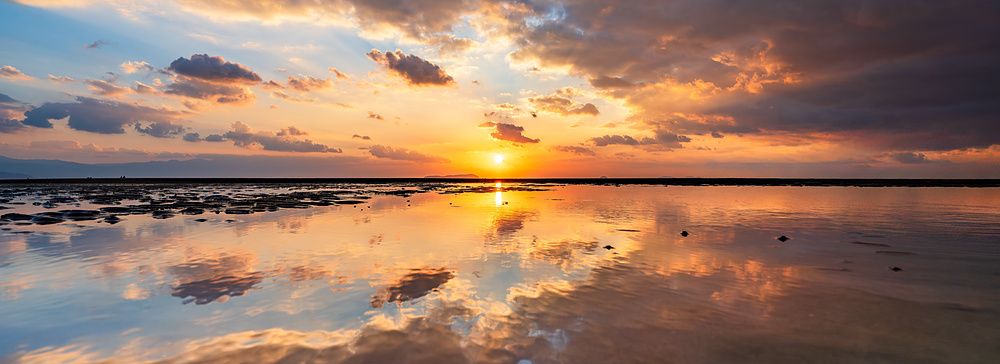
A kilometer-long beach in Mitoyo, Kagawa Prefecture, where the outgoing tide leaves behind dozens of still pools that reflect the sky like mirrors. Chichibugahama is known for that, and for the sun going down straight ahead over the Seto Inland Sea. It’s also a real beach, though, with sand, crabs and kids splashing around.
Come here if you’re traveling around Shikoku and want to end the day standing in shallow water, watching the colors change. It’s the first place I suggest when people ask me what to see in this part of Japan.
What you’ll see
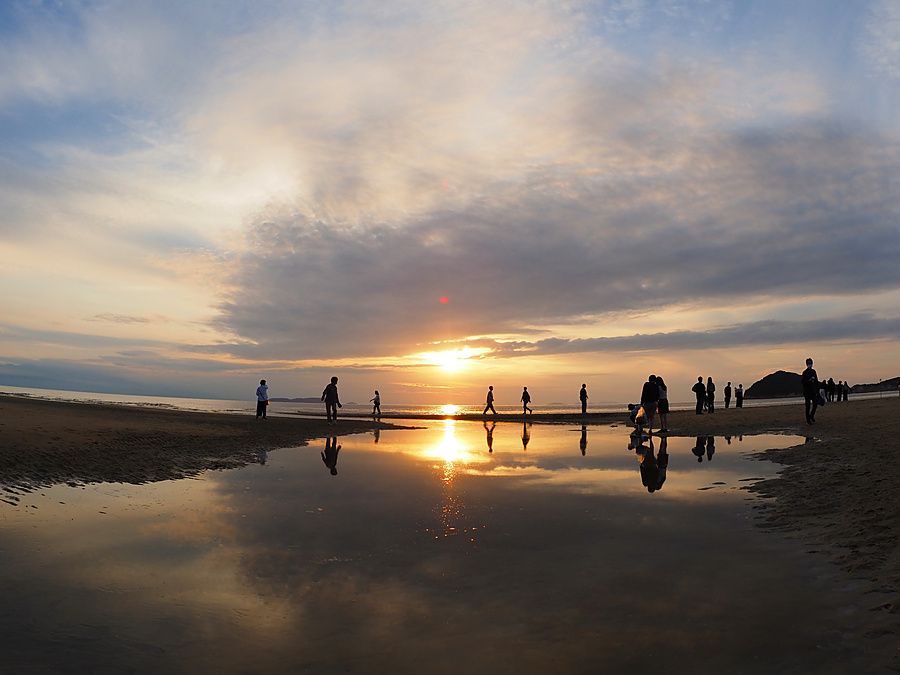
- The low-tide pools: when the water pulls back, it leaves shallow mirrors a finger or two deep scattered all over the sand. The sky, the clouds and the backlit figures of people are all reflected in them.
- Sunset over the Seto Inland Sea: the sun goes down right in front of you, on a horizon of open water, while the outlines of the islands slowly turn dark.
- The stretch of wet sand: the water pulls back a few hundred meters, and you can wade out ankle-deep much farther than you’d guess from the shore.
- The little creatures in the pools: hermit crabs, tiny crabs and small fish that dart away when you put your foot down. Kids plant themselves there and won’t budge.
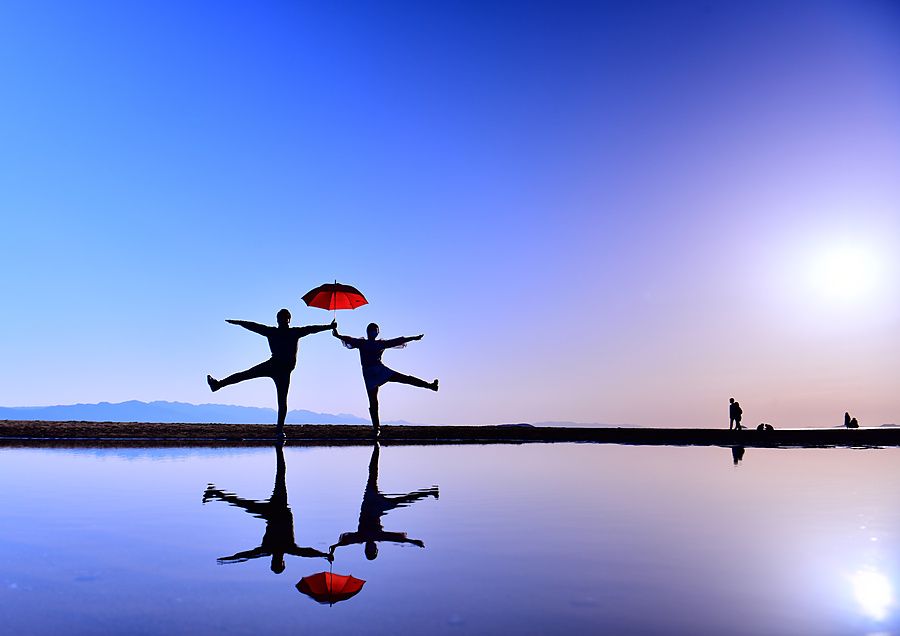
- The red umbrellas: locals lend them out for photos, and in the pools they’re the only splash of color among the black silhouettes.
- The beachfront: Chichibugahama Port and a row of places to eat with tables facing the sea, where people pass the time until evening with a coffee or a burger in hand.
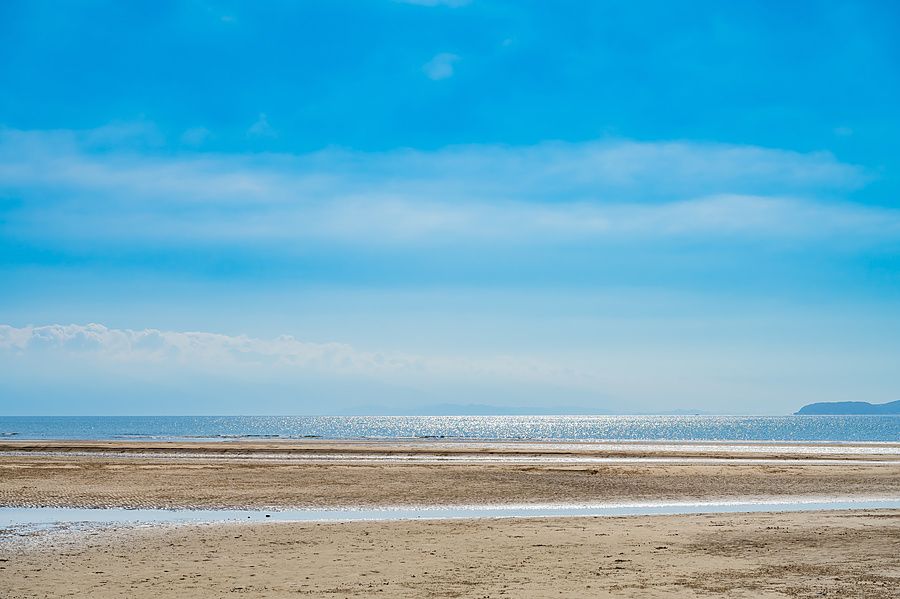
It all comes down to two things you can’t control: low tide has to fall around evening, and the wind has to drop. If the tide is high, you’re looking at a perfectly ordinary beach with the water almost up to the seawall, and that’s the end of it.
The wind is even less forgiving than the tide. Even a light breeze ripples the pools, the reflection breaks apart, and you’re left with plain old puddles. On good evenings the wind dies down by itself here (local fishermen call it the Seto calm), and that’s when the water turns to glass.
If you’re picturing those photos of the Bolivian salt flats, rein in your expectations. There’s sand under your feet, and behind you there’s a seawall, a parking lot and the houses of the town. In the half hour around sunset there are plenty of people crouched down with their phones almost touching the water. It isn’t an empty place, and it doesn’t pretend to be.
It still doesn’t disappoint, because no photo captures what it’s like out there: an orange sky under your feet, other people’s silhouettes walking upside down in the water, and the low murmur of two hundred people who all go quiet at the same moment.
I keep coming back because it’s one of the few places in Japan where you don’t just look at something and move on. You stand in the water doing nothing until the sky goes dark, and time just slips by. People who come to visit me expect temples and skyscrapers, and then they end up here barefoot, staring at a puddle.
The place only delivers if the tide and the wind are on your side, but when they are, I don’t know of anything like it anywhere else.
When to go
There’s only one right time, and you have to go looking for it: late afternoon, on days when low tide falls around sunset. The good part is the half hour before the sun touches the water and the half hour after, and that second half is the one few people stick around for. Once the sun is gone the sky turns pink and then purple, the water reflects every bit of it, and the beach has already half emptied. If you don’t want to leave it to chance, the Mitoyo tourism office publishes an official calendar every year with the days when low tide falls close to sunset. Check it before you schedule your stop here. There’s no calendar for the wind, though, so it’s down to the weather that evening.
At midday, with the sun high, there’s no reflection to speak of. The flat light kills the effect, and all you see is a wide beach with a few young people walking across it.
On weekends the middle of the beach fills up with people waiting their turn at the best pools, and getting a shot without strangers in it takes patience. On weekdays there’s a lot more breathing room, so you can find a pool to yourself and stay as long as you like.
In summer it’s also a beach where people go swimming, with families and beach umbrellas until evening. In winter the cold and the strong wind make for clear evenings but water that’s almost never still, and that’s the season when you’re most likely to go home empty-handed.
If the sky is completely overcast, don’t bother setting out: with no color up there, the pools have nothing but gray to reflect. If it’s raining, forget it altogether.
Getting the shot
There’s just one rule, and even the volunteers who clean the beach will tell you: get your phone or camera really low, right down at water level, practically resting on the wet sand. From there the reflection stretches out and the person looks like they’re standing on the sky. Twenty centimeters higher and the effect is gone.
Whoever’s posing stands on the far side of the pool, backlit, between you and the sun. Jumps, arms spread wide, the red umbrella open overhead: what you want is a clean silhouette, because facial details won’t show here anyway.
Expect sand on your elbows and knees, because getting down that low means lying almost flat on the ground. Anyone who doesn’t want to get dirty stays standing and ends up with a mediocre photo. That’s the trade-off of the evening.
Wet feet and kids
It isn’t physically demanding at all. There are no stairs and no slopes, just a flat walk across the sand. The catch is that the sand is wet and soft in places, so your feet will get dirty, guaranteed.
Just go barefoot from the start or wear sandals, and bring a towel. The beachfront has faucets for rinsing your feet and restrooms too, but when everyone leaves at once there’s a bit of a wait.
With kids it’s one of the best things you can do around here, because the water in the pools only comes up to their ankles and they spend their time watching real live crabs instead of looking at them through aquarium glass.
With a stroller, on the other hand, you won’t get far: the wheels don’t turn on wet sand, and the good pools are a long way from the seawall. And to be upfront with anyone who has trouble walking on soft ground: the part that matters is out in the water, and from the shore you won’t get a sense of it.
At a glance
- The highlight: pools that fill with sky as the sun goes down, with upside-down silhouettes inside them.
- When to go: late afternoon on days when low tide falls toward evening, with little wind. Weekends are very crowded, and it’s worth staying after sunset.
- Best for: people touring Shikoku, families with small kids, and anyone who wants an evening away from the usual temple circuit.
- Atmosphere: an open beach facing the sea, people scattered across the shallow water with their phones, and conversation dying down once the color kicks in.
The bottom line
You don’t come here to see a monument. You come to catch the right weather: low tide, still air and a clear sky. When all three line up, it’s the best evening you can spend anywhere in Shikoku, and it’s worth going out of your way for. Without them, you’re on an ordinary beach with a few nice places to eat along the beachfront.
If you’re short on time and can’t pick your day around the tide, skip it and don’t feel bad. If you can move a stop so it lands at the right time, move it. This is one of those places you remember for the whole evening you spent there, not for a single photo.