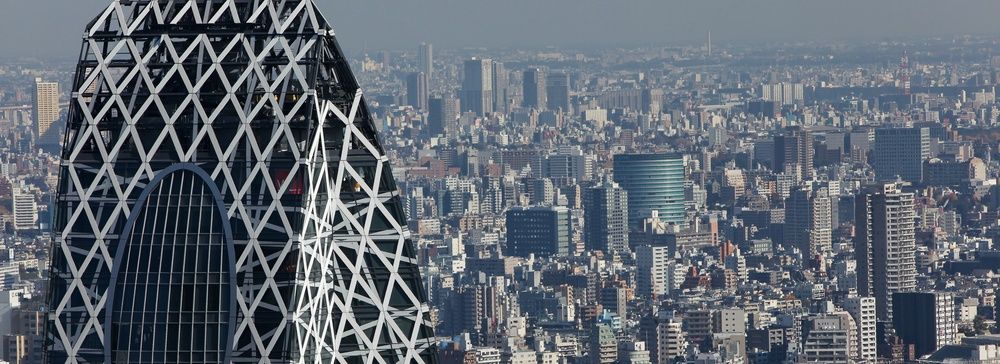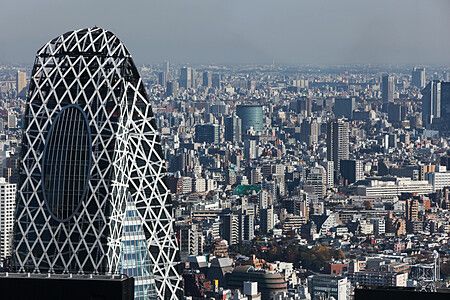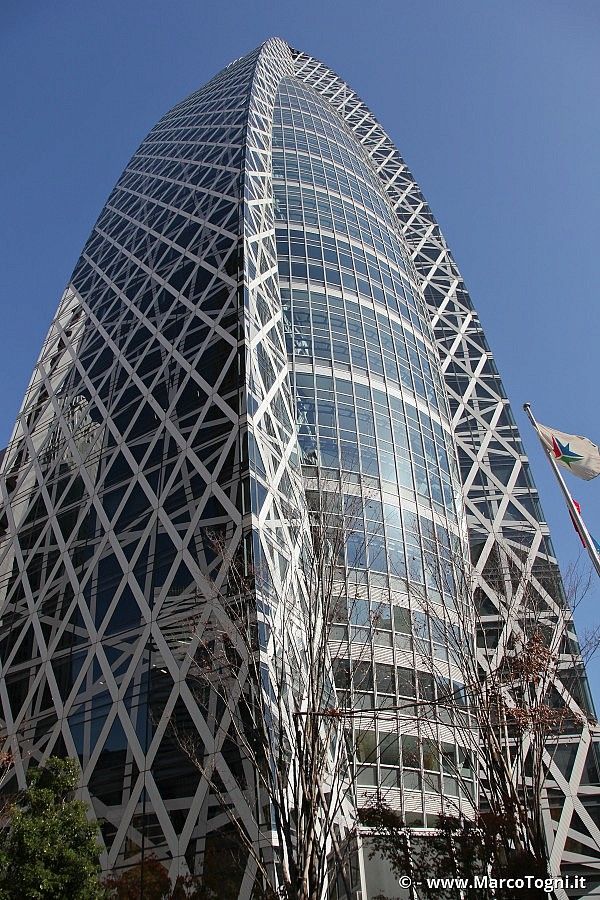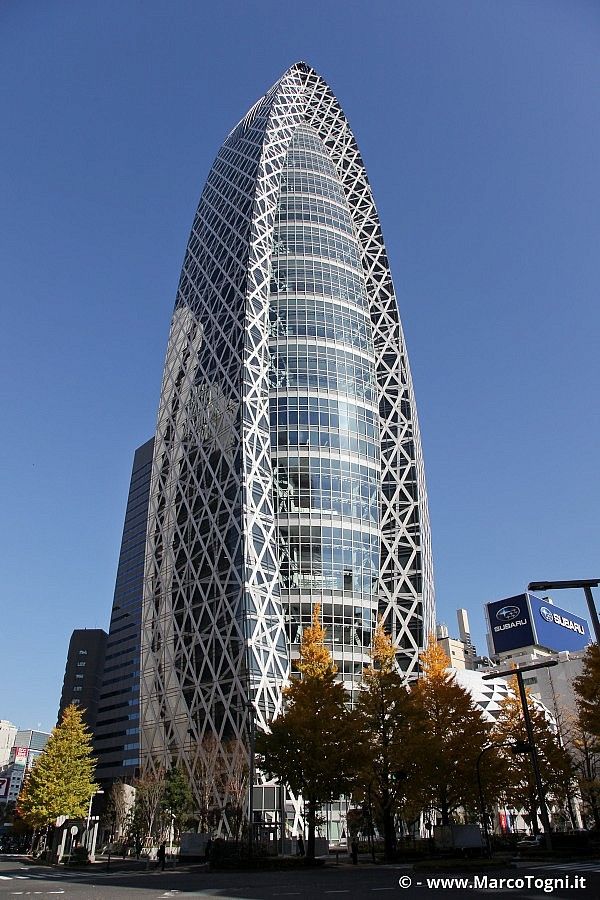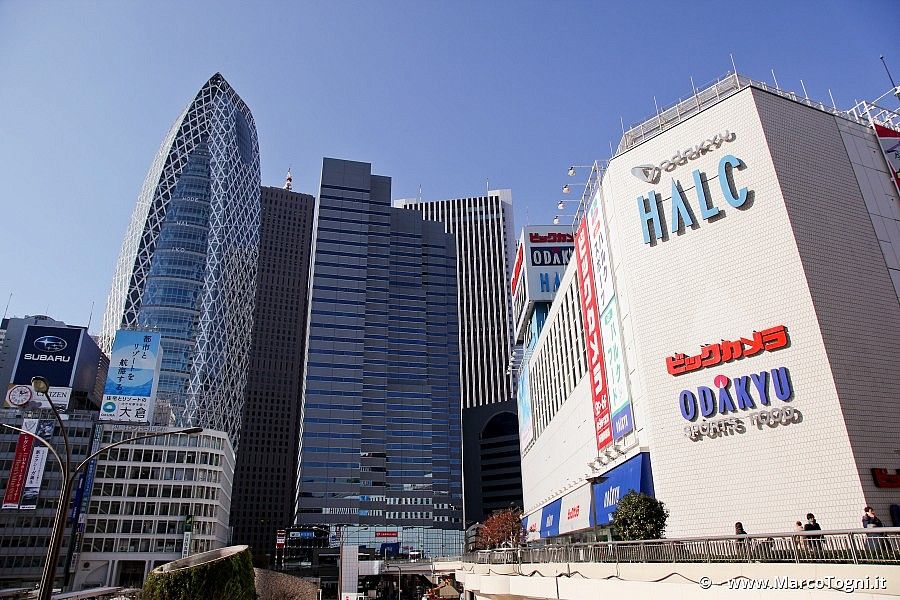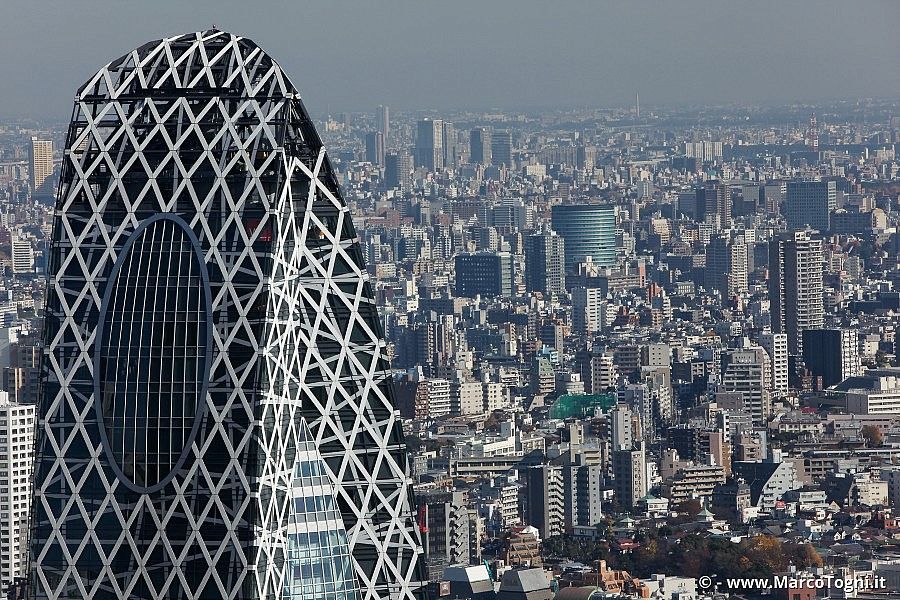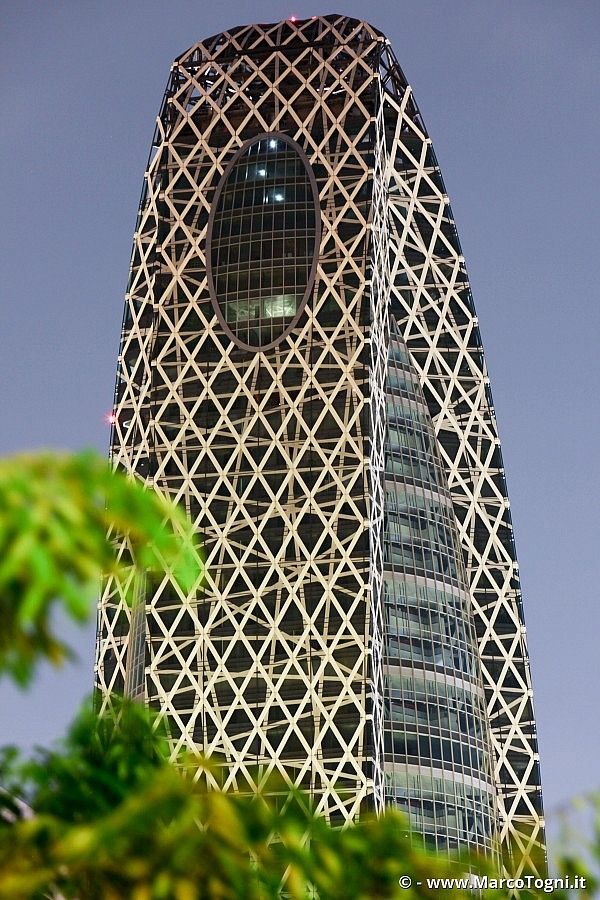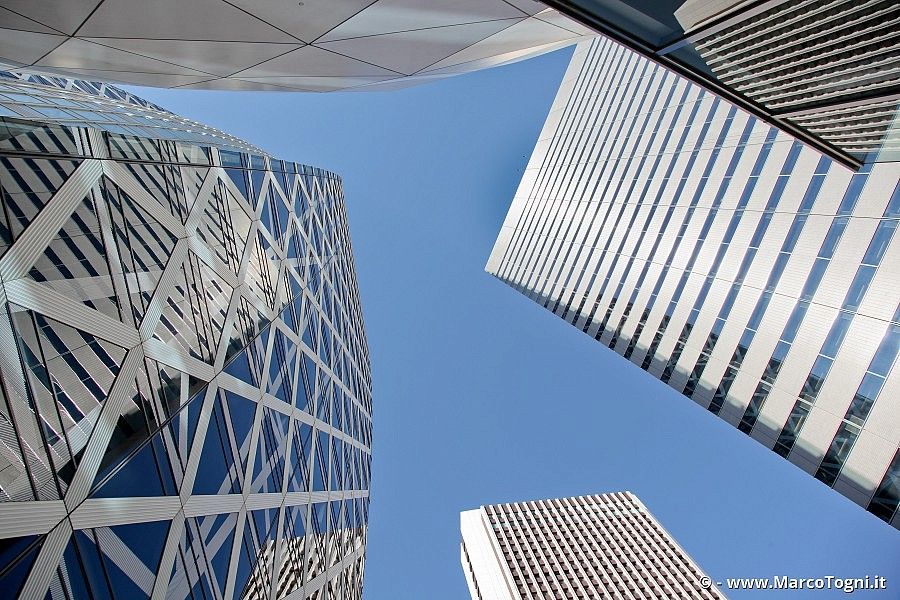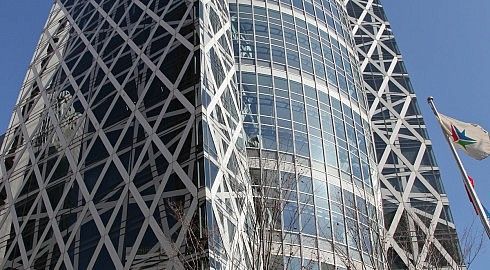
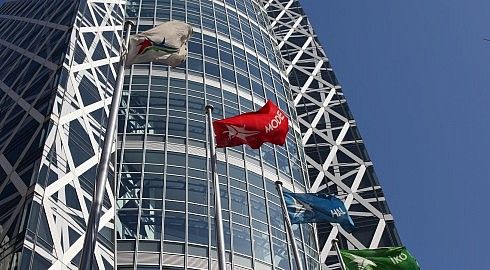
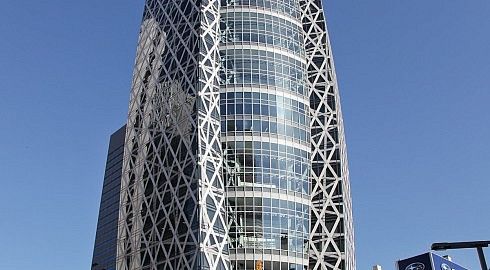
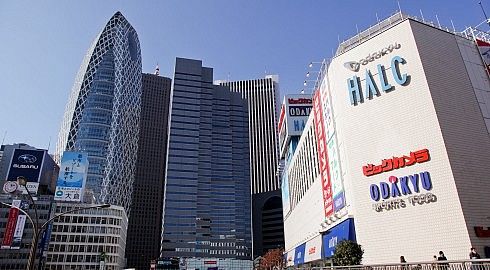
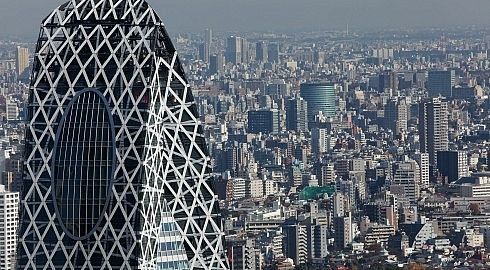
The Cocoon Tower stands out against the Tokyo sky, surrounded by other buildings.

Cocoon Tower

Cocoon Tower is one of Tokyo’s most recognizable skyscrapers. It rises right in the middle of Nishi-Shinjuku, among the high-rises west of the station, and its cocoon shape, wrapped in a web of white diagonals, is impossible to mistake for anything else.
It isn’t an office tower. Inside are three vocational schools, and that’s exactly why visitors can’t go in. There’s still plenty to look at, though, because this is a building you walk around and photograph. The dark blue glass changes color with the daylight, and after sunset the shop signs light up its base.

Photo Gallery

Getting There

Cocoon Tower is practically next door to Shinjuku Station. Take the West Exit and two or three minutes later it's right in front of you, easy to spot from a distance thanks to its white lattice silhouette.
If you're on the Oedo Line, get off at Shinjuku-nishiguchi, which comes out almost right under the building.

From the Tokyo Metropolitan Government Building it's about ten minutes on foot, following the walkways between the Nishi-Shinjuku skyscrapers.

Useful Info

Name: Cocoon Tower
Hours: Monday–Saturday: 10:00–20:00; Sunday: closed
Time needed: 15-20 minutes
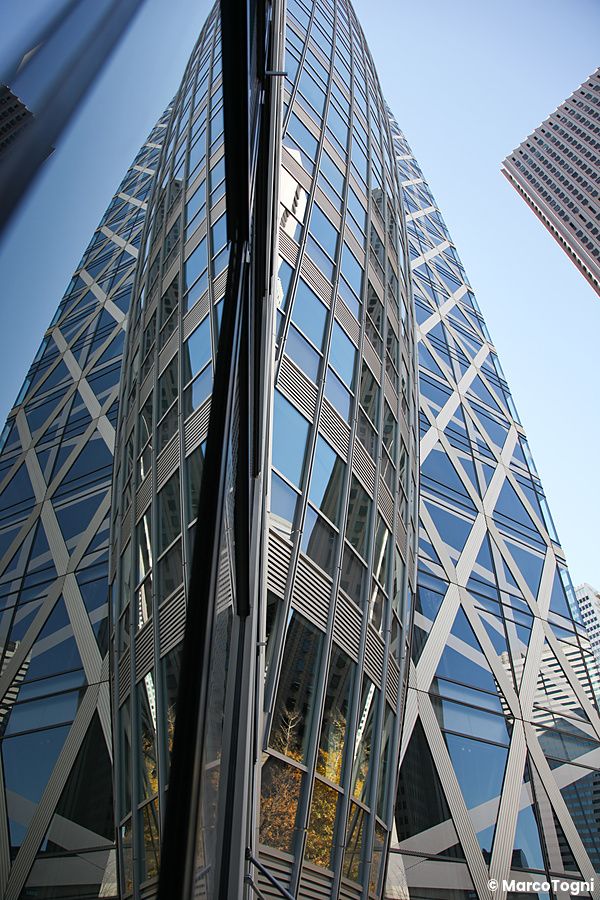
Tips: What makes Cocoon Tower worth seeing is all on the outside. Walk all the way around it, because the diagonals cross differently on every side, and look for the spot where the windows of the building next door reflect its lattice. If you can, come back after sunset, when the shop signs light up the base and the lines glow from inside.
Getting there:
  • Shinjuku Station (JR Yamanote, Chuo, Saikyo, Odakyu, Keio, Tokyo Metro Marunouchi, Toei Shinjuku): West Exit
  • Shinjuku-nishiguchi Station (Toei Oedo): a short walk from the tower
  • Nishi-Shinjuku Station on the Marunouchi Line is a little farther away
Address: Mode Gakuen Cocoon Tower, 1-chome-7-3 Nishishinjuku, Shinjuku City, Tokyo 160-0023, Japan
Website: Cocoon Tower
Designed by: Tange Associates
Open in Google Maps
Built in: 2008

Map

MarcoMaps100% free

This place is on MarcoMaps

Cocoon Tower

My map of Japan: over 4,000 places I've tried myself, each with photos, rating, and hours. Filter by category and rating, find veg-friendly spots and places near you with GPS. No sign-up, right from your phone.


  • 4,000+ places
  • Rating, photos, and hours
  • Veg friendly
  • Near me (GPS)
  • Favorites without login
  • Works offline
Open my map!
The MarcoMaps map of Japan with dozens of places markedThe map on a phone: a place's info card with photos, rating, hours and prices

A 204-meter cocoon

The tower is 204 meters tall with 50 floors. It was completed in 2008 and designed by Tange Associates, the firm led by Paul Noritaka Tange. The whole concept is right there in the name: a cocoon that protects whoever is growing inside, with a white shell that narrows as it rises and tapers all the way to the top.
What looks like decoration is actually the load-bearing structure. The crisscrossing diagonals carry wind and earthquake forces down to the ground, and they allow for classrooms with no columns in the middle. The rest of the surface is clad in dark blue glass that shifts from metallic gray to bright blue depending on the time of day and the sky. Walk past again a few hours later and you’ll find it’s a different color.
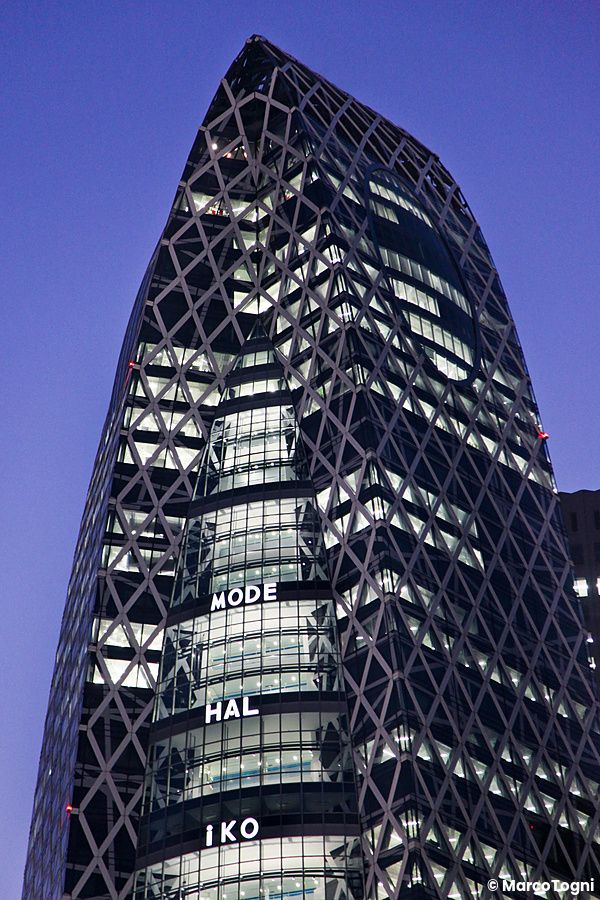
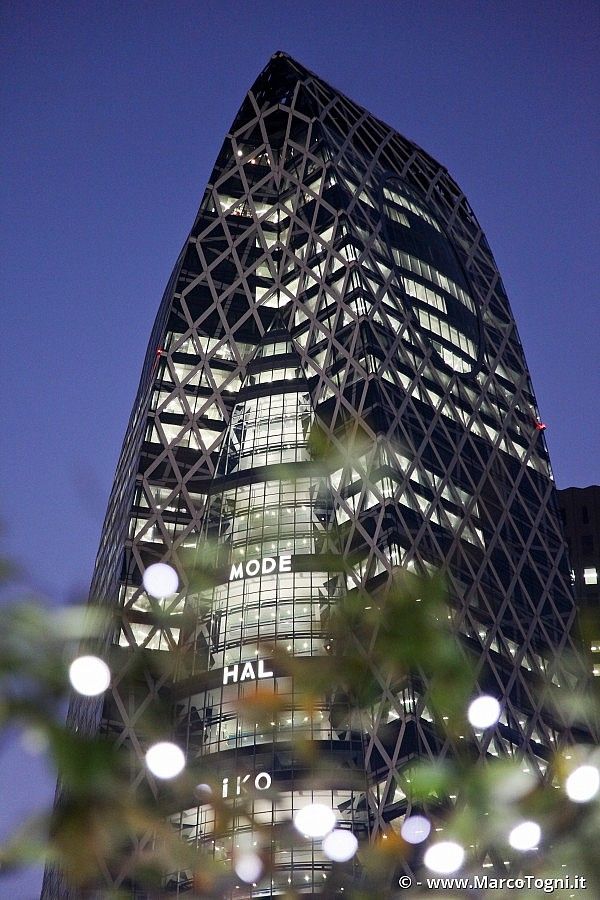
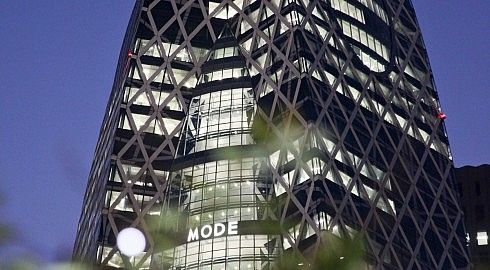
The Cocoon Tower in Shinjuku rises into the evening sky, its distinctive lattice structure lit up.
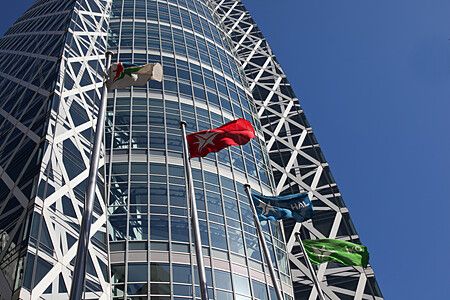
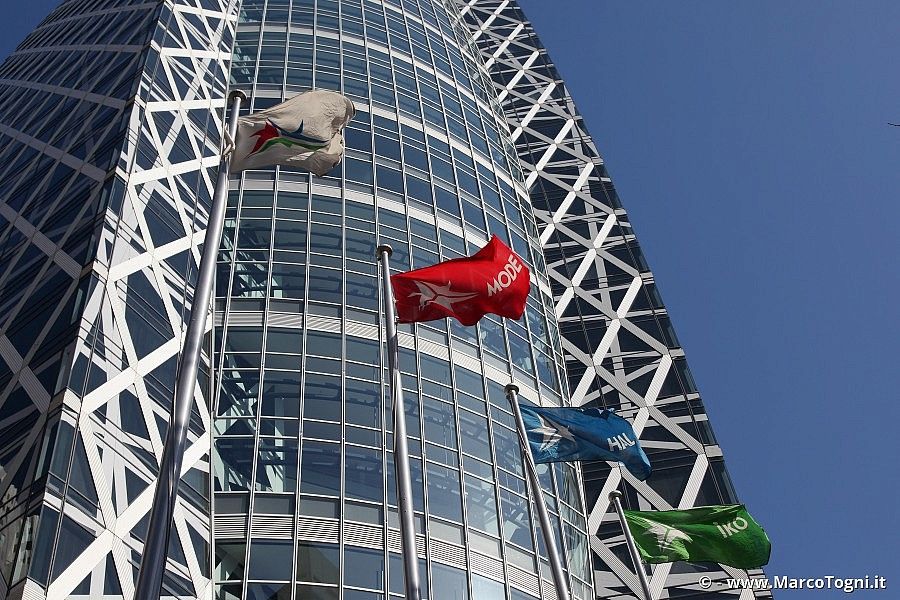
The interior lighting follows the metal diagonals. The illuminated signs reading Mode, Hal and Iko are the names of the three vocational schools inside.
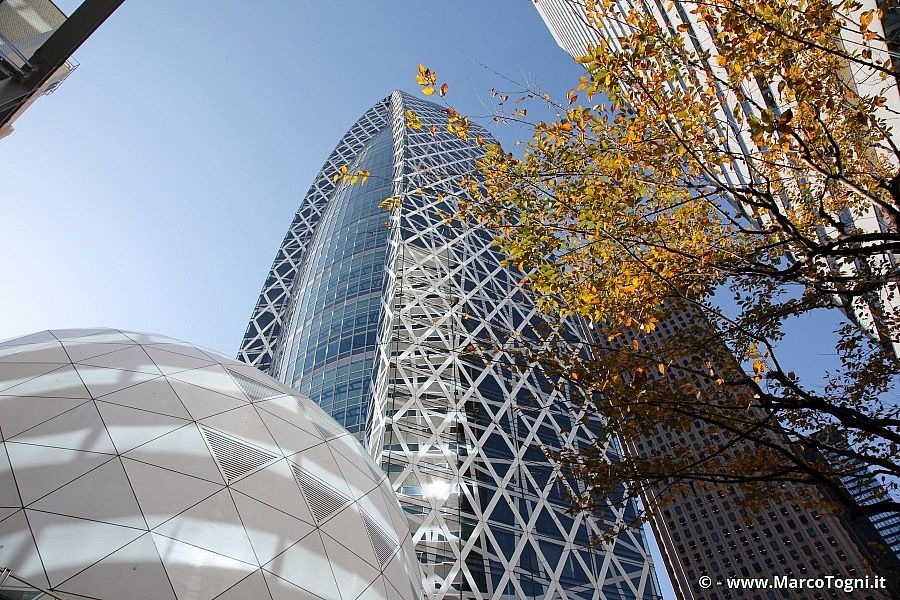
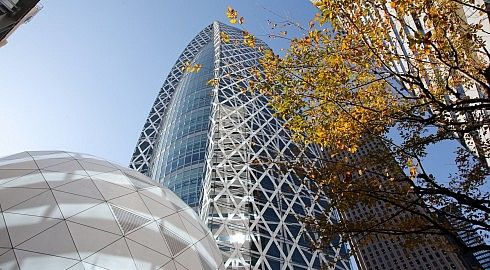
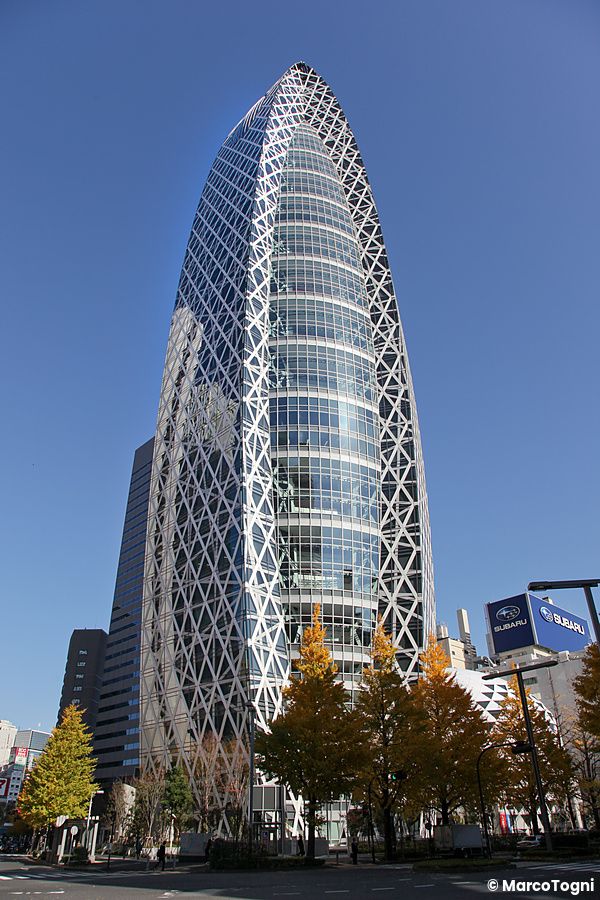
The Cocoon Tower rises into Shinjuku's blue sky, surrounded by autumn trees with golden leaves.
In the fall, the yellow leaves of the trees at the base stand out sharply against the building's cold glass and the neighborhood's big shop signs.
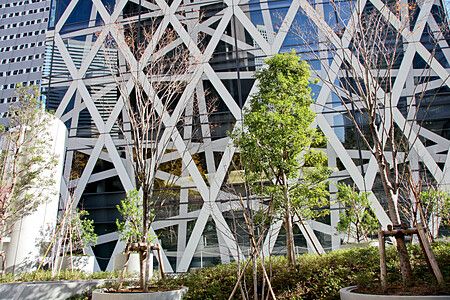
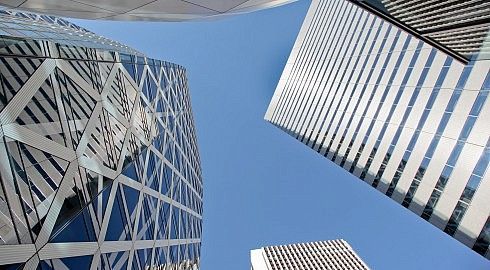
The glass-and-steel lattice facade of the Cocoon Tower in Shinjuku is reflected in a glass wall next to it.
On the left, the windows of the skyscraper next door reflect the tower's lattice. Move a few steps and you'll find the best angle for a photo.
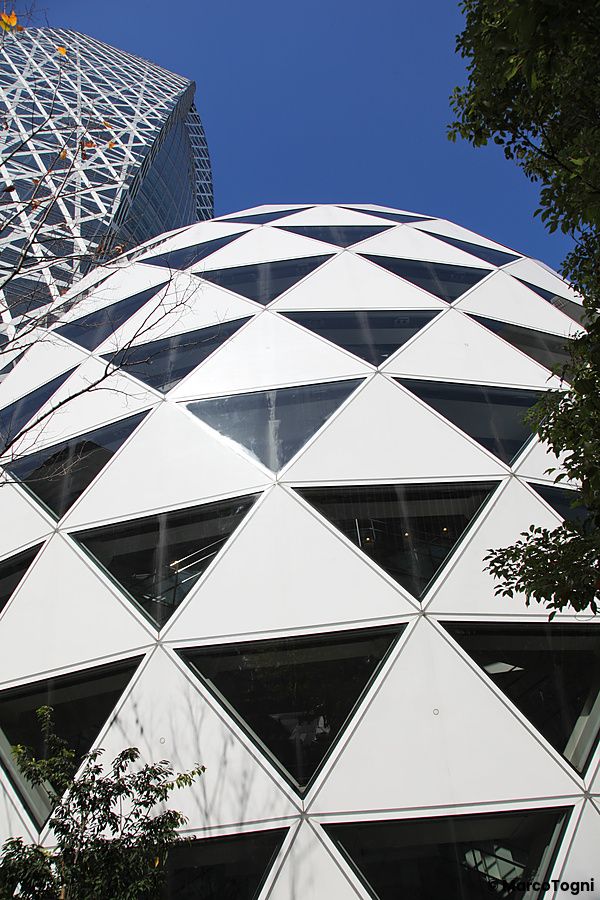
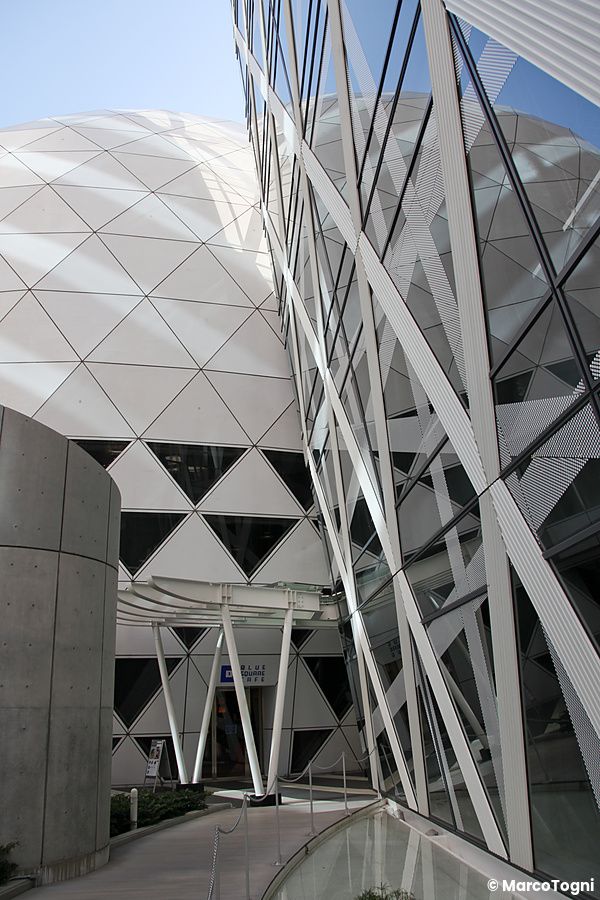
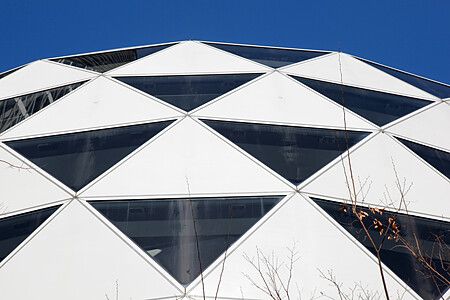
A hemispherical structure with white triangular panels and dark windows at the Cocoon Tower in Shinjuku.
Next to the main tower is a hemispherical structure. Its matte and glossy triangular panels alternate, hiding the classrooms inside.
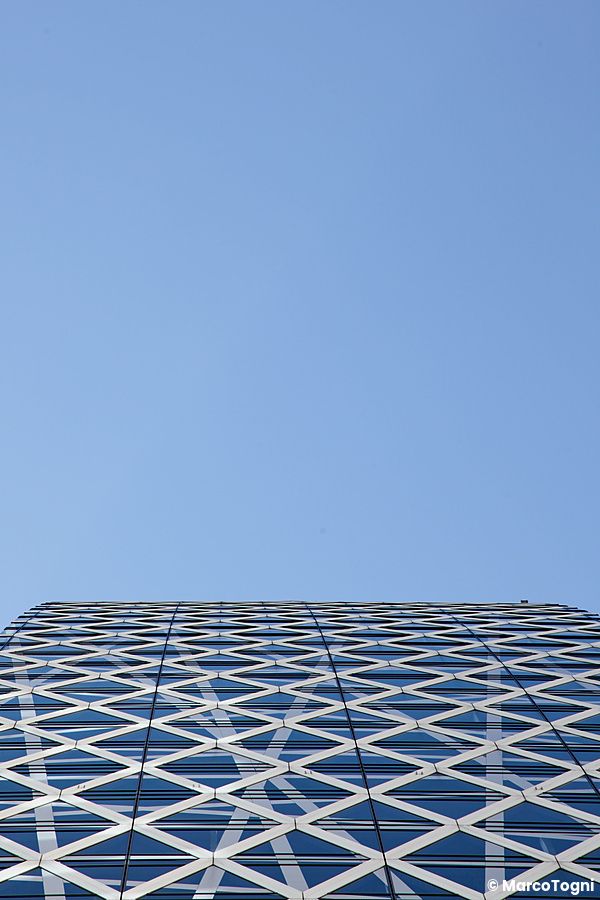
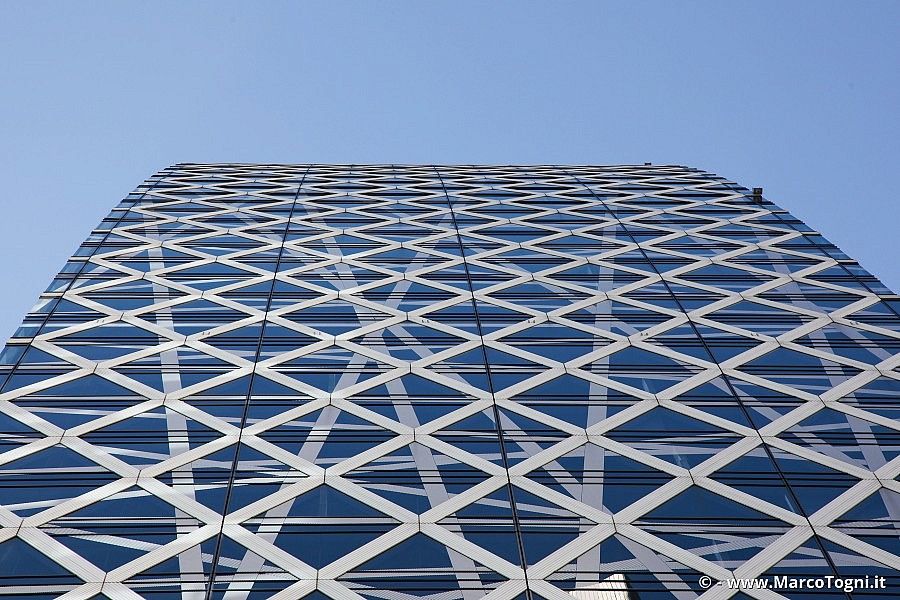
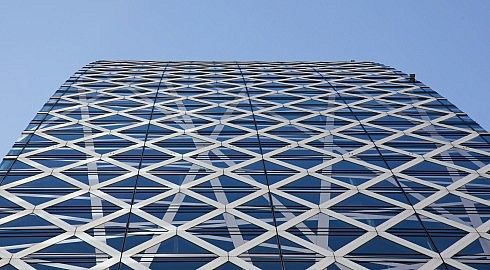
The geometric facade of the Cocoon Tower in Shinjuku, with its distinctive white diagonals against a blue sky.
The crisscross cladding of white-painted steel works as an exoskeleton, so the rooms inside don't need any columns.
Tokyo's Cocoon Tower stands out against the evening sky, partly seen through a shrub lit with LED lights.
The round lights on the bushes in the foreground come on after sunset. Shoot with a wide aperture to turn them into a glowing, blurred background.
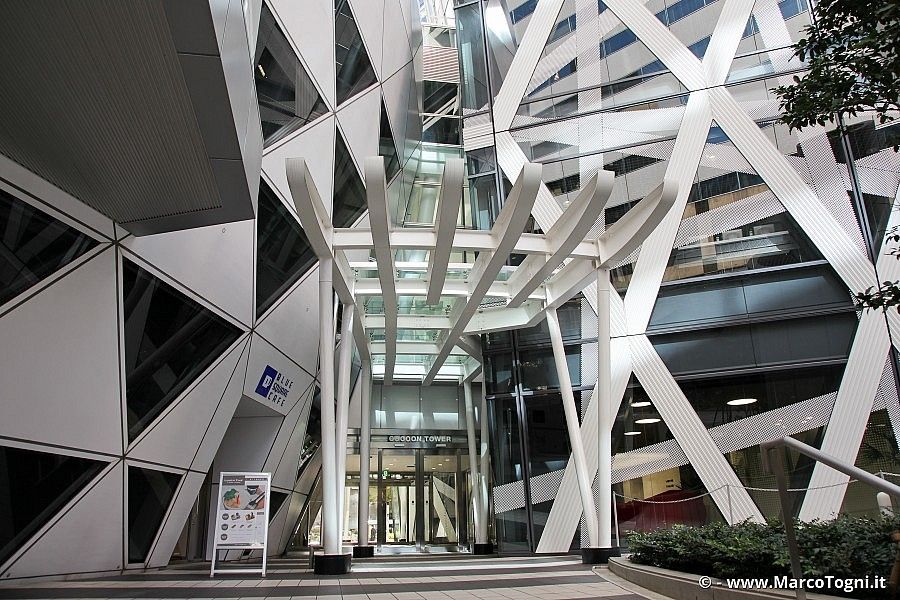
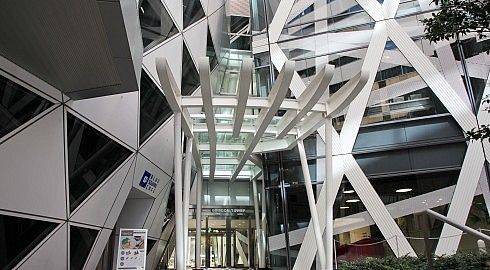
An architectural detail of the Cocoon Tower in Shinjuku, showing its typical white triangular lattice structure.
Follow the curve of the concrete at the base and you'll reach the Blue Square Cafe. Look up at the joints between steel and glass above your head, precise down to the millimeter.
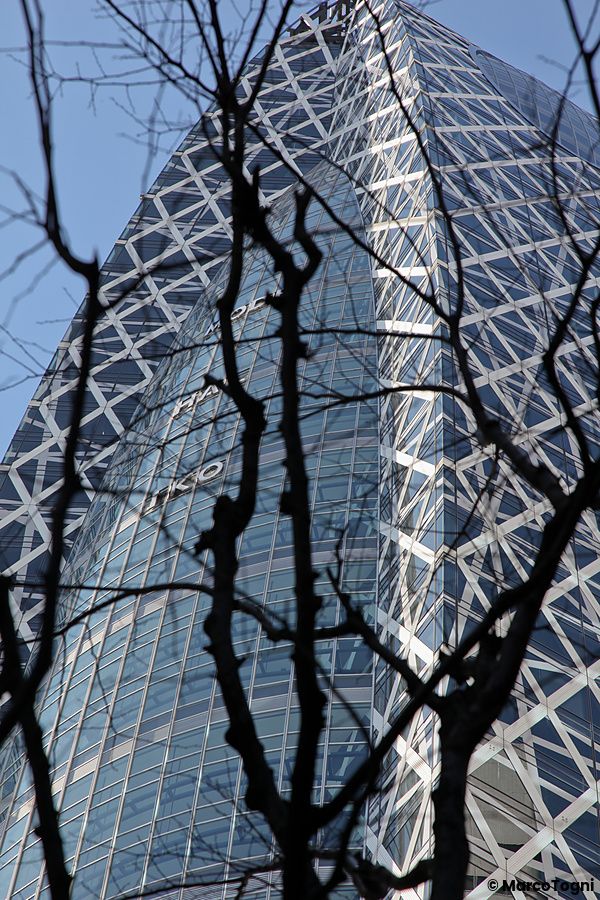
Shinjuku's Cocoon Tower rises behind the dark, bare branches of a tree on a clear day.
Bare branches frame the dense web of white metal. This structural detail is what lets the building withstand strong earthquake forces.
The Mode Gakuen Cocoon Tower in Tokyo seen from below, with lots of people walking by in the foreground on a sunny day.
The sidewalk out front is always crowded with students and office workers. Look up and you get a sense of how massive the facade is above the people walking by.
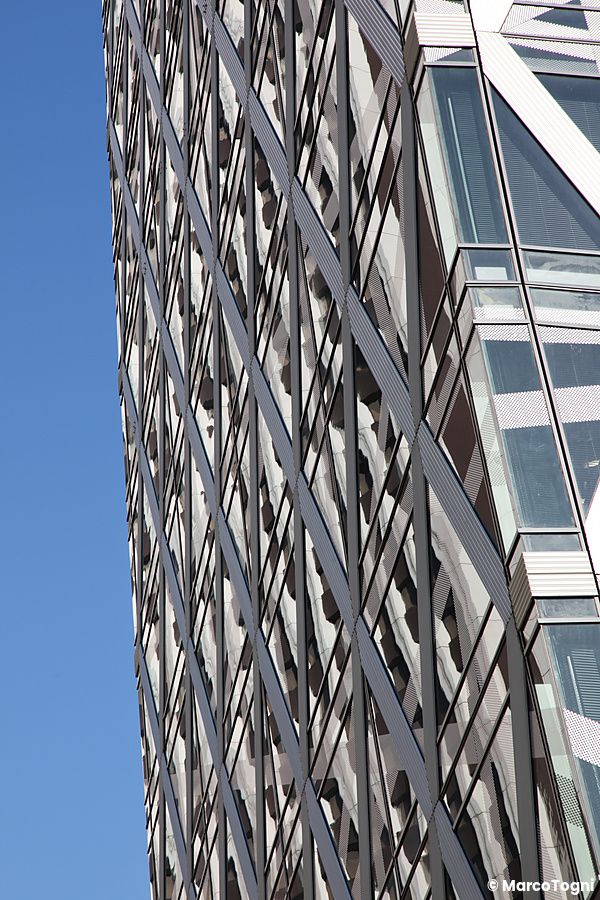
An architectural detail of the Cocoon Tower's facade in Shinjuku, with its distinctive woven structure.
Dark glass panels fill the diamond-shaped gaps left by the load-bearing structure. On clear days they reflect the blue sky and the colors get more saturated.

Three schools in one skyscraper

Behind the glass there are no offices, just classrooms full of students. Tokyo Mode Gakuen teaches fashion and design, HAL Tokyo covers IT, video games and graphics, and Shuto Iko trains people for medical careers. Those are the three names you see lit up on the facade. The tower can hold up to 10,000 students across the three schools, and it’s the second-tallest school building in the world.
Every three floors the shell opens up into a three-story lounge looking out over the city, which is also why some horizontal bands of the tower look lit differently from the rest at night. The classrooms are only open to the people who study there, though, so you’ll see it all from the outside. That’s where you really get a feel for the building’s shape anyway.