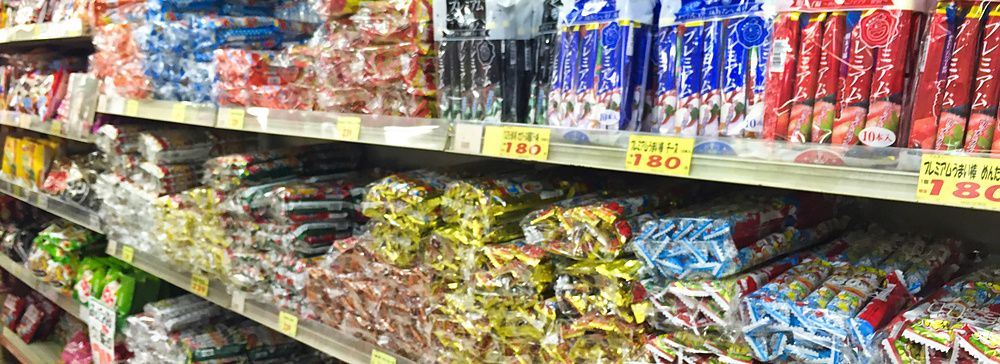
Dagashiya
Walking into a dagashiya is one of the simplest, most cheerful ways to see a side of Japan that you won’t find in guidebooks. These are the little shops selling cheap sweets where generations of Japanese kids have gone to spend their pocket change after school, taking their time choosing from dozens of colorful little boxes.
There are far fewer of them than there used to be, but if you know where to look you can still find them. Some are neighborhood shops run by elderly women, while others are bigger stores that also cater to tourists. With a few hundred yen in your pocket you’ll walk out with a full bag, and Tokyo has at least a couple of places where you can see a real one.
Contents
What is a dagashiya
The name tells you most of the story. Dagashi are sweets that cost a few coins, and the suffix ya means shop. The word came about in contrast to the refined traditional sweets made with fine sugar for ceremonies and special occasions. Dagashi were the sweets of ordinary people, made from cheap grains and syrups.
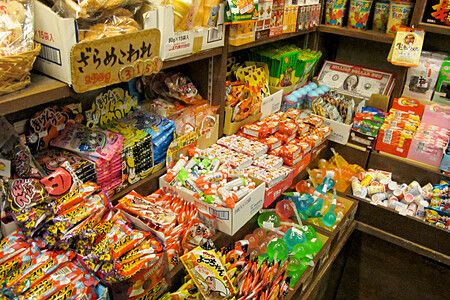
Today a dagashiya mostly sells packaged snacks, candy, gum, chips in tiny bags, drinks and small toys. The classic shop is a single room on the ground floor of a house, with its entrance wide open to the street, low shelves at kids’ height and small wooden or plastic boxes full of loose sweets.
There’s often an elderly woman behind the counter, and the neighborhood kids simply call her obachan, auntie. She adds things up out loud or on an old abacus, knows everyone by name and knows who has already spent all their allowance. For many people she’s as much a part of the shop as the sweets, and she’s the reason so many Japanese adults talk about these shops fondly.
How it all started
Shops selling cheap sweets already existed in the Edo period. Back then they were called ichimon gashiya, one-mon sweet shops, after the smallest coin of the time. What they sold was very simple: sweet potato jelly, puffed sugar candy, rice crackers and puffed rice treats.
Their golden age came after the war, with the economic boom. The dagashiya became the place where kids made their first purchases on their own, swapped trading cards, played and met up with friends. The number of shops peaked sometime around the 1980s, then started falling fast.
The reasons for the decline are pretty clear. Konbini open around the clock came along, and so did supermarkets selling the same snacks in big packs. Kids got game consoles to play with at home, and there were fewer and fewer kids. Then there’s the usual problem for small Japanese shops: the owners get older and nobody wants to take over, because selling sweets for a few yen barely makes any money.
Today Tokyo is down to a few dozen traditional dagashiya. That’s why I always stop when I find one open in a residential neighborhood. You never know if it’ll still be there in a few years.
What to buy
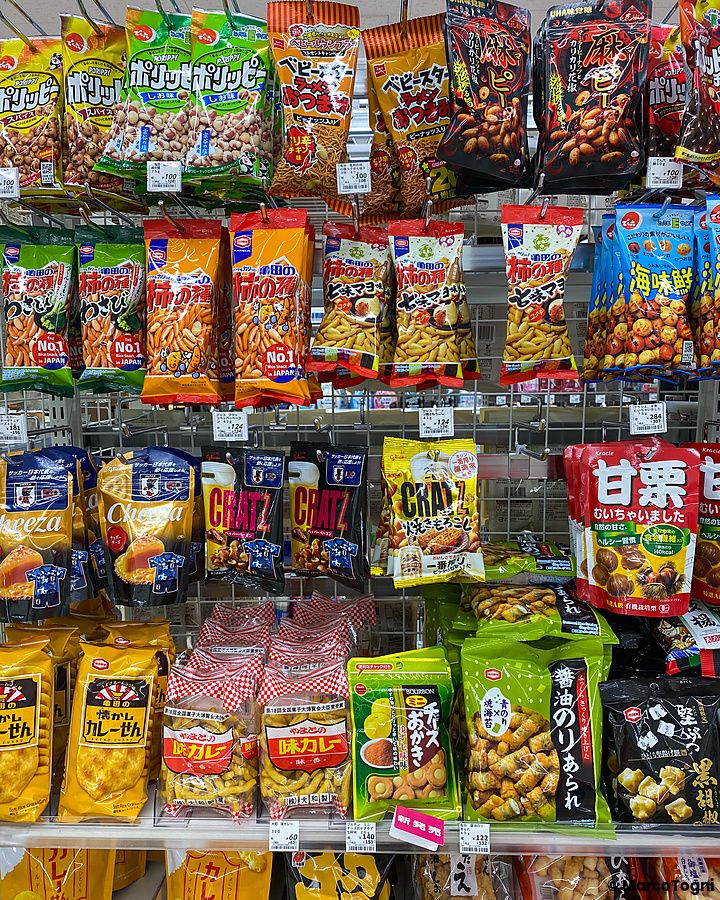
The shelves of a dagashiya are full of products many Japanese people recognize at a glance, because they’ve been around for decades with the same packaging designs and often the same taste. A wholesaler can carry hundreds of different kinds, and even a tiny shop can easily have a hundred or so on display.
These are the ones I’d suggest trying at least once:
- Umaibo: the cylindrical puffed corn stick that’s pretty much the king of dagashi. It comes in tons of flavors, from cheese and corn soup all the way to takoyaki, and it’s worth grabbing three or four different ones.
- Baby Star Ramen: fried, crumbled noodles you eat straight from the bag. They’re salty and a little spicy, and you get hooked fast.
- Tirol Choco: little chocolate squares with a different filling for each flavor. You can find them at konbini too, but dagashiya have more variety.
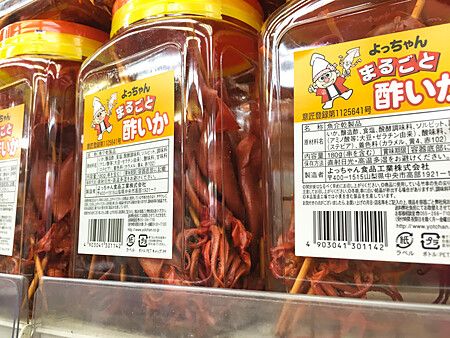
- Yocchan Ika: bits of squid marinated in vinegar, a flavor that throws off anyone used to sweets but that Japanese people love.
- Kinako bo: soft sticks of roasted soybean flour on a toothpick, one of the oldest dagashi of all.
- Cabbage Taro: puffed corn balls with sauce and aonori seaweed, shaped like tiny cabbages.
Besides the salty and sweet snacks, there’s almost always a fridge with small bottled drinks and popsicles, and then a toy corner with water guns, bouncy balls, trading cards, fake rings and little whistles. It’s stuff that costs a few yen and lasts an afternoon, and that’s exactly the point of the place.
Some shops also sell Butamen, mini instant noodles in a cup, and keep a thermos of hot water by the register so you can make them and eat them right outside. I like doing this in winter, because holding that little steaming cup while you look out at the neighborhood has a charm of its own.
Prices and pocket change
Part of a dagashiya’s appeal is in the numbers. Most dagashi cost between 10 and 100 yen, plenty of items cost around 20–50 yen, and an Umaibo goes for about 15 yen.
Only a handful of sweets really cost a single 10-yen coin: some loose candy, a few kinds of gum, the soybean sticks. Everything else costs a bit more, but it’s still a tiny amount compared with anything else in Japan.
With 500 yen you’ll fill a bag, and with 1,000 yen you’ll have a hard time spending it all. For many Japanese kids the dagashiya was their first lesson in everyday math. You walk in holding 100 yen and try to get as much as you can for it, adding it up in your head and putting back whatever takes you over.
Try playing the same game yourself, maybe with a set budget per person if you’re traveling with kids.
Prizes and games
Many dagashi give you a shot at a little prize, which makes buying them more fun. It’s called atari, which means a win: you open the package, and if you find the winning message, you get another one free.
The best-known example is kinako bo. If the tip of the toothpick is colored red, you’ve won and can ask for another stick. Other products have the winning ticket printed on the inside of the wrapper or on the popsicle stick, and kids double-check every wrapper before throwing it away.
Then there are kuji, lotteries that cost a few yen. You pull a little ticket off a board, and depending on the number you win a bigger or smaller toy. It’s almost always something small, but every now and then someone wins the prize hanging up top that everyone’s been eyeing.
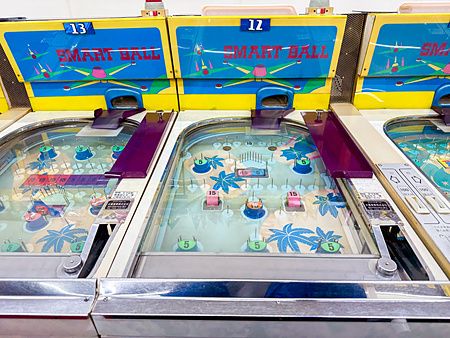
Some dagashiya also have a few old coin-operated games out front. You drop in a 10-yen coin and try to get it all the way to the end of a track to win a token. These noisy machines covered in lights look like they come from another century, and they’re one of the most fun parts of the visit.
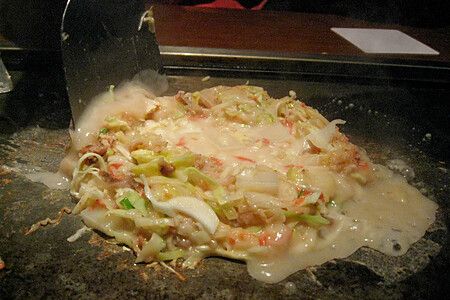
Monjayaki also comes from Tokyo’s dagashiya. Today people eat this flour batter cooked on a griddle at restaurants in Tsukishima, but in the little shops kids used to cook a very simple batter with a bit of soy sauce and write letters and pictures on it. That’s where the name comes from: moji means writing.
Where to find one in Tokyo
Finding a traditional dagashiya takes a bit of luck, because they’re in residential areas, not tourist neighborhoods. A few, though, are easy to put on your itinerary:
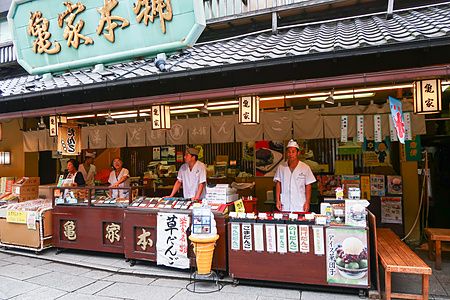
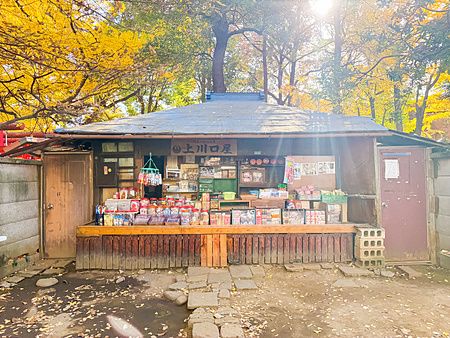
- Kamikawaguchiya: in the Zoshigaya neighborhood near Ikebukuro, it’s considered the oldest dagashiya in Japan. It opened in 1781 and sits under a big tree in the grounds of Kishimojindo temple, and a woman from the 13th generation of the same family sells the sweets.
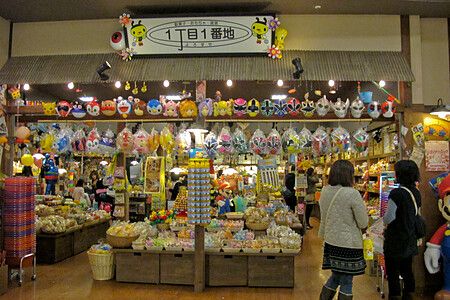
- Daiba Itchome Shotengai: on the fourth floor of the Decks Tokyo Beach mall in Odaiba, this covered street recreates a Showa-era neighborhood, with dagashi shops, old-style games and vintage signs.
- Yanaka and Nezu, between Ueno and Nippori, are among the easiest areas to stumble across old shops as you walk around, dagashiya included.
- Big discount snack chains and stores like Don Quijote often have a dagashi corner. It’s handy for stocking up on souvenirs, even if there’s none of the atmosphere.
Kamikawaguchiya is the one I recommend most if you want to see a dagashiya the way it used to be. It’s a tiny open-air stall inside a very quiet temple, and buying sweets there feels just like it must have for kids two centuries ago. Opening hours are irregular and it may stay closed in bad weather, so have a plan B in the area.
Odaiba is the opposite. It’s a recreation, crowded and set up like an attraction. It isn’t authentic in the strict sense, but it’s easy to visit with kids, the signs are easy to follow even if you can’t read Japanese, and you’ll find everything in one place.
Outside Tokyo
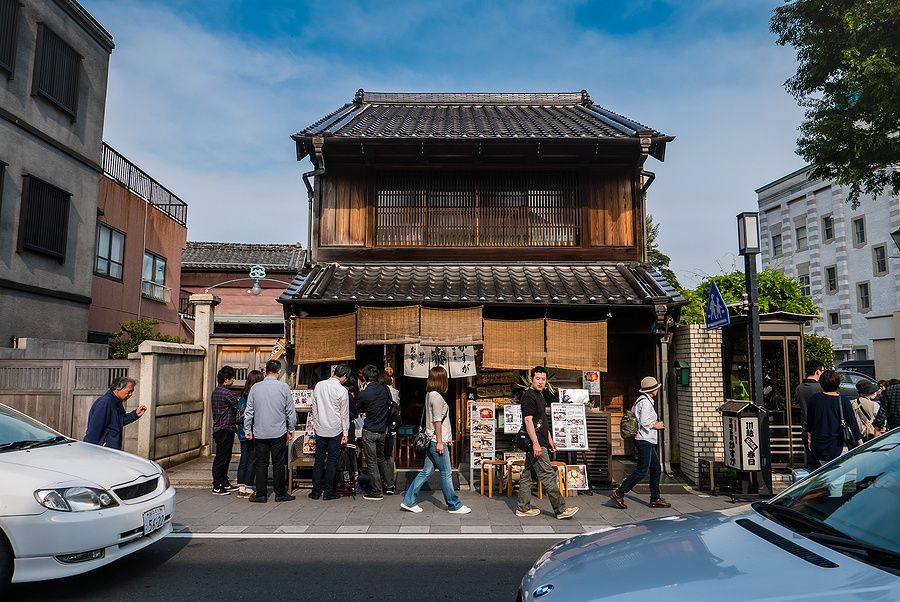
If you’re planning a day trip to Kawagoe, the town less than an hour from Tokyo known for its Edo-period merchant storehouses, Kashiya Yokocho is worth the detour. It’s a lane a couple of hundred meters long, lined with about twenty shops selling traditional sweets and dagashi.
Its history goes back to the Great Kanto Earthquake of 1923. When the earthquake destroyed Tokyo’s candy-making businesses, Kawagoe started making sweets for the whole region, and the street ended up with more than sixty shops. Today you’ll find handmade sweets, pulled candy, extra-long sugar sticks and the classic packaged dagashi, and on weekends the street gets very crowded.
Around Japan there are also big specialty stores selling thousands of different kinds of dagashi, practically dagashi supermarkets. And outside the big cities you can still come across the small-town dagashiya next to the elementary school, with kids’ bikes parked out front in the afternoon.
To me these are the best ones to find, because they’re still part of neighborhood life and not places for tourists. If you happen to walk past one, go in without overthinking it.
Dagashi bars
The grown-up version is the dagashi bar, where people eat the candy they grew up with along with a beer or a cocktail. You pay a small fee based on how long you stay, order at least one drink, and then take whatever you want from the shelves, with no limit.
The place is crammed with old manga, toys and Showa-era objects, with pop songs and anime theme songs from a few decades ago playing in the background. Some bars also have a menu of Japanese school lunch dishes, like fried bread coated in sugar.
It’s a different experience from a real dagashiya, much more geared toward Japanese customers’ nostalgia. I’ll be honest: if you didn’t grow up in Japan, some of the fun is lost on you. Still, it makes for a different kind of night out with friends. You get to try dozens of snacks without buying whole packs, and it costs less than a night at an izakaya.
Tips for your visit
A dagashiya is a neighborhood shop that kids often go to, and a few small courtesies make the visit nicer for everyone:
- Bring 10-, 50- and 100-yen coins: you pay in cash at traditional shops, and paying for a few hundred yen’s worth of candy with a 10,000-yen bill puts whoever’s at the register in a tough spot.
- Use the basket or the little box by the entrance instead of walking around with your hands full of packets, and put everything on the counter when you’re done.
- Give the kids space while they pick, and don’t photograph their faces. For them this is part of everyday life, not a show.
- Ask before taking photos of the inside or of the person at the register, especially in the small shops.
- Don’t eat while walking down the street: stop in front of the shop like everyone else does, and throw your wrappers in the trash can that’s usually next to the entrance.
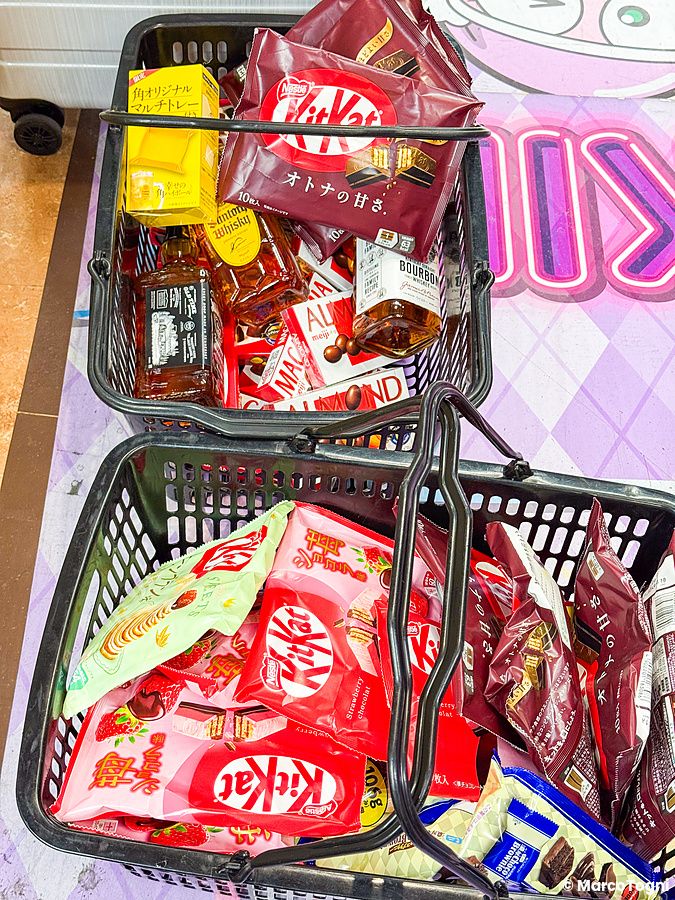
Dagashi also make great souvenirs to take home. They’re light and cheap, and a mixed bag with ten or fifteen different flavors always goes over well, with kids and curious adults alike.
Just check the expiration dates: on some products, like soft candy or squid, they come up sooner than you’d think. And be careful with anything chocolate-filled if you’re traveling in summer.
My advice
I’d say don’t treat a dagashiya as something to check off a list. Use it as an excuse to stray from your usual itinerary. Set aside an afternoon, head toward Zoshigaya or Yanaka, walk into the first little shop you see with colorful boxes out front, and spend five hundred yen like you’re ten again.
It won’t cost you much, and it isn’t spectacular either. It’s small, noisy, full of sugar and full of packages you can’t read. And that’s exactly why, once you’re back home, it’s one of the memories that make you smile the most. Which Umaibo would you try first?