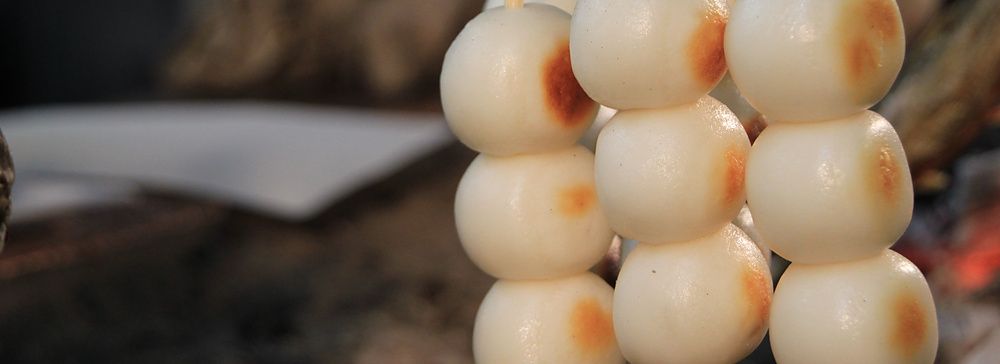
Dango
Dango are one of the easiest Japanese sweets to try and, in my opinion, one of the most underrated by first-time visitors to Japan. They’re rice flour balls on a skewer, soft and a little chewy, and you’ll find them everywhere: at temples, in markets, in long-established sweet shops and even at the konbini down the street.
They look simple, but there are dozens of flavors, different versions from one region to the next, and shops in Tokyo that have been making them for over a century. Keep a few things in mind and your first bite won’t be a letdown.
Contents
What dango are
To make dango, you mix rice flour with water, roll the dough into balls and then boil or steam them. You usually thread three, four or five onto a bamboo skewer and top them with a sauce, a paste or a sweet powder.
The texture is the first thing you notice. They aren’t crunchy and they don’t melt in your mouth; instead they put up a little resistance when you bite down. In Japanese this is called mochimochi, a word for exactly that springy, dense feel, and people here love it.
On its own, a ball has very little flavor, almost like plain cooked rice. All the flavor comes from the topping, which is why dango from two different shops can feel like two completely different sweets.
There’s even a well-known saying, hana yori dango, which literally means “dango over flowers.” It’s used to tease people who go to see the cherry blossoms but really only care about the food, and it says a lot about how much this sweet is part of everyday life.
Dango vs. mochi
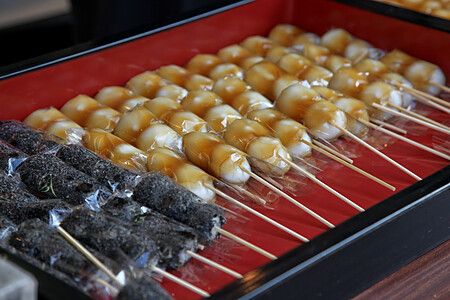
People ask me about the difference between dango and mochi more than anything else, and it makes sense, because they look almost the same. The difference is in how they’re made. Mochi starts with glutinous rice that’s cooked and then pounded for a long time, while dango start with rice that’s already been ground into flour and is then mixed with water.
Two flours are used most often. Joshinko comes from regular rice, the kind people eat every day, and gives firmer, denser balls; shiratamako comes from glutinous rice and gives softer, smoother ones. Many shops blend the two in different ratios, and each has its own recipe.
When you eat them, you can feel the difference. Mochi is stickier and stretches when you bite it, while dango hold their shape better and break off cleanly. Neither one is better than the other, but if you found mochi too gluey, you might like dango more.
Mitarashi dango
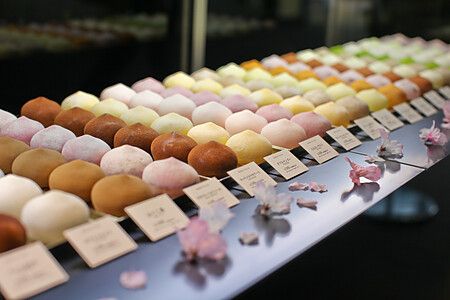
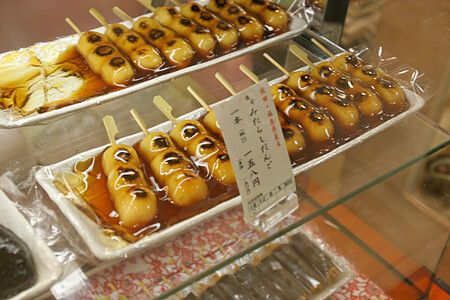
Mitarashi dango is the best-known flavor, the one you’ll find in any shop. The balls are lightly grilled and then covered in a thick, glossy sauce made from soy sauce, sugar and starch that tastes like salted caramel.
It’s the dango I always recommend to people who’ve never had Japanese sweets, because that sweet-and-salty mix makes sense right away, even if you don’t care for red beans. Fresh off the grill, with the edges slightly charred, it’s nothing like the packaged kind.
It traces its origins to Shimogamo Shrine in Kyoto, where Kamo Mitarashi Chaya, a small teahouse that specializes in it, is still open today. There the skewer has five balls, with the top one set slightly apart from the rest. According to tradition, they stand for a person’s head and limbs, or for the bubbles in the shrine’s purification pond.
In Tokyo you’ll more often see four to a skewer. The story goes that in the Edo period dango cost one mon per ball, and when a four-mon coin came into circulation, vendors switched to four balls per skewer so customers could pay with a single coin. True or not, it’s a story you’ll hear a lot.
Other flavors
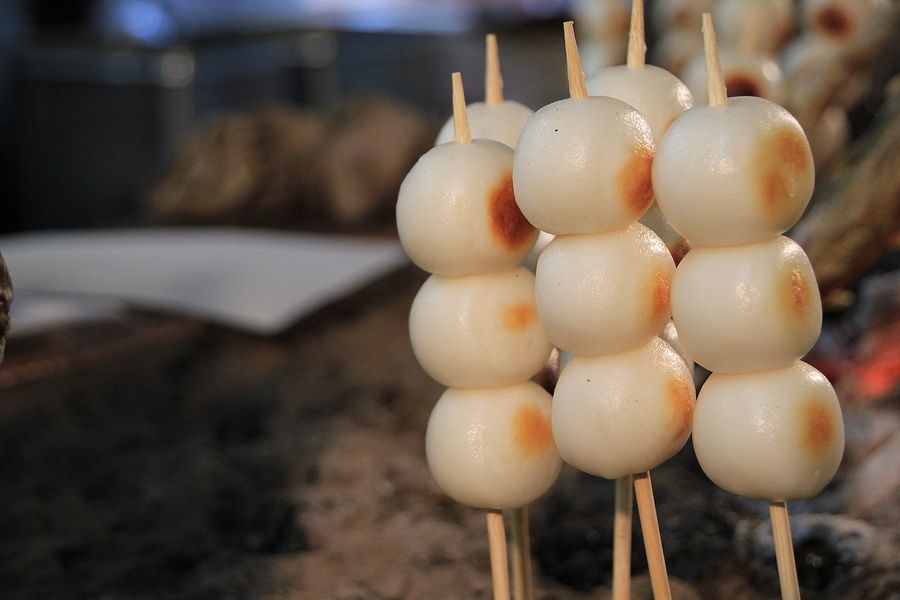
After mitarashi, the other big classic is dango with anko, red azuki bean paste. It comes in two versions, and it’s worth knowing which is which, because the dango end up tasting quite different. Koshian is a smooth, strained paste with no bits of skin and feels gentler on the tongue, while tsubuan still has whole or mashed beans in it and a more rustic flavor, with a stronger taste of beans.
You’ll often see other flavors in shop windows too:
- Kinako dango is coated in roasted soybean flour, which smells a bit like peanuts and is powdery, so try not to breathe in while you bite.
- Goma dango is topped with black or white sesame paste, richer and toastier, great if you like strong flavors.
- Isobe dango is grilled with soy sauce and wrapped in a piece of nori seaweed. It’s the savory version, almost a snack.
Up north, especially in Sendai and Tohoku, you’ll also find zunda dango, topped with a green paste made from mashed, sweetened edamame. It has a fresh, green flavor that surprises anyone expecting the usual kind of sweet. Honestly, if you’re in that part of the country, it’s the flavor I’d tell you to try before any other.
Seasonal dango
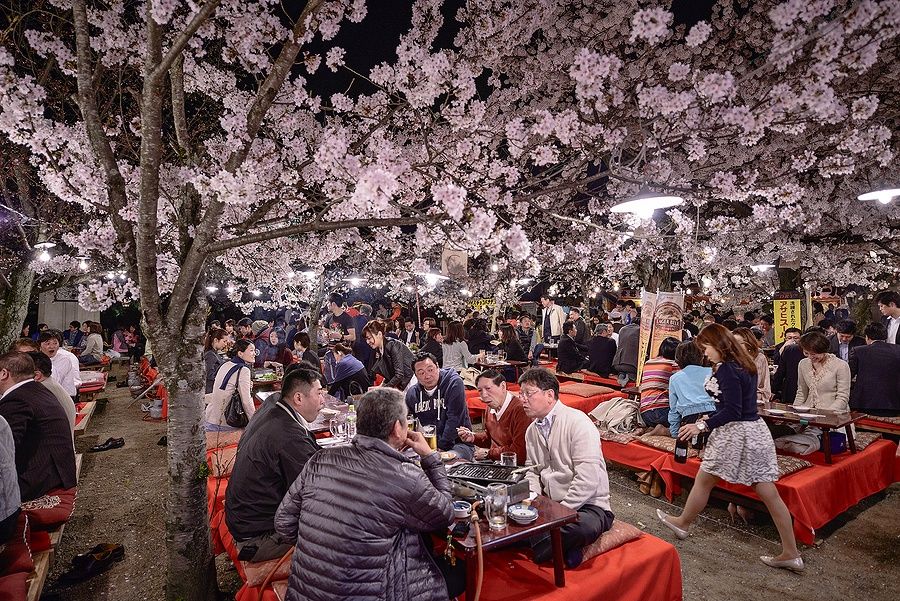
Hanami dango are the ones with three colored balls: pink, white and green. They show up in shops in spring, during cherry blossom season, and there are different explanations for the colors. Some say they stand for the buds, the blossoms and the leaves; others see them as the end of winter, spring itself and the coming summer.
The taste is light, little more than sugar and rice, and honestly they’re prettier to photograph than to eat. Still, they’re as much a part of a picnic under the cherry trees as beer and bento, and there’s almost always a pack from the konbini, picked up on the way to the park.
In autumn you’ll see tsukimi dango, made for the moon festival, which falls around September. They’re smooth white balls with no skewer, stacked in a pyramid on a small plate next to stalks of susuki grass, and offered to the full moon.
The deep green ones are kusa dango or yomogi dango, made with mugwort mixed in. They have a grassy smell and a slightly bitter taste, and usually come with anko. They’re more of a spring thing, but in many places you can get them all year.
Regional dango
Every part of Japan has its own version, and tracking them down is fun when you travel around the country. In Matsuyama, on the island of Shikoku, there’s Botchan dango: three colored balls covered in green, yellow and brown bean paste, named after Natsume Soseki’s novel Botchan, which is set in the city. You’ll find it everywhere around Dogo Onsen.
In Okayama there’s kibi dango, tied to the folk tale of Momotaro, the boy born from a peach who gives them to a dog, a monkey and a pheasant to get them to follow him. The kind sold as a souvenir today is closer to a small, soft mochi, packed in gift boxes. The name has a double meaning: Kibi is the old name of the Okayama region, but kibi is also millet, the grain these sweets were originally made from.
That’s why the kibi dango you’ll find in Asakusa, which really are made with millet, are a different sweet from the boxed ones from Okayama, even though they share the name.
In Niigata Prefecture you’ll find sasa dango: rice dough with mugwort, filled with anko, wrapped in bamboo leaves and tied with a strand of grass. They’re often sold in bunches and are one of the area’s classic souvenirs.
In Takayama, in the mountains of Gifu, mitarashi dango isn’t like what you get in the rest of the country. There’s no sweet sauce. The balls are just brushed with soy sauce and grilled over the fire. If you prefer savory flavors, it’s a nice surprise, and you’ll see stalls selling it along the streets of the old town.
Where to eat dango in Tokyo
Tokyo has shops that have been open for over a century, and I think they’re worth seeking out at least once instead of settling for the konbini. These are the ones I recommend most often:
- Habutae Dango, near Nippori Station, is one of the city’s oldest shops, opened in the early 1800s. Its dango are flattened instead of round and come two ways, with soy sauce or with anko, and there’s a small room with a garden where you can sit down and eat them with tea.
- Oiwake Dango, in the Shinjuku-sanchome area of Shinjuku, has a long history and a display case full of flavors, handy for trying three or four in one stop.
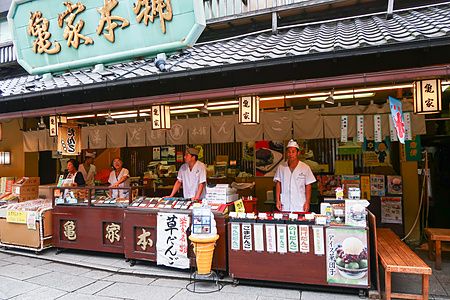
- In Shibamata, in the east of the city, the street leading to Taishakuten Temple is lined with kusa dango shops, the same ones that appear in the Tora-san movies, a hugely popular series of Japanese comedies. It’s easy to get there by train, and it makes for a half-day trip that’s quite different from typical Tokyo.
- In Asakusa, near the shopping street in front of Sensoji, you’ll find Edo-style kibi dango: small balls coated in kinako, served warm, often with a glass of iced matcha or amazake.
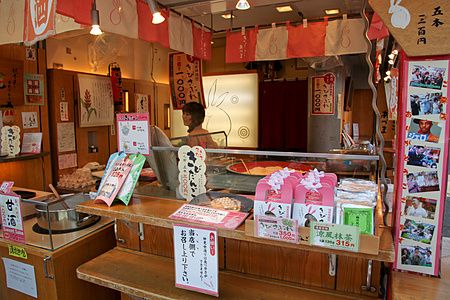
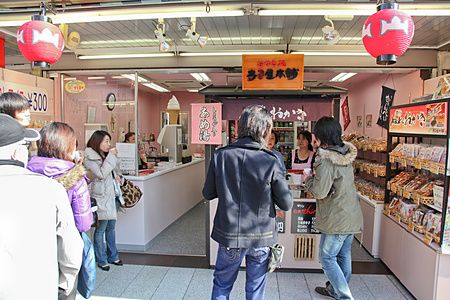
A lot of these places have limited space or only sell takeout, and on weekends lines form, especially in Shibamata and Asakusa. If you want to sit down and take your time, I’d go on a weekday morning, when the dango are also freshly made.
Prices and konbini dango
Dango are one of the cheapest snacks you can eat in Japan. At konbini and supermarkets they come in packs of two or three skewers for about 100–200 yen, while at specialty shops a single skewer usually costs between 150 and 400 yen, depending on the shop and the topping. It’s still a good idea to check current prices, but this is a sweet you buy without thinking twice.
There’s a difference in quality, and you can taste it. Factory-made ones are sweeter, more uniform and chewier, while shop-made ones are softer, smell of rice and are often grilled right in front of you.
The thing to know is that fresh dango need to be eaten the same day. Balls made without preservatives harden within a few hours, and by the next day they’re already firm and not very pleasant.
If you have leftovers, a few seconds in the microwave or a quick turn in a pan will soften them up again. Konbini dango are made to last longer, but it’s still worth checking the expiration date, since it’s never far off.
How to eat dango
There’s no real etiquette, but a couple of habits help. Pull the top ball off with your teeth, then slide the next one up toward the tip of the skewer so you don’t get sauce on your nose.
With mitarashi, keep a tissue handy, because the sauce drips easily, especially when it’s hot. Take it from me: light-colored clothes and a hot mitarashi eaten standing up don’t mix well.
In several tourist areas, like the street leading up to Sensoji in Asakusa, you’re asked not to eat while walking. Most shops have a small spot out front or off to the side where you can stop, and you can throw away your skewer there too. Trash cans are scarce on Japanese streets, so taking the stick back to the shop is the easiest option.
The classic drink to go with dango is green tea or hojicha, which is roasted tea. The tea’s bitterness clears the sweetness from your mouth and leaves you wanting a second skewer.
My advice
If I had to pick just one dango for someone arriving in Japan, it would be a freshly grilled mitarashi from a shop that grills them right in the window. Then an anko one, to taste the difference, and you can take it from there.
You don’t need to plan a special trip for it. When you walk past a temple or an old shopping street and see people lined up in front of a window full of skewers, stop. It’s cheap, it takes two minutes to eat, and it’s often the simplest, tastiest memory of the day. Which flavor would you start with?