What Is Dashi?
Hardly anyone orders dashi by name, yet it’s the most Japanese thing you can taste. It’s the base broth for miso soup, udon, oden, chawanmushi, home-cooked stews and half the sauces you’ll find on the table.
When people say Japanese food has an umami taste, they mostly mean dashi. And it’s much easier to make at home than you’d think: all you need is two dried ingredients that pack easily in a suitcase and about ten minutes on the stove.
Contents
What dashi is
Dashi is a light broth made in just a few minutes by steeping dried, umami-rich ingredients in water. It isn’t a meat stock left on the stove for hours. It cooks quickly and comes out clear, almost transparent, with a color anywhere from pale straw to golden.
On its own the flavor is delicate, a little briny and smoky, and the first time you try it you might think it’s not much more than salt water. But it isn’t meant to shine by itself. Its job is to act as a base and bring out the flavor of whatever you put in it.
In Japan it’s used pretty much everywhere. Miso soup is dashi plus miso, the broth for udon and soba is dashi with soy sauce and mirin, and the tamagoyaki in a bento often has dashi mixed into the eggs. Even dishes that don’t look like they have anything to do with broth, like boiled and dressed vegetables (ohitashi) or potato and meat stew (nikujaga), start with dashi.
That’s why I’d suggest thinking of it less as a dish and more as a basic ingredient.
The main ingredients
Only a handful of ingredients really matter, and almost all of them are dried products that keep for a long time. Each one brings a different kind of umami, and the secret is in how you combine them.
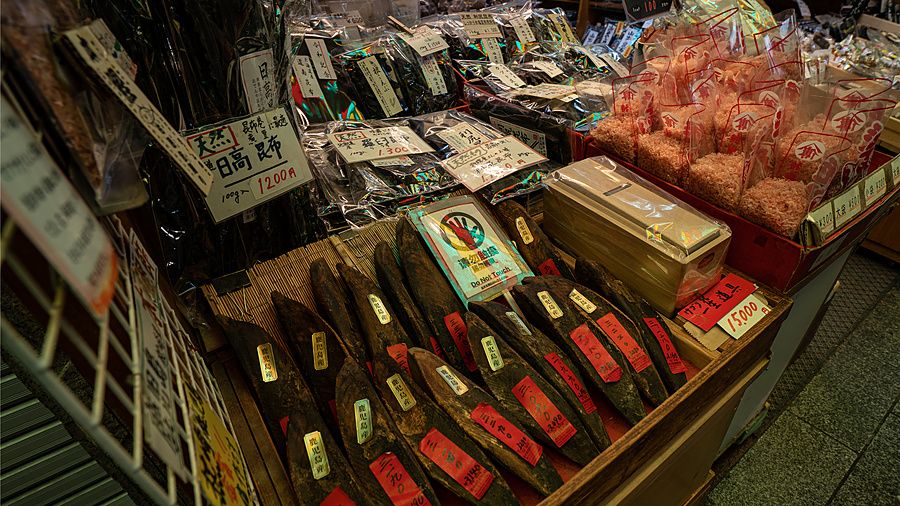
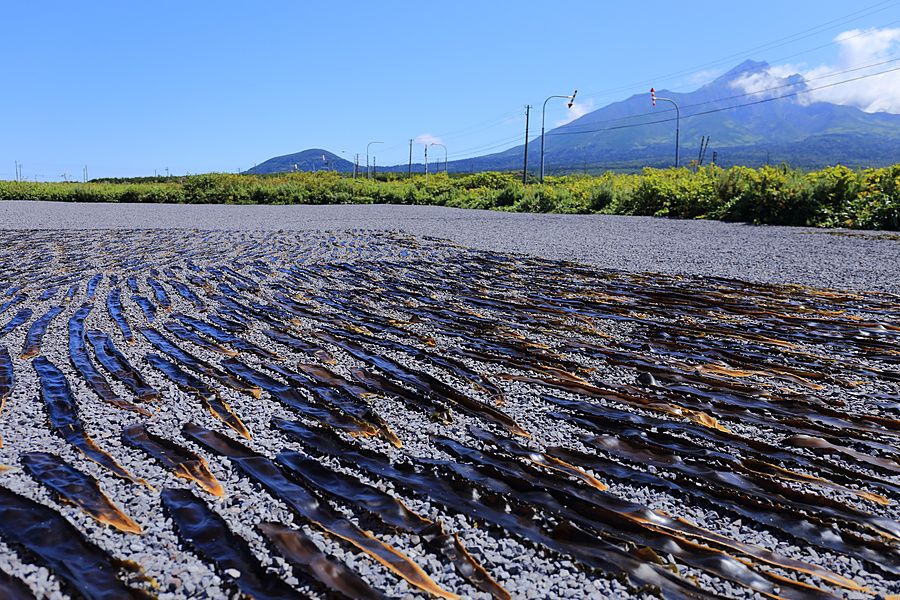
- Kombu is a dried brown seaweed sold in wide, stiff sheets with a white powder on the surface. That’s flavor, not dirt, so don’t wash it off.
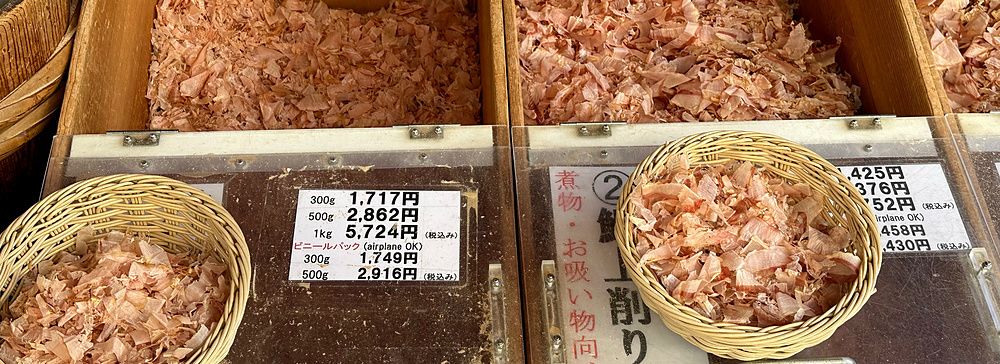
- Katsuobushi is skipjack tuna that’s been boiled, smoked and dried until it’s as hard as a piece of wood. It gets shaved into paper-thin flakes, the ones you see dancing on top of okonomiyaki and takoyaki.
- Niboshi are small sardines or anchovies, boiled and dried. They make a stronger, fishier broth that’s widely used for home-style miso soup and for some ramen.
- Dried shiitake have a deep, almost earthy flavor, and together with kombu they’re the base of vegetable dashi.
There are also more niche bases, like ago dashi, made from dried flying fish and typical of Kyushu, or seafood dashi, but to get started these four are more than enough.
The most common by far is awase dashi, which is kombu and katsuobushi together. It’s what you’ll find in most restaurants and home kitchens.
The science behind umami
There’s a clear scientific story behind dashi, and it’s the reason the whole world talks about umami today. In 1908, Kikunae Ikeda, a chemist at the University of Tokyo, wondered what gave kombu broth its particular taste, and found that the source was glutamate.
He was the one who gave this fifth taste the name umami, alongside sweet, salty, sour and bitter. His research later led to the founding of Ajinomoto, which started producing monosodium glutamate.
A few years later one of his students found another compound in katsuobushi, inosinate, and later still guanylate turned up in shiitake. When you put these compounds together they don’t just add up. They boost each other, so the flavor you taste is much stronger than what each ingredient gives on its own.
In practical terms, that’s why awase dashi has more flavor than a broth made only from kombu or only from katsuobushi. Japanese cooks had known this from experience for centuries, and chemistry just explained why.
Kanto vs. Kansai
Dashi changes from region to region, and the best-known difference is between Tokyo and the Osaka–Kyoto area. In Kyoto and Osaka cooks use a lot of kombu and the broth is delicate, while in Tokyo katsuobushi plays a bigger role and the flavor is bolder.
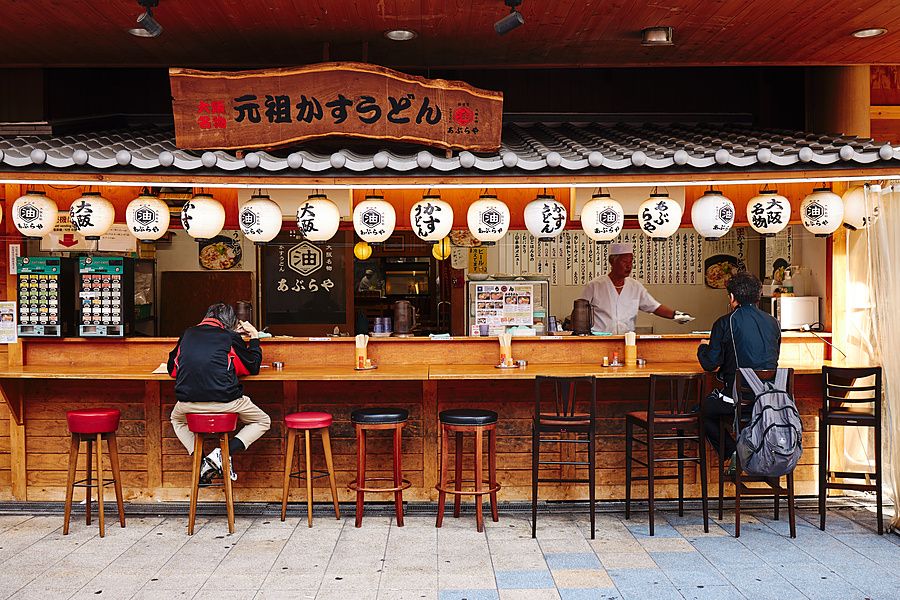
Udon makes it easy to see. In Osaka the broth is pale, almost clear, while in Tokyo it’s dark from the stronger soy sauce. People from Tokyo who eat udon in Osaka are usually surprised at how light the broth is, and yet how full of flavor.
There are two explanations for this difference, and they’re tied together. The first has to do with trade. Kombu comes from Hokkaido, and in the Edo period it traveled on ships down the Sea of Japan coast and from there all the way to Osaka, which became the center of the kombu trade.
The second is the water. Kansai water is very soft and draws the flavor out of kombu well, while Tokyo’s is slightly harder and gets less out of it, so cooks there came to rely more on katsuobushi.
Osaka still has long-established kombu shops where the seaweed is aged the way wine is, and if you step into one, even just out of curiosity, you’ll see how seriously people take this ingredient.
Making it at home
Awase dashi is much simpler to make than it looks, and once you’ve got two or three steps down you’ll be able to do it in your sleep. The classic ratio is roughly one liter of water, a piece of kombu weighing about 10 grams and around 20 grams of katsuobushi.
- Put the kombu in cold water and let it soak for at least half an hour. If you have time, a few hours or overnight in the fridge works great too.
- Heat the water over medium-low heat and take the kombu out as soon as the first bubbles appear, before the water actually boils. If you let it boil, the broth turns slimy and bitter.
- Bring the water to a boil, turn off the heat and add all the katsuobushi at once.
- Let the flakes sit for a couple of minutes until they sink to the bottom, then strain through a sieve lined with a cloth or paper towels.
- Don’t squeeze the flakes to get more liquid out, or the broth will turn cloudy and pick up a heavy aftertaste.
This first broth is called ichiban dashi. It’s the fragrant, clear one used for clear soups (osuimono), where you taste the dashi almost on its own. You can then boil the used kombu and katsuobushi again for about ten minutes to make a second batch, niban dashi, which is less fragrant but fuller-bodied.
My advice is to save the second one for stews, miso soup and dishes with other strong flavors. That way nothing goes to waste, which is also the spirit of Japanese home cooking.
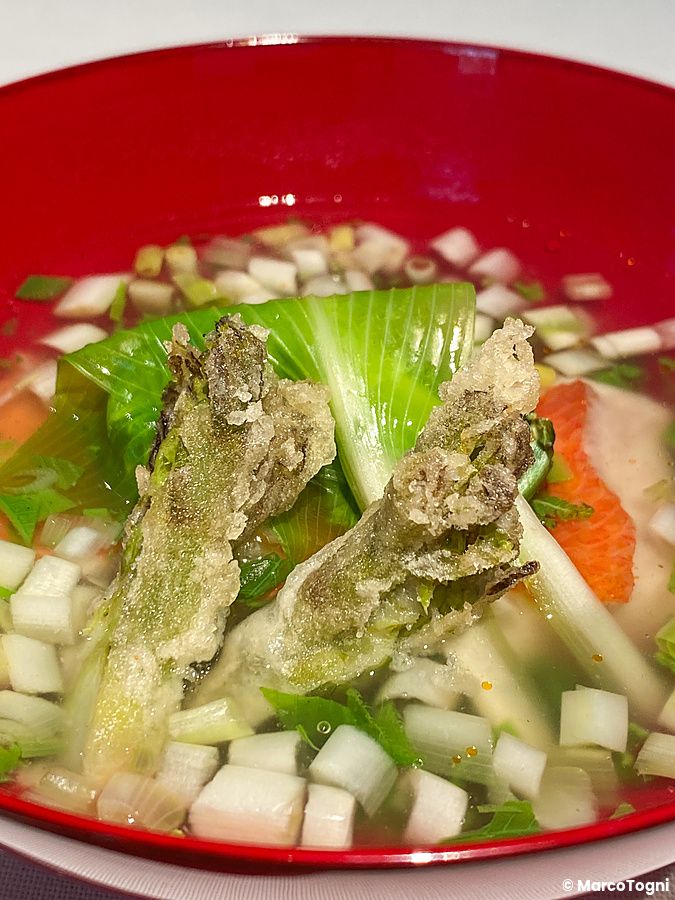
Cold-brew dashi
If you don’t feel like standing over the stove in the morning, mizudashi, or cold-brew dashi, is the easiest method there is. You put kombu and katsuobushi (or kombu and shiitake) in a bottle of water and leave it in the fridge overnight.
In the morning you strain it and end up with a very clean broth with no risk of bitterness, and it keeps for two or three days.
A lot of Japanese families always have a bottle like this in the fridge, and in summer it’s the easiest way to avoid turning on the stove. I like it mainly because the kombu comes through sweeter and rounder.
For vegetable dashi, the kind used in shojin ryori, the vegetarian cuisine of Buddhist temples, the cold method is an even better fit. Shiitake need time to soften and release their flavor, and a night in water is just the right amount of time.
Granules and dashi packs
Very few people in Japan make dashi from scratch every day, and that’s perfectly fine. I’ll be honest with you: plenty of Japanese home kitchens use granulated dashi too. The best known is Ajinomoto’s Hondashi, which dissolves in hot water in a few seconds.
It tastes stronger and a little saltier than real broth, and it often contains added glutamate. It’s fine for a quick miso soup, but in a clear broth where dashi is the star you’ll notice the difference right away.
A middle ground I always recommend is dashi packs, which work like tea bags. They’re filled with katsuobushi, kombu and other ingredients already ground up, and you just boil them in water for a few minutes.
The best-known brand is Kayanoya. It’s from Fukuoka and has shops in several cities, including in Tokyo department stores. Kayanoya’s packs cost more than supermarket ones, but the result comes pretty close to homemade dashi. Supermarkets carry packs at every price point anyway, from bargain packs to name brands, and the difference you’ll taste comes down mostly to how much salt and how many additives they contain.
A few things to help you find your way around the shelves:
- Packages labeled 無添加 (mutenka) have no additives, and they’re usually the best quality.
- Shiro dashi is a concentrated liquid dashi already seasoned with light soy sauce and mirin. It’s very handy for broths and eggs, but it’s salty, so dilute it and use it with a light hand.
- Mentsuyu is another ready-made liquid base, designed for soba and udon, and it already contains dashi, soy sauce and sugar.

Where to taste it on its own
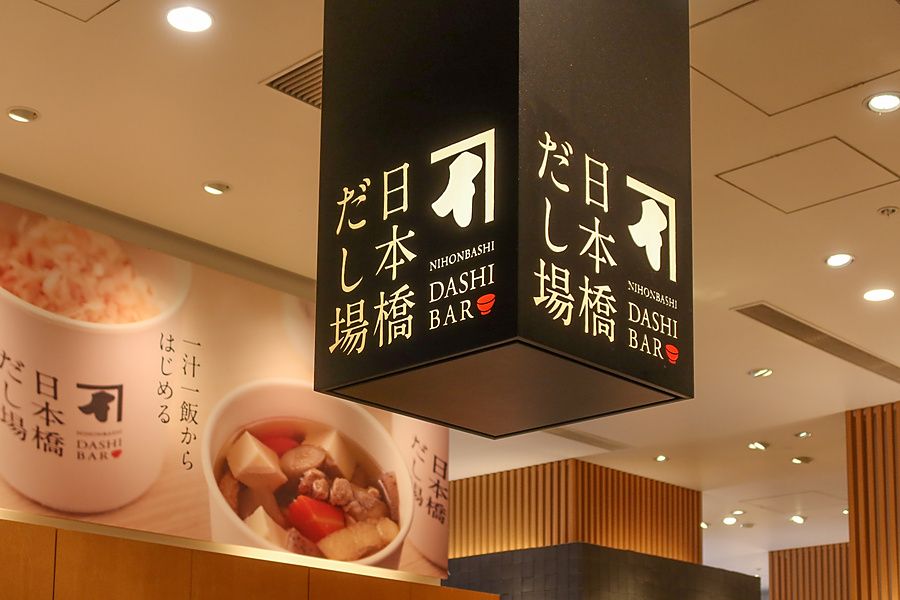
To really understand dashi, you should drink it on its own, without miso or sauce, at least once. In Tokyo the easiest place to do that is the Nihonbashi Dashi Bar, opened by Ninben, a katsuobushi company that’s been around since the late 1600s and is based right in Nihonbashi, a few minutes from Tokyo Station.
At the counter they’ll serve you a small cup of hot broth for a few hundred yen, and there are also soups and dishes made with dashi. It only takes ten minutes, but it lets you taste the clean flavor of good katsuobushi better than any explanation could.
The other way, which is even easier, is to order dishes where dashi is the star. These are my favorites for getting a feel for it:
- Oden, an assortment of ingredients cooked for a long time in a clear broth. In winter you’ll also find it at konbini, next to the register.
- Chawanmushi, a savory custard of egg and dashi, steamed and served in a small cup with a lid.
- Udon in clear broth, ideally somewhere around Osaka, so you can taste the kombu-heavy version.
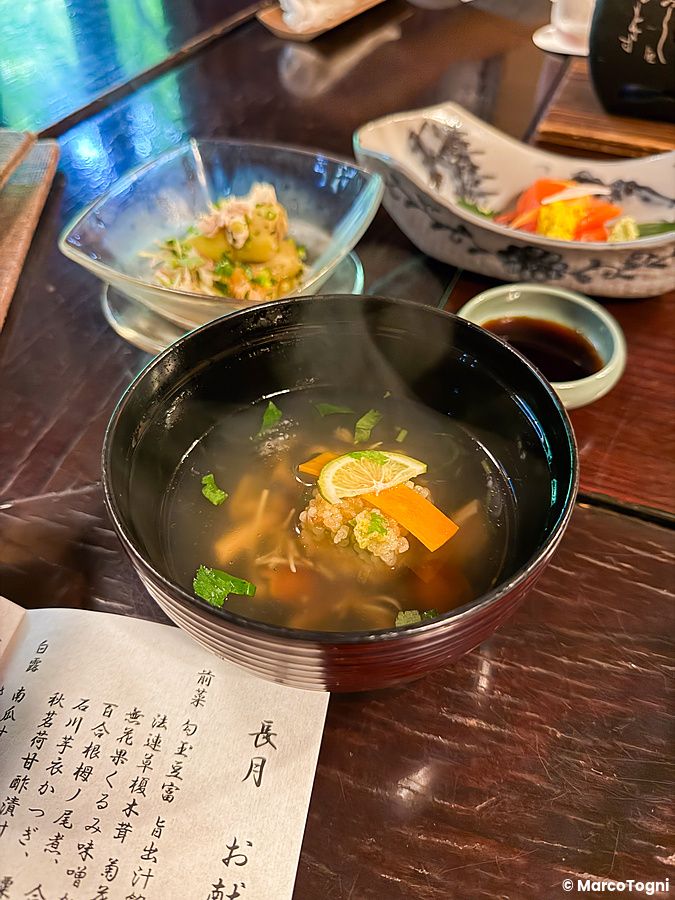
- Osuimono, the clear soup that shows up in kaiseki menus and ryokan meals, where you can taste the quality of the dashi in every sip.
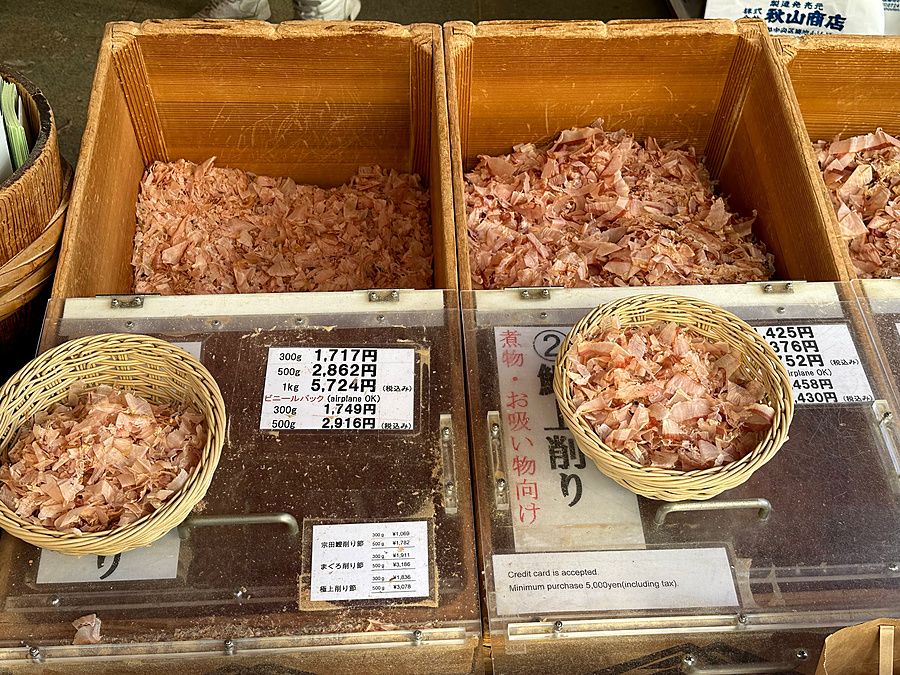
And if you’re passing through Tsukiji Outer Market, there are stalls selling katsuobushi in blocks and as freshly shaved flakes. You can catch the smoky smell from the street, and once you see a whole block you’ll understand right away why people compare it to a piece of wood.
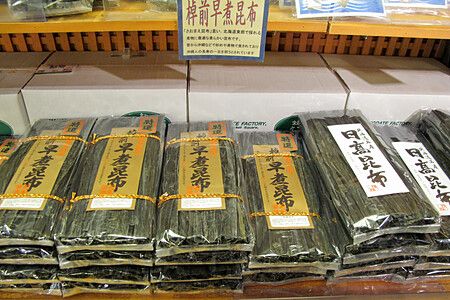
Top-grade katsuobushi and kombu
Katsuobushi isn’t all the same, and the difference comes down to how it’s made. The most common kind, arabushi, is fish that’s been smoked and dried. The most prized kind, honkarebushi, is coated several times with a beneficial mold after smoking and then left to age for months.
The mold absorbs the moisture and fat still left in the fish, so you end up with a clearer broth and a lighter flavor. The best-known production centers are Makurazaki and Ibusuki in Kagoshima Prefecture, and Yaizu in Shizuoka Prefecture.
Kombu almost always comes from Hokkaido, and there are different varieties depending on which coast it grows on. Ma-kombu makes a sweet, clear broth, and rishiri kombu is the favorite in Kyoto for clear broths. Rausu kombu gives a richer dashi that’s a little cloudy, while hidaka kombu is soft and is also eaten in stews.
Prices climb steeply as quality goes up. A supermarket pack costs a few hundred yen, but aged kombu from specialty shops can run several thousand yen. For home cooking I’d suggest something in between: a good ma-kombu or rishiri, without going overboard on special vintages.
Taking dashi home
Dashi is one of the most useful food souvenirs you can pack, because the ingredients are dry and light, and they keep for months. Dashi packets are the easiest option: they come in cute gift packaging and anyone can use them.
If you want to do it properly, get a pack of kombu and a vacuum-sealed pack of katsuobushi flakes. Once you open the katsuobushi, seal it tight and use it up quickly, because it loses its aroma fast.
Seaweed and dried shiitake won’t cause any trouble at airport security or customs. Katsuobushi and niboshi are fish products, though. They’re generally allowed for personal use if they’re packaged and sealed, but check your country’s rules before you leave.
Liquid products like shiro dashi and mentsuyu belong in your checked luggage, well wrapped, since a bottle that breaks in your suitcase leaves a fishy smell that’s hard to get out.
My advice
If you bring home just one thing from Japan to cook with, get a piece of kombu and a pack of katsuobushi and try making your first ichiban dashi. It takes ten minutes, and you’ll realize the miso soup you’d been making with instant powder was a different thing altogether.
When people ask me where to start with Japanese cooking, I always give the same answer: dashi first, then everything else. Rice, miso, udon, eggs… it really does change everything.