 231 m
Sushi Ginza Onodera231 m
Chain with excellent sushi.
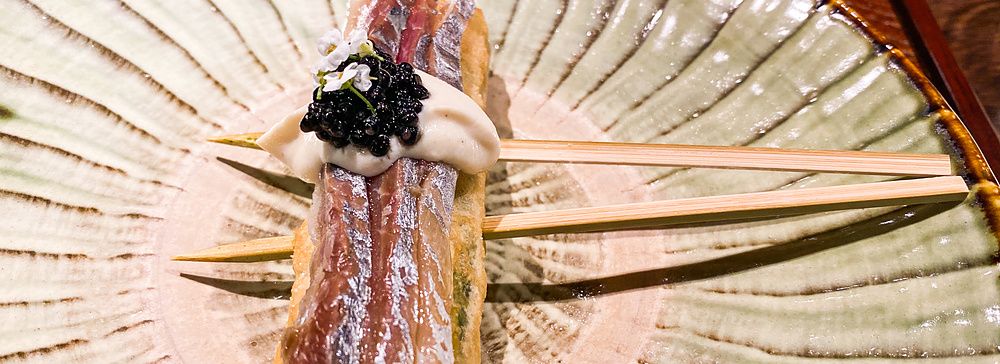
A fine-dining restaurant in Omotesando where every course comes on a skewer, and Japanese and French cooking meet in the same bite.
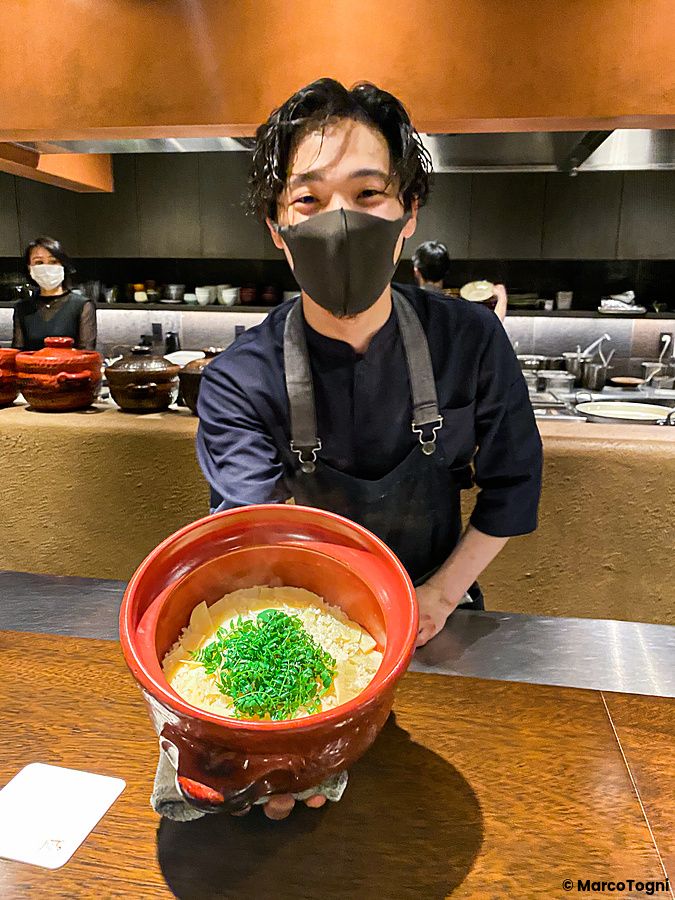
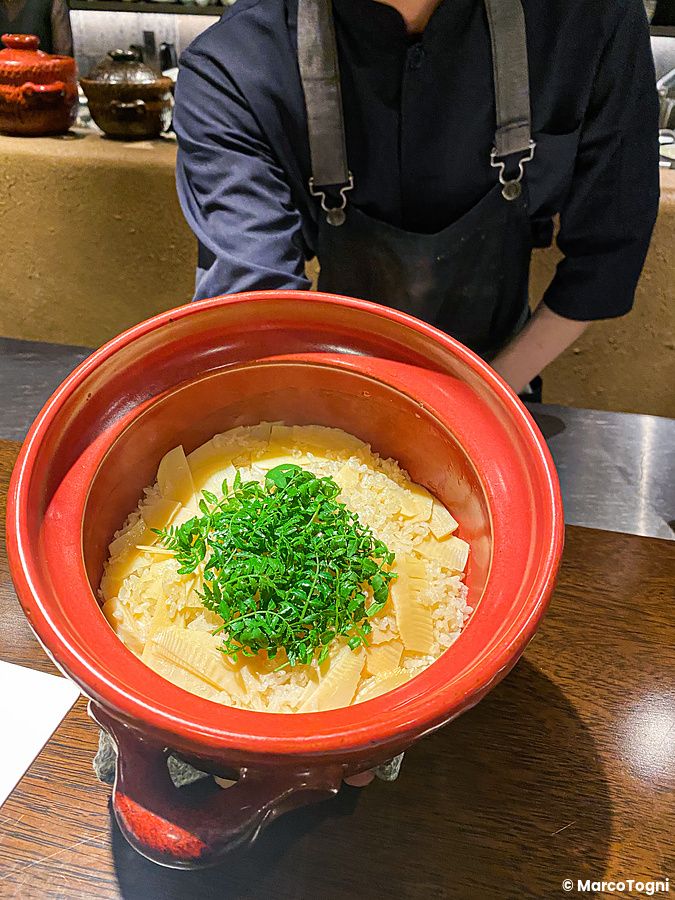
Denkushiflori grew out of a collaboration between two of Tokyo’s best-known chefs. Its course menu changes with the seasons, with skewers that are fried or grilled over the coals, a few dishes served in bowls, and rice in a clay pot toward the end.
Everyone sits at the counter, facing the cooks. It’s the place for a meal you’ll want to remember: a birthday, say, or a day when you want to eat things you won’t find anywhere else.
The two names behind it are Zaiyu Hasegawa, the chef at Den, and Hiroyasu Kawate, the chef at Florilège, two of Tokyo’s most famous restaurants. Den brings playful Japanese cooking, the kind that takes food seriously without taking itself seriously. Florilège brings French technique and a taste for precise pairings.
Here the two sides meet on ground that belongs to neither of them: the skewer. That’s why the result doesn’t feel like a compromise. The two chefs aren’t in the kitchen every night, but their touch shows in every bite.
There’s just one set menu and no à la carte, so the only thing you choose is what to drink. The skewers arrive one at a time, each on its own plate.
The skewer is what ties everything together. In Japan it’s the most down-to-earth format there is, from yakitori to kushiage to street stalls, and here it’s used to serve the kind of food that usually gets plated with tweezers.
Liver and offal come back several times, from the boudin noir to the liver mousse with sardines. If you don’t like those flavors, you’ll miss out on half the fun.
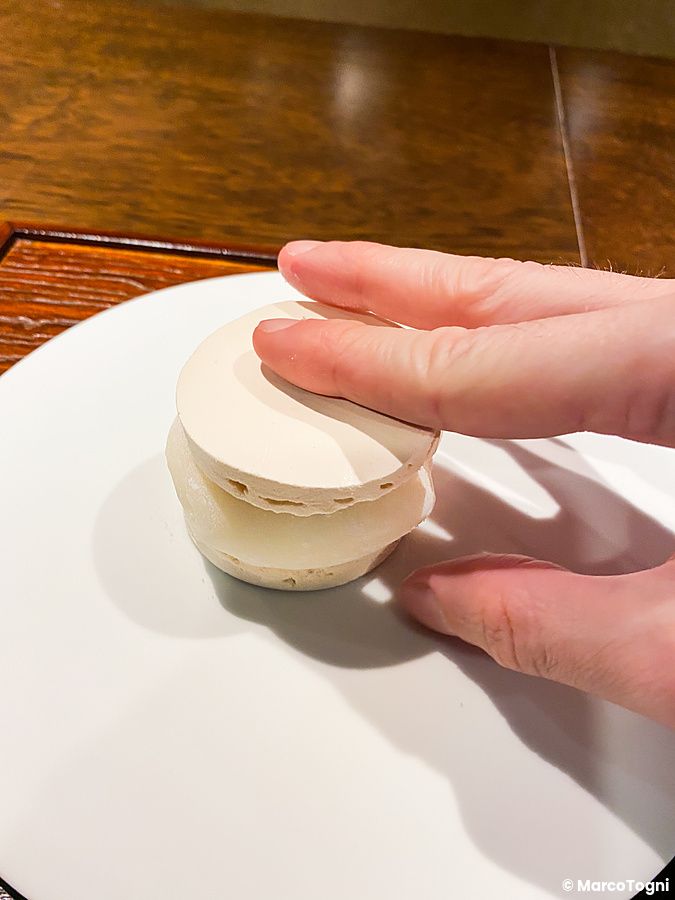
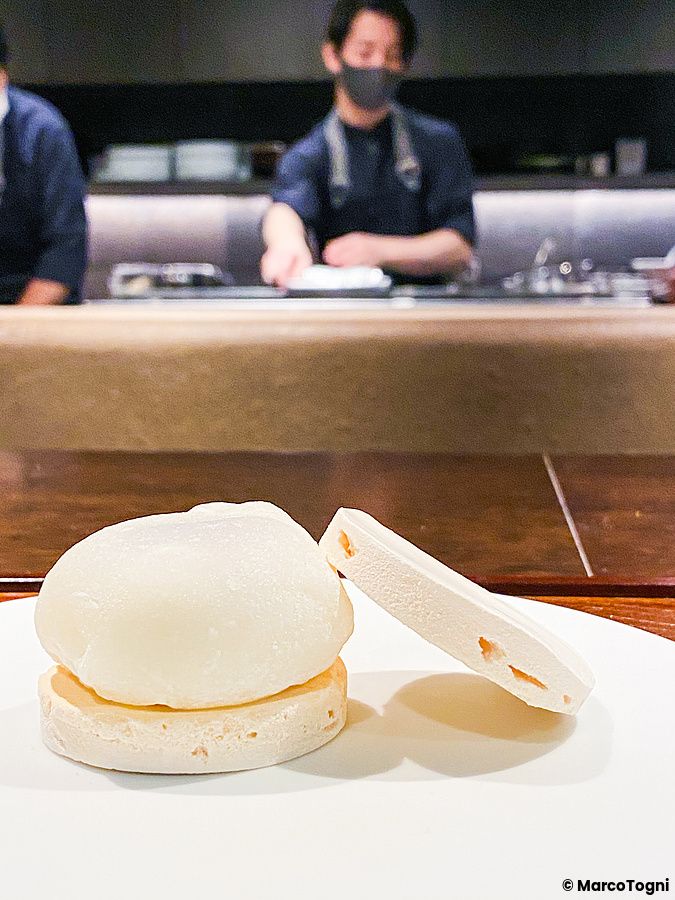
Dessert is lighter in tone but not in quality. There’s a pudding with green tea cream, and a chilled cream daifuku squashed between two meringues that you eat with your hands like a cookie.
Lunch runs about 10,000–12,000 yen per person, and dinner about 15,000–20,000 with something to drink, plus a ten percent service charge. It’s obviously not an everyday place, but given who’s behind the stove, it’s one of the least expensive meals you’ll find in Tokyo at this level.
The drink pairing is cheaper than most pairings, and it moves from champagne to sake to natural wines without sticking to one style. There are cocktails too, served on a square coaster with the logo.
When I want to take someone out to eat at this level without the ceremony of a Michelin-starred restaurant, this is the first place I think of. You sit at a counter, you eat with your hands, and meanwhile one dish after another shows off serious fine-dining technique.
You head down below street level into a room with a horseshoe-shaped counter that wraps around the kitchen, sixteen seats in all. It’s all light wood and bright lighting, with nothing dim about it and no hushed reverence: people talk at a normal volume, and you can hear what’s going on across the counter.
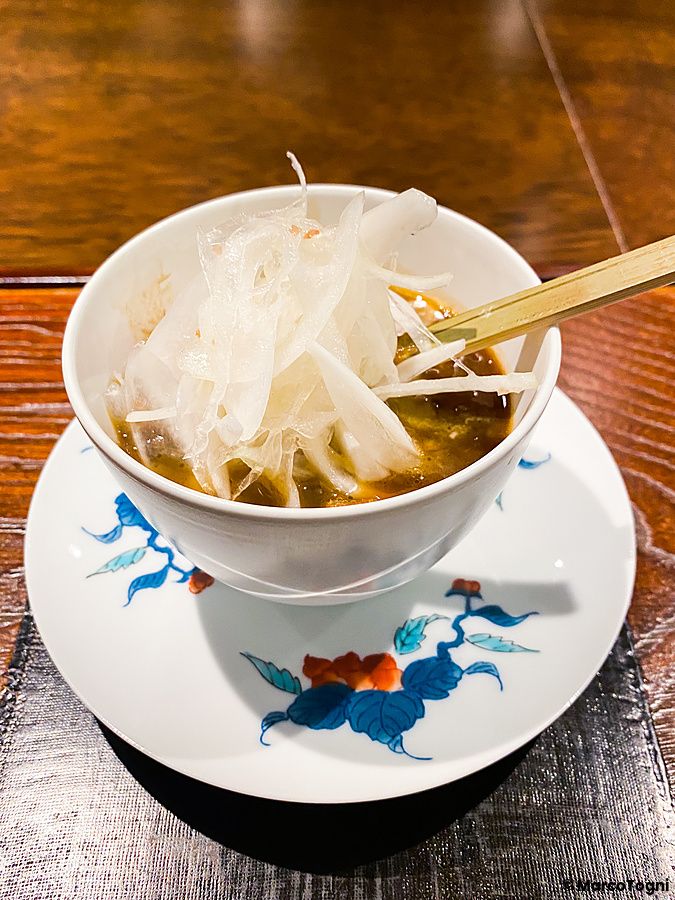
The tableware changes with every course. There are round white plates for the skewers, dark bowls for anything with foam, wooden trays with the grain showing, and wooden spoons set alongside.
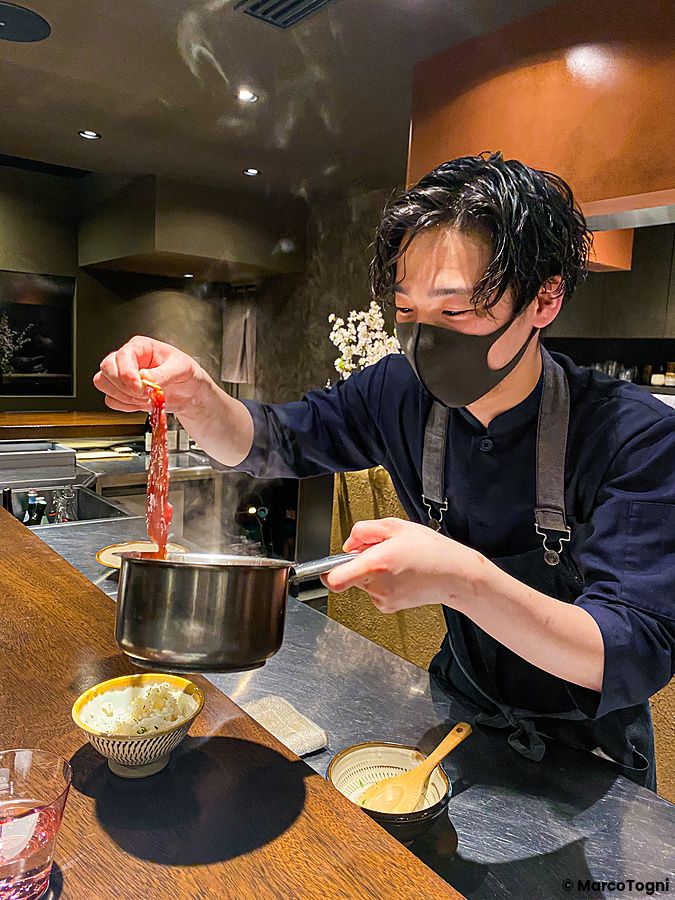
From your seat you see everything: the grill, the tongs, the fryer, the hands putting a skewer together just inches from you.
The flip side is that you’re sitting in a row with everyone else, with no private corners. If the counter is full and you end up next to a lively group, the noise goes up and you’re stuck with it for the whole meal.
Nobody fusses about what you wear, and you don’t need a jacket and tie, but it’s the kind of place where flip-flops and a tank top look out of place.
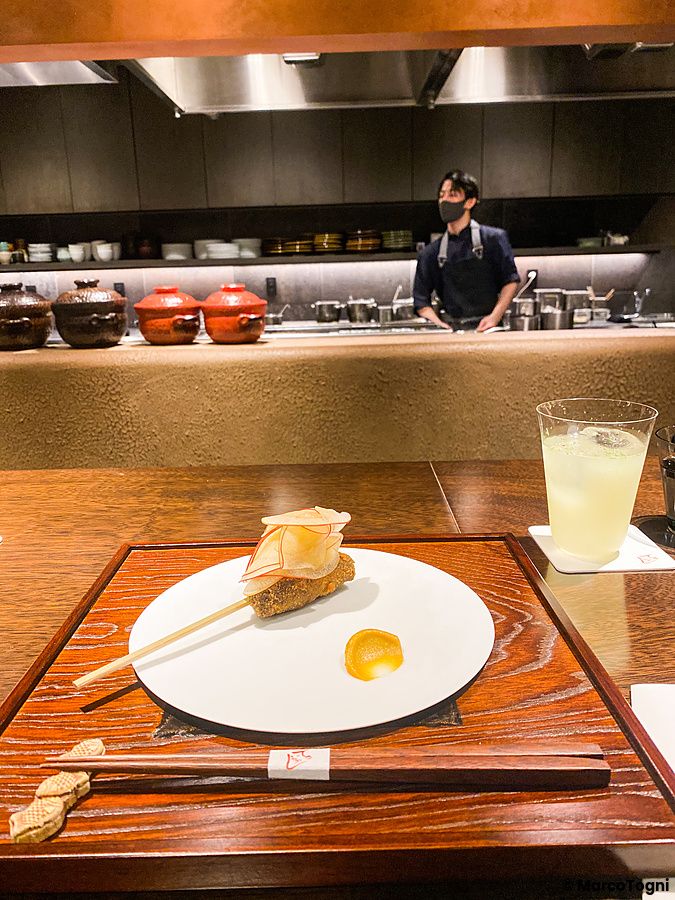
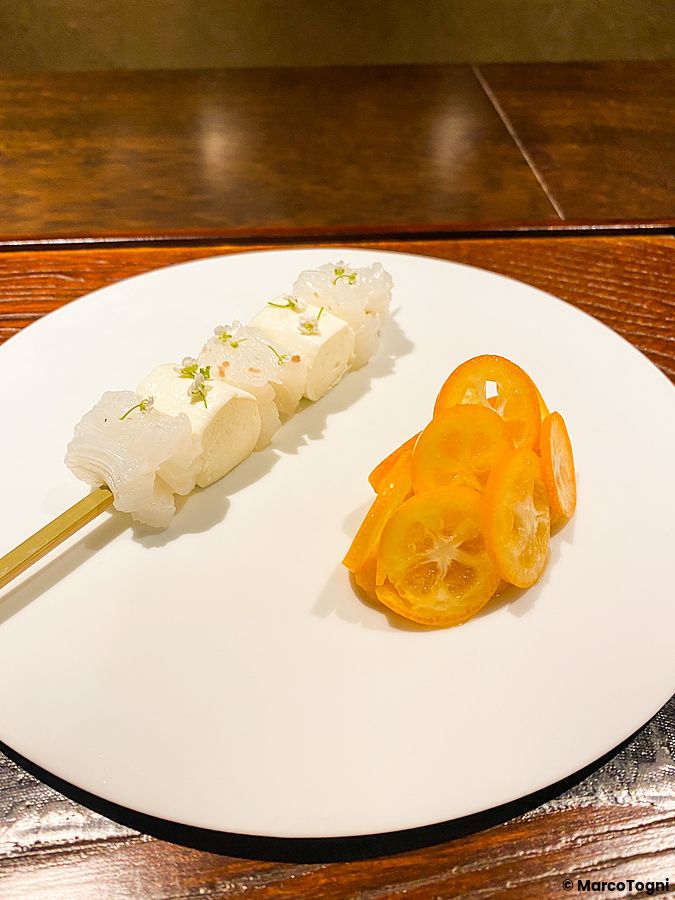
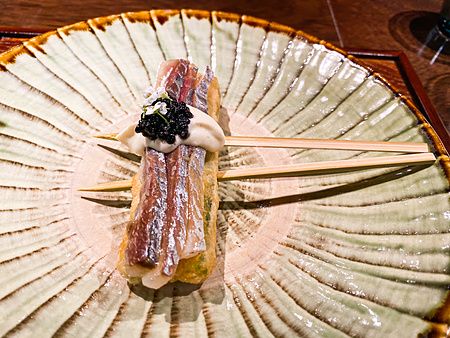
The cooks serve you themselves. Each skewer comes with a two-sentence explanation, given casually rather than recited from a script, and if you ask what’s in it, they tell you without being cagey.
There are three of them behind the counter, moving around without bumping into each other, and they come across as people who are happy to be there. They smile, they joke, and they make you feel at ease even if it’s your first time.
The pace is brisk early on, with one bite following another, and it slows down when the rice and desserts arrive. Nobody rushes you out the door.
When the room is full, the gaps between courses get longer, and you can end up sitting for a few minutes with an empty plate in front of you. It doesn’t last long, but it happens.
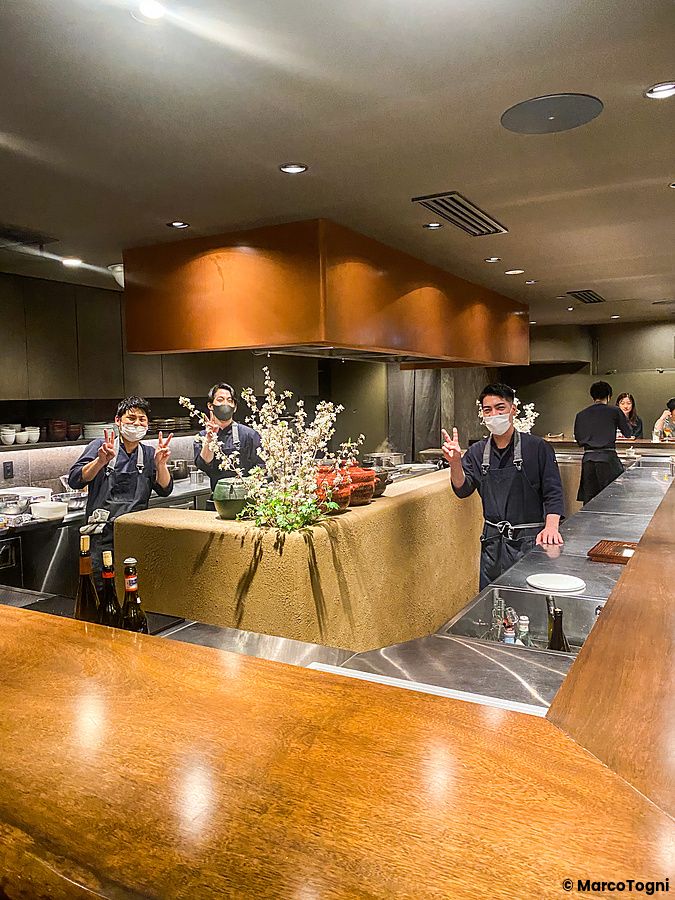
If you’re traveling solo, this is one of the best setups you’ll find in Tokyo for a meal like this. At the counter you’re never really alone, and the people in the kitchen keep you company.
It works just as well for a couple, as long as you’re fine sitting side by side instead of across from each other. For a serious business dinner, though, look elsewhere.
If you’ve already made the rounds of Tokyo’s big-name restaurants, you’ll find a relaxed version of that world here, with the same hands behind it. If you’ve never set foot in one, this is the least intimidating way in there is.
Fair warning: if you want a menu where you recognize the dishes, this isn’t the place. Here French blood sausage ends up under apple slices and cheese shares a skewer with raw cuttlefish, and if the idea puts you off, you’re better off going somewhere else.
Pros:
Cons:
Best for: a special dinner or lunch, especially if you’re traveling solo and want to be in the middle of the action
Atmosphere: an underground room with light wood and bright lighting, sixteen seats around the kitchen, and a relaxed mood that’s anything but solemn
What to order: the drink pairing, which is cheap for what they pour
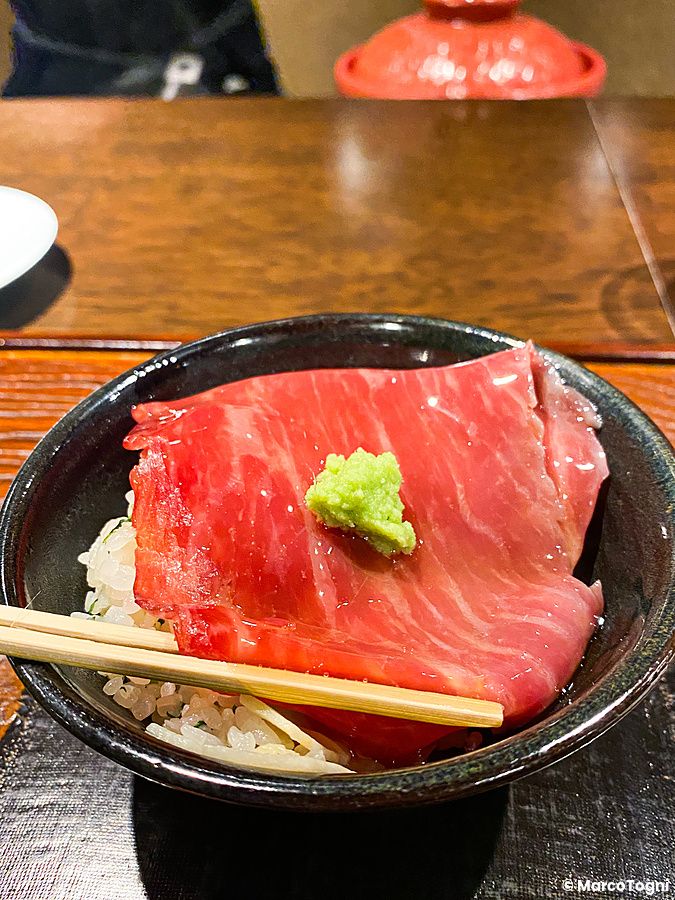
What sticks with you from the whole dinner is a slice of wagyu, cooked for just a moment in the little pot right in front of you and laid on the rice with grated wasabi on top. You watch it come together, and thirty seconds later it’s on your plate. If they let you pick when you arrive, aim for the middle of the counter, facing the grill, where you get the best view of the skewers being put together.
If you’re only going once, go with the drinks the house picks and let the cooks set the pace, because that’s the whole point: a skewer, a glass, a two-sentence explanation, and on to the next. At the end, when they lift the lid off the clay pot, the smell of the rice fills the room. Tokyo has very few places like this. Go.
From Omotesando Station, take Exit B2 and walk about 5 minutes to the GEMS Aoyama Cross building. The restaurant is in the basement, and you go down to it from the street.
This place is on MarcoMaps
Denkushiflori
My map of Japan: over 4,000 places I've tried myself, each with photos, rating, and hours. Filter by category and rating, find veg-friendly spots and places near you with GPS. No sign-up, right from your phone.


Denkushiflori - nearby you will find: