D.T. Suzuki Museum
A museum near Kenrokuen in Kanazawa, where people come more to sit by the water than to look at the exhibits. The D.T. Suzuki Museum is dedicated to a philosopher born right here in the city, the man who made Zen known in the West. What stays with you when you leave, though, is the architecture: corridors, white walls, a garden that’s just a very shallow pool of water, and an empty room with benches.
It’s for people who love architecture, for anyone who needs to stop for a moment on a packed itinerary, and for anyone who has already seen Kenrokuen and wants something completely different in Kanazawa.
Who D.T. Suzuki was
Daisetsu Teitaro Suzuki was born in Kanazawa in 1870, a short walk from where the museum stands today, and that’s why the museum is here and not in Tokyo or Kyoto. He spent many years in the United States and wrote his books on Zen in English from the start. It’s thanks to him that Zen became fashionable among Western writers, musicians and artists in the ’50s and ’60s.
You don’t need to know anything about him to enjoy the visit. But once you know that the Zen that reached the West came largely through him, the empty room over the water takes on a different meaning: the museum doesn’t explain his ideas, it lets you experience them for a moment.
What you’ll see
The museum is made up of three buildings linked by corridors, plus three gardens, and you’re meant to walk through it in a set order: first you look, then you read, and at the end you sit down.
- The entrance garden: a stone wall, a tree and not much else, the first sign that everything here is stripped down to the bare minimum.
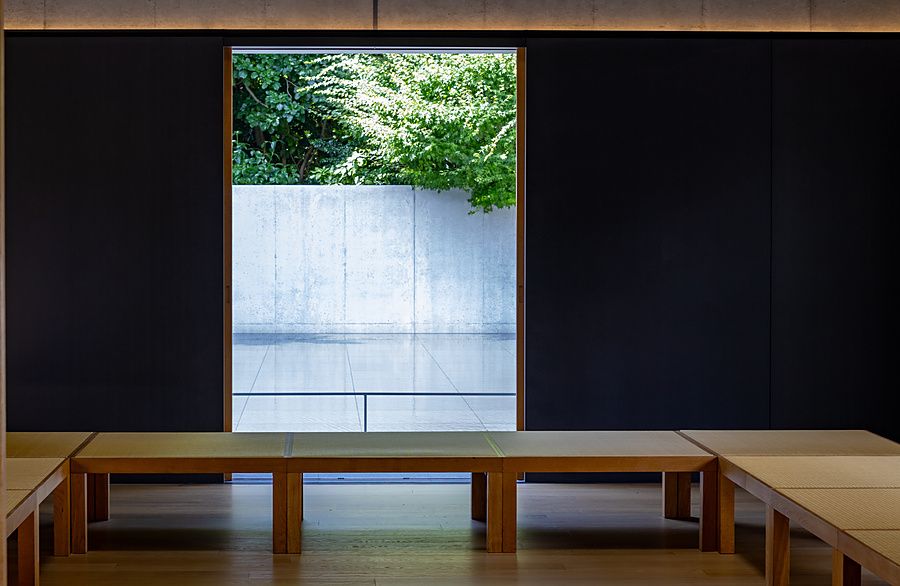
- The inner corridor: long and dim, with dark walls and an opening halfway along that lets in light from the garden.
- The exhibition room: calligraphy, photographs and writings by Suzuki, hung with no explanations next to them. The explanations come later, in a separate room.
- The study room: a square room with wooden benches, books, and sheets of the philosopher’s quotes that you can leaf through and take with you.
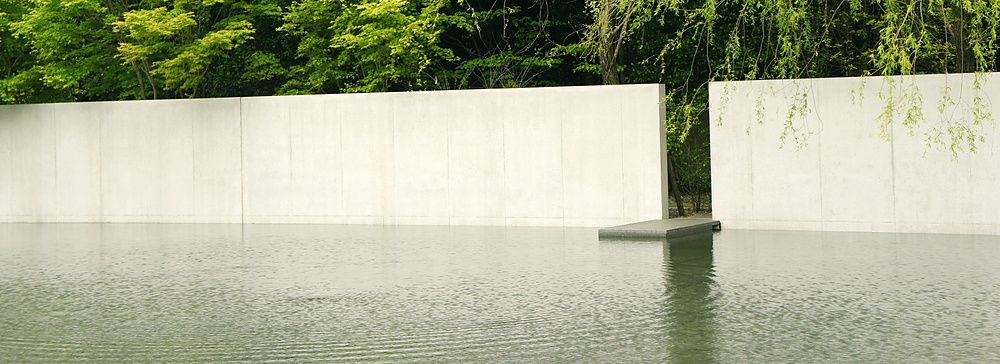
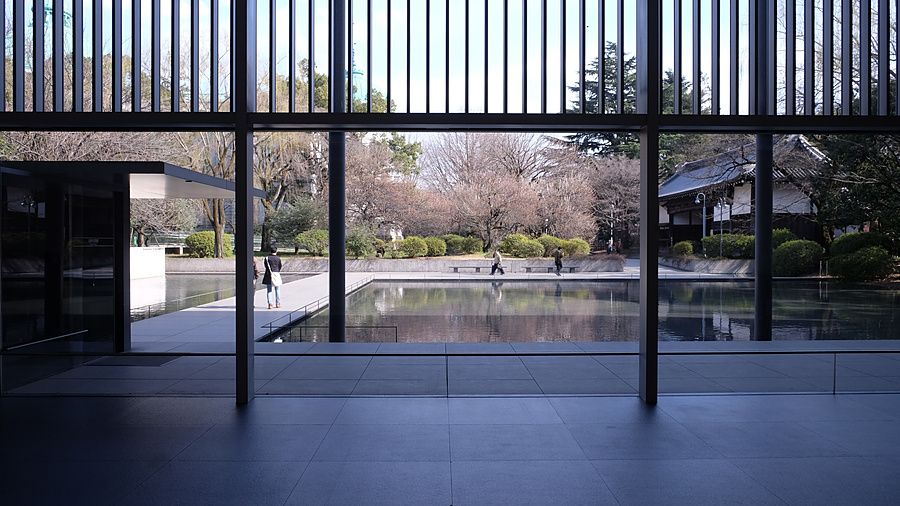
- The Water Mirror Garden: a flat, very shallow pool enclosed by gray walls, reflecting the sky, the white room and the trees in the woods behind it. Every few minutes rings of water spread out from the center, reach the edges and then fade away.
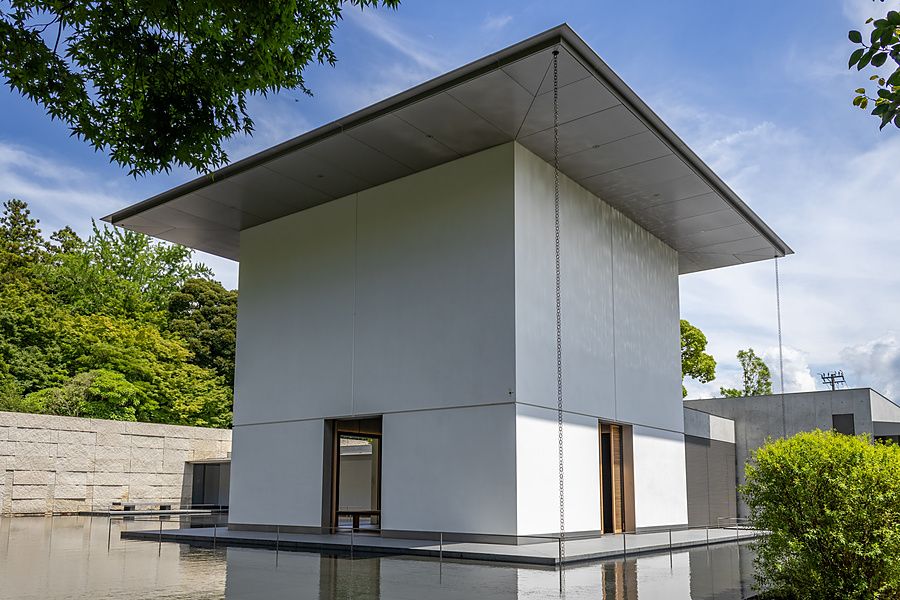
- The contemplation room: a white box that seems to rest on the water, with an opening on each side and benches in the middle, where you look out at the pool with nothing else around you.
There are very few works on display, so if you’re expecting a museum to explore room by room, you’ll be disappointed. The calligraphy isn’t translated, and even people who read Japanese struggle with it, so you walk past each piece, pause for a moment and move on.
The real highlight is the outer corridor that runs along the pool to the contemplation room. That’s where you realize the whole museum was designed around that moment, and everything before it is there to prepare you.
The rings on the water come from a hidden mechanism at the bottom: a few bubbles rise, the surface ripples, and for a minute the whole pool is moving. If you sit inside the room and wait for the next set of rings, you’ll notice that the rest of the museum stops and waits with you. People stop walking, someone pulls out a phone, then the water goes flat again and everyone relaxes.
Outside, under the willow next to the pool, there’s a spot where you can see the whole contemplation room reflected in the water, and almost every photo of the museum is taken from there. When it gets a bit busy, people form a short line, waiting for a clean reflection with nobody in the frame.
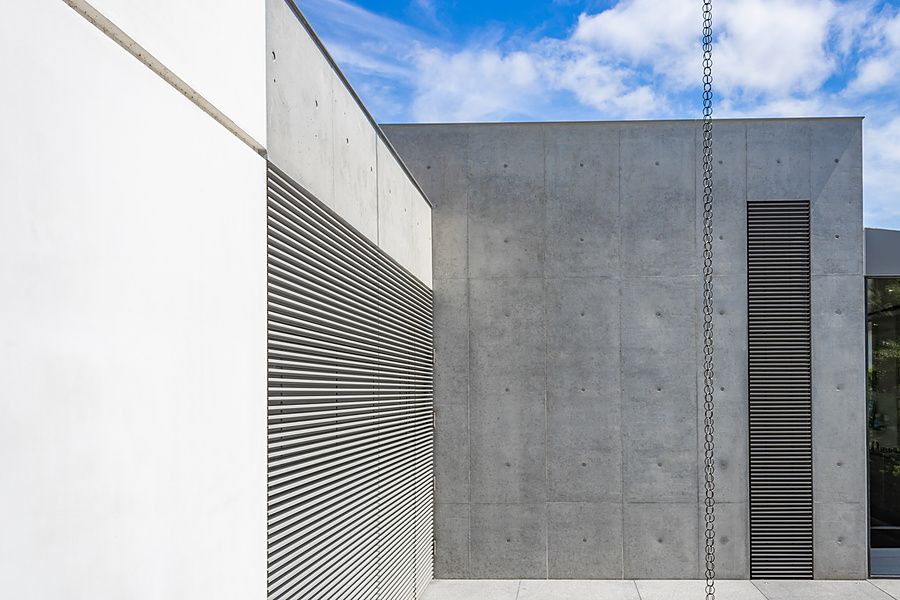
The museum gives you a lot more than it promises. On paper it’s a museum about a philosopher few people have heard of, with around thirty pieces on display. In person, it’s the place in Kanazawa that gives you the clearest sense of what a good architect can do with concrete, wood and water. The architect is Yoshio Taniguchi, who also redesigned MoMA in New York, and you can see the same hand at work here: clean lines, not a single unnecessary detail, and everything built to make you look out rather than in.
When I have guests visiting, I bring them here straight after Kenrokuen. After a garden full of little bridges, lanterns and people photographing everything, sitting for a while in that white room is exactly what you need. I’ve yet to meet anyone who left disappointed, not even people who walked in without knowing who Suzuki was.
When to go
The best time is early morning or late afternoon on a weekday. In the morning the light skims low across the water and the walls’ reflection is razor-sharp; toward evening the pool turns orange and the gray walls warm up.
It’s never as crowded as Kenrokuen, not even on weekends, but a group of six or seven people on the benches is enough to change the place: voices, footsteps on the wood, rapid-fire photos. When the room is empty, all you hear is the wind in the trees and the water moving when the rings start.
If it’s raining, go without a second thought. The drops make hundreds of tiny rings on the pool, the rain on the contemplation room’s roof drowns out everything else, and there are fewer people, because visitors walking around Kanazawa with an umbrella head for the bigger museums.
In fall the woods behind turn red and yellow and are mirrored in the water. In winter, with snow on the edges of the pool and on the white roof, the color contrast disappears and only gray is left, and that’s my favorite season. In summer, though, the outer corridor is in full sun and it gets hot on the benches.
Inside the museum
Everything is on one level, the corridors are wide and there’s very little walking, so it works for people with limited mobility and for anyone pushing a stroller. There are benches in both the study room and the contemplation room, and you don’t have to wait for a seat.
With small children, though, I don’t really see it working. The problem isn’t the space but the silence everyone expects: you can hear a child running or shouting in the corridor from every corner of the museum, and the water may be shallow but you’re not allowed to touch it.
Photos aren’t allowed in the exhibition room, and the staff are quick to tell you. You can take them in the corridor with the opening onto the garden, outside and in the contemplation room, without flash.
Pick up the sheets of Suzuki’s quotes in the study room. They’re in English too, and taking them home is the best way to remember this place without boiling it down to a photo of the pool.
At a glance
- The highlight: the white room over the water and the rings that cross the pool every so often.
- When to go: early morning or toward evening on weekdays; it’s at its best in the rain, in fall and when there’s snow.
- Ideal for: people who love architecture, people coming from Kenrokuen who want a break, people who need to sit and do nothing.
- Atmosphere: gray walls, wood, hushed voices, the wind in the woods.
Final thoughts
Don’t come for the exhibition. Come for the sequence of spaces that takes you from the dim corridor to the light on the water: it’s architecture you understand with your body, by walking and sitting, and there are very few places in Japan built this well. If you’re passing through Kanazawa, it’s well worth the detour, even if it’s just to sit and watch two sets of rings spread across the pool.
If what you mainly want from a museum is the works, the labels and things to learn, you’ll be bored here, and you’re better off going straight to the contemporary art museum nearby.