Esquisse
A French restaurant in Ginza where a Corsican chef takes Japan’s seasonal fish and vegetables, cooks them with French technique and adds herbs, citrus and spices you don’t see coming. Esquisse has two Michelin stars and a single menu, which the kitchen decides each time based on what comes in from the market.
It’s the right place for a celebration lunch or dinner, say an anniversary or some other special occasion, and for anyone who wants to see how far French cooking can go when it truly meets Japan.
Food and prices
You don’t order anything à la carte. There’s a single tasting menu, which they call the spontaneous menu. The chef, Lionel Beccat, builds it around whatever the season is offering at that moment, so two lunches a few weeks apart won’t look alike. It opens with house-made bread, followed by seven or eight courses of starters, fish and meat, then a pre-dessert, dessert, and coffee or herbal tea with petits fours. You can add cheese separately.
In summer, for example, you might get dishes like these:
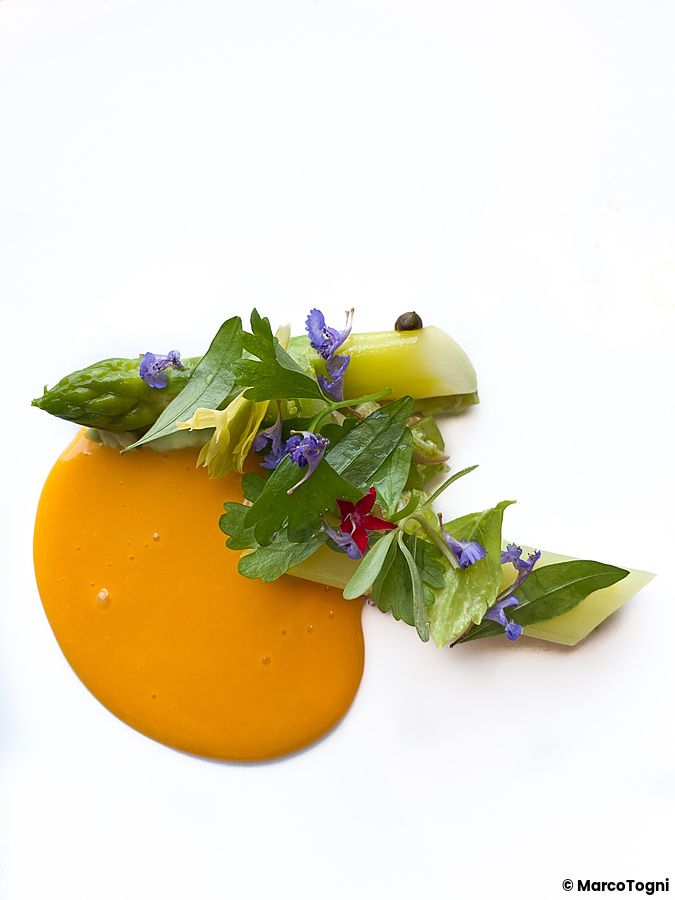
- Asparagus with avocado and egg yolk sauce: green asparagus covered in a creamy blend of avocado and sour cream, next to a thick egg yolk sauce.
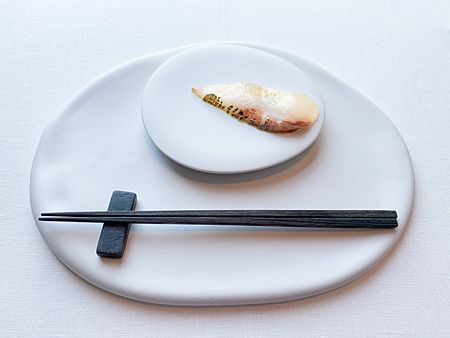
- Raw shima aji: Japanese striped jack, sliced and dressed with a sauce, served in a small round dish set on an oval plate, with chopsticks on a chopstick rest.
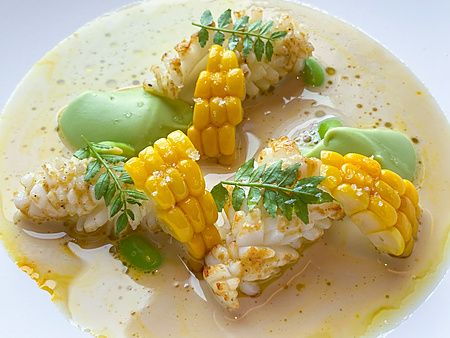
- Cuttlefish and corn: tender cuttlefish, sweet corn kernels, edamame and a sauce made from the cuttlefish itself, butter and white wine.
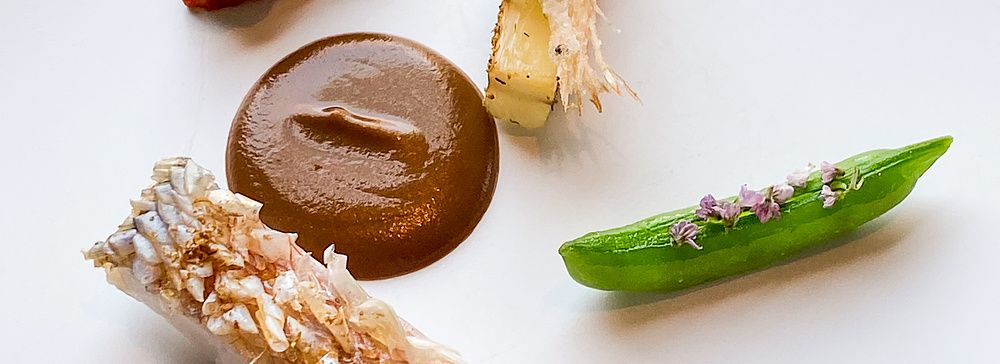
- Amadai with fennel: the fish with its scales left on and cooked until crisp, served with fennel and seasonal vegetables.
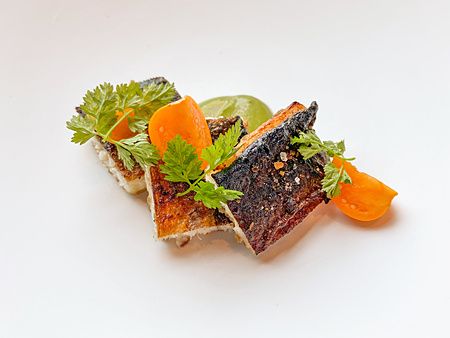
- Eel with ground cherries: pieces of eel with golden skin, wedges of orange ground cherry and small leaves of fresh herbs.
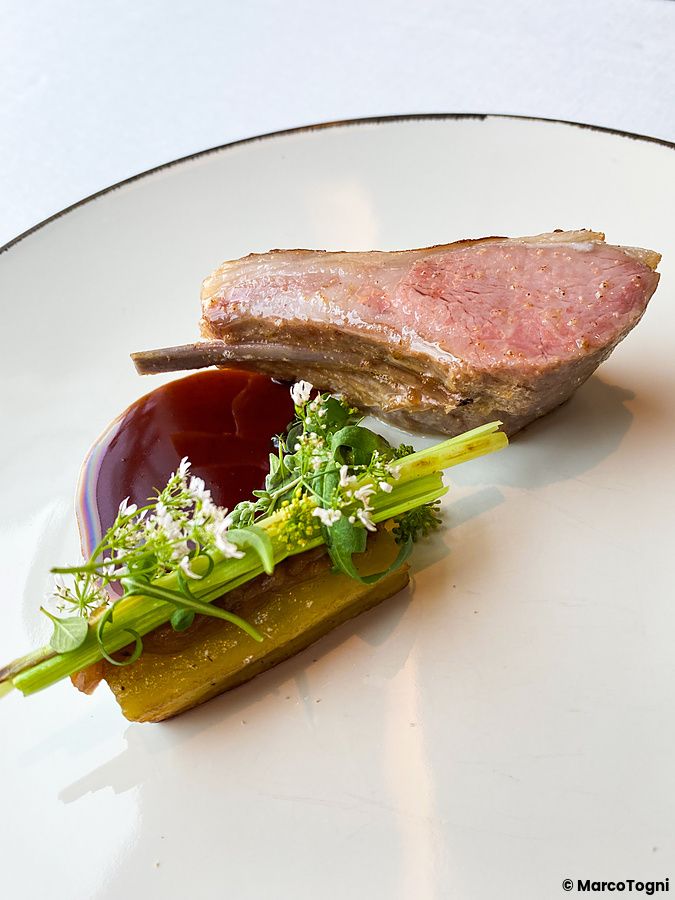
- Lamb: pink meat, a dark, glossy reduction, fresh vegetables and tiny white flowers on top.
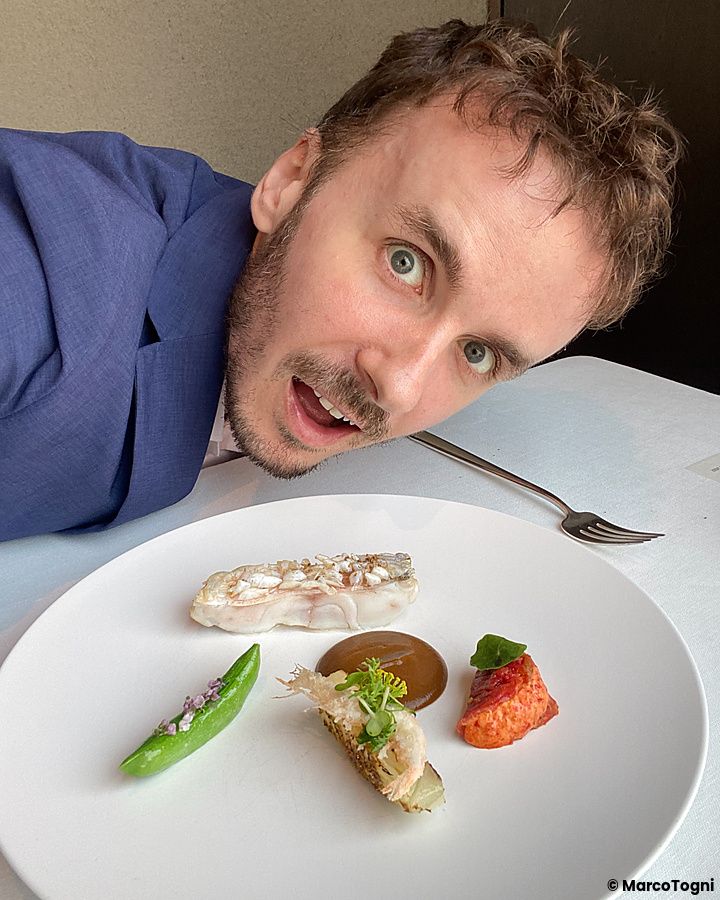
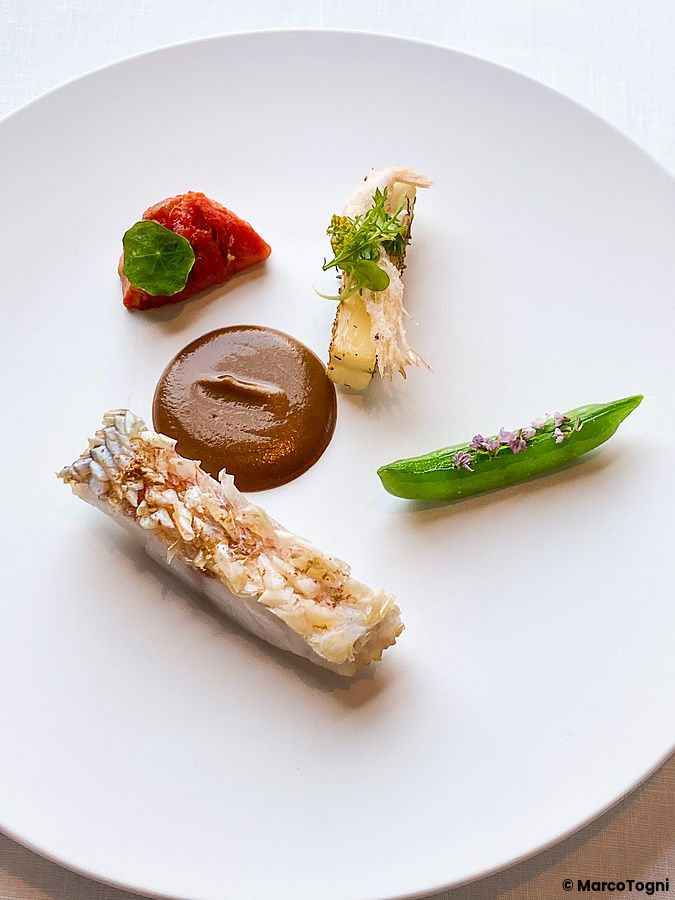
The amadai is the dish that stuck with me most. The skin crackles under your fork like a wafer, a texture you don’t expect from such a delicate white fish, and then the fennel freshens it all up.
Something similar happens with the eel. The ground cherries’ acidity cuts through the fatty, smoky eel, and a pairing that sounds odd on paper works perfectly once you taste it, because the fruit cleanses your palate between bites.
If you’re expecting classic French cooking, with big meat dishes and dark sauces everywhere, you’ll be a little thrown. Most of the courses here are fish and vegetables. The meat shows up only once, near the end, and while there’s butter, it never drowns out the ingredient. The cuttlefish, for example, comes with a rich, round sauce, and yet the first thing you taste is the sweetness of the corn.
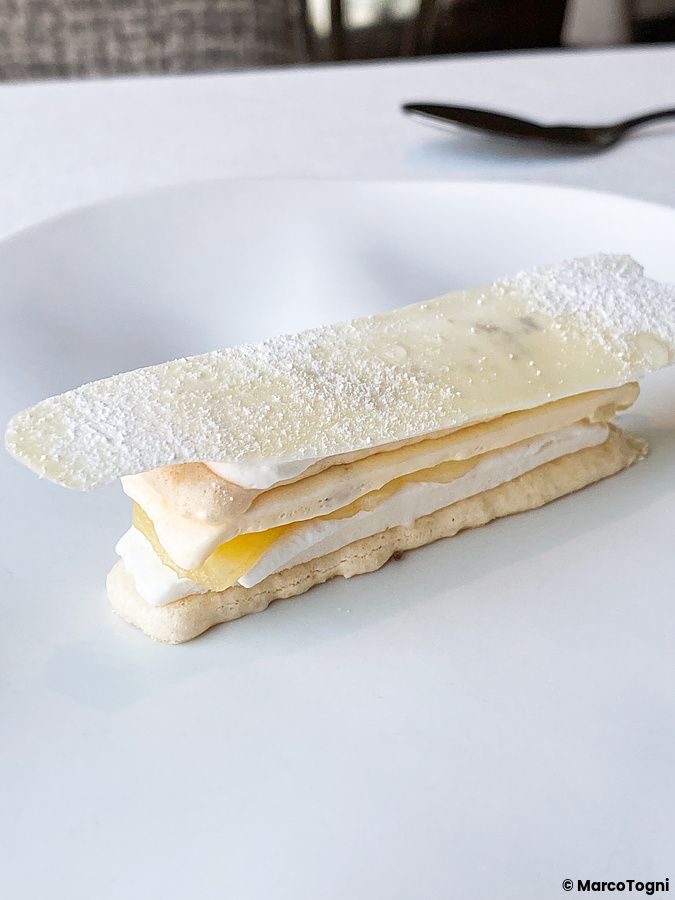
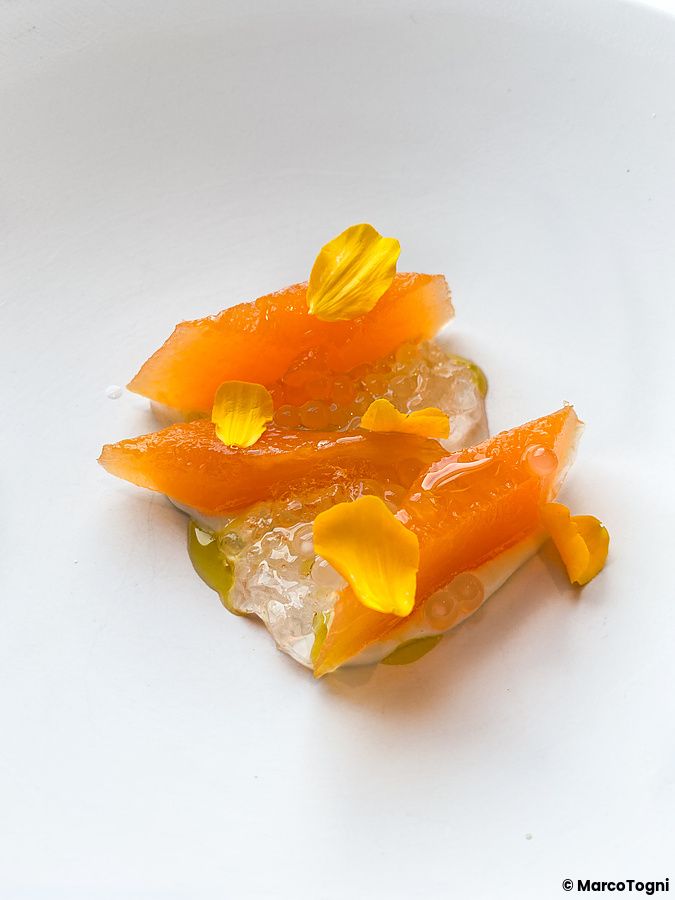
The desserts follow the same approach. The melon pre-dessert with Martini Bianco pearls has a boozy edge that wakes up your palate, and the pineapple, coconut and long pepper dessert layers paper-thin wafers with coconut cream and fresh fruit, with the pepper giving just a faint tingle at the end.
I won’t sugarcoat the price: it’s expensive. Lunch runs around 30,000–40,000 yen per person with something to drink, dinner starts at 45,000 yen, and with the wine pairing it can easily climb to 60,000–70,000 yen, 12% service charge included.
That’s in line with Tokyo’s other two-star restaurants, and lunch, with the same cooking plus daylight, is the most affordable way to try it. When I want to celebrate something with a special meal, it’s the first place that comes to mind, because I always find at least one dish I’ve never seen before and keep thinking about for months, like that eel with ground cherries.
The dining room
The restaurant is on the ninth floor of a Ginza building, and as soon as you step out of the elevator, the street noise disappears. The room seats just over thirty at round tables with white tablecloths, spaced well apart, so you can barely hear the next table.
At lunch, light comes in through the side windows and falls on the plates. In the evening the lights are dimmed and the room feels more intimate, better suited to a dinner for two.
The decor is understated, with light wood and irregularly shaped ceramics, and none of the ornate plasterwork or chandeliers of a grand hotel. That makes the room warmer than a lot of other two-star places: you sit up straight, but you don’t feel like you have to whisper.
There’s also a small private room for four to six people, handy for a family or business dinner.
Dress well. There’s no strict dress code, but shorts and sandals would be out of place, and for men I’d recommend a jacket, since almost everyone in the room wears one.
Service and details
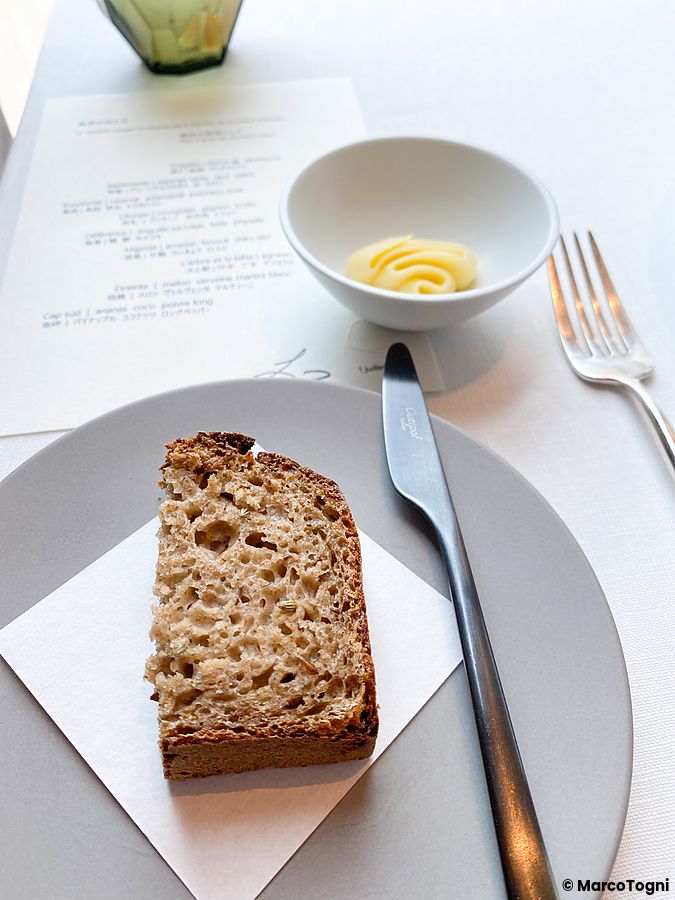
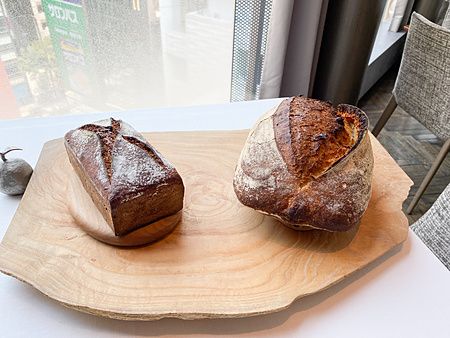
The bread arrives whole on a wooden board and is sliced right at your table. It has a well-baked crust and a crumb with big, irregular holes, the kind you get from a long rise, and the butter comes separately in a small bowl. It’s hard not to ask for a second slice.
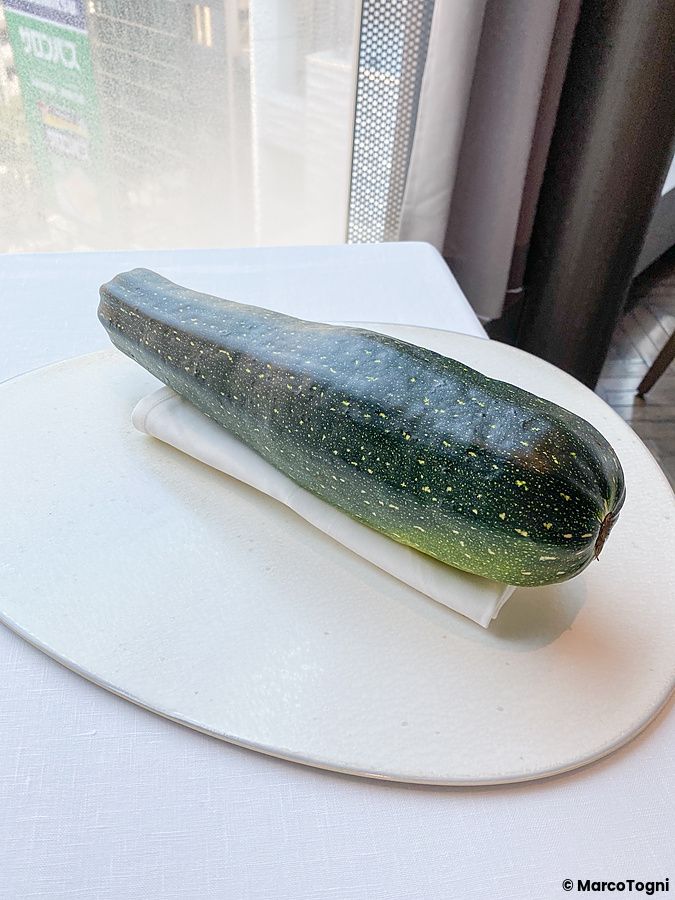
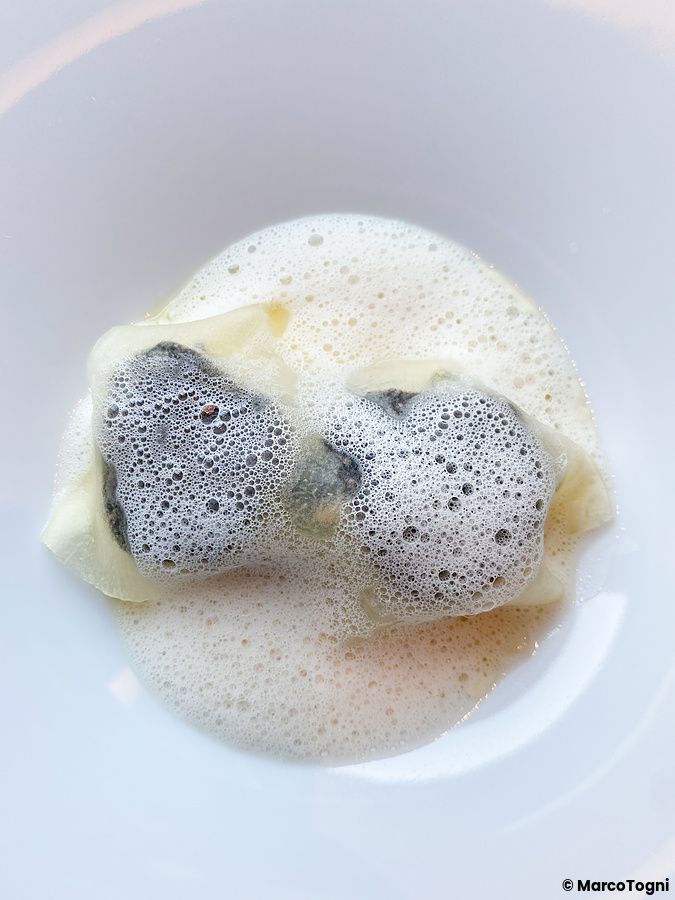
Before some courses, the staff bring the raw ingredient to the table. It might be a whole zucchini, resting on a white napkin in a ceramic dish, to show where the next course comes from: zucchini with pine nuts and a light foam.
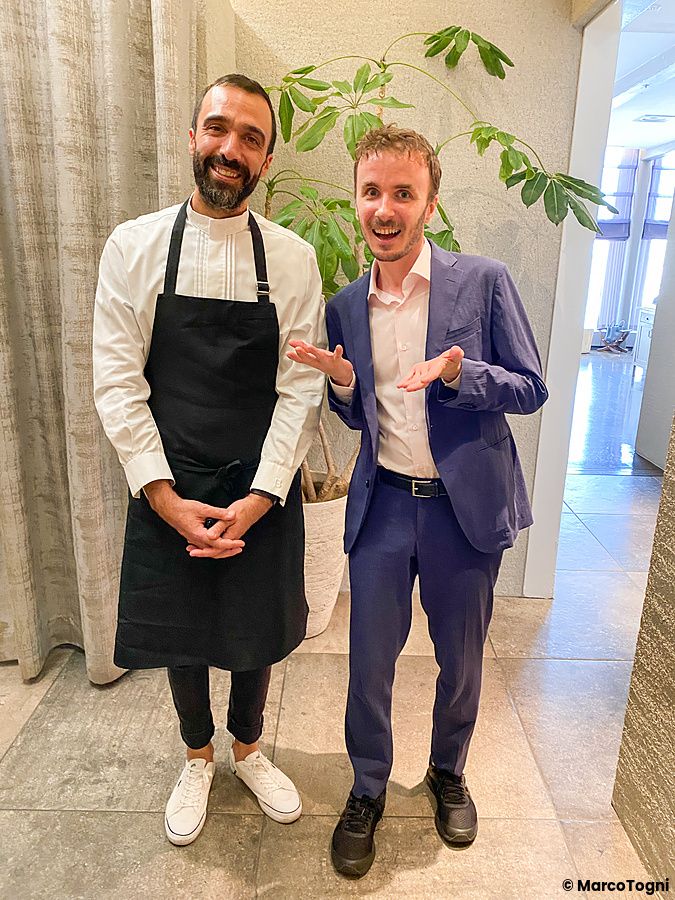
The service is professional but relaxed, and every dish is explained without rushing, in English or Japanese depending on who’s at the table. The chef is happy to come out of the kitchen. He smiles, stops to talk with anyone who has questions about the food, and doesn’t keep his distance.
The front-of-house team is very strong on wine: the head sommelier received an award from the Michelin Guide Tokyo, and the pairings mix French and Japanese bottles that genuinely suit the food.
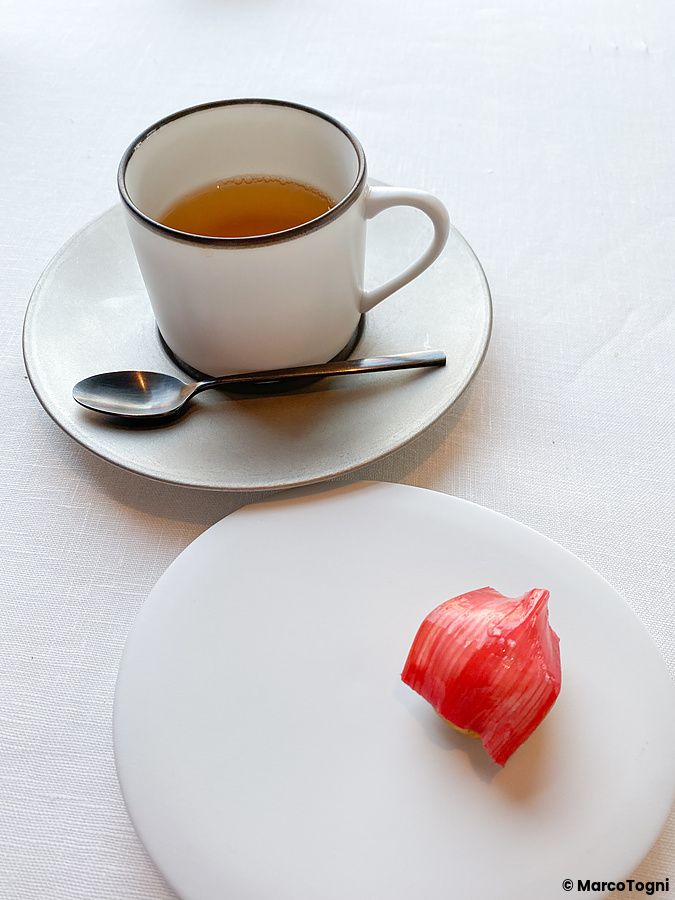
The ending is long and meant to be savored slowly. After dessert comes a hot herbal tea and a brightly colored petit four, and on your way out they give you a small gift to take home.
Plan on at least two and a half hours at the table, and don’t schedule anything right after.
At a glance
Pros:
- Japanese fish and vegetables cooked with French technique, with herbs and citrus that always add a spark
- house-made bread sliced at the table
- bright, quiet dining room with tables far apart
Cons:
- special-occasion bill, especially at dinner with wine
- if you want classic, meat-heavy French food, you’ll find very few meat courses
Best for: a celebration lunch or dinner, as a couple or with someone who loves chef-driven cooking
What to order: the wine pairing, if your budget allows
Atmosphere: white tablecloths, light from the windows, views down over Ginza
Final thoughts
At Esquisse, part of the fun is not knowing what’s coming next. You sit down, let the kitchen take over and let each course surprise you, from the crackling amadai skin to the tingle of long pepper in the dessert. Go for lunch, with light pouring in through the windows, then head out for a walk around Ginza with those flavors still in your mouth.
Let the kitchen decide, and treat yourself to this at least once.
The chef
The chef is Lionel Beccat, who ran Michel Troisgros’s kitchen in Tokyo before Esquisse. That’s where he learned to work with Japanese producers, and he’s never looked back.
When he opened Esquisse, he brought that idea with him: start with what’s in season and only then think about technique. You can see it in the food, where the ingredient leads and the sauce stays a step behind.
Eiji Wakabayashi, the director and sommelier, has been in the dining room from the start, and he received the Michelin Guide Tokyo’s Sommelier Award. He’s the one who puts the pairings together, and it’s worth asking him to walk you through them.