766 m
Don Quijote766 m
Open 24 hours, and you can find anything.

A gyoza joint in Sugamo where the gyoza come out like plump little barrels and get fried in a fair amount of oil instead of just being browned. Fight Gyoza is one of those places where you won’t spot a single tourist. You eat alongside people from the neighborhood, in a wooden dining room where every table is full and plates clatter in and out of the kitchen.
The menu also has fried rice, ramen and sets with miso soup, but the place has only one real specialty, and you can tell the moment you walk in.
It’s the place for a hearty lunch that takes half an hour, or for a plate of gyoza and a beer with no fuss.
These aren’t the gyoza you’re picturing. Forget thin, flat half-moons: they’re plump and cylindrical, and the skin is thick, closer to bread than to a thin wrapper. The cooks drop them into sizzling oil in a deep pan, so the side touching the pan turns golden with a hard, crusty shell, while the other side stays soft and a little chewy.
The filling is mostly cabbage. You can taste the meat, but it doesn’t take over, and the whole thing stays nice and juicy. On the table you’ll find vinegar, black pepper, soy sauce and chili oil. The usual way here is vinegar with a grind of pepper, and before you try anything else you might as well do what everyone else does.
Fight Gyoza didn’t invent the barrel shape or the idea of frying them in oil. It’s part of the White Gyoza network, the chain that started in Noda, Chiba Prefecture, and teaches its technique to affiliated shops. The recipe is the original one, but the dining room and the personality are pure Sugamo.

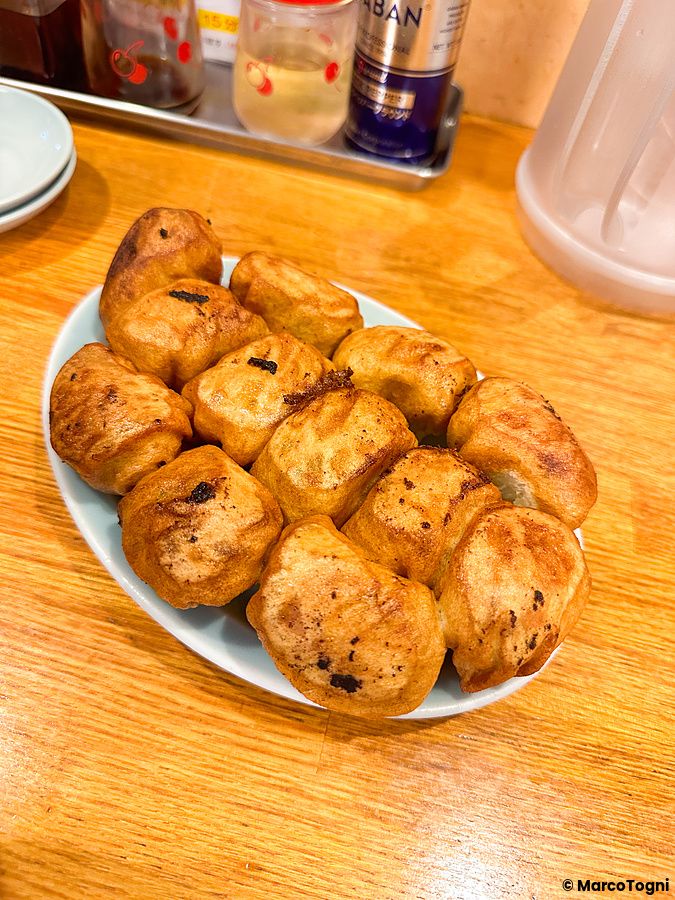
They arrive ridiculously hot. Bite in the second the plate hits the table and you’ll burn the roof of your mouth, so give them a full minute.
If you’re after a delicate gyoza with a paper-thin skin that melts in your mouth, you won’t find it here. These are greasy, crispy and filling.
It’s cheap: 1,000–1,500 yen a head gets you a full set and something to drink. There’s nothing fancy, no cover charge and none of the extras you’d pay for at a restaurant, so all your money goes into the food.
When I’m craving gyoza, it’s the first place I think of, because for just over 1,000 yen I end up with an oval plate of crispy gyoza and a beer, and I can’t think of anywhere else that gives you the same thing for so little.
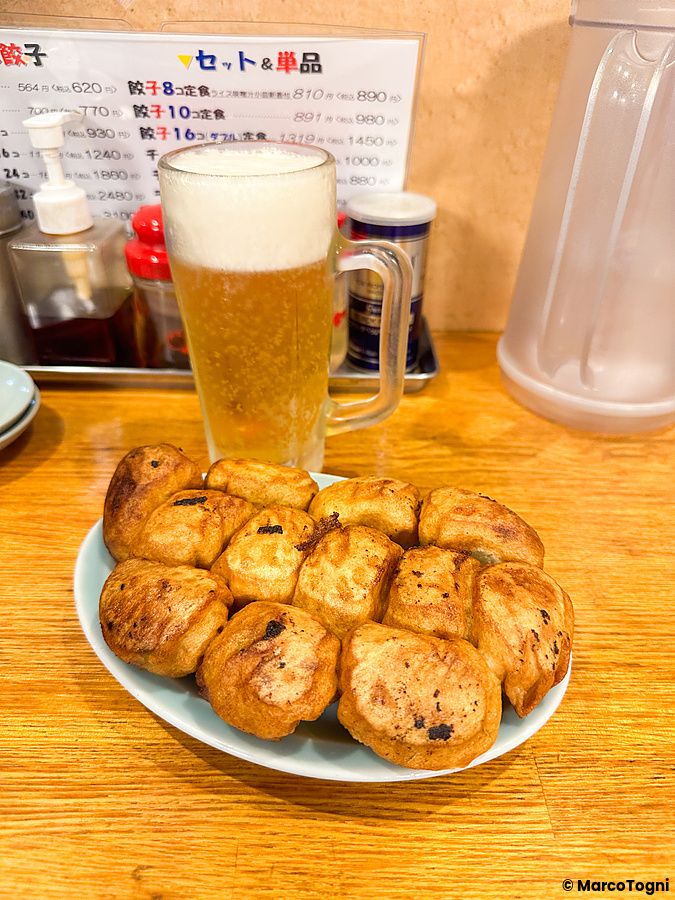
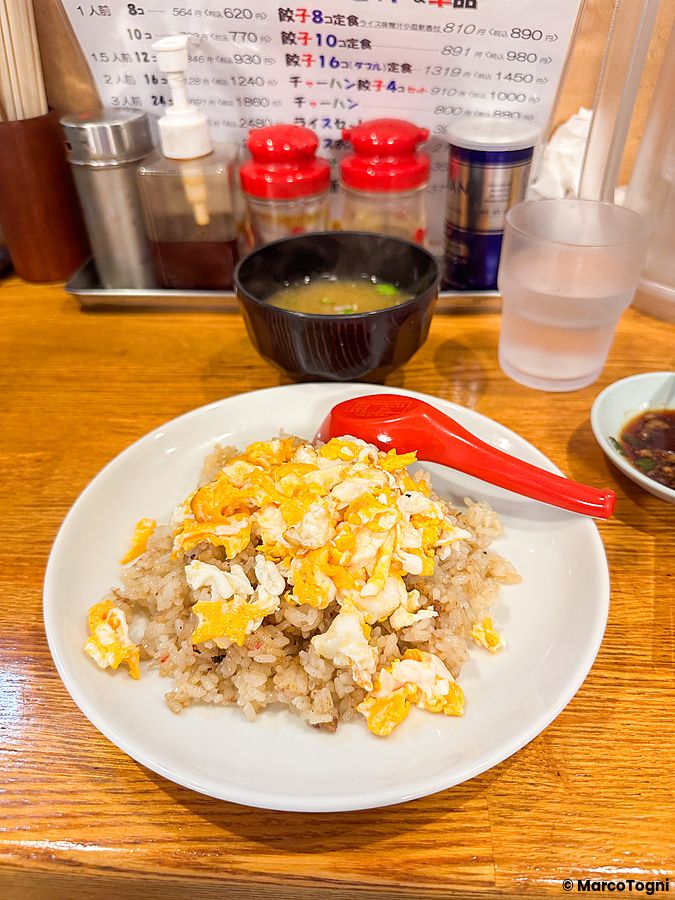
The wooden counter runs along one side with a few stools, and it’s the best spot if you’re eating alone: you’ve got the row of condiment bottles in front of you and you can watch the kitchen at work. The rest of the room is taken up by well-worn wooden tables, eight in all, plus a tatami room for groups.
Forty-one seats sounds like a lot on paper, but in practice people squeeze past each other between the chairs, and you may end up sharing a table with strangers. Nobody minds.
It has the feel of a neighborhood diner, with loud voices and orders shouted back to the kitchen. The crowd is local women eating alone while reading the paper, workers, and families with kids.
The servers are women who’ve been doing this forever, brisk and kind at once. They set the plate down in front of you and give you a quick tip on how to eat it. There’s not a word of English, and you don’t need any: you point at the photo, hold up fingers to show how many you want, and you’re done in ten seconds.
Expect a line outside the door. At lunch you’ll wait twenty minutes to half an hour standing on the sidewalk, and on weekends people start lining up before the doors open.
The line moves, though, because nobody lingers at the table chatting. People eat, pay and leave.
Then there’s a second wait after you order, and it’s better to know about it going in. The gyoza need fifteen minutes in the pan, and the staff make that clear when they take your order. Meanwhile your miso soup, rice or beer arrives, and you sit tight.
My advice is to order everything in one go, because with this kind of cooking, adding another order halfway through the meal means starting the wait all over again.
It’s cash only, no exceptions, so you can’t get by with a card or your phone. It’s the kind of detail that ruins lunch if you only find out at the last minute.
The menu is short and it’s nearly all gyoza. If you’re not in the mood for fried food at lunch, the pickings are slim, and the only vegetables that make it to the table are pickles.
That crust on such a well-stuffed gyoza is worth a detour out here, but this is a place for people who are hungry and aren’t there for the ambience: uncomfortable chairs, lights cranked all the way up, nothing to photograph except the plate.
If you’re traveling with someone who finds noisy places stressful, keep that in mind before you go.
Pros:
Cons:
Best for: a hearty lunch on a budget, even solo at the counter
Atmosphere: wooden neighborhood diner, full of chatter, not a tourist in sight
What to order: the gyoza with rice and miso soup, plus the fried rice with egg to share
What you’ll remember walking out is the din of the dining room and, in the middle of all that commotion, the oval plate landing in front of you with the gyoza still sizzling. Get the yaki gyoza with rice and miso, wait that one minute, and bite in from the dark side, the one with the crust. That’s when you get why people in Sugamo line up here.
Vinegar and pepper, nothing else, at least the first time around. You’ll find gyoza all over Tokyo, but not like these, so come really hungry.
From Sugamo Station, cross the wide Hakusan-dori and head into the Jizo-dori shopping street. Walk all the way down it, past the little shops and stalls, and in about 10–12 minutes you'll reach the restaurant, near the far end of the street toward Koshinzuka.
If you come on the Toden Arakawa tram, it's about 6 minutes on foot from Koshinzuka stop, walking back toward Sugamo.
This place is on MarcoMaps
Fight Gyoza
My map of Japan: over 4,000 places I've tried myself, each with photos, rating, and hours. Filter by category and rating, find veg-friendly spots and places near you with GPS. No sign-up, right from your phone.


Fight Gyoza - nearby you will find: