Yatai Food Stalls in Fukuoka
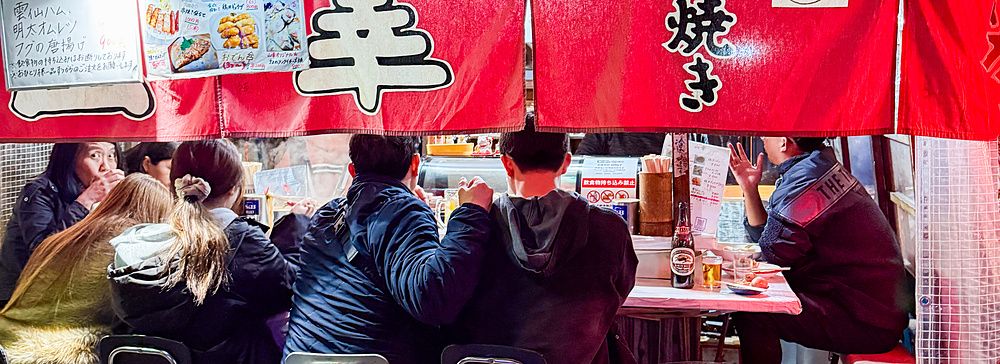
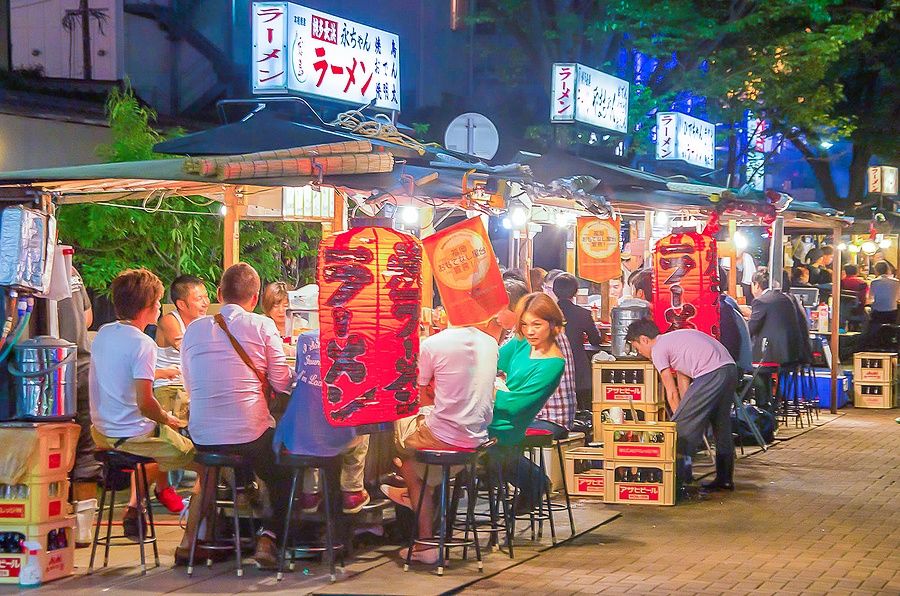
Fukuoka’s yatai are one of the best reasons to spend at least one evening in the city. They’re small wood and canvas stalls that pop up at sunset along the sidewalks and riverbanks, each with a counter, a few stools and a cook who makes everything right in front of you.
No other Japanese city has this many, and none has them spread across downtown the way Fukuoka does. Walk between Tenjin and Nakasu in the evening and you keep running into them. You eat ramen, skewers and oden elbow to elbow with locals, and there are two or three rules you’ll want to know before you sit down.
Contents
What yatai are
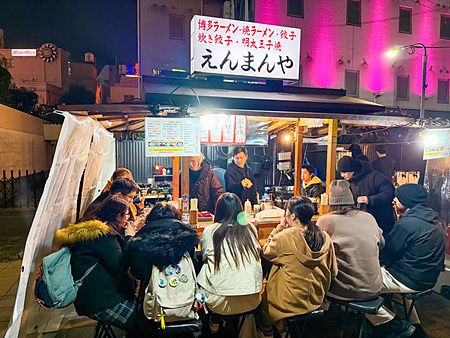
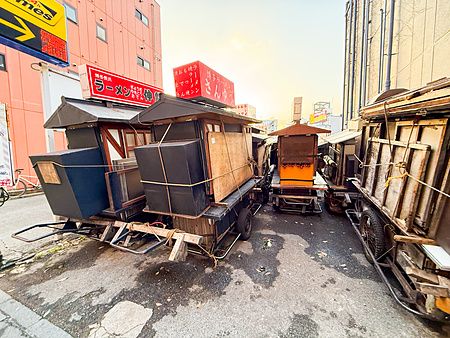
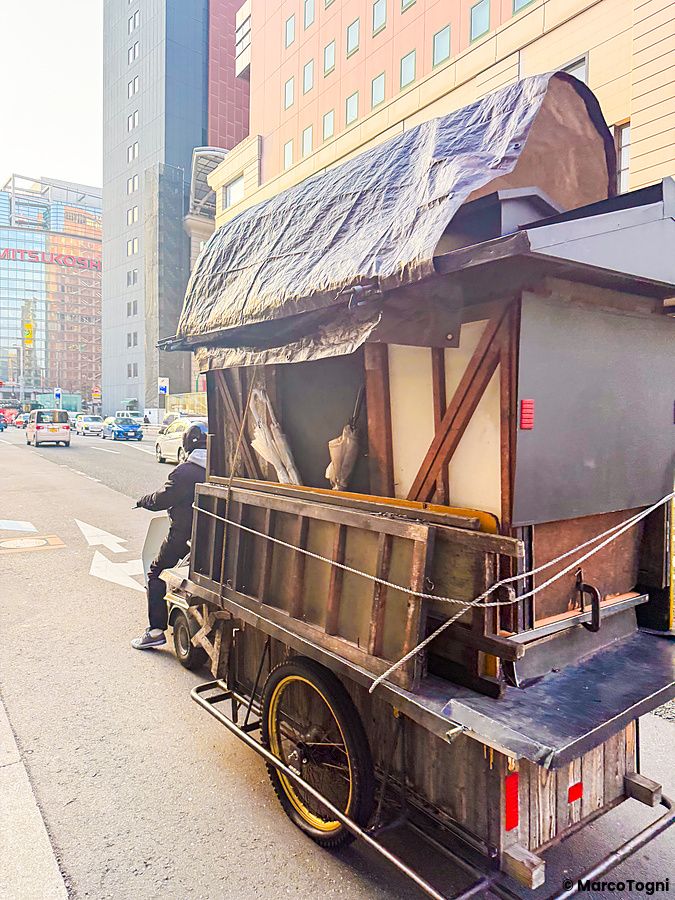
A yatai is a street food stall on wheels, set up every evening on public land and taken down before morning. During the day, all that’s left of the crowded little kitchen is an empty sidewalk and a few marks on the ground showing the stall’s assigned spot.
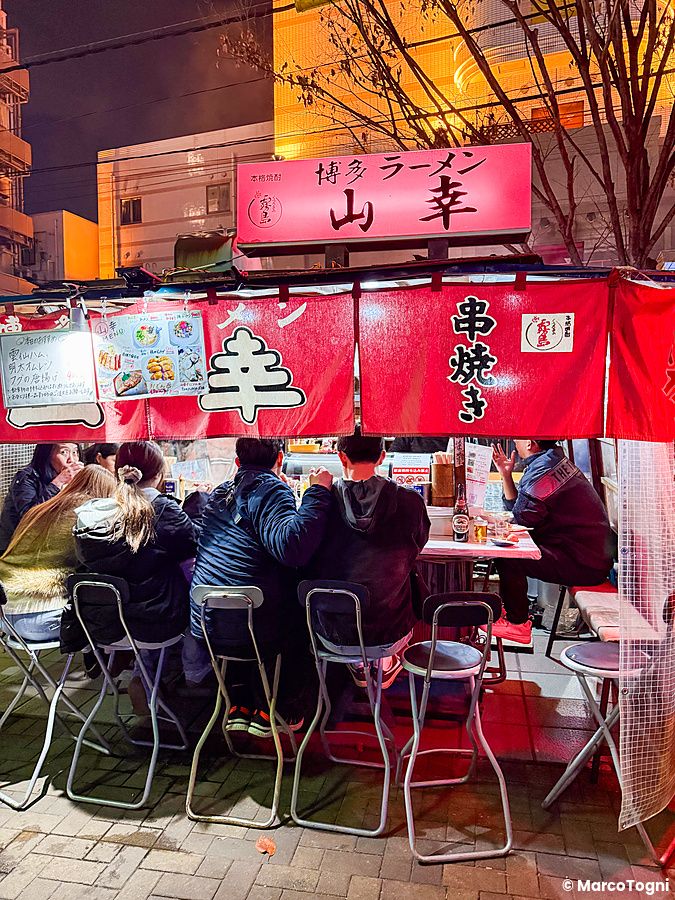
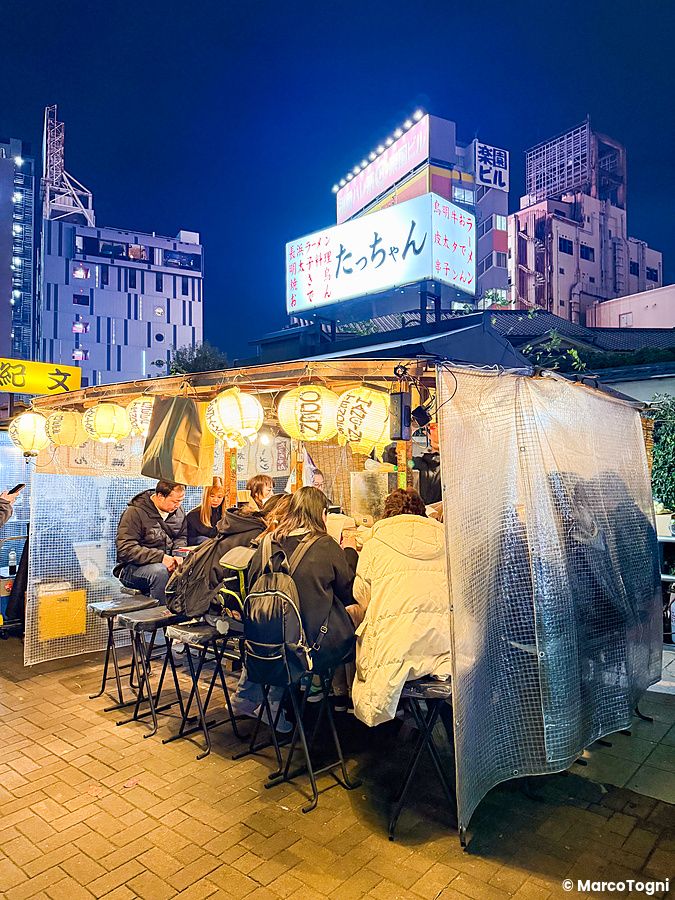
A stall usually seats seven to ten people, elbow to elbow around the counter, while the cook in the middle cooks, serves and chats. When it’s cold or windy, clear plastic sheeting closes off the sides, and in winter it gets surprisingly warm inside thanks to the burners and the steam from the pots.
Each stall is a little restaurant in its own right, with its own cook, its own menu and its own regulars. That’s exactly why I like them. They’re the opposite of a typical Japanese restaurant, where everyone keeps to their own table and talks quietly. At a yatai you almost always end up chatting with whoever’s on the next stool, whether it’s an office worker in a suit and tie or a tourist from Korea.
A bit of history
Fukuoka’s yatai date back to the years right after World War II, when many people who had lost their homes and jobs came up with a way to earn a little by selling food on the street. At their peak, around the 1960s, the city had more than four hundred of them.
Then came hygiene regulations, traffic problems and complaints from residents, and the numbers fell sharply. For a while people feared they’d disappear altogether, because licenses couldn’t be passed on to anyone, and every time an owner retired, the stall went with them.
The turning point was a city ordinance written specifically for them, the “Fukuoka-shi yatai kihon jorei.” With it, the city decided to treat yatai as a city asset rather than a problem to put up with. Today there are clear rules on stall size, cleanliness and hours, and when spots open up the city runs a public selection process to choose new operators, complete with a written exam and an interview.
As a result, the number of active stalls has held steady at around a hundred, and the owners range from older men who’ve been doing this for decades to young people cooking more creative food.
They’re all over downtown
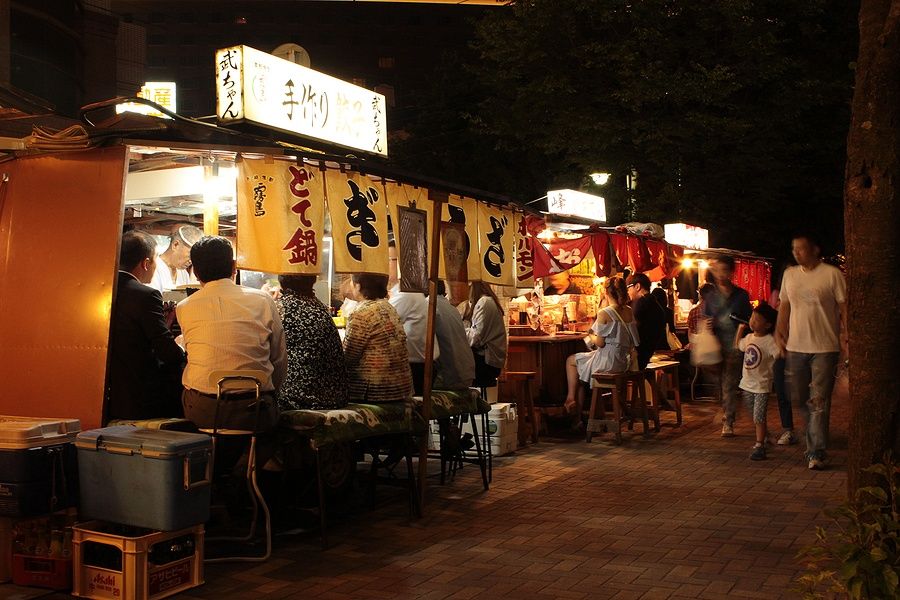
In Fukuoka the yatai aren’t packed into a single tourist street. They’re spread across the whole downtown area, in small clusters or on their own, on a street corner or in front of a bank that’s closed for the night.
So there’s no need to plan a special trip: if you’re staying in Tenjin or Nakasu, you’ll find them literally right outside your hotel when you head out for dinner. When people are here for just a few days, I often tell them not to fixate on one particular stall they found online, but to go for a walk and stop wherever there’s a free seat and a friendly face behind the counter.
That said, there are three downtown areas where the stalls are most concentrated, each with its own character, plus a few stalls outside Fukuoka:
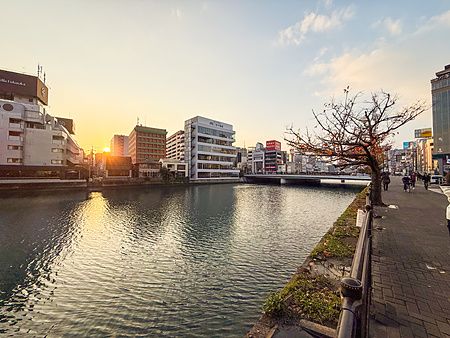
- Nakasu: along the bank of the Naka River, it’s the best-known and most photographed area, with a row of lit-up stalls reflected in the water and the signs of the nightlife district behind them.
- Tenjin: this area has the most stalls overall, scattered along the big avenues lined with shops and offices, and the crowd is more mixed, with lots of locals stopping by after work.
- Nagahama: near the fish market, this is the area tied to the birth of Nagahama ramen, the one with ultra-thin noodles and noodle refills, and it has more of a neighborhood feel.
- Outside Fukuoka: there are yatai in Kitakyushu, around Kokura, and in Kurume too, but only a handful, and they’re worth looking for only if you’re already in the area.
Nakasu or Tenjin?
Nakasu is the postcard view, and it’s worth seeing at least once, ideally on a walk along the river when the lights come on. The downside is that it’s also the area with the most tourists, the longest lines and slightly higher prices, and some stalls now get an almost entirely foreign crowd.
Tenjin is more laid-back, and I find it better suited to solo travelers, since more of the stalls there have a local crowd and there’s often more room to chat with the cook. It’s also where you’ll find the widest range of food, from ramen to French- and Italian-inspired dishes.
Here’s what I’d do: walk around Nakasu for the atmosphere and a few photos of the river, then eat in Tenjin, just a few minutes away on foot. I mostly recommend Nagahama to ramen fans who want to try the local style where it was born, maybe paired with a visit to the fish market.
What to eat
A yatai menu is short and varies a lot from stall to stall, but a few dishes show up almost everywhere. The first is tonkotsu ramen, Fukuoka’s signature dish, made with a thick, pale pork bone broth.
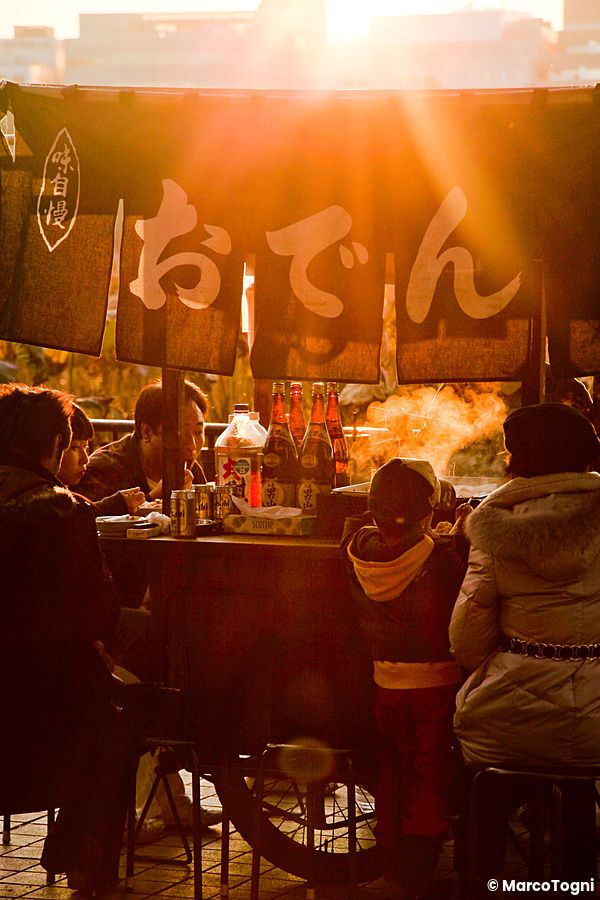
Then there are grilled meat skewers, the bite-size gyoza the city is known for, and oden, the winter classic: eggs, daikon, tofu and fish balls simmered for hours in a light broth. Many stalls also make motsunabe, another local specialty: a tripe hot pot with vegetables and garlic.
One dish to look for is yaki ramen, ramen stir-fried on a griddle with sauce, which was invented at a Fukuoka yatai and went on to become a city classic. Some stalls also have dishes made with mentaiko, the spicy cod roe you’ll find everywhere here, for example in a rolled omelet.
Don’t expect raw fish, though. Yatai don’t serve raw fish, for hygiene reasons, so if you want sashimi, you’ll have to go to a restaurant.
My advice is not to stay in one place. The best way to do yatai is as a crawl: a couple of dishes and a beer at one stall, then you get up and move on to the next, maybe finishing with a bowl of ramen.
How much it costs
Eating at a yatai isn’t especially cheap, and that surprises a lot of travelers. Prices are similar to those at an average izakaya, sometimes a bit higher, because the owners have only a few seats and limited hours.
To give you an idea, a bowl of ramen runs about 700–1,000 yen, skewers are priced per piece and a draft beer costs about what it would in a regular bar. Stop for a couple of dishes and a drink and you’ll spend around 2,000–3,000 yen per person, while a night across several stalls with a few more drinks can go higher.
Always check the menu and prices before you sit down. Almost every stall posts one, and the ones that get a lot of tourists also have an English version with photos. If a stall doesn’t show prices anywhere, it’s not rude to ask first.
Bring cash in small bills. Some stalls take cards or phone payments, but not all of them, and you don’t want to find out when the check comes.
The rules to know
At a yatai there’s no server to greet you and explain how things work, so it’s best to show up already knowing the basics. None of it is complicated, but these small courtesies are what separate a welcome customer from one who’s merely tolerated.
- Use the restroom beforehand, because yatai don’t have toilets. People use the ones in subway stations or konbini, and getting up halfway through dinner to go find one is awkward for everyone.
- Before sitting down, wait for a sign from the cook and hold up your fingers to show how many of you there are, rather than just grabbing the first free stool.
- Order at least one drink and one dish each, because there are very few seats and taking one just to sip tea is frowned upon.
- When you’re done, pay and free up your seat, especially if people are waiting behind you.
- Keep your backpack or bag on your lap or under the stool, because space is really tight and putting it on the seat next to you means taking a seat away from someone.
- Don’t stand around outside the stall drinking, and don’t bring outside food or drinks.
Photos are a matter of common sense too. Taking pictures of the dishes you ordered is totally fine, but ask before you point your phone at the cook or other customers, because a lot of people come to a yatai precisely to unwind after work and don’t want to end up on Instagram.
Groups and lines
With so few seats, large groups are the main problem. Four people can usually find room, but with five or more it’s almost impossible for everyone to sit together, so it’s best to split up into pairs or groups of three and maybe meet up later.
Solo travelers, on the other hand, have the edge. A single seat frees up quickly even at the busiest stalls, and when you’re alone the cook or the people next to you are much more likely to strike up a conversation.
Lines depend a lot on the stall and the day. The most famous ones, especially in Nakasu, can have long lines right from opening, while plenty of others just a few meters away have free seats.
The busiest time is after dinner, when people come out of restaurants and bars, and the wait is longer on Fridays and Saturdays than midweek. If you want to avoid the crowds, show up early, right when they open in the evening, or very late.
Weather and seasons
You’re eating outdoors, so the weather matters. In heavy rain, strong wind or a typhoon many stalls just don’t open, and depending on the owner, some also close on set days of the week.
If you only have one night in Fukuoka, check the forecast and have a plan B. There are late-night ramen shops downtown that can save your dinner.
I’ll be honest: winter is when yatai are at their best. It’s cold outside, but inside the stall there’s steam from the oden and the ramen, and everyone squeezes in around the counter. Still, dress in layers, because your back is to the outside and you’ll always feel a bit of a draft.
Summer, on the other hand, is hot and humid, and with the burners going inside the stall you’ll sweat quite a bit. It’s still pleasant, but that’s when an ice-cold beer becomes mandatory.
Is it worth it?
Yes, at least for one night, even if you’re not a big street food fan. It’s not that the food is better than at a good restaurant. It’s that this is one of the few places in Japan where you sit down next to strangers and end up talking to them, sometimes with gestures, while the cook plays go-between.
I wouldn’t recommend it if you want a comfortable, quiet dinner with roomy tables and no rush. Space is tight, you sit shoulder to shoulder, and as at any counter, people come and go all the time.
If I were you, I’d keep it simple: pick an evening, skip reservations, bring cash, walk from Nakasu to Tenjin, and sit down at the first stall that has an open seat and catches your eye. Then try a second one if you’re still hungry. And finish with ramen, of course.