G-Cans
A flood-control facility dug out beneath a suburban soccer field in Kasukabe, just outside Tokyo, where you walk down about a hundred steps into a concrete hall the size of a stadium, filled with columns as tall as a six-story building. Foreigners know it as G-Cans, while in Japan people call it the underground temple.
You won’t find statues or gardens down there. What you get is pillars, darkness, puddles and the silence of a huge empty space. It’s for people who’ve already done the temples and skyscrapers and want to see something different, for anyone into photography, and for anyone traveling with kids who are crazy about enormous things.
Contents
What you’ll see
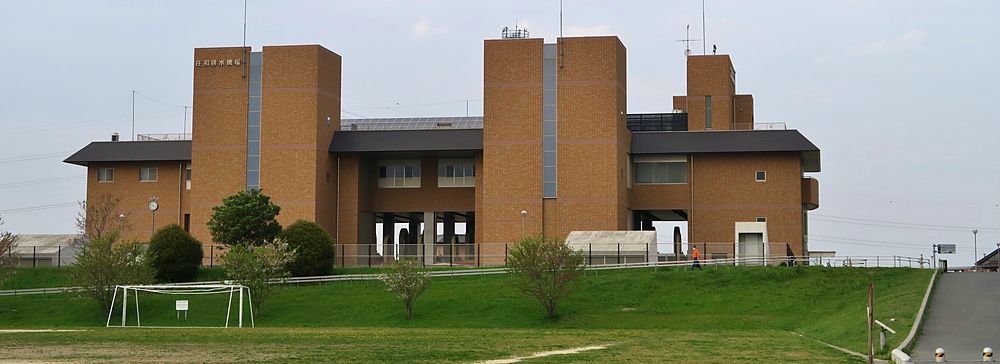
From the outside you’d never guess what’s there. You see a low building with a small museum, a lawn, and a sports field where neighborhood kids play on Sundays. Everything else is right under your feet, more than twenty meters down.
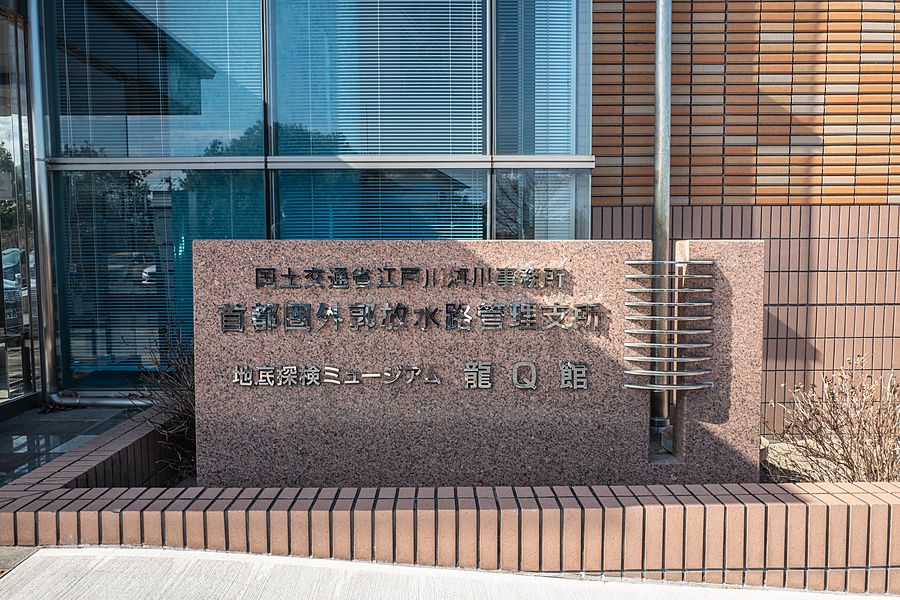
- Ryu Q Kan: the museum at the entrance. A scale model shows how water from swollen rivers drops into the shafts, runs through the tunnel and gets pumped into the Edo River. It’s well done, and it helps you understand what you’re about to see.
- The way down: a metal and concrete staircase that runs down along the wall. From the landing halfway down, you can already see the first rows of columns disappearing into the dark.
- The surge tank, the actual underground temple: a hall almost two hundred meters long and nearly eighty meters wide, with fifty-nine concrete pillars weighing five hundred tons each. This is what you come for.
- The openings in the ceiling: in a few spots the roof opens up and a shaft of light falls from above. They’re there so a crane can lower bulldozers in when the hall needs cleaning, but that light falling between the pillars is the best sight of the whole visit.
- The far end of the hall: on one side the floor stops and there’s a drop into the dark toward the first shaft. You can get as close as the barriers allow, and that’s enough to give you a sense of how deep the rest of the facility goes.
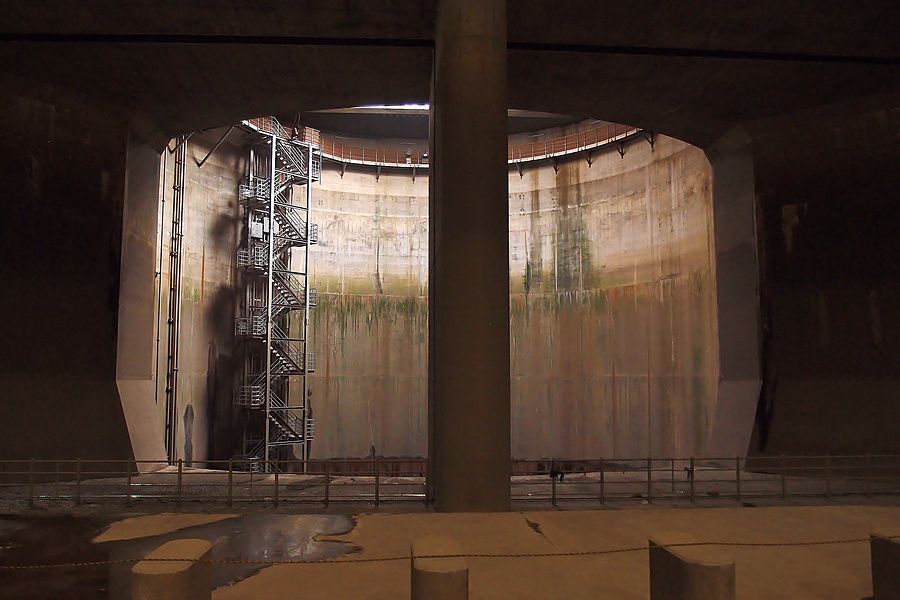
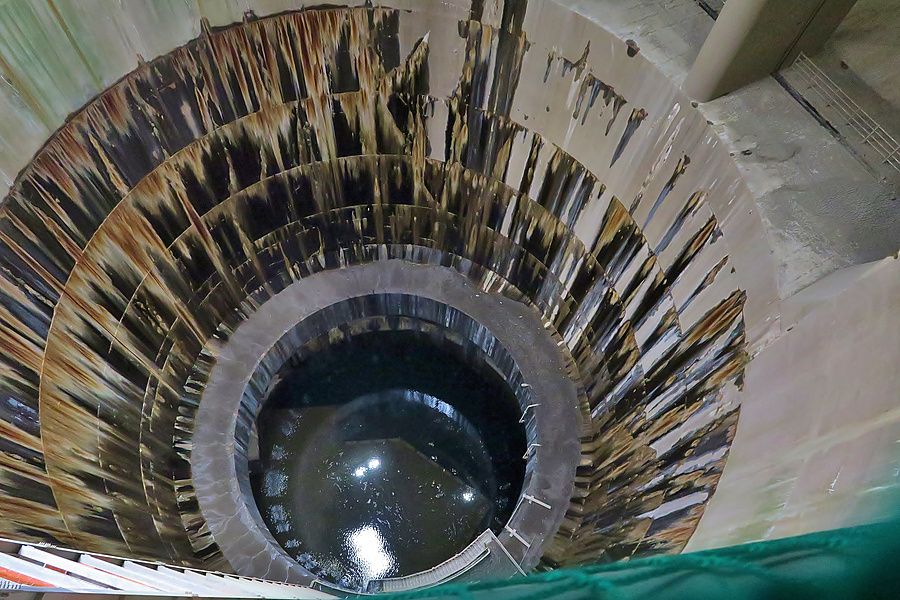
- The first shaft and the pump room: a cylinder thirty meters across and about seventy meters deep, which you look down into from a service catwalk, plus the turbines that push the water out. You only see these on the longer tours, wearing a harness and helmet and, on some of them, waist-high waders. The basic tour stays in the pillar hall.
The thing you only notice once you’re down there is the cold. The air stays cool all year, around 15°C, and in the middle of August, after being out in the sun on the field above, it feels like walking into a fridge. Bring a jacket even in summer, especially if you plan to stop and take photos.
The floor is wet and muddy in places, with puddles that reflect the columns. Leave your nice shoes at the hotel and wear sneakers, because the damp stairs are slippery.
You can’t wander around the whole hall as you please. You stay inside an area marked off by barriers, where the guide talks for a while and then gives you some time to look around and take pictures. The explanations are only in Japanese, so anyone expecting to roam freely or get an English audio guide will be disappointed. I don’t think it matters, because the place makes complete sense even if you don’t know a word of Japanese. Just look up.
The photos on social media are a bit misleading, too. Almost all of them are shot with a wide-angle lens and a long exposure, which make the hall look brighter and tidier than it is. In person it’s darker, dirtier and damper and, I have to say, far more impressive, because no photo captures what it feels like to have a concrete ceiling over your head held up by columns that seem to go on forever.
The best part isn’t the numbers. The guide keeps repeating them and you forget them five minutes later. It’s the moment you walk down the last flight of stairs and the group goes quiet on its own, without anyone asking. Voices echo, and you hear water dripping somewhere and footsteps on the wet concrete.
When someone comes to visit me and asks for a place they’ve never seen in any guidebook, this is where I take them. It works for everyone, from the engineer friend who gets lost staring at the pumps to the one who doesn’t want to hear a word about concrete and then walks out with two hundred photos. It’s the only place near Tokyo where nobody, on the way back up, has ever told me they’d pictured it differently.
What it’s actually for
The underground temple is just one piece of a much bigger system. The area north of Tokyo, between the Naka and Ayase rivers, is a low-lying plain as flat as a pancake, where rain from thunderstorms and typhoons had nowhere to go and flooded homes and streets almost every year.
The facility collects water from swollen rivers in five huge shafts, sends it through a tunnel more than six kilometers long dug about fifty meters underground, and releases it into the Edo River, which is bigger and carries it out toward the sea.
The pillar hall you visit is where the water slows down and settles before it reaches the pumps. This isn’t a postcard monument. The facility really does kick into action several times a year, especially during the late-summer typhoons, and on those days the floor you walk on ends up underwater.
When to go
A weekday is the right call. On weekends the tours are full, and late morning on Saturday and Sunday is the busiest time. With around fifty people in the same marked-off area, getting a shot without someone in front of you becomes a real challenge. During the week the groups are smaller, and after the explanation people spread out nicely among the pillars.
The season matters less than you’d think. In summer it’s one of the few day trips near Tokyo where you’re comfortable in the middle of the day, and in winter, after being out in the icy wind blowing across the plain, the air down there feels almost warm.
The weather does matter, though. This is a real, working facility, and after days of heavy rain or a typhoon the floor is covered in mud and puddles. It’s harder to walk on, but with the columns reflected in the water your photos come out better. When the pumps are running, some parts of the longer tours are off-limits, but the pillar hall is still the main part of the visit either way.
Stairs and kids
There are no elevators or escalators. It’s about a hundred steps down and the same back up, and the climb at the end is the part your legs will feel, especially if you’ve been standing still in the cold for a while. You can’t do the tour if you have trouble walking, use a wheelchair, or have a stroller with you.
If you’re afraid of heights, part of the staircase has an open side over the drop. Keep your eyes on the step in front of you and you’ll make it to the bottom just fine.
With kids, it depends on their age. Very young children, before elementary school, aren’t allowed in. For kids around six or seven and up, it’s one of the outings they remember most. In Japan the place is popular with families partly because loads of superhero shows have been filmed here, so don’t be surprised to see Japanese kids posing between the columns with a toy of their favorite hero.
When you come back up, the field above the tank is an open lawn where the little ones can finally run around, and they figure out for themselves that the columns they just saw are right underneath them.
Getting the best shot
The photo you’ll take home is the backlit one, with the dark pillars in the foreground and the light pouring down from the ceiling opening at the far end. Position yourself so the columns line up in front of you and the perspective does the rest.
There isn’t much light, and your phone can only handle it in night mode. If you have a camera, open up the aperture and don’t be afraid to push the ISO. When there are puddles on the ground, get down low and use them as a mirror.
Having a person in the middle of the frame helps a lot, because without something for scale the columns don’t look that tall. Ask whoever you’re traveling with to walk about twenty meters away and stand between two pillars. That photo shows how big the place is better than any number.
At a glance
- The highlight: the underground hall with fifty-nine giant columns and light falling from the ceiling.
- When to go: on a weekday, avoiding weekend mornings; in summer to escape the heat, after rain for the reflections.
- Best for: people who’ve already seen classic Tokyo, photographers, curious kids and engineering fans.
- Atmosphere: dark, cool and damp, with echoing voices and groups walking slowly between the pillars.
The bottom line
Getting here takes you out of Tokyo into a suburb with fields and low houses, and you go back to the city having seen something your travel companions who stayed in Shibuya didn’t. The underground temple tour is guided in Japanese and you stay behind the barriers, but what you see more than makes up for the journey. It’s a place that only exists here, built for a very serious purpose, and almost by accident it’s become one of the most beautiful sights around Tokyo. It’s worth the detour for anyone with at least three or four days in the city. If it’s your first trip and you only have two days in total, though, save it for next time and stay in central Tokyo.