
What Does Gaijin Mean, and Is It Offensive?
Gaijin is one of the first Japanese words people learn, often before they’ve even set foot in Japan. Watch one YouTube video or open a travel forum and you’ll find it everywhere, usually with a warning attached: careful, it’s offensive.
The reality is a bit more complicated and, I’ll say it up front, more interesting too. It’s a very old word, and some people dislike it for specific reasons, but online you’ll read a lot of nonsense about it. Once, this word I used to dread actually got me invited to sit down at the table.
Contents
What gaijin means
Gaijin is written with two characters: 外, which means outside, and 人, which means person. Literally it means outside person, someone who isn’t part of the group. In everyday Japanese people use it to refer to foreigners, and it’s a much shorter, more conversational word than the long form.
The full form is gaikokujin, written 外国人, meaning a person from a foreign country. It adds 国, country, in the middle, and that one extra syllable changes the tone quite a bit. Gaikokujin is the word the government uses, the one you’ll find on official documents, on the TV news and on signs at city hall, and everyone considers it neutral.
A lot of people think gaijin is simply short for gaikokujin, the way bike is short for bicycle. Many Japanese people today see it exactly that way, but historically the two words took different paths. Gaijin is much older. Gaikokujin only caught on in the Meiji era, when Japan opened up to the world and needed an official term for foreign citizens.
An old word
Gaijin already shows up in the Heike Monogatari, the great 13th-century epic about the war between the Taira and Minamoto clans. There it has nothing to do with Europeans or Americans. The word means someone from outside, someone on the other side, sometimes even the enemy. It takes the idea of inside and outside, which still matters enormously in Japan today, and applies it to people.
In the Edo period the word was also used for people from another domain. Someone from a neighboring domain was Japanese in every sense, but to the locals they were still an outsider. In Sendai, for example, the lodgings for people from elsewhere were actually called gaijin-ya, the outsiders’ house.
I think this history explains a lot. Gaijin didn’t start out as a way to describe race or skin color. It was a way to draw a line between your own group and everyone else. Over time the meaning shifted to foreigners, especially the ones you can spot at a glance, but at its root it’s still about the outsider.

Why it can be offensive
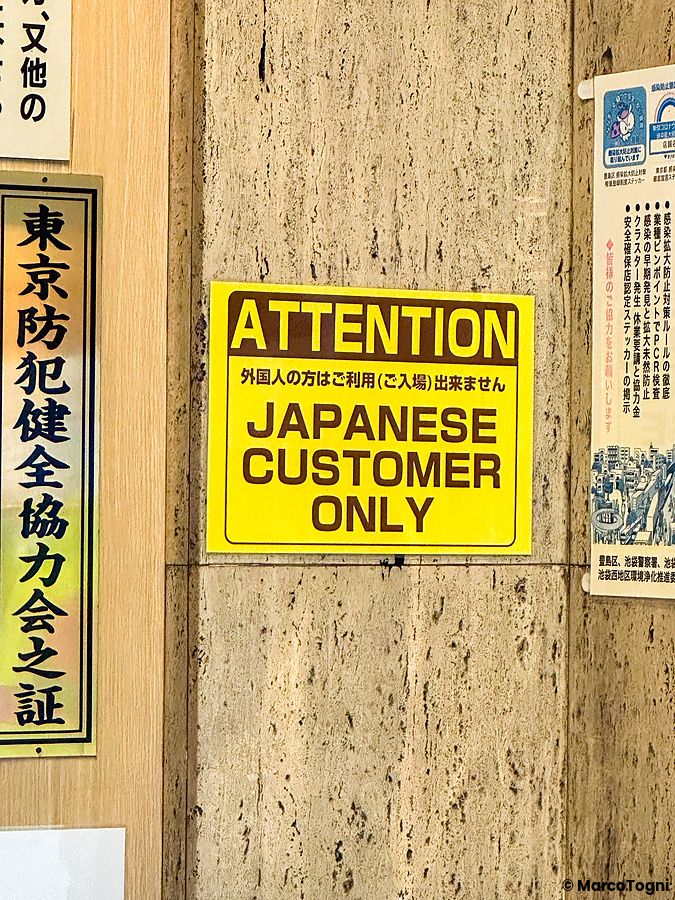
The dislike is real, and it deserves a proper explanation, without playing it down. The sensitive part is that in everyday use, gaijin isn’t about your passport but about how you look. Hardly anyone calls a Chinese or Korean person living in Japan gaijin if they look no different from Japanese people, even though technically they’re foreign.
On the other hand, a white or Black person who was born in Japan, speaks only Japanese and maybe even has Japanese citizenship can end up being called gaijin their whole life. That’s what stings for a lot of foreign residents. The word seems to say you’ll never be one of us, no matter what you do.
In the 1980s and early 1990s, American journalists and writers published quite a few books and articles portraying Japan as a closed country, and gaijin became the symbol of that exclusion. That’s how it got its reputation as a discriminatory word, which then spread around the world.
In Japan, too, attitudes toward the word have shifted. TV and newspapers almost always go with gaikokujin, and in formal settings using gaijin comes across as a bit unrefined. It’s not a swear word, but in some circles people avoid it.
The nonsense online
Online, though, you really do read a lot of nonsense. There are articles and videos describing gaijin as a vicious racist slur, on par with the worst words in English. It isn’t, and anyone who lives here knows it.
In the vast majority of cases, when a Japanese person says gaijin, they’re just saying foreigner in the shortest, most casual way they know. There’s no contempt and no aggression, at most a bit of linguistic laziness. It’s the same word you’ll hear from a grandma at the supermarket, an office worker on their lunch break and teenagers on the train.
The trouble starts when people take a real nuance and turn it into an absolute rule. These are the exaggerations I hear most often, and the truth behind each one:
- If someone calls you gaijin, they’re insulting you: false in almost every case, because the tone and the situation matter much more than the word itself.
- Japanese people use it on purpose to exclude you: people who use it usually don’t give it a second thought, and if you tell them it bothers some people, they’re often surprised.
- Gaijin is a banned word: it isn’t. You’ll find it in manga, on TV variety shows and in everyday speech; gaikokujin is just the preferred word in official contexts.
- Foreigners should never use it: foreign residents use it all the time, often with a bit of self-deprecating humor.
I often see travelers arrive in Japan already on the defensive, convinced that every gaijin they hear on the street is a dig at them. I think that’s a shame, because you end up seeing hostility where there isn’t any and missing out on some lovely moments.
Gaijin san
There’s also a form that almost nobody online explains, and it’s essential: gaijin san. In Japanese, adding san to a word makes it polite and respectful. It’s the same san that goes after surnames, and people also add it to words for jobs: the vegetable seller becomes yaoya san, the doctor oisha san, the police officer omawari san.
So gaijin san means something like the foreign gentleman or the foreign lady. When someone calls you that, they’re addressing you politely, especially if they don’t know your name. It’s typical of older people in small towns and the countryside, and it’s how children are taught to talk about foreigners.
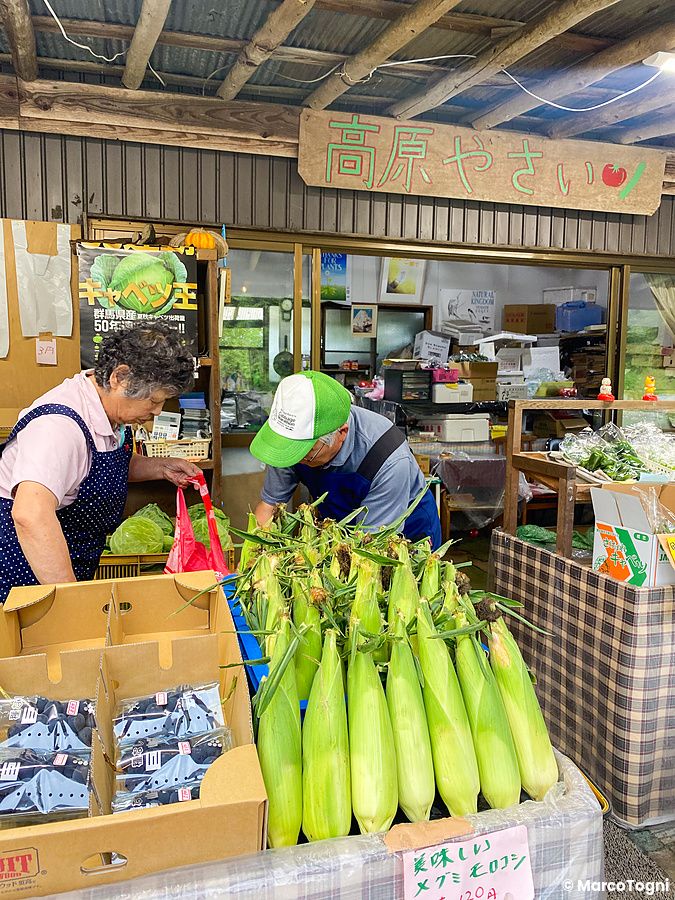
I’ve been called gaijin san quite a few times, and I remember the first time vividly. I was at a traditional neighborhood festival, the kind where everyone knows everyone, and in that whole crowd I was the only foreigner. I felt a little uneasy, a little out of place, partly because I still thought gaijin was a derogatory word.
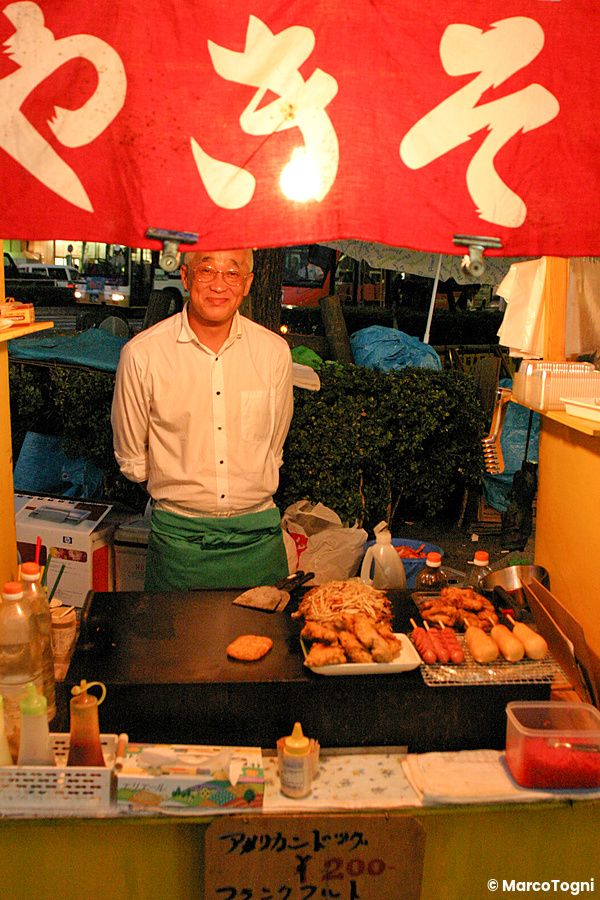
Then I heard someone in the distance shout gaijin san! I immediately assumed the worst, that someone wanted to provoke me or let me know I wasn’t welcome. Then I got closer and saw what was going on. A man was calling me over to offer me some food, to invite me to sit down and eat with everyone else, and to tell me they were all glad to have me there.
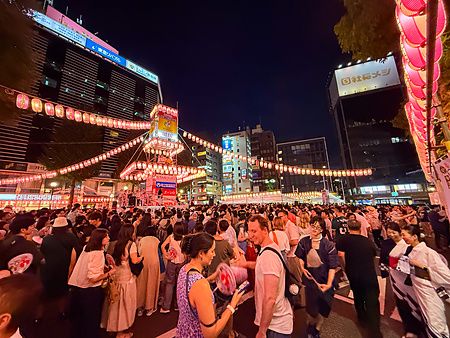
That day I realized that the word on its own says almost nothing. What matters is who says it, how they say it and why. That man didn’t know my name, and to get my attention he used the most polite form he knew.
Tone and context
To tell whether someone is using gaijin in a neutral, kind or unpleasant way, you have to look at everything else. In Japanese context matters a great deal, and the same word takes on a different shade of meaning depending on how it’s said and who says it.
These are the situations you’ll run into most often:
- A child who points at you and says gaijin! to their parents is just curious: the parents often correct them right away or apologize, and there’s no malice in it.
- An older person who calls you gaijin san is being kind: they usually want to help you, offer you something or just have a chat.
- Someone who mentions gaijin in general while you’re chatting is almost always just using a handy word, the same way you’d say foreigners.
- When someone says it curtly, maybe while giving you a dirty look or turning you away, that makes the word sound unpleasant, but the problem is the attitude, not the vocabulary.
Some people do use it in a nasty way, and I won’t pretend otherwise. They say gaijin with contempt. But it’s the exception, and you’ll spot it right away, without having to analyze the word.

Compounds and slang
Gaijin also turns up in plenty of compound words, some old but still in use, others rarer. Yokohama has a cemetery where many of the foreigners who came to Japan after the ports opened in the nineteenth century are buried, and everyone knows it as gaijin bochi, the foreigners’ cemetery. Its official name uses gaikokujin, but in conversation almost nobody calls it that.
The same goes for the French Foreign Legion, which is gaijin butai in Japanese, and for foreign players on baseball teams and in other sports, who were called gaijin senshu for decades. Newspapers and TV commentators now prefer gaikokujin senshu, but among fans the short version has stuck around.
Foreigners who live here have also built their own slang around gaijin, almost always used ironically. You’ll hear these expressions in groups for foreign residents, on forums and among friends:
- The gaijin seat is the empty seat next to a foreigner on a packed train, which sometimes stays free because someone would rather stand.
- The gaijin card is the joking name for the residence card, which every foreign resident has to carry.
- The gaijin pass is the slack Japanese people sometimes cut foreigners when they break a rule of etiquette, since people assume they don’t know it.

It says a lot that foreigners are the ones using this word about themselves. For many of them it’s become a way to laugh about it and to talk about the little oddities of being the one who’s different in a country where almost everyone looks alike.

Should you use it?
I’d suggest you use gaikokujin when you’re the one speaking, at least at first. It’s the safe choice and it works anywhere: at work, at city hall, with people you don’t know. Nobody will ever take offense when you say it, and it also makes a good impression, because it shows you care at least a little about the language.
Save gaijin for casual conversations with Japanese friends or other foreigners, when the tone is light and everyone knows what you mean. And if you feel like using it about yourself, with a bit of self-deprecating humor, nobody will find it strange. If you want to be even more polite, there’s also gaikoku no kata, where kata is a respectful word for person. You’ll often hear it from salespeople, clerks and hotel staff when they’re talking about you, and it’s the politest form of all.
When you’re the one being called gaijin, my advice is not to assume the worst. Look at the person’s face, listen to the tone and think about where you are. Nine times out of ten it’s curiosity, an offhand way of talking or even a form of politeness, as with gaijin san.
If it does turn out to be the tenth time, the unpleasant one, don’t bother giving a lecture on linguistics. That person would have found a way to be nasty whatever word they used.
My take
Words change meaning, and gaijin is a good example. It started out meaning anyone who came from outside, then became a symbol of exclusion for some people and an ordinary word for many others. There’s no point denying it can hurt, but there’s no point turning it into an insult it isn’t either.
Honestly, every time I hear gaijin san I think back to that festival, to the man calling out to me from a distance and the plate he put in my hands. If I’d stuck to my assumptions, I’d have gone home thinking I’d been made fun of. Instead I sat down and ate with the whole neighborhood.