Ganguro Fashion
Ganguro was one of Japan’s most extreme and recognizable youth fashions: deeply tanned skin, hair dyed platinum blonde, silver or pink, and loud, heavy makeup.
It started among teenage girls in Shibuya and Ikebukuro in the ’90s, hit its peak of popularity around 2000, and turned traditional beauty standards completely upside down.
After a few years ganguro gradually faded, and these days spotting a real ganguro on the streets of Tokyo is far from common.
Contents
Where ganguro started and how it grew
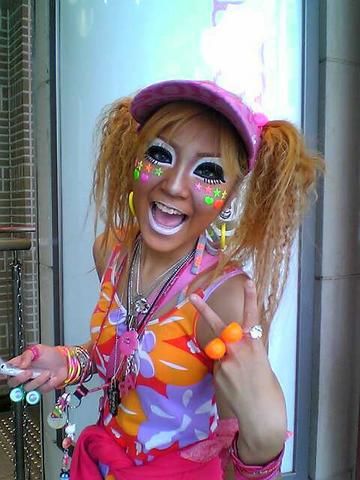
Japanese women have traditionally followed set beauty standards: pale skin and dark, straight hair, standards shaped by ethnicity. In 2000, though, the girls of Ikebukuro and Shibuya in Tokyo saw things differently, and ganguro turned those standards on their head. Start with the skin: forget a pale complexion. Ganguro meant deeply tanned skin that Latin American women would envy. Then the hair. With dark skin you’d expect dark hair, but these girls went against the grain and dyed it really loud colors, like platinum blonde, silver and hot pink. And makeup? Tons of it. A ganguro girl looked nothing like the classic fresh-faced Japanese girl, and the makeup was heavy because it had to show up against the tan.
Ganguro and folklore
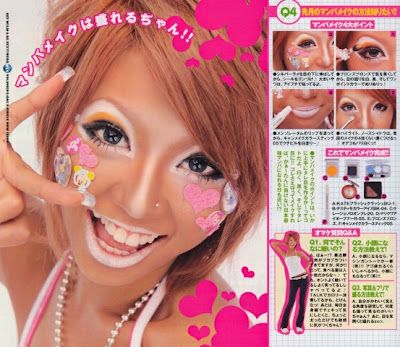
Ganguro doesn’t seem to have been only about looks. The style has plenty of ties to Japanese folklore, starting with the heavy makeup, which echoes the demons and spirits of Japanese tradition. People often see a resemblance to noh and kabuki costumes in the look, too. There’s also a ganguro style called Yamanba, which grew out of a tale about a mountain witch, so the link between folklore and fashion is a close one. In the legends, the yamauba is an old woman with wild white hair who lives in the mountain forests. Yamanba girls channeled her in an almost theatrical way: bleached, messy hair and, above all, white around the eyes and on the lips, over very dark skin.
Where the word ganguro comes from
It’s an odd name for a teen fashion. The word ganguro combines guro, which means grotesque, and gangan-kuro, which means very dark. You could translate it as “black face.”
What ganguro looked like
Ganguro exploded in 2000, but the first signs actually showed up back in the ’90s. It first spread among teenage girls: in Japan, teenagers are often the first to pick up something new and spread it. The young women who followed it were deeply tanned and paired the tan with bright hair dye in strong colors like platinum blonde, orange and pink, and sometimes a kind of silver known as “high bleached.”
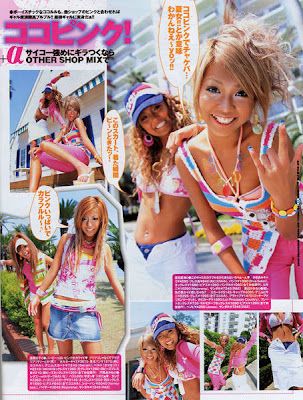
Ganguro girls also wore a lot of makeup, especially on the eyes, with thick black eyeliner and false eyelashes, while their lips were painted white with loads of concealer. The result was a sharp color contrast. They covered the rest of the face with various powders and colored rhinestones. Clothes had to be colorful too, mostly sarongs and very short skirts, with accessories like bracelets, necklaces and rings.
How ganguro has been read
Ganguro is a subcategory of gyaru culture. Some have suggested it was a kind of revenge against tradition-bound Japanese society: a way to let off steam in the name of freedom, pushing back against school rules and rules of behavior in general.
Magazines and para para
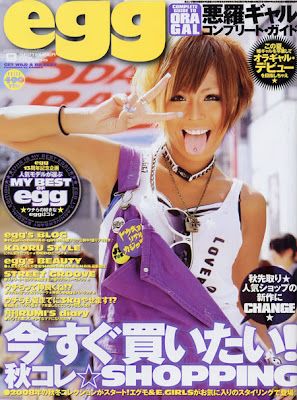
Ganguro didn’t stay a purely Japanese phenomenon. It drew a lot of attention, and many fashion magazines set out to figure out what this style was. I’m thinking especially of Egg, a magazine launched in 1995 that became the standard-bearer for ganguro girls. The style is also tied to a Japanese dance called para para. You dance it in a group, in sync, doing set routines to eurobeat music, mostly with your arms. Around 2000 para para took off in the clubs of Shibuya, and ganguro girls were among the stars of the dance floor.
After ganguro
I’ve already mentioned Yamanba, but it isn’t the only style that grew out of ganguro: there’s also Manba. These styles peaked in 2004. They still called for a heavy tan, but the lipstick was no longer pale or white. It was red. Girls wore stickers on their faces and bright Hawaiian-style clothes, but sadly (or thankfully, depending on your point of view) the style faded away after a while.
Photos