How to Get to Arashiyama
Arashiyama is one of Kyoto’s most interesting areas for visitors, with plenty of natural and cultural sights worth your time. Getting there is very easy. The area has three stations served by trains and trams: JR Saga-Arashiyama, Hankyu Arashiyama and Keifuku Arashiyama. All three are well connected to central Kyoto and the main sightseeing areas, and they’re well placed for the sights in Arashiyama itself. The train or tram is the fastest and most convenient option, but you can also take the bus. It takes longer, depending on traffic, though you get a better look at the city along the way.
Contents
By train or tram
By JR
If you’re starting from Kyoto Station, the quickest and easiest way to reach Arashiyama is the JR Sagano Line, which takes you to Saga-Arashiyama Station in about 15 minutes. The fare is 240 yen, and it’s covered by the Japan Rail Pass. From Saga-Arashiyama, the center of the neighborhood is a 5- to 10-minute walk.
At Kyoto Station, the Sagano Line platforms are at the far west end of the station, all the way down the indoor concourse. If you’re aiming for a specific train, give yourself a few extra minutes just to get there. Trains run very often anyway, so even if you miss one you won’t be waiting long.
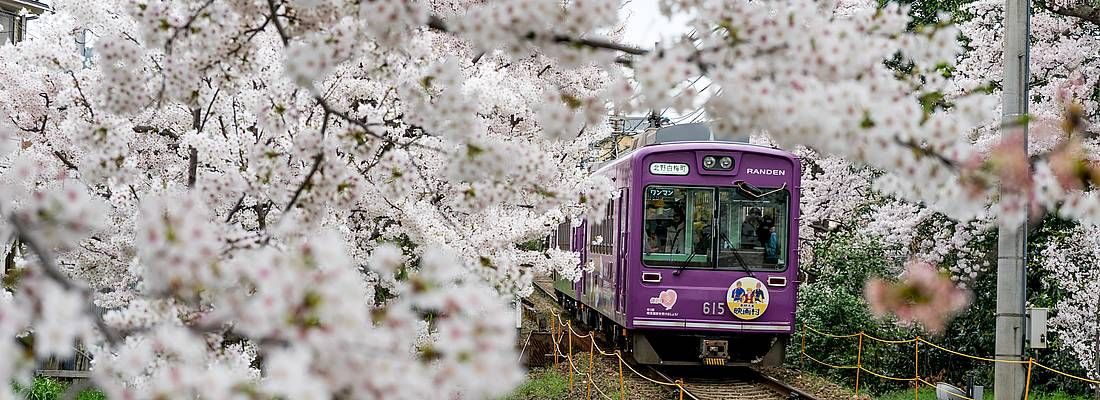
By Randen tram (Keifuku)
The trams on the Keifuku Arashiyama Line run between Arashiyama and Shijo-Omiya station, at the corner of Shijo and Omiya streets in central Kyoto. The ride takes a little longer, around 20 to 25 minutes, but these vintage-looking trams give the trip extra character, and you get a few glimpses of the city on the way. Keifuku is a private company, and its trams are all that’s left of a large network that once covered Kyoto. The fare is 250 yen, and the line ends at Keifuku Arashiyama station, right in the center of the neighborhood.
By subway and Randen
If you’re staying along the Tozai subway line, anywhere between Higashiyama and Nijo, there’s no need to go all the way back to Kyoto Station to get to Arashiyama. Ride to the end of the line at Uzumasa Tenjingawa, and the Randen stop is a short walk away. From there, take the tram to the last stop, Arashiyama.
It’s the most convenient option if you’re staying downtown or around Gion: you skip the long detour through Kyoto Station, and the tram drops you right in the center of Arashiyama.
By Hankyu
From Kawaramachi or Karasuma station in central Kyoto (both on Shijo Street), take the Hankyu Main Line to Katsura, then change to the Hankyu Arashiyama Line to Arashiyama. The whole trip takes about 20 minutes and costs 240 yen. You’ll arrive at Hankyu Arashiyama station, which is on the other side of the river, about ten minutes from the center of the neighborhood.
Coming from Osaka
If you’re based in Osaka, you can reach Arashiyama without going through central Kyoto. From Osaka-Umeda station, take the Hankyu Kyoto Main Line and change at Katsura for the branch line that ends at Arashiyama.
The alternative is a JR train to Kyoto Station and then the Sagano Line. That’s the natural choice if you have a Japan Rail Pass, because Hankyu is a private railway and the pass doesn’t cover it.
By bus
Not many visitors take the bus, since the ride takes about 30 minutes in normal traffic. If you’d still rather go that way, catch Kyoto City Bus 28 from Kyoto Station and get off at Arashiyama-Tenryuji-mae. At peak times, though, those 30 minutes can easily turn into twice that. During cherry blossom season and the weeks of fall foliage, the roads heading west get jammed and the bus is stuck in stop-and-go traffic. When that happens, you’re better off switching to the train and keeping the bus as a backup.
Which station to choose
The three stations aren’t interchangeable, and which one works best depends a lot on what you want to see first.
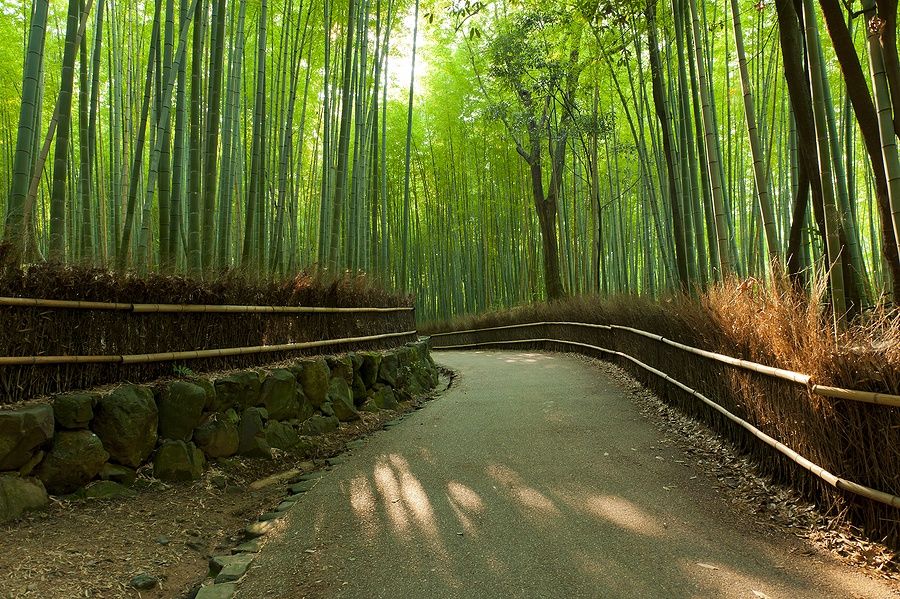
JR Saga-Arashiyama and the Randen station are both on the north side, a short walk from Tenryuji and the entrances to the bamboo grove. The Sagano Romantic Train also leaves from right next to the JR station, which is handy to know if you’re planning to ride it too.
Hankyu Arashiyama station, though, is on the south bank of the river. That means crossing Togetsukyo Bridge on foot, which makes for a memorable arrival, but it makes the walk longer if you’re heading straight for the bamboo grove.
Getting back to central Kyoto
In the late afternoon everyone leaves at once and the stations fill up. If you have a schedule to keep, the JR line is your most reliable bet, because the trains hold a lot of people and they run straight to Kyoto Station.
At the Randen terminal there’s sometimes a line, and you may have to wait for the next tram, while the bus out of Arashiyama is the one that gets stuck in traffic. If you can, head back before sunset, or take your time and let the crowds clear first.