How to Get to Kyoto
Kyoto sits in central Japan, and you can reach it easily from anywhere in the country. From Tokyo, from Osaka or straight from Kansai Airport, you almost always have more than one option: the shinkansen when you want to get there fast, regional trains and buses when you want to spend less.
Here’s how to get to Kyoto without any hassle, and how to save money doing it. I include travel times and how each option compares, so you can pick the right one for your trip right away.
Contents
From Tokyo to Kyoto
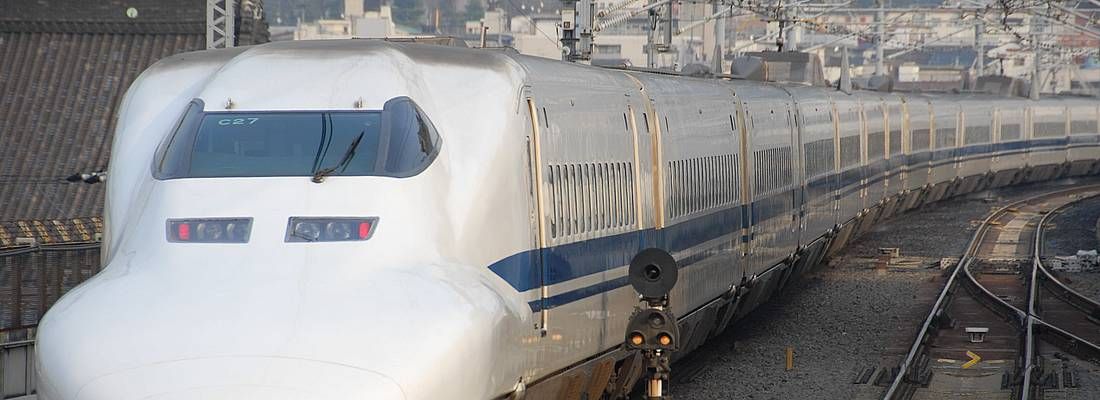
The best way to go from Tokyo to Kyoto is definitely the shinkansen bullet train. With a Japan Rail Pass you’ll ride a Hikari, which takes about 2 hours 40 minutes to 3 hours. Without the pass you can take the Nozomi, which takes 2 hours 20 minutes and costs about 13,000 yen.
Pass holders can now ride the Nozomi too, but they have to pay a separate surcharge of about 5,000 yen on this route. For the twenty or so minutes you save, it’s almost never worth it.
In Tokyo, you can catch the shinkansen to Kyoto at Tokyo and Shinagawa stations.
There are also buses, both overnight and daytime. They take about 9 hours and cost 6,000 to 9,000 yen, depending on the type of bus. Night buses leave the Shinjuku terminal in the evening and drop you off in front of Kyoto Station early in the morning, so you don’t pay for a night in a hotel and arrive with the whole day ahead of you. The downside is that you won’t sleep well. If you decide to try it, spend a bit more and pick a bus with three seats across, because the ones with four across are really cramped.
I strongly advise against local trains on this route: they take as long as the bus, cost 8,000 to 9,000 yen, and you have to transfer countless times. The one exception is the Seishun 18 kippu, a ticket valid only on local trains and sold during three periods of the year. With it the cost drops sharply and the journey becomes part of the fun, but be ready to spend the whole day hopping from one train to the next.
From Osaka to Kyoto
Osaka and Kyoto are very well connected. A JR Special Rapid Service or JR Kyoto Line Rapid train gets you there in about half an hour for 580 yen.
The shinkansen takes half the time, but only consider it if you have the Japan Rail Pass, because otherwise it’s really expensive, about 2,800 yen.
From Osaka on the Hankyu and Keihan lines
If you’re staying in Osaka and want to get straight to central Kyoto without going through Kyoto Station, consider the two private lines. The Hankyu runs from Osaka-Umeda to Kyoto-Kawaramachi, a short walk from Gion and Nishiki Market. The limited express takes a little over 45 minutes and costs less than the JR train.
The Keihan starts at Yodoyabashi and follows the Kamo River up to Gion-Shijo and Sanjo, so it’s very handy if your hotel is near the temples on the east side of the city.
The only drawback is that neither line is covered by the pass. If you have the Japan Rail Pass, the Special Rapid is still the most sensible choice; if you don’t, check where you’re staying in Kyoto and choose accordingly.
From Kansai Airport to Kyoto
For this route I recommend the Haruka Express, a fast train that takes you from the airport to Kyoto Station (and back) in 78 minutes for 3,300 yen. The Haruka is free with the Japan Rail Pass.
The Icoca & Haruka deal no longer exists. It’s been replaced by the Haruka One-way Ticket: if you’re visiting Japan as a tourist with a non-Japanese passport, it costs 2,200 yen to Kyoto, and you can buy it online on the official JR West website or through a travel agency before you leave.
Nankai trains also run from the airport, but you have to transfer twice.
You can also take a Limousine Bus, which costs 2,800 yen and takes 1 hour 40 minutes.
From Itami Airport to Kyoto
A lot of people forget that Osaka has a second airport, Itami, which handles only domestic flights. If you’re coming to Kyoto by plane from Tokyo, Sapporo or Okinawa, you’ll almost certainly land at Itami rather than Kansai. No trains run to Itami, so your best bet is the direct bus to Kyoto Station. It leaves from outside the arrivals terminal and takes about an hour.
This is one of the few cases where I recommend the bus without a second thought. The alternative is the monorail plus two trains, and all those transfers make no sense when you’re carrying luggage.
From Hakone to Kyoto
After seeing Tokyo, many travelers spend a night at a ryokan in Hakone and head to Kyoto from there. It’s very easy: from Hakone-Yumoto Station take the Hakone Tozan train to Odawara (17 minutes), then catch the shinkansen, which gets you to Kyoto in 2 hours.
From Hiroshima to Kyoto
Nozomi trains run direct on this route in 1 hour 40 minutes. With the Japan Rail Pass, the shinkansen takes 2 hours 10 minutes and sometimes requires a transfer at Shin-Osaka. If your connection there is tight and you miss it, don’t worry: trains between Osaka and Kyoto run all the time, as I mentioned a few sections up.
From Nara and Kobe to Kyoto
The rest of the Kansai region is close by too. From Nara you can reach Kyoto Station in 45 minutes on the JR Nara Line rapid, which is covered by the Japan Rail Pass. The Kintetsu line’s limited express trains are even faster, but they’re not covered by the pass and you have to pay a surcharge.
From Kobe, just get on the Special Rapid at Sannomiya. There are no transfers and the ride takes about 50 minutes, since these are the same trains that link Osaka and Kyoto.
Trains on these routes are so frequent that you don’t need to plan anything. Just go to the station and take the next train.
From Nagoya and Kanazawa to Kyoto
From Nagoya it’s an easy trip: the shinkansen gets you to Kyoto in just over half an hour, so many travelers make Nagoya a half-day stop on their way west.
From Kanazawa and the rest of Hokuriku, though, you need to transfer at Tsuruga. You take the shinkansen as far as Tsuruga, then the Thunderbird limited express to Kyoto Station, for about two hours in total.
The transfer sounds intimidating, but it’s designed to be quick, and the trains wait for each other. Just allow a few minutes on the escalators to get from one level of the station to another.