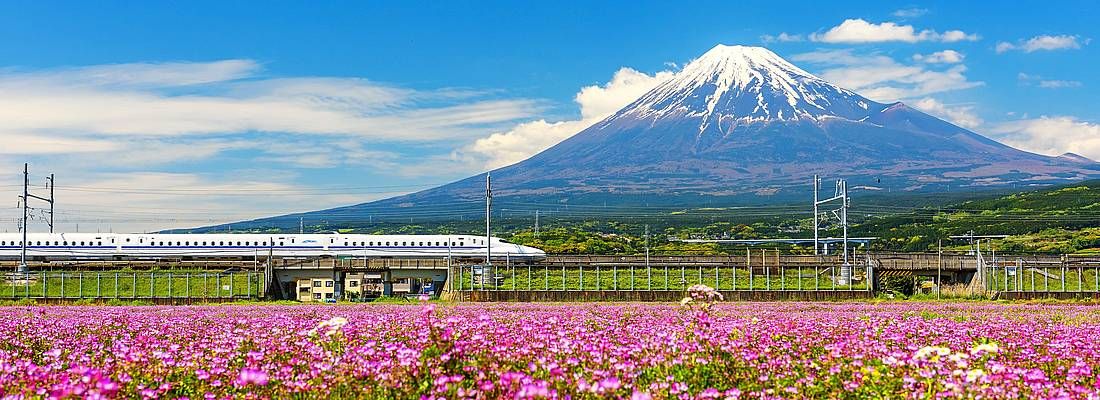
How to Get to Mount Fuji
Mount Fuji is without a doubt Japan’s most famous symbol, and a stop you shouldn’t skip on any trip to the country. The good news for visitors is that the volcano is also much easier to reach and to climb today than it used to be. From Tokyo you have several ways to get there. Which one makes more sense depends on the season you’re traveling in and on the activities you’re planning around the mountain: climbing to the summit, exploring the Fuji Five Lakes region around it, relaxing in a hot spring town, and so on. Here are the options in detail, both by bus and by train.
Contents
By bus
Year-round
Many visitors seem to go for the long-distance buses, which run on a regular schedule all year from Shinjuku, Shibuya and Tokyo stations and from Tokyo’s airports. The ride takes two to two and a half hours depending on where you get off, and fares are fairly cheap: a ticket costs between 2,000 and 3,000 yen depending on the distance, and you can buy it online or at the ticket counters in the bus terminals. The buses make several stops, and the main ones are Kawaguchiko Station near the lake of the same name, the Fuji-Q Highland amusement park, Fujisan Station and finally the Lake Yamanakako stop.
The Kawaguchiko and Yamanakako stops give you access to some of the lakes around Mount Fuji, with beautiful walks, views of the snowcapped peak and hot spring villages. Except in winter, when the roads are covered in snow, you can catch a local bus from Kawaguchiko Station up to the Mount Fuji Fifth Station, where the hike to the summit starts. You don’t need a reservation for this bus.
In summer
Summer is peak season, because that’s when the weather is best for climbing Mount Fuji. From July to mid-September there’s extra service to the mountain, including a direct bus from the Shinjuku Expressway Bus Terminal to the Fifth Station. The ride takes about two and a half hours and costs a bit more than the regular year-round buses.
Keep in mind that getting to the Fifth Station isn’t enough anymore. To actually start climbing toward the summit, you need to make an online reservation through the official website and pay an entry fee at the gate, and this applies on all four trails. The Yoshida Trail, the one that starts here, also has a daily cap on climbers, and in the early afternoon the gate closes to anyone without a mountain hut reservation.
By train
If you’d rather take the train, you have several lines to choose from depending on the season and where you’re headed. The train generally costs more than the bus and takes about the same time, but if you have a Japan Rail Pass it can be a great way to get more use out of it.
Year-round trains
For the Fuji Five Lakes, one of the most popular options is a JR Limited Express Azusa or Kaiji from Shinjuku Station to Otsuki, followed by the Fujikyuko Railway to Kawaguchiko Station. The whole trip takes about 2 hours and 20 minutes. Only the first leg to Otsuki is covered by the Japan Rail Pass, while the JR Tokyo Wide Pass covers the entire route. Some Fujikyuko Railway trains also stop at Fuji-Q Highland.
Alternatively, the JR Chuo Special Rapid Service follows the same route but takes about 10–20 minutes longer.
From Kawaguchiko Station you can take a bus up to the Fifth Station or to other places nearby.
Another option is to take the JR Tokaido Line toward Atami from Tokyo Station to Kozu, where you change to the JR Gotemba Line and ride it to Gotemba Station. This trip takes about as long as the route via Otsuki. From Gotemba you can catch a free shuttle to Gotemba Premium Outlets if you feel like doing some shopping, or a local bus to the Fifth Station.
If you’re going to Hakone, the well-known resort area in Fuji-Hakone-Izu National Park with beautiful views of Mount Fuji, take the Tokaido shinkansen to Odawara and continue on the Hakone Tozan Line. The Japan Rail Pass is valid only on the first leg. Not every shinkansen on the line stops at Odawara, so check the stops carefully. If you’re considering this route, you might also look into the Hakone Free Pass, which covers travel from Shinjuku or Odawara plus unlimited rides around Hakone.
The Fuji Excursion direct train
If you don’t want to change trains along the way, the easiest option is the Fuji Excursion, a limited express that runs from Shinjuku to Kawaguchiko with no transfers in just under two hours. There are a few trains a day, with some extra departures on weekends and holidays, and all seats are reserved. It’s best to book ahead, because the train sells out in peak season.
Here too, the Japan Rail Pass only covers the stretch to Otsuki, and you pay separately for the Fujikyuko Railway section after that. The JR Tokyo Wide Pass, on the other hand, covers the trip from start to finish.
Mount Fuji passes
Between July and November you can buy the Mount Fuji 5th Station Pass. It’s valid for two days and covers the train from Otsuki to Kawaguchiko plus unlimited rides on the bus to the Fifth Station.
Another option, available all year, is the Mt Fuji Pass. It comes in 1- to 3-day versions and covers all the transportation in the area, along with some attractions like Fuji-Q Highland.
By car
If you’ve rented a car, you can drive from the Tokyo area to the Five Lakes in about an hour and a half when there’s no traffic, taking the Chuo Expressway and getting off at the Kawaguchiko exit. If you’re heading for the Gotemba side of the mountain and Hakone, take the Tomei instead. Sundays and holidays are the worst time to drive back to Tokyo: backups on the expressway are the norm and can double your travel time.
To drive up the mountain you take the Fuji Subaru Line, the toll road that goes all the way to the Fifth Station. During climbing season, from July to early September, the road is closed to private cars. At that time of year you leave your car at the big parking lot at the foot of the mountain and switch to the shuttle bus, so plan for one extra transfer.