Getting Around Japan
Getting around Japan is one of the easiest parts of the whole trip. The country has one of the best transportation networks in the world, and whatever you ride, it’s clean and punctual. You’ve got trains of every kind (local, express, bullet trains and more), subways, long-distance and city buses, cable cars and funiculars, ferries, streetcars, domestic flights and taxis.
If you’re planning a trip, you’re probably wondering how to get around a huge city like Tokyo and how to travel from one city to the next. Here’s what each option is like, what it costs and which ones are worth using.
Contents
Trains
For tourists, trains are by far the most widely used way to travel around Japan. They’re fast, and while they aren’t cheap, there’s a whole range of passes that can save you money, the best known being the Japan Rail Pass.
To figure out schedules and fares, I recommend Google Maps. It makes planning and fine-tuning a trip in Japan really easy, both within a city and between destinations.
Keep in mind that trains, like most transportation in Japan, are extremely punctual, so if you show up late you’ll most likely miss yours. Most trains also don’t run around the clock, not even in big cities: in Tokyo, for example, the last trains leave around midnight and the first ones around 5:00. That’s why you’ll often find capsule hotels next to the main stations in big cities. They’re meant for commuters and anyone else who misses the last train home. Long-distance night trains, on the other hand, have almost disappeared. The only one still running regularly is the Sunrise Seto/Sunrise Izumo, which leaves Tokyo and continues on to Takamatsu and Izumo.
As you travel around, you’ll notice how clean and well organized the stations are. The larger ones often have shopping centers inside, with shops and places to eat where you can pick up souvenirs, grab a snack or buy a bento box to eat on the train.
Railway networks
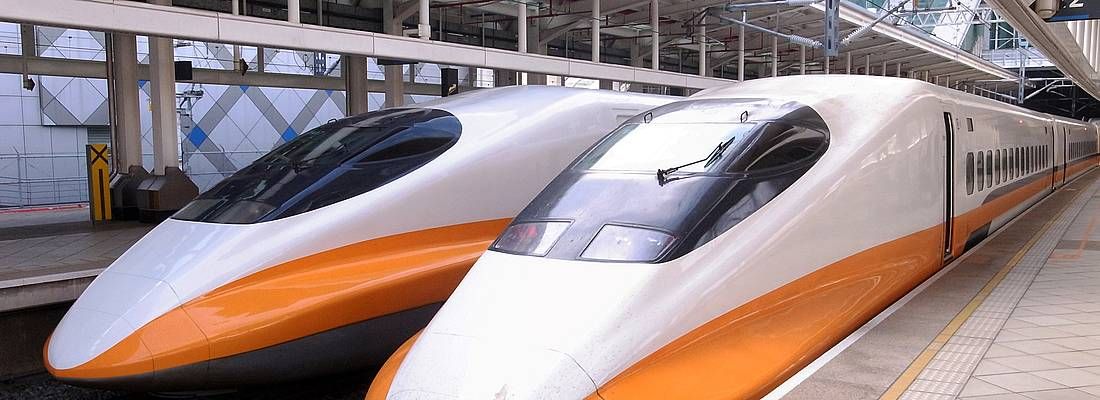
Several companies run the trains. The biggest and best known is Japan Railways, which is made up of six regional companies: JR Hokkaido, JR East, JR Central, JR West, JR Shikoku and JR Kyushu. Together they cover Japan’s four main islands, Honshu, Hokkaido, Kyushu and Shikoku, with a wide, dense network that includes subways, local trains and the famous bullet trains, the Shinkansen, which are incredibly handy for getting between cities like Tokyo, Kyoto and Osaka quickly and comfortably.
With regular trains, you need to be able to tell the different types apart so you can skip the slowest ones, which would waste a lot of your time when there’s a faster way to reach your destination. Here’s a quick rundown:
- Local. They stop at every station and are the slowest of all.
- Rapid. Despite the name, they’re not the fastest, but they skip a few stations and cost the same as local trains.
- Express. Faster than rapid trains because they skip a good number of stations, but they may cost a little more.
- Limited Express. The fastest of all, since they only stop at major stations, and they usually charge a higher fare. Just make sure your destination is actually one of the stops.
On top of the JR network, there are of course other private railways serving the rest of the country. Besides the Japan Rail Pass, each regional JR company offers its own passes to help you get the most out of the trains. If you’re only getting around within a city, I recommend buying one of the IC cards (Suica and Pasmo), so you don’t have to buy a ticket every single time.
IC cards
Nothing makes getting around easier than an IC card: Suica and Pasmo in Tokyo, Icoca around Osaka and Kyoto. They all work the same way. You tap the card on the gate reader when you go in and when you come out, and the fare is deducted automatically, so you never have to figure out how much each trip costs.
Even though the name changes from region to region, the cards are compatible with each other, so you can use a Suica bought in Tokyo to pay for the subway in Osaka or the bus in Hiroshima. There are a few exceptions, but they’re mostly small local lines in rural areas. For the Shinkansen, though, you still need a separate ticket.
The best part is that you can use them outside the train system too: at konbini, vending machines, station lockers and quite a few restaurants. And if your phone is compatible, you can use the card on your phone and top it up without going to the machines at the station.
Special cars
Japanese trains have different classes and special-purpose cars, just like trains elsewhere. On express services, for example, there are first-class Green Cars. They cost extra, but they’re more comfortable, and some of them come with a few services included.
To make women passengers feel safer and more at ease, some lines have women-only cars during rush hour. These cars are marked with pink stickers that say “women-only.”
The subway
In big cities, the subway is what you’ll use most, and luckily language won’t be an issue at all. Every line has a color and a letter, every stop has a number, and the signs are always in English too. All you need is your stop’s code, G09 for example, and you can find your way without being able to read a word of Japanese.
In Tokyo, the lines are split between Tokyo Metro and Toei, two different operators, and switching from one to the other basically means paying twice. With an IC card you don’t have to think about it, but if you’re buying tickets, check which of the two networks your line belongs to.
If anything, the real challenge is the huge stations like Shinjuku, which are real mazes with dozens of exits. Before you head up to the street, find the right exit, or you might end up on the opposite side of an enormous block.
Flying
Fast trains like the Shinkansen are so good that flying is really more of a luxury than a necessity. On the busiest routes, like Tokyo to Osaka, the travel time comes out about the same once you add the trips to and from the airports. Cost is a different story, and there’s no single answer anymore. At current Japan Rail Pass prices, the pass only pays off if you string together several long trips, while for a single trip from one end of the country to the other, flying is often cheaper. Flights can also be the most convenient option for reaching certain islands, like Okinawa, or places where the rail network is thinner, such as sparsely populated Hokkaido.
Over the past few years, low-cost airlines like Jetstar Japan, Peach and Spring Japan have been catching on in Japan, offering cheap flights between destinations around the country.
Ferries
Ferries aren’t used much, since Japan’s main islands are connected by tunnels and bridges. In some cases, though, they can get you to small islands and sparsely populated places, and they’re often the most practical option. There are also a few ferries that make long crossings, for example from Tokyo and Osaka to more distant places like Okinawa and Hokkaido.
Buses
Japan has an efficient bus network, with local routes serving cities and long-distance buses running day and night between the main tourist destinations. The network is fairly dense, so it covers all the areas that trains and other transportation don’t reach.
Long-distance buses between the major cities in particular can be a good alternative to the train if you want to save money, but keep in mind they take much longer. If you travel overnight, though, you can save on a night’s accommodation, and since you sleep on the bus, you make better use of your time. Willer Express’s Japan Bus Pass, which for years let you ride several routes for a flat price, is no longer sold. To save money, book individual trips online well in advance, which is when you’ll find the lowest fares. Some bus companies still offer regional passes for getting around a single area, each with its own conditions.
Like some train cars, some night buses are women-only, such as the Plumeria and Cherish buses between Tokyo and Osaka.
You’re unlikely to use local buses in big cities, but they’ll definitely come in handy in small towns or in cities popular with tourists, like Kyoto, where the subway network isn’t as extensive as Tokyo’s. Paying on buses is fairly simple. You usually get on through the back door and take a numbered ticket from the machine. Then just check the fare on the electronic display above the driver: find the number printed on your ticket, and the fare is listed next to it. In some places and on some buses you can also use IC cards like Pasmo and Suica, so check when you get there and you can skip the ticket. You pay at the end of the ride. You get off through the front door, drop the money into the box next to the driver and leave your numbered ticket there too. If you don’t have the exact amount, that’s fine, because the machine can make change for coins and 1,000-yen bills. Just do it before it’s your turn so you don’t hold up the line. On city buses with a flat fare, like the ones in Tokyo, you pay when you get on instead, and there’s no numbered ticket at all.
Taxis
Taxis are a bit expensive, but they’re safe and convenient, and you’ll find them all over Japan, not just in big cities. In some areas they may even be the only way to reach certain sights. Fares usually start at around 500 yen for the first kilometer and then go up by 100 yen every 200 to 250 meters, with some differences from city to city. There are extra charges for late-night rides, though.
If you’re short on time and not traveling alone, a taxi can still be a great way to get somewhere fast while splitting the cost. If you’re on a tight budget, you can always ask the driver for a rough estimate so you know what to expect.
To catch a taxi, just wave one down on the street or wait at the taxi stand outside stations and airports. Keep in mind that even in big cities, few taxi drivers speak English, so always carry a note with the name and address of your destination. If you can get someone to write it in Japanese, even better.
One interesting detail about Japanese taxis is that the driver controls the back doors, so don’t open or shut the door yourself when you get in: they open and close automatically! If no taxis are passing by, the easiest thing is to call one from your phone. The GO app is used pretty much everywhere in Japanese cities, and it also saves you from telling the driver where you want to go, since you set the destination on the map. Almost all taxis take cards and digital payments, IC cards included, so you don’t need to keep cash on hand for the ride.
Renting a car
Between Japan’s excellent public transportation and the traffic in the big cities, you really don’t need a rental car. In rural and more remote areas, though, having your own car can be handy and save you money. In that case, I’d suggest taking the train to the station closest to your destination and renting a car there, partly to avoid the tolls on the expressways, which in many cases cost more than the train fare.
Remember that in Japan you drive on the left, and that you need an international driving permit along with your own driver’s license. Check which kind of permit you have, because this is the detail that could leave you stranded at the rental counter. Japan only recognizes the 1949 Geneva Convention permit and doesn’t accept the 1968 Vienna version. Always bring both documents, because the international permit is worthless without a valid license from home.
Rentals start at 5,000 yen a day for the smallest, most basic cars, and you should always make sure insurance is included.
By bike
If you’re traveling in the warmer months, a bike can be a great way to explore some small towns or stretches of countryside. You’ll find bike rentals in every city, especially near routes that are popular with cyclists, and in small rural towns too.
What to do with your luggage
Dragging suitcases from one city to the next is what makes travel days hardest, but Japan has a system that makes a huge difference. It’s called takkyubin, a courier service that ships your bags from one hotel to the next, usually with next-day delivery. You can send them from konbini, major stations and the front desk of almost every hotel, so you drop off your suitcase and travel with just a backpack.
If you only need to store your bags for a few hours, every station has rows of coin lockers in different sizes. You can pay for them with IC cards too, and at the stations most popular with tourists they fill up early in the morning.
One last thing about the Shinkansen: on the lines connecting Tokyo, Osaka and Kyushu, if you’re bringing a very large suitcase, one whose three sides add up to more than 160 cm, you need to book a seat with luggage space. The reservation is free, but without one you’ll have to pay a surcharge on board.

