How to Get to Kanazawa
Kanazawa is a little gem that mass tourism has largely overlooked, probably because it’s relatively remote, even though it’s easy to reach from Japan’s major cities. If you want a feel for old, traditional Japan, it’s the ideal place to go. It’s probably one of the best-preserved Edo-period cities in the country, and it’s quieter than better-known places like Kyoto.
If you’re planning a trip to Kanazawa, here’s how to get there.
By train
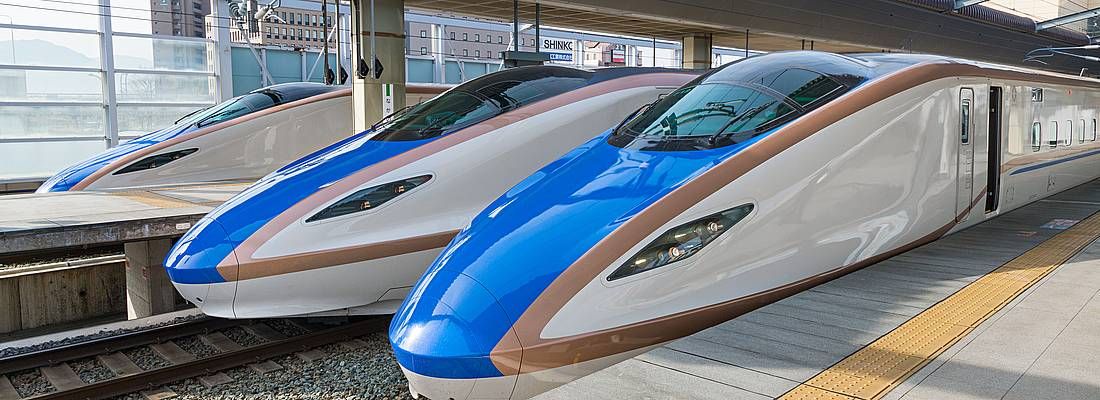
Kanazawa’s modern station greets you with a glass-and-metal front that has a wooden gate built into it. The city is on the JR Hokuriku Shinkansen line, which runs straight to Tokyo in about 3 hours, and the fare can be covered by the Japan Rail Pass or the Hokuriku Arch Pass. If you have one of these passes, the train is a great way to save money and get the most out of your pass.
Two different services run on the line, and you’ll notice the difference. The Kagayaki are the fastest: they skip almost every stop and get from Tokyo to Kanazawa in just under two and a half hours. The Hakutaka stop a lot more often and take about half an hour longer. Every seat on the Kagayaki requires a reservation. With a pass the reservation is free, but you still have to make one, or you’re left with the non-reserved car on a Hakutaka.
From Kyoto and Osaka, take the JR Thunderbird limited express to Tsuruga and switch to the Hokuriku Shinkansen there for the last stretch. Trains run frequently throughout the day, and the whole trip takes 2 to 2.5 hours. It can be covered by the Japan Rail Pass.
From Nagoya, take the JR Shirasagi limited express to Tsuruga and switch to the shinkansen there. You’ll reach Kanazawa in about 3 hours, and this trip can be covered by the Japan Rail Pass too.
Changing at Tsuruga
If you’re coming from Kansai or Nagoya, the transfer at Tsuruga is less daunting than it sounds. The station was designed for exactly this: it takes just a few minutes to go from the limited express platforms up to the shinkansen platforms one floor above, the signs are clear and in English too, and the connections are already built into the timetable.
My advice is to buy a single ticket all the way to Kanazawa, so you get a seat assigned on both the limited express and the shinkansen. On the Thunderbird and the Shirasagi every seat now requires a reservation, and there are no longer any non-reserved cars. That goes for Japan Rail Pass holders as well: they can reserve at no extra charge, but they still have to do it.
By bus
Several bus companies connect Kanazawa with other parts of Japan. From Tokyo, for example, JR runs two daytime and two overnight buses from Shinjuku and Ikebukuro, plus an overnight bus from Tokyo Station. Of course, the bus takes longer than the train—about 8 to 9 hours—but it can be a convenient way to save money if you travel overnight. Budget companies like Willer Express have fares starting at 4,500 yen one way, and if you can sleep on the bus, you may be able to skip paying for a night in a hotel.
There are daytime and overnight buses from Osaka and Kyoto as well, and the trip takes 4 to 5 hours in total. Companies running these routes include Hokutetsu and Nishinihon JR Bus, with fares around 3,500 to 4,000 yen one way. The Japan Rail Pass isn’t valid on these buses.
From Takayama and Shirakawa-go
There’s one more way in, and it’s the one people take when they combine the Japanese Alps with the Sea of Japan coast: the Nohi Bus and Hokutetsu buses that go through Shirakawa-go. From Shirakawa-go to Kanazawa it’s just over an hour. If you start in Takayama and stop off in the village, you’ll need two separate tickets, one for each leg.
The Japan Rail Pass isn’t valid here either, and I strongly recommend booking ahead. In peak season the seats sell out well in advance, and getting stranded in the middle of the mountains is no fun.
By plane
Flying is fast and definitely convenient, but keep in mind that the nearest airport is in the city of Komatsu. Once you land, the bus to Kanazawa takes about 50 minutes and costs 1,400 yen. The airport has daily flights to many cities, including Tokyo (Haneda Airport), Okinawa, Sapporo, Sendai, and Fukuoka. The flight from Tokyo takes about an hour, and with budget airlines you can find great deals at around 10,000 to 13,000 yen one way.
By car
Driving makes the most sense if Kanazawa is one stop on a longer trip. The Hokuriku Expressway runs along the coast and links the city to Kyoto and Osaka in about four hours, and if you’re coming from Nagoya, you take the Tokai-Hokuriku Expressway, the same road you’d take to Shirakawa-go. From Tokyo, though, the train wins hands down, and driving isn’t worth it.
Keep in mind that once you’re there, a car is more of a hassle than a help. The city center is compact and walkable, you can explore the historic districts on foot, and Japanese tolls are anything but cheap. If you do bring one, decide in advance where you’ll leave it, because you can’t park in the narrow lanes of the teahouse districts.