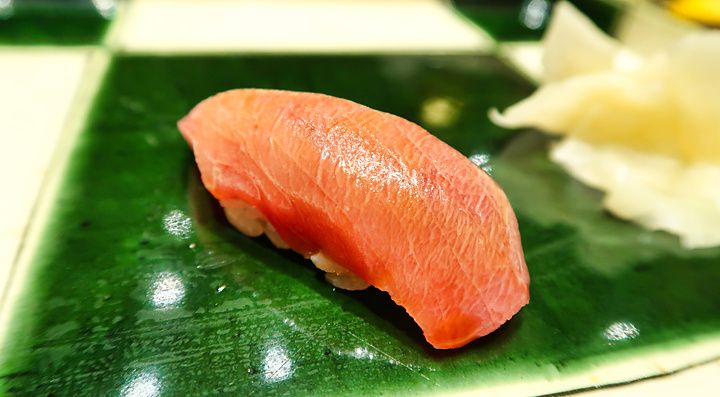
A carefully prepared otoro nigiri served on a ceramic plate at Ginza Iwa in Tokyo.

Ginza Iwa

An Edomae-style omakase sushi counter in Ginza with a Michelin star but none of the hushed, temple-like air that makes you afraid to breathe. The chef makes each piece one at a time and sets it right on the counter in front of you.
Ginza Iwa serves omakase only, with fish that comes in from Toyosu every morning and rice with a strong vinegar edge, meant to go with sake.
It’s the right place if you want first-rate Edomae sushi explained piece by piece, in English if you need it.
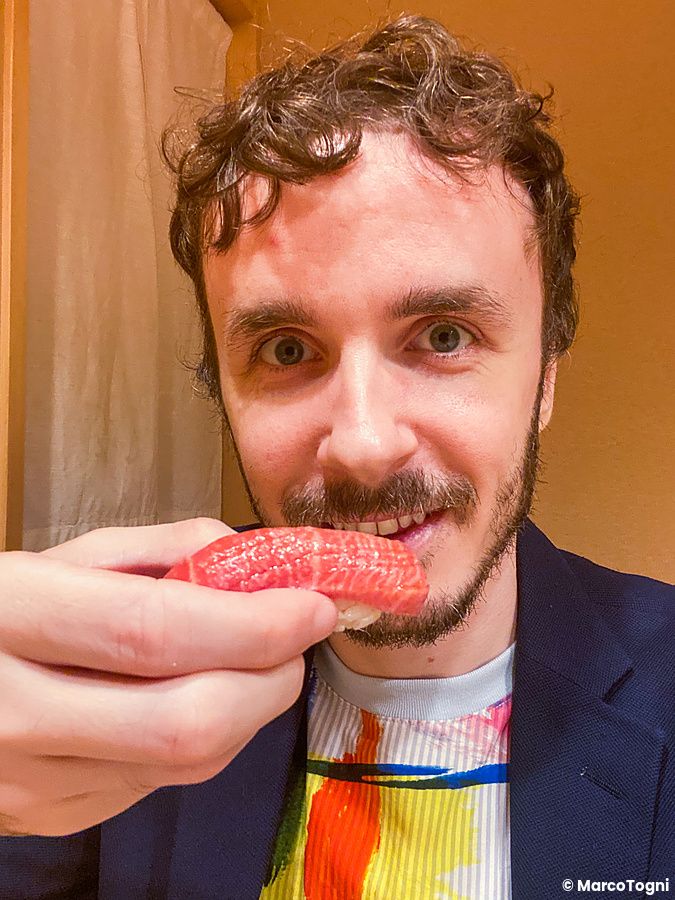
Marco Togni holds up an otoro nigiri inside Ginza Iwa in Tokyo's Ginza district.
I pick up a freshly made fatty tuna belly nigiri. The visible marbling points to a cut of the highest quality.
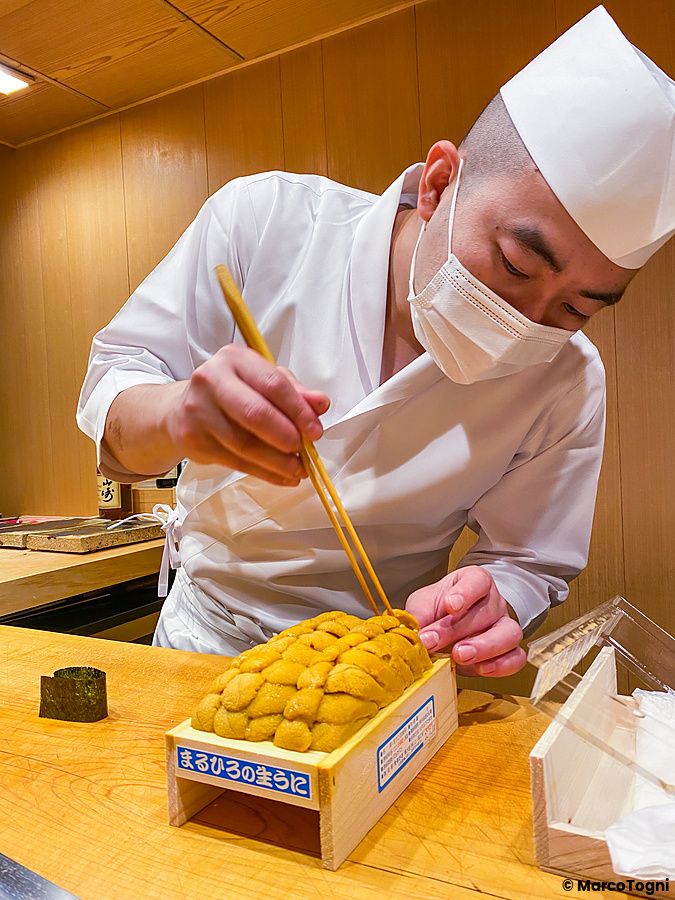
A chef prepares fresh uni (sea urchin) in a wooden box at Ginza Iwa in Tokyo.
The wooden box holds portions of deep yellow sea urchin. The urchin is handled with thin chopsticks so the flesh doesn't fall apart.

The menu and prices

There’s only one option, the omakase, and it changes every day depending on what’s good at Toyosu. Here are a few things you might find at the counter:
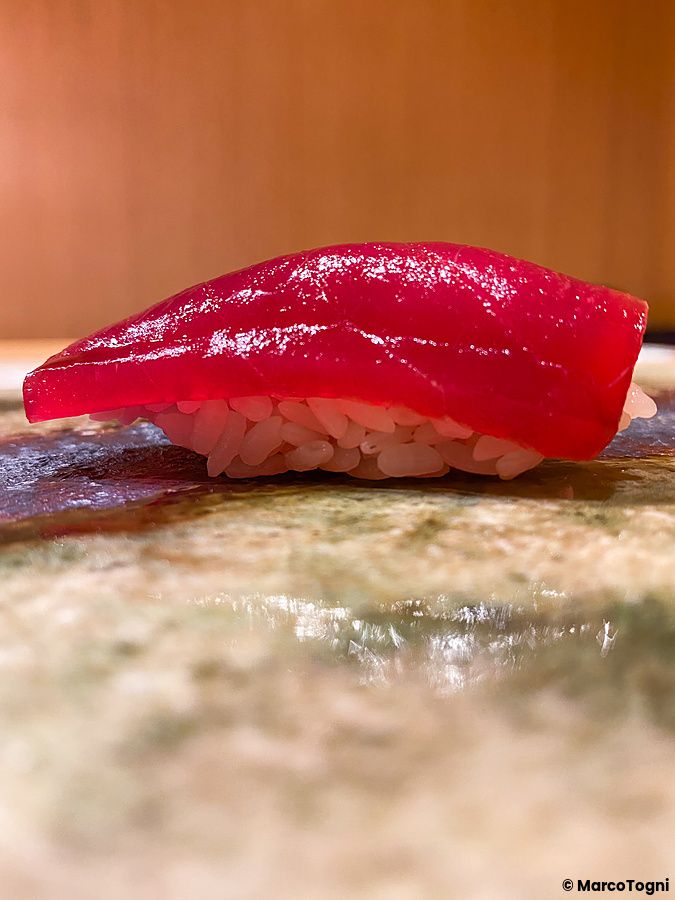
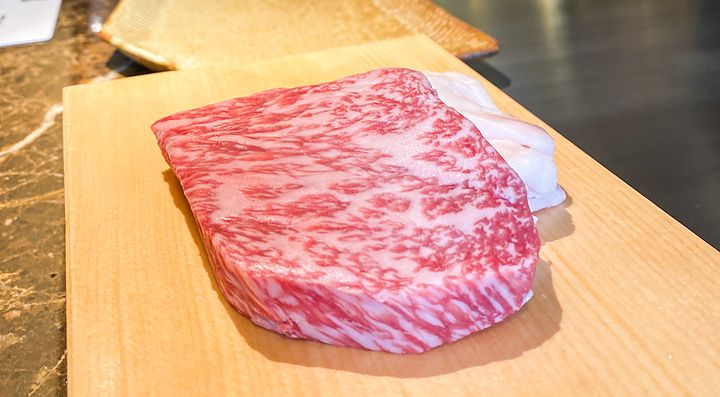
  • Otoro: the fattiest part of the tuna, aged and brought to room temperature before it’s served. It melts in your mouth.
  • Uni: creamy, sweet sea urchin that still tastes like the sea.
  • Awabi: abalone from the Boso Peninsula, with a sauce made from its own liver and aosa seaweed on top.
  • Anago shiroyaki: sea eel grilled plain, with a house-made yuzu kosho that has a kick and cleanses your palate.
  • Tamago: the sweet omelet that comes at the end of the meal, dense and almost like a dessert.
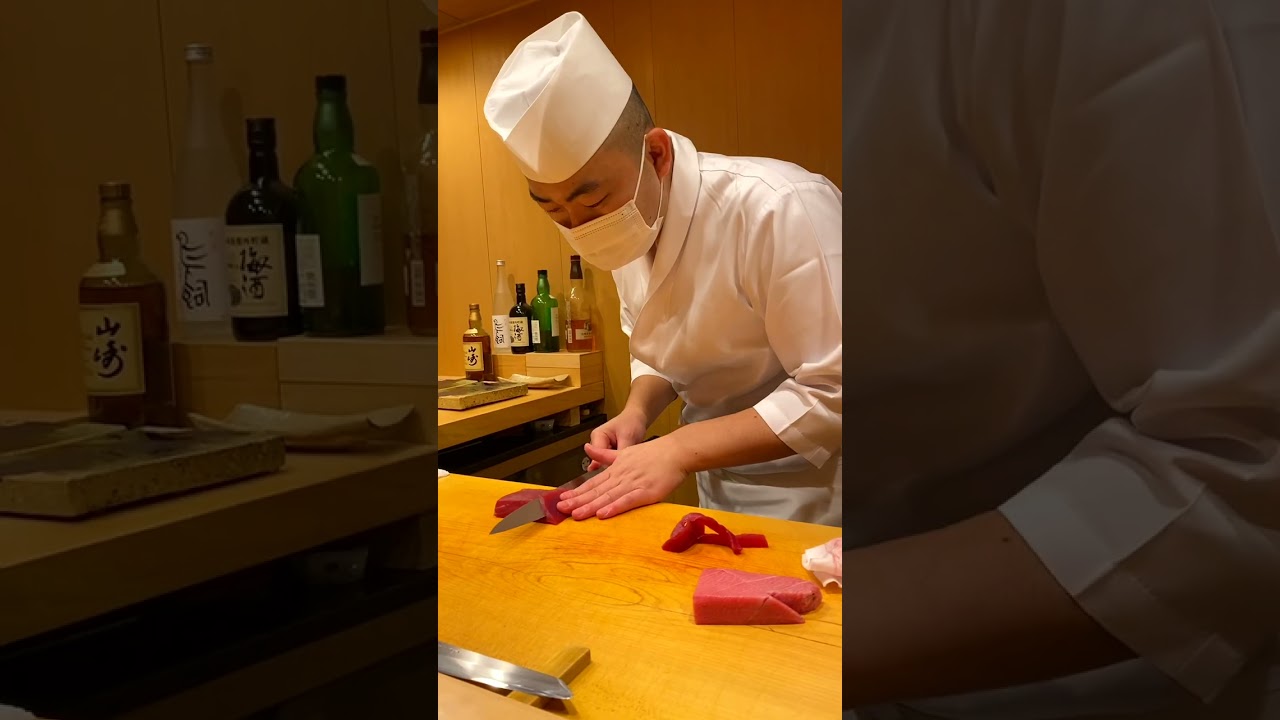
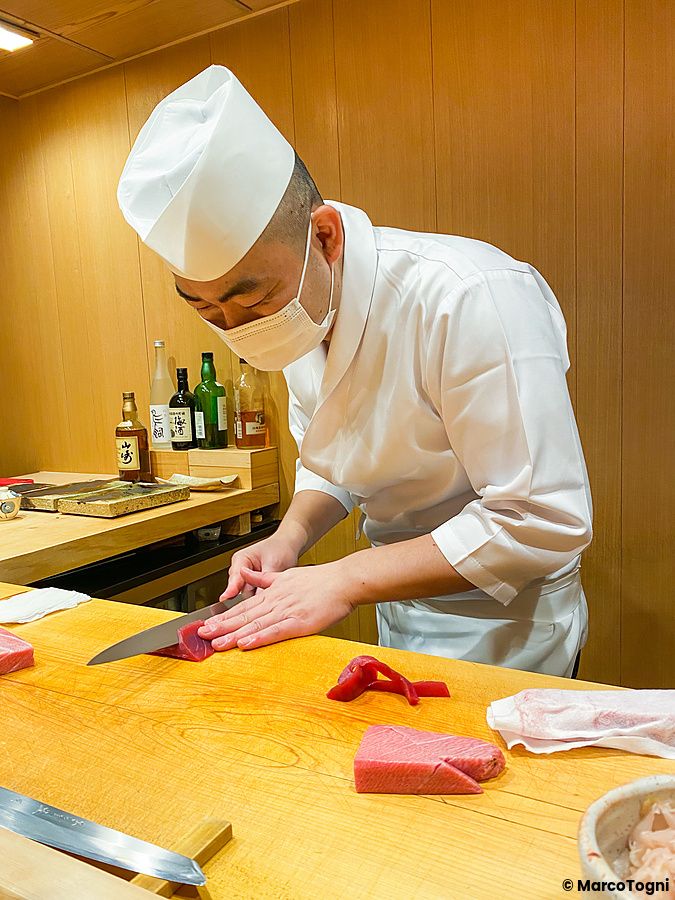
A chef in a white uniform and a face mask cuts maguro at Ginza Iwa.
Behind the light wood counter, the chef fillets the tuna with measured movements. Watching that precision is part of the experience.
A maguro nigiri on a ceramic plate at Ginza Iwa in Tokyo.
The classic bluefin tuna nigiri stands out against the handmade ceramic. The shine on the surface tells you the fish is fresh.

The rice has more vinegar and salt than usual, a deliberate choice so it can stand up to sake. If you’re used to soft, delicate rice, the first bite will catch you off guard.
Each nigiri is made to be eaten in one bite between sips, and it arrives already seasoned, so leave the soy sauce alone. It would drown everything out.

It’s an expensive place, not somewhere you go every day. Lunch runs about 16,000–20,000 yen per person, while dinner starts at 40,000 yen and goes up with the full omakase and something to drink. It’s best to check current prices before you go. Even so, for Edomae sushi at this level it’s more affordable than other Michelin-starred counters in the area.
When I’m in the mood for a serious omakase and want to take my time at the counter, it’s one of the first places I think of. I find aged tuna this tender and full-flavored in very few other places.

Lunch or dinner?

Lunch is more stripped down. You move on to the nigiri almost right away, one after another, and it’s the right way to see what the place can do without tying up your evening.
Dinner opens with a few small dishes before the nigiri start coming. The pace is slower, and there’s more time for sake and for talking with the chef. If it’s your first time and the bill scares you, lunch is more than enough: same fish, same skill.
If you’re traveling with your family, keep in mind that children under 10 aren’t allowed.
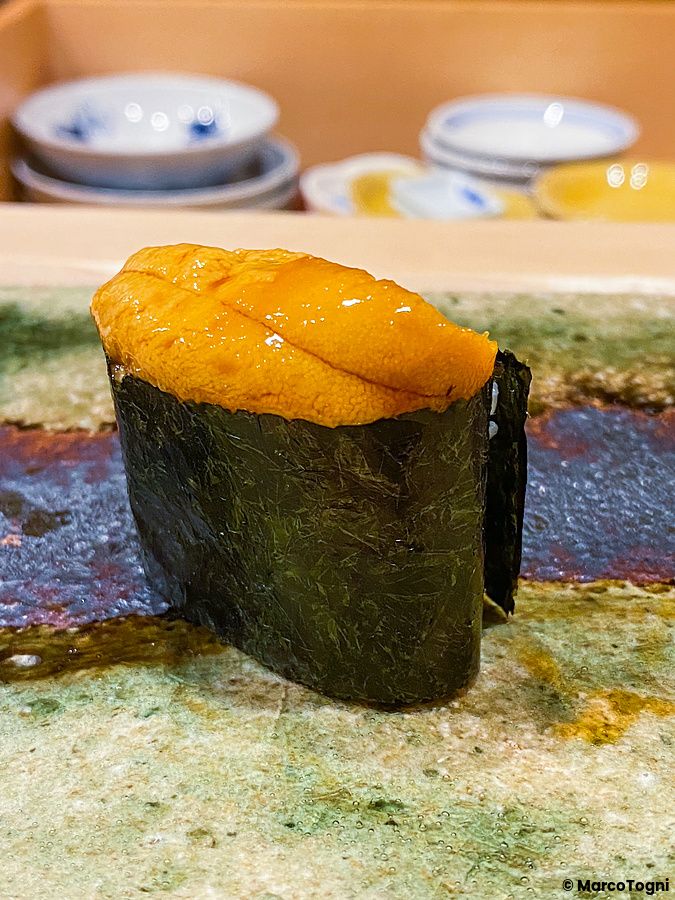
An uni gunkan served on a ceramic plate at Ginza Iwa in Tokyo's Ginza district.
In the gunkan, crisp nori wraps the rice and holds up the creamy sea urchin. A rich bite that fills your mouth with the briny taste of the sea.
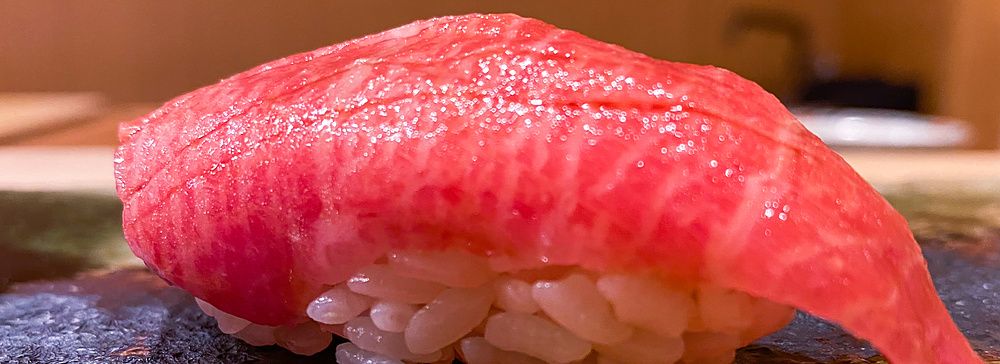
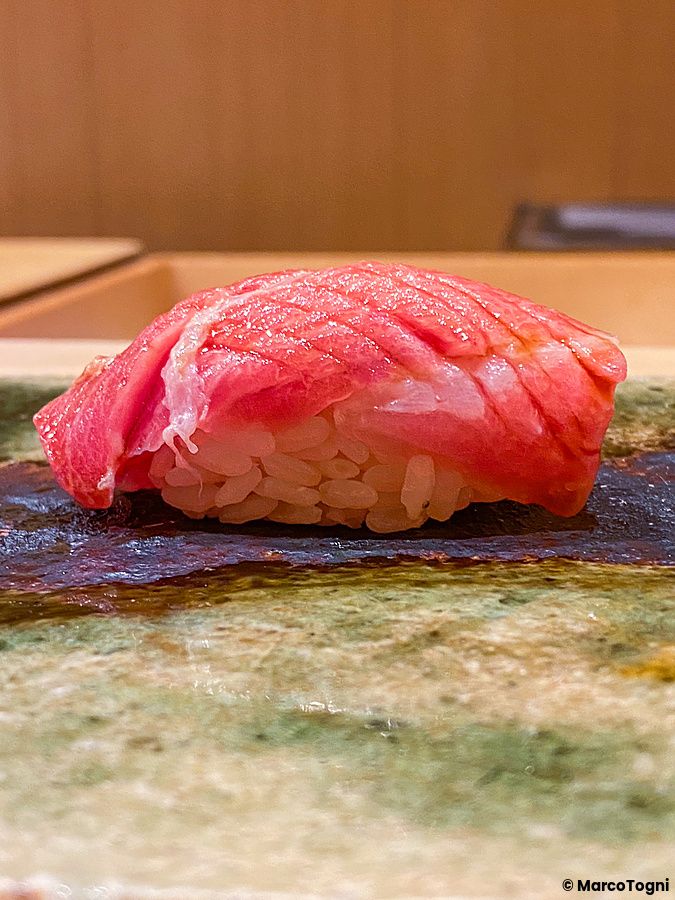
A piece of otoro nigiri served on a ceramic plate at Ginza Iwa in Tokyo.
You can spot the otoro right away by its bright pink color. The fat melts from the warmth of your mouth, no chewing needed.

Inside the restaurant

It’s a small, intimate room: six or seven seats at a cypress counter, light wood, not much in it, and all of it well kept. You sit close together and watch the chef work right in front of your plate.
The restaurant is on two levels, the ground floor and the floor below, each with its own counter and its own chefs. At lunch, tourists sometimes end up downstairs, and not everyone takes it well. The customers are almost all foreigners, which is rare for a sushi place in Ginza.
From the street, though, you’d never guess what’s inside. There’s a short curtain at the entrance, barely any sign, and a storefront you have to hunt for a bit among the buildings around it. Then you push the curtain aside, the counter is right there, and the chef looks up to greet you. It feels a world away from the shop windows and department stores you’ve just left behind.
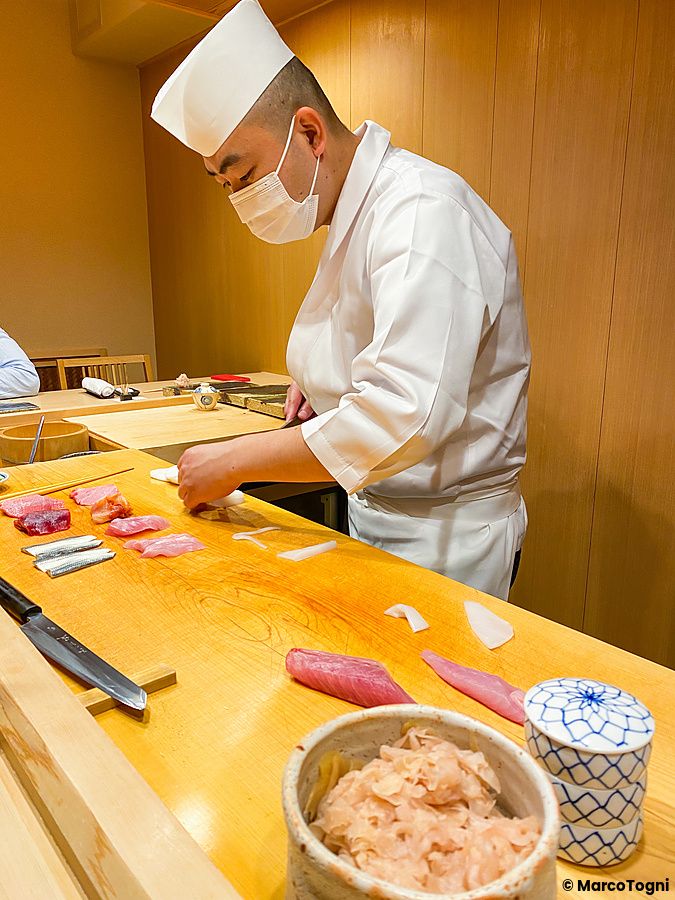
A chef in a white uniform cuts maguro at Ginza Iwa in the Ginza district.
The red slabs of fish sit on the work surface, ready to be cut into portions. Notice how neatly they're laid out next to the ginger bowl.
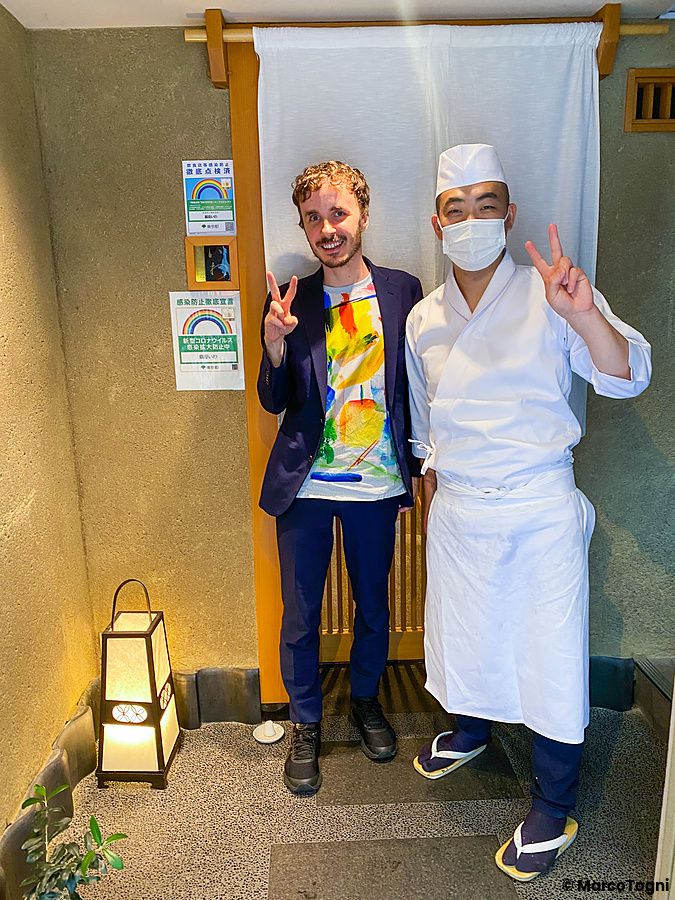
Marco Togni and a Japanese chef in uniform pose in front of the entrance to Ginza Iwa in Tokyo.
In front of the traditional entrance with its classic paper lantern. I meet the chef before taking my seat at the counter for the omakase.

The chef

Hisayoshi Iwa, the chef, was born in Tokyo, and where he trained tells you a lot about what ends up on your plate. He spent three years at Kyubey, one of Ginza’s historic sushi restaurants, then more than ten years at Sushi Kanesaka, where he was on the opening team.
You can see that background in the way he works: economical movements, no showmanship, and a willingness to adapt to the tastes of whoever’s sitting in front of him without ever lowering the quality of the fish.

The service

The atmosphere at the counter is anything but stiff. The chef and his team speak English and tell you, piece by piece, what you’re eating and where it comes from.
If you’re traveling solo or as a couple and want to understand what you’re eating, you’ll be comfortable here.
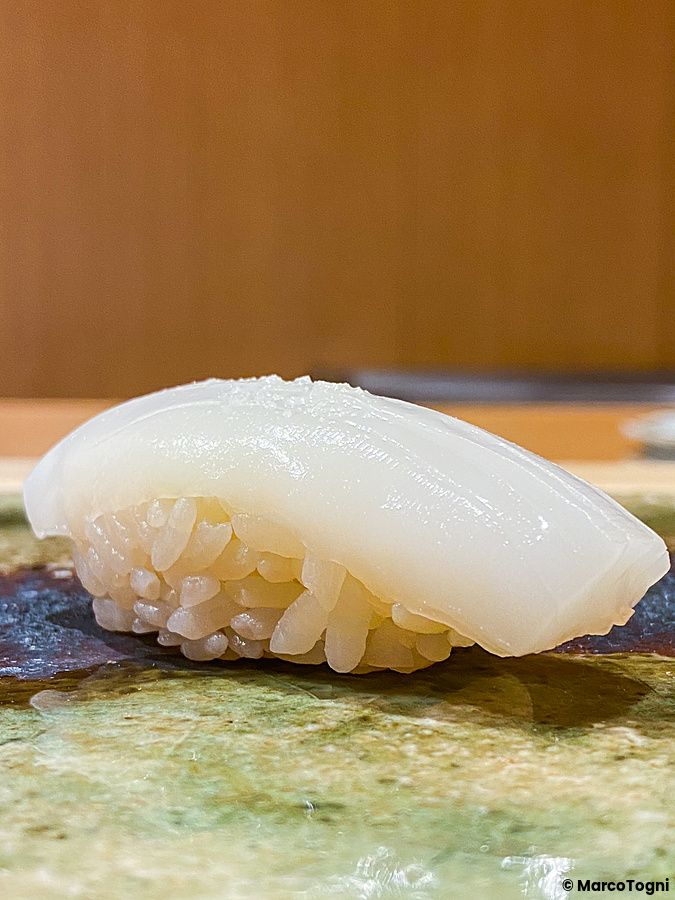
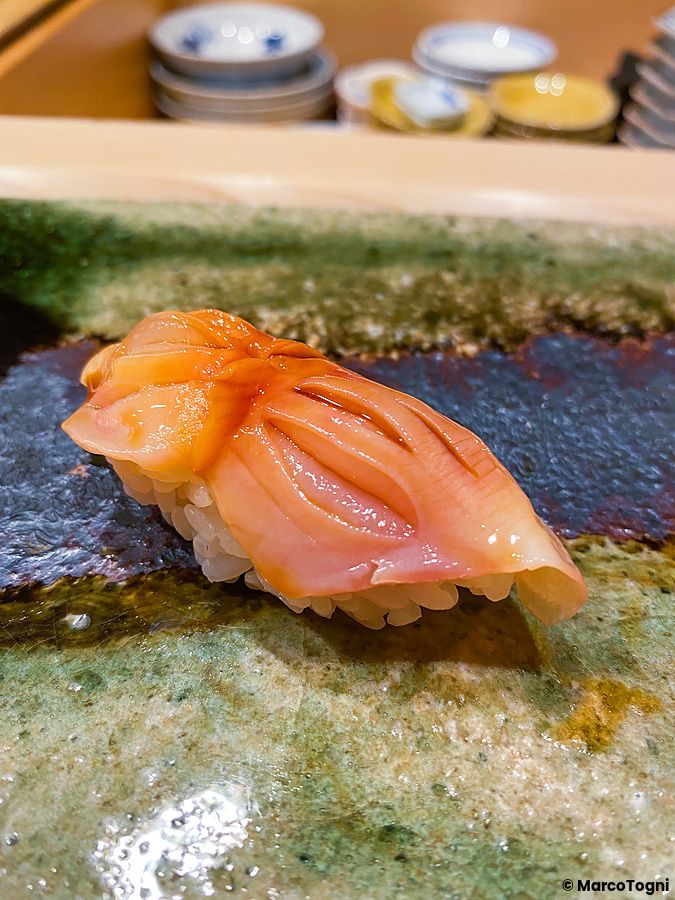
An ika nigiri with scored white cuttlefish on a bed of rice, served on a ceramic plate at Ginza Iwa.
The cuttlefish gets tiny parallel cuts. This technique softens the texture and helps it hold the soy sauce better.
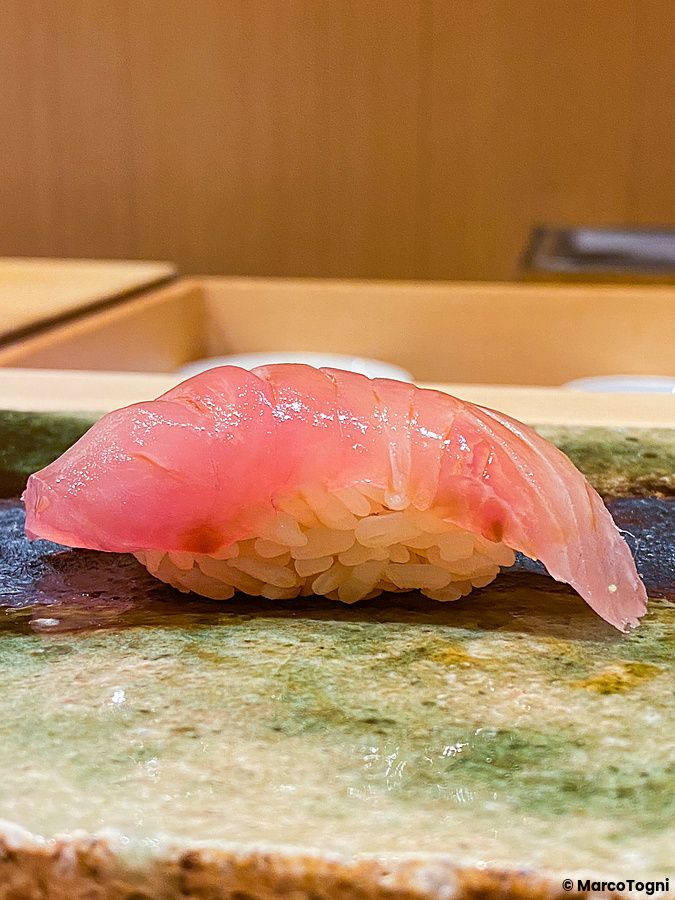
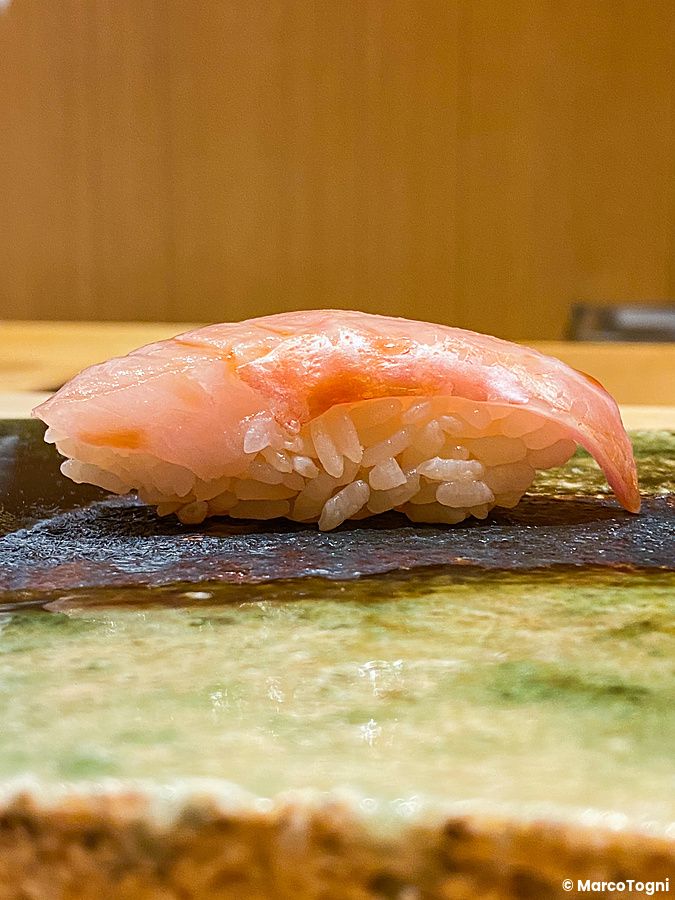
An amberjack nigiri on a ceramic plate at the sushi restaurant Ginza Iwa in Tokyo.
The amberjack has pinkish tones and sits on a firm mound of rice. The minimal presentation lets the flavor speak for itself.

At a glance

Pros:

  • Michelin-starred Edomae sushi with fish from Toyosu every morning and incredibly tender aged otoro
  • A chef and staff who explain everything in English, in a relaxed atmosphere
  • At lunch the bill is lighter than at other Michelin-starred places in Ginza

Cons:

  • The tart, salty rice catches you off guard if you like it delicate
  • At lunch foreigners may end up downstairs with a different chef

Best for: anyone who wants their first first-rate omakase in Tokyo without a language barrier, solo or as a couple

Atmosphere: a cypress counter, few seats, people from all over the world and easygoing service
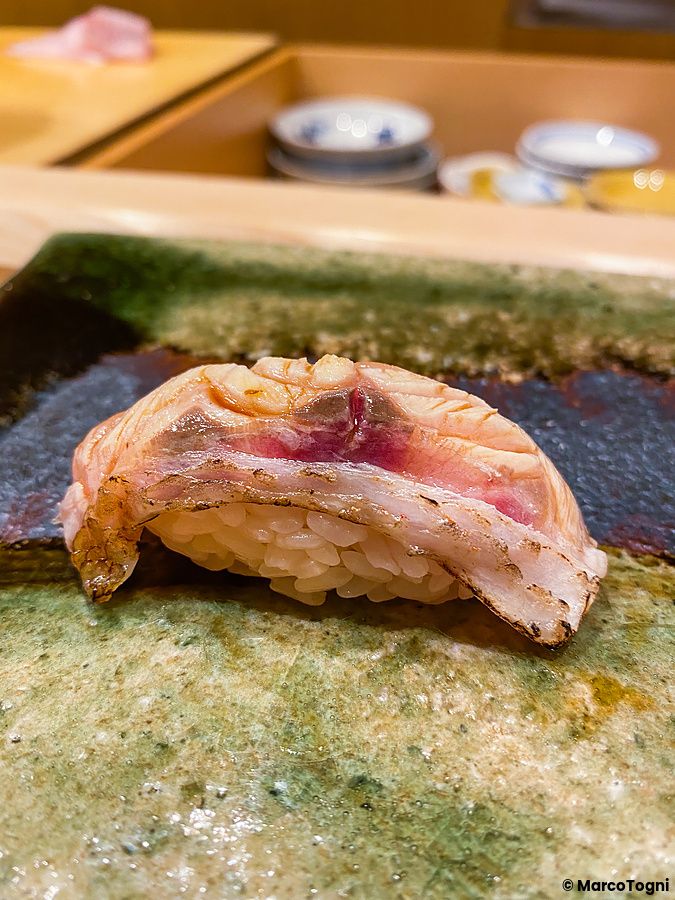
A nodoguro nigiri served on a rough ceramic plate at Ginza Iwa in Tokyo.
The seared fish releases its oils onto the warm rice. The light charring on the surface adds a subtle smoky note.
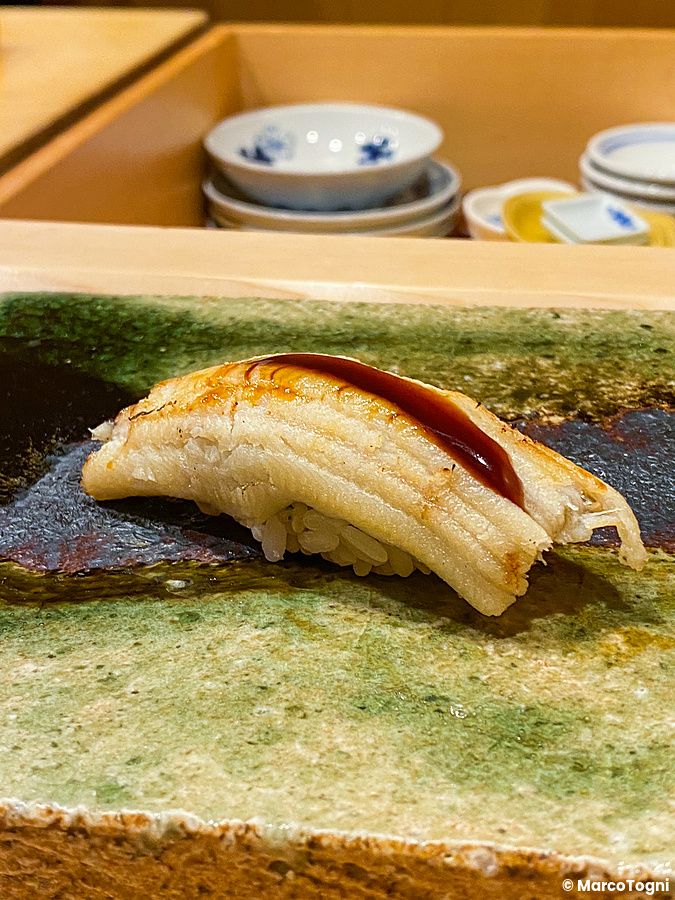
Anago nigiri with sauce served on a ceramic plate at Ginza Iwa in Tokyo.
Grilled sea eel often comes last among the fish. The glossy dark glaze contrasts with the white, very tender flesh of the fillet.

Final thoughts

What stays with you after you leave Ginza Iwa isn’t one particular piece. It’s the chef’s face as he hands you the otoro and waits to see your reaction. Ask about the awabi if it shows up in the sequence: the abalone with its liver sauce is the bite you’ll talk about most, even more than the tuna.
And do something almost nobody dares to do at sushi counters of this level: ask questions. That’s exactly what the chef and his team are waiting for, and once you start, dinner turns into a conversation about fish instead of a parade of dishes. Sit down, let him choose and enjoy one of the finest Edomae counters in all of Ginza.
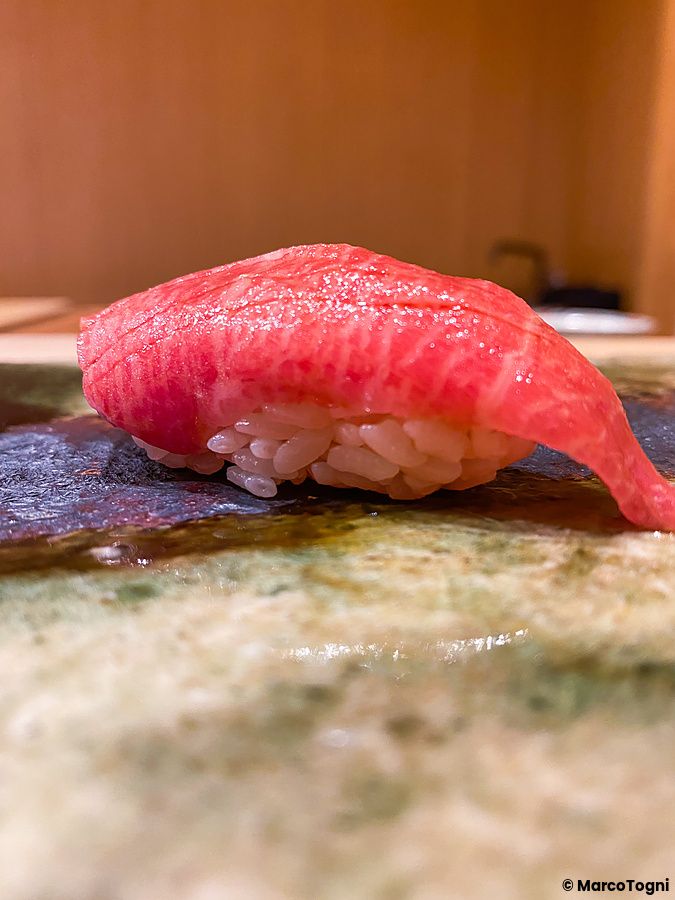
A carefully prepared otoro nigiri served on a ceramic plate at Ginza Iwa in Tokyo.
Another take on tuna belly, served on a textured plate. Eat it as soon as the chef sets it on the counter so you get it at its best.
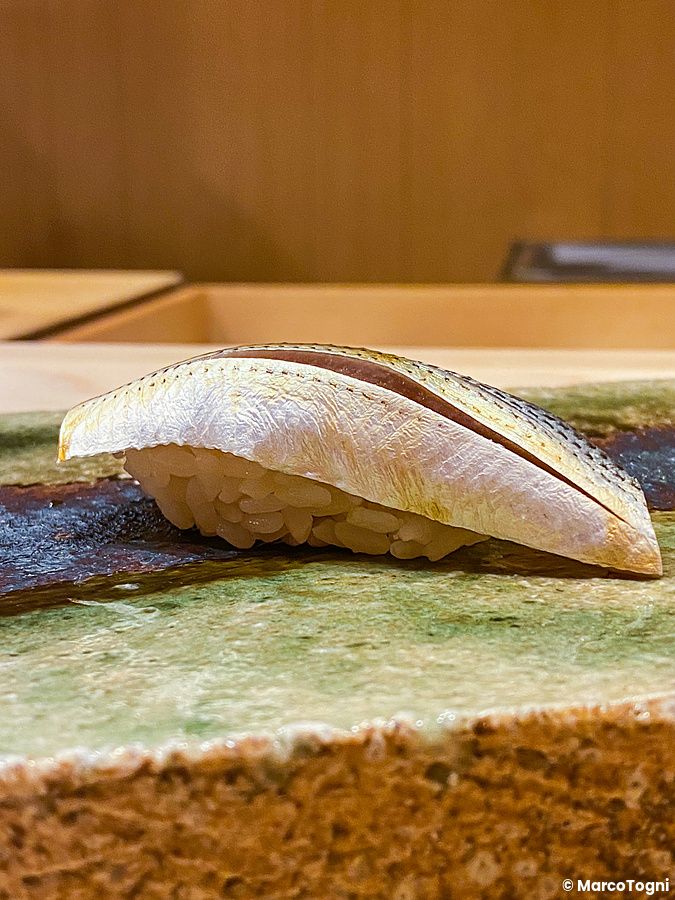
A kohada nigiri served on a textured ceramic plate at Ginza Iwa in Tokyo.
Kohada is a fixture of the local tradition. Its silver skin and marinade balance out the fat of the earlier cuts.
A maguro nigiri served on a ceramic plate at Ginza Iwa in Tokyo.
A piece of maguro with the rice grains separating just right. Edomae technique calls for a precise temperature for every single piece.
An amberjack nigiri on a rough ceramic plate inside Ginza Iwa in Tokyo.
Another cut of amberjack, set on dark green ceramic. The no-frills presentation is the signature of Ginza's great restaurants.
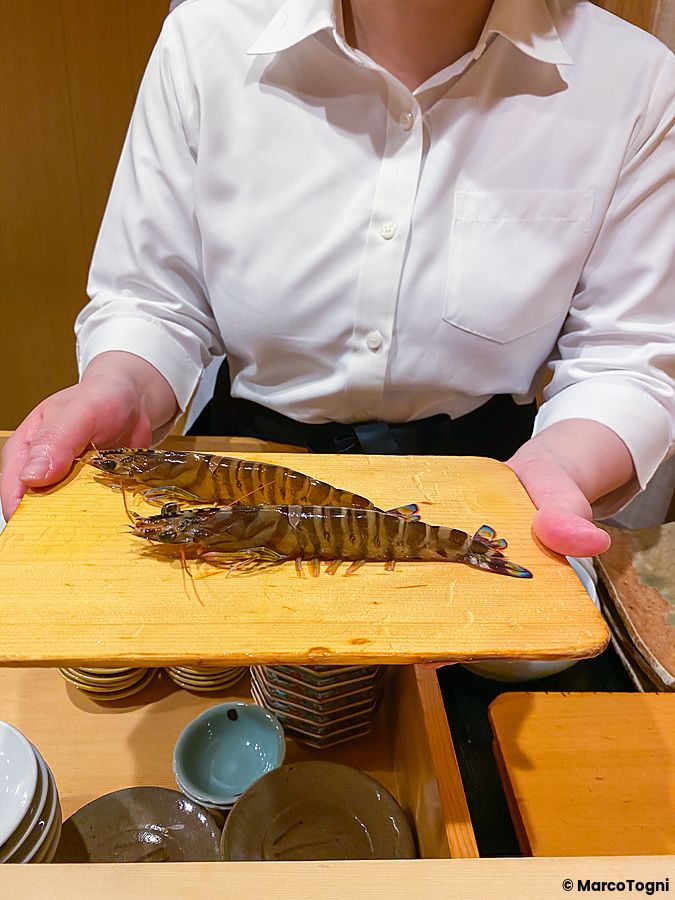
Someone holds up two fresh kuruma ebi shrimp on a wooden cutting board at Ginza Iwa in Tokyo.
The raw shrimp are shown on the cutting board before they're prepared. Checking how lively they are confirms the quality of the ingredients.
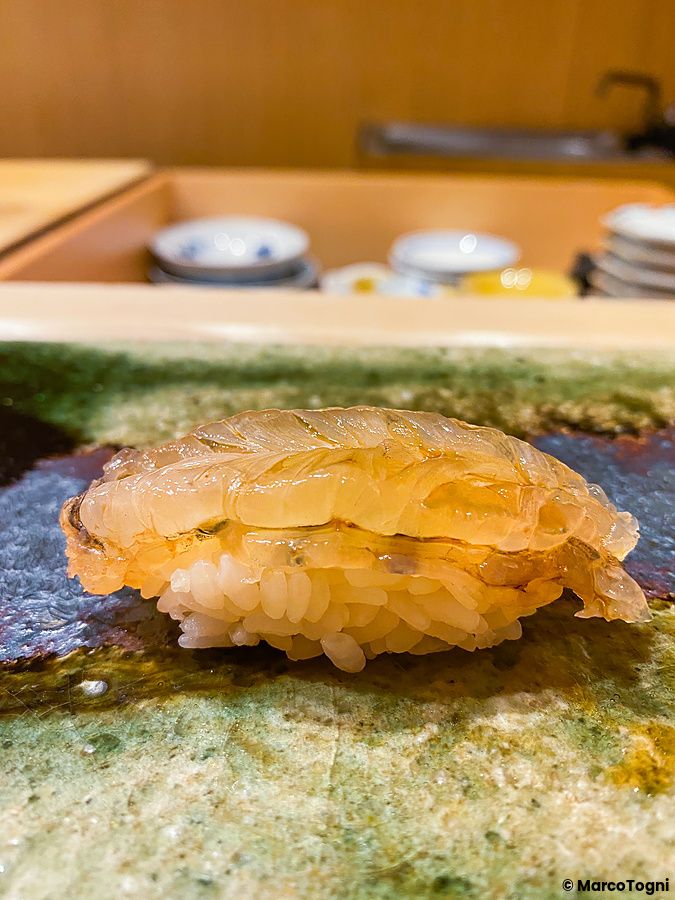
A carefully prepared shiro ebi nigiri on a handmade plate inside Ginza Iwa in Tokyo.
The white shrimp becomes a translucent nigiri. Its texture is extremely delicate compared with the bigger, meatier kinds.
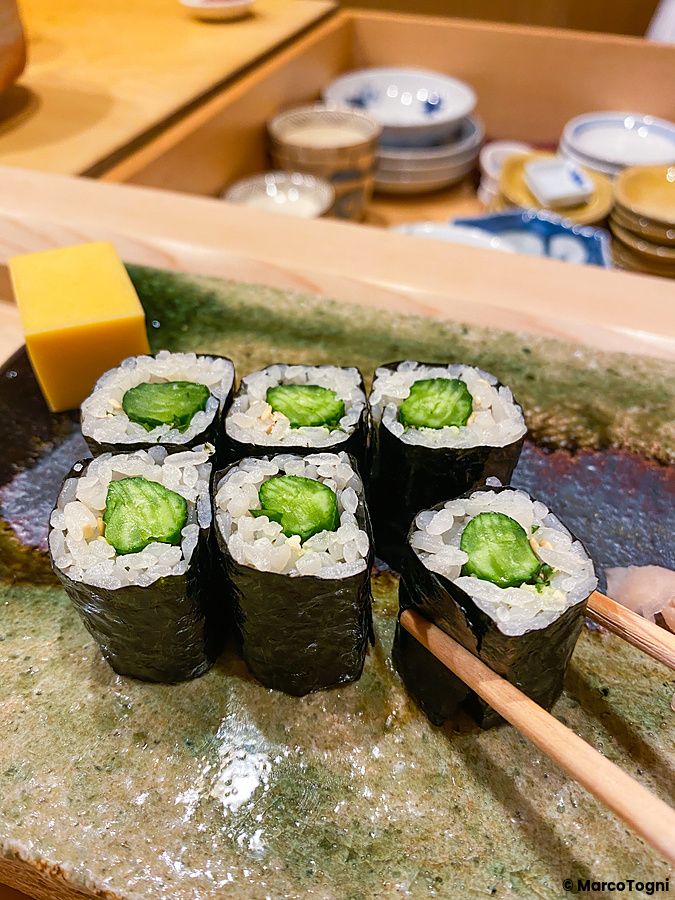
Kappamaki served on a ceramic plate at Ginza Iwa in Tokyo's Ginza district.
I take a cucumber roll to refresh my palate at the end of the meal. The sweet omelet at the top left serves as the traditional dessert.
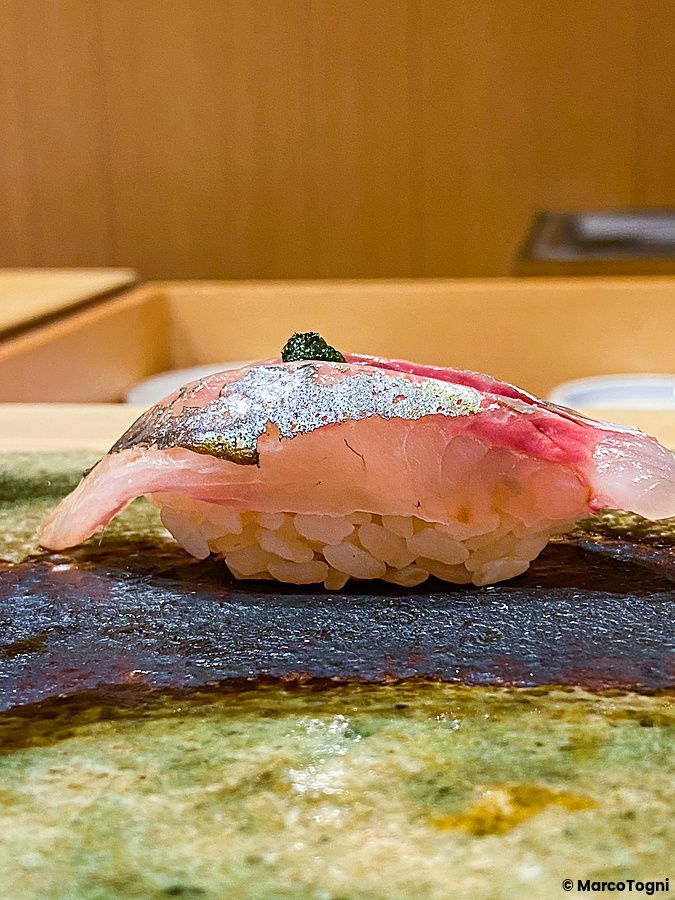
An aji nigiri served on a dark ceramic plate at Ginza Iwa in Tokyo's Ginza district.
Horse mackerel served with a dab of green garnish. A sharp contrast between the fish's saltiness and the earthy tones of the dark plate.

Getting There

The restaurant is in block 8 of Ginza, on a quiet side street halfway between Ginza and Shimbashi.
From Shimbashi it's a five-minute walk north, and that's the easiest option if you're coming by train.
If you're browsing the shop windows on Chuo-dori, you can walk south from Ginza in seven or eight minutes.

Useful Info

Name: Ginza Iwa
Hours: Monday: 12:00–14:00, 18:00–22:00; Tuesday–Wednesday: closed; Thursday–Sunday: 12:00–14:00, 18:00–22:00
Time needed: About 2 hours at the counter
Booking: Required. You can book online or by phone, and there are very few counter seats, so book well in advance. You'll need a credit card as a guarantee, and if you cancel in the last few days you pay the full amount. If you can't get a seat, your hotel concierge often has their own channels.
Tips: The rice here is boldly seasoned and every nigiri arrives already brushed, so you don't need soy sauce. It would drown everything out. Eat each piece as soon as the chef sets it down on the counter, and if one of them makes you curious, go ahead and ask: they're happy to explain in English.
Getting there:
  • Shimbashi Station (JR Yamanote, Keihin-Tohoku and Tokaido lines; Ginza and Asakusa subway lines)
  • Ginza Station (Ginza, Marunouchi and Hibiya subway lines)
Address: Japan, 〒104-0061 Tokyo, Chuo City, Ginza, 8-chome−4−4 三浦ビル 1F
Website: Ginza Iwa
Open in Google Maps

Map

MarcoMaps100% free

This place is on MarcoMaps

Ginza Iwa

My map of Japan: over 4,000 places I've tried myself, each with photos, rating, and hours. Filter by category and rating, find veg-friendly spots and places near you with GPS. No sign-up, right from your phone.


  • 4,000+ places
  • Rating, photos, and hours
  • Veg friendly
  • Near me (GPS)
  • Favorites without login
  • Works offline
Open my map!
The MarcoMaps map of Japan with dozens of places markedThe map on a phone: a place's info card with photos, rating, hours and prices

Video: Eating at a sushi master's counter in Tokyo

0:00 / 1:00