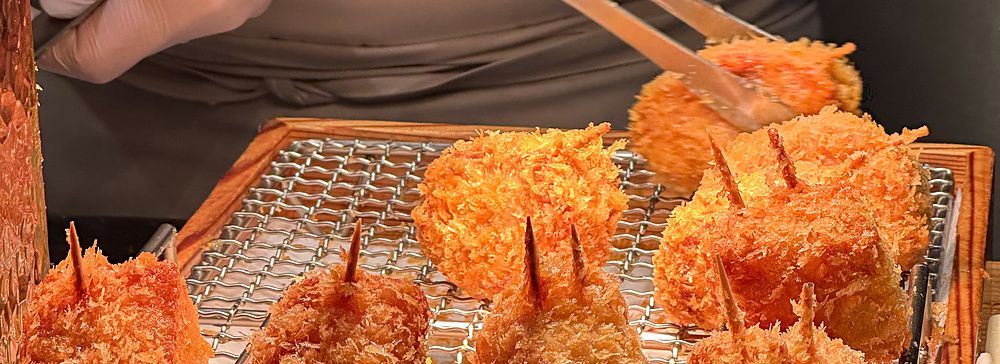
A chef uses tongs to handle pieces of fried tonkatsu on a wire rack at Ginza Katsukami in Tokyo.

Ginza Katsukami

A tonkatsu restaurant in Ginza where your pork cutlet doesn’t land on the plate all at once but arrives one piece at a time, like a tasting menu built around the different cuts of the pig.
At Ginza Katsukami every bite comes to you straight out of the fryer and still hot, and each course is a different part of the pig. You eat at the counter, facing the chef at the fryer.
It’s the place for anyone who wants to treat themselves and is curious to see how far a simple fried cutlet can go. It’s a long way from a lunch wolfed down standing up.
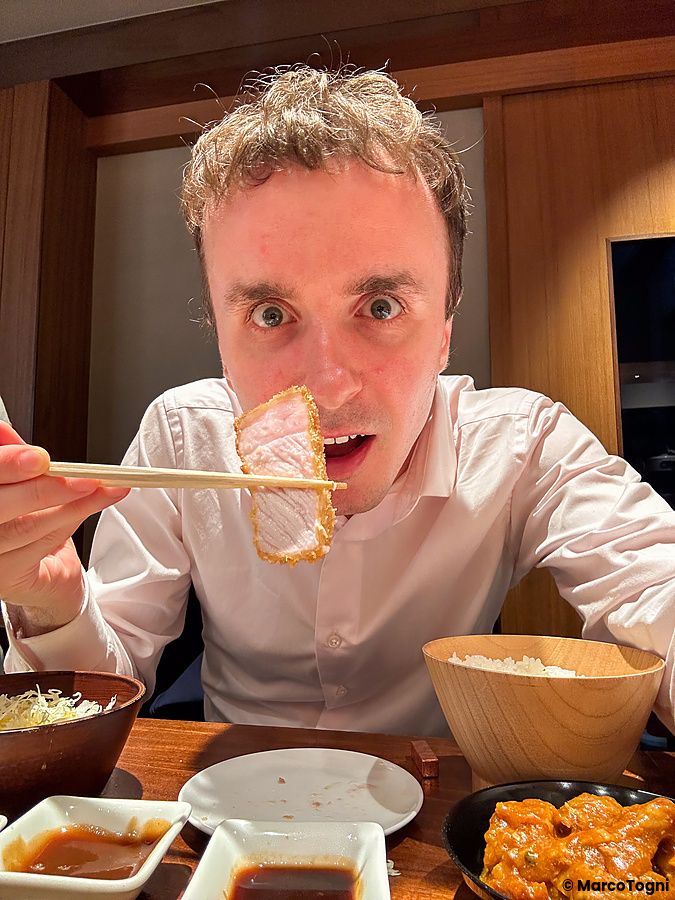
Marco Togni holds a slice of tonkatsu with chopsticks inside Ginza Katsukami in Tokyo.
I weigh the breaded piece of meat between my chopsticks to judge its texture. In an omakase meal, the chef sets the pace.
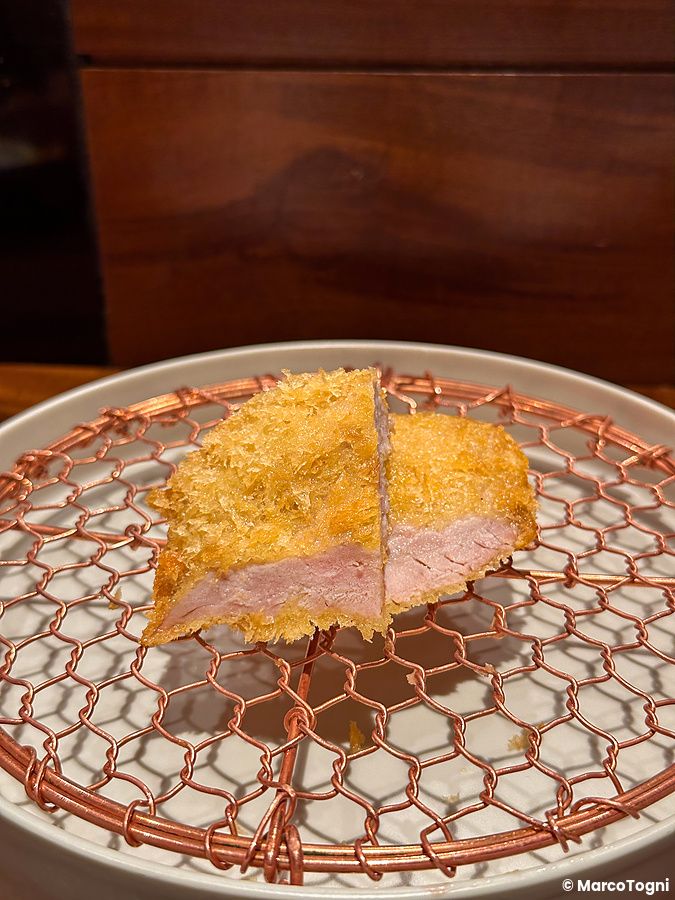
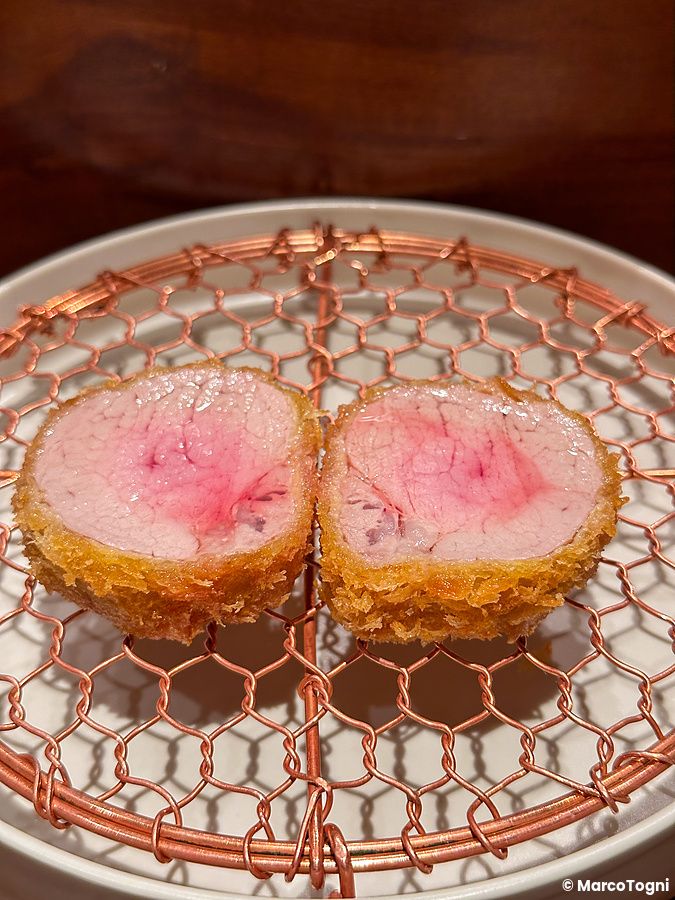
Two slices of fried pork fillet rest on a round wire rack at Ginza Katsukami in Tokyo.
The tenderloin is noticeably pink in the center. Cooking it to this temperature keeps the meat tender without drying it out.

Food and prices

Instead of ordering a cutlet, you get a sequence of different cuts, brought out one after another. At lunch there are four or five; at dinner there are six, with some rarer cuts and a tempura shrimp slipped in among the meat.
The condiment changes with every piece, too. There’s pink Himalayan salt for the more delicate cuts, two different sauces and, at dinner, a balsamic sauce that works better on the fatty cuts than you’d expect. The chef tells you what to use each time, and it pays to listen instead of drowning everything in the usual tonkatsu sauce.
  • Tenderloin (hire): the first of the evening, fried with the center still pink and incredibly tender. The first thing you taste is the juice, even before the meat.
  • Loin (rosu): a fattier, more flavorful cut that comes near the end with freshly grated wasabi from Shizuoka to cleanse your palate.
  • Zabuton: the grand finale, a marbled shoulder cut served with truffle butter from a shop in Ginza.
  • Menchi katsu: a ground meat patty, breaded and fried, that stays juicy inside and drips when you bite in.
  • Creamy crab croquette: crisp outside, with a soft, creamy crab filling.
  • Fried oysters: when they’re in season, with thin breading and the oyster inside barely cooked.
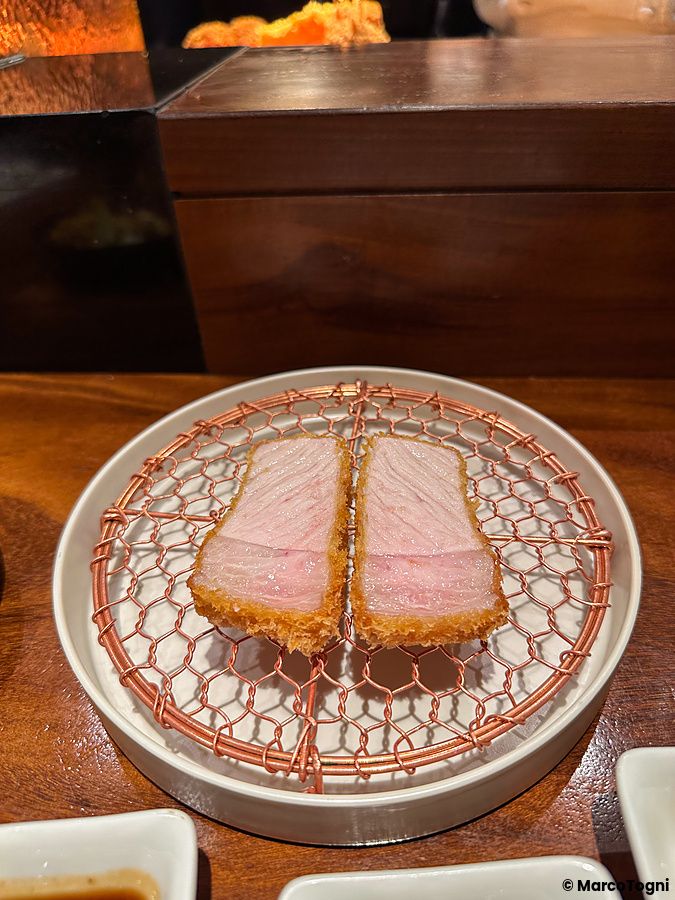
Two slices of fried tonkatsu, pink in the middle, sit on a wire rack at Ginza Katsukami in Tokyo.
The fattier cuts are portioned into neat rectangles. Notice how the breading clings to the meat and doesn't come away when you bite.
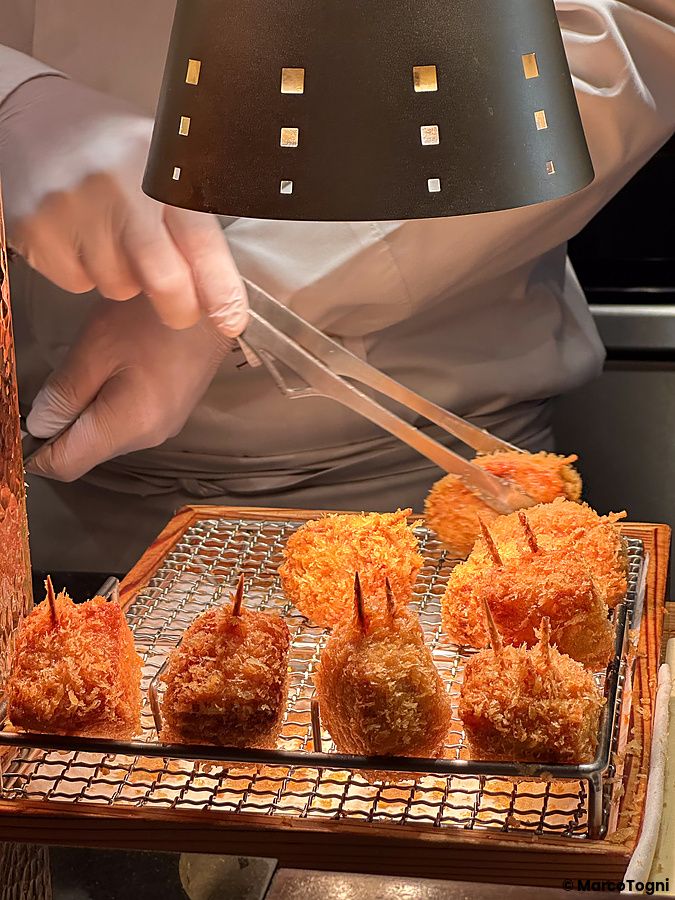
A chef uses tongs to handle pieces of fried tonkatsu on a wire rack at Ginza Katsukami in Tokyo.
Behind the counter, the chef times the frying with great precision. The heat lamp keeps the breading crisp until it's served.

The pink center on the tenderloin is a choice, not a flaw. If undercooked pork makes you uneasy, know that going in.
The zabuton with truffle is genuinely rich and comes last, and if you’re already full you’ll feel it, so go easy on the rice early on. And you can’t walk in and just order a cutlet: it’s the full course or nothing.

Dinner comes to around 10,000–15,000 yen per person, and lunch drops to about 6,000–8,000. It’s expensive, and it’s not somewhere you go every day.
But you can taste what you’re paying for, bite after bite. The breading stays light and never greasy, the meat changes character with every cut, and at dinner there’s wine, sake or shochu to pair with it.
When I want to splurge on a dinner that isn’t just another restaurant meal, it’s one of the first places that come to mind, because I can’t find frying done with this kind of technique anywhere else. That’s exactly why it’s worth the detour.

The pork they use

There isn’t just one kind of pork here. They use different breeds depending on the cut and the course, and on the menu you might see names like Yonezawa Ichiban Sodachi, sweet and balanced, or Tokyo X, known for flavorful fat that melts in your mouth.
So ask the chef what you’re about to eat before you bite into it. The same tenderloin tastes different depending on the animal, and you can really tell one loin from another, especially in the fat.
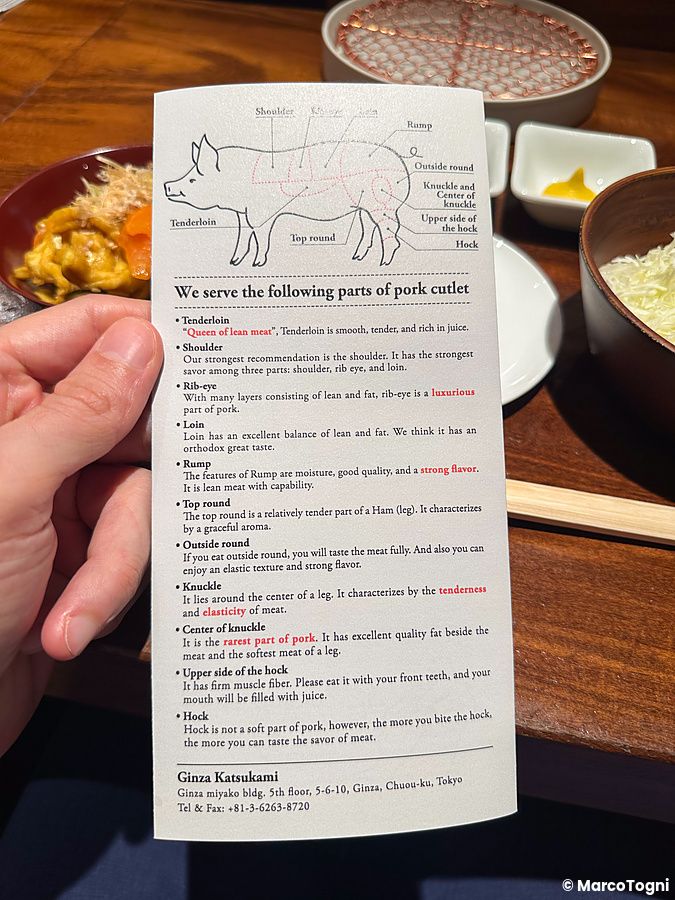
A hand holds an information menu with a diagram of the pig's cuts at Ginza Katsukami in Tokyo.
An illustrated sheet maps out the pig and each of the cuts served. It helps you figure out exactly which part of the animal is about to land on your plate.
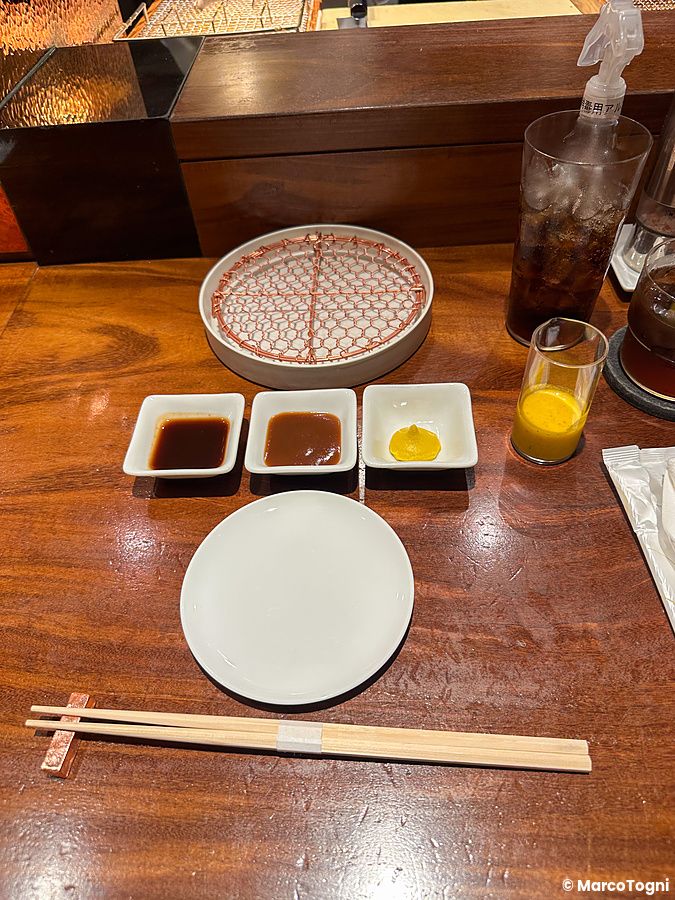
A place setting with sauces and a tonkatsu rack at Ginza Katsukami in Tokyo.
Each place at the counter is already set with a copper rack for draining the oil, plus the dipping sauces. Everything is laid out with great precision.
A serving of tonkatsu on a metal wire rack at Ginza Katsukami in Tokyo.
Each piece goes onto its own rack straight out of the oil. The heat keeps gently cooking the inside while the excess fat drips away.
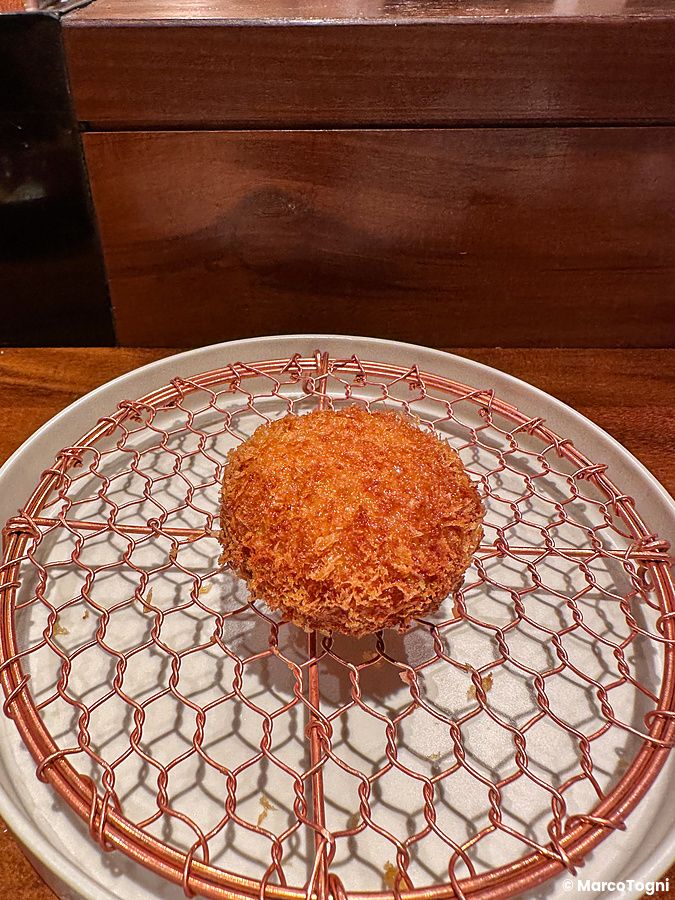
A fried dish served on a metal wire rack at Ginza Katsukami in Tokyo.
The fried ground meat patty known as menchi-katsu often closes the sequence of cuts. It's juicy inside right from the first bite.

Seating

There are only a handful of seats, nine at the counter and four at a small table, and everything is timed so each piece reaches you the moment it comes out of the oil. Children aren’t allowed, so you know it’ll be a quiet evening for grown-ups.
I think sitting at the counter is the way to go: you get to watch the chef frying right in front of you.

The people behind it

Katsukami didn’t start out as an old fry shop. It was opened by the group behind Kitafuku, a Michelin-starred crab restaurant, which explains the obsession with ingredients and the crab croquette you’d never find at an ordinary tonkatsuya.
It was the first restaurant in Japan to serve tonkatsu only as a tasting menu, and it’s shown up in the guides, from Michelin’s Bib Gourmand to rankings of the country’s best tonkatsu. Here the cutlet gets the same treatment as sushi, with a chef who decides the order and timing for you.
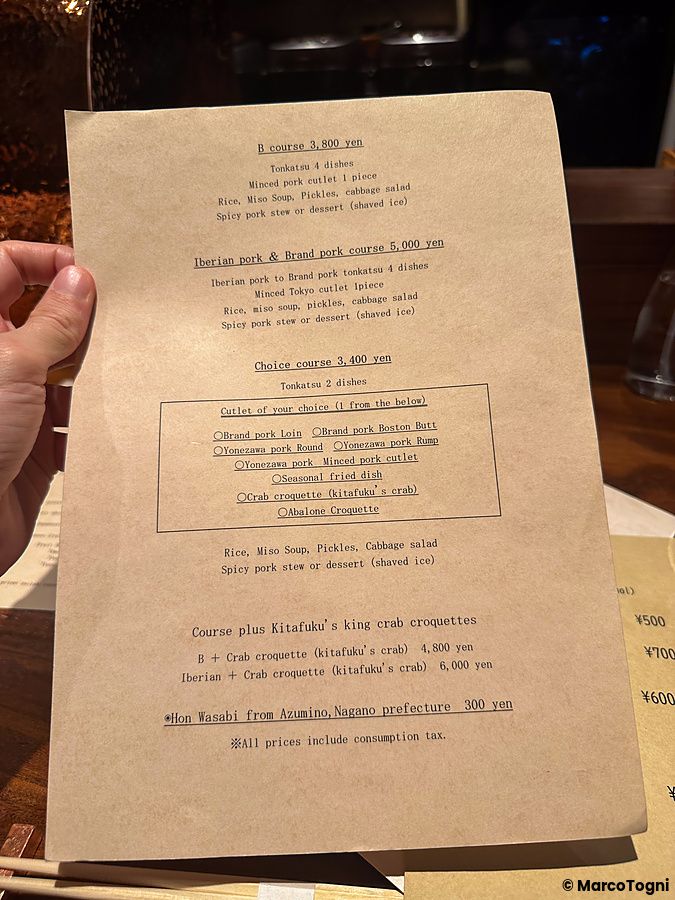
The paper menu at Ginza Katsukami in Tokyo, listing the different tonkatsu tasting options.
The menu lists the tasting courses right up front. Choose your omakase course based on how hungry you are and which pork you'd like to try.
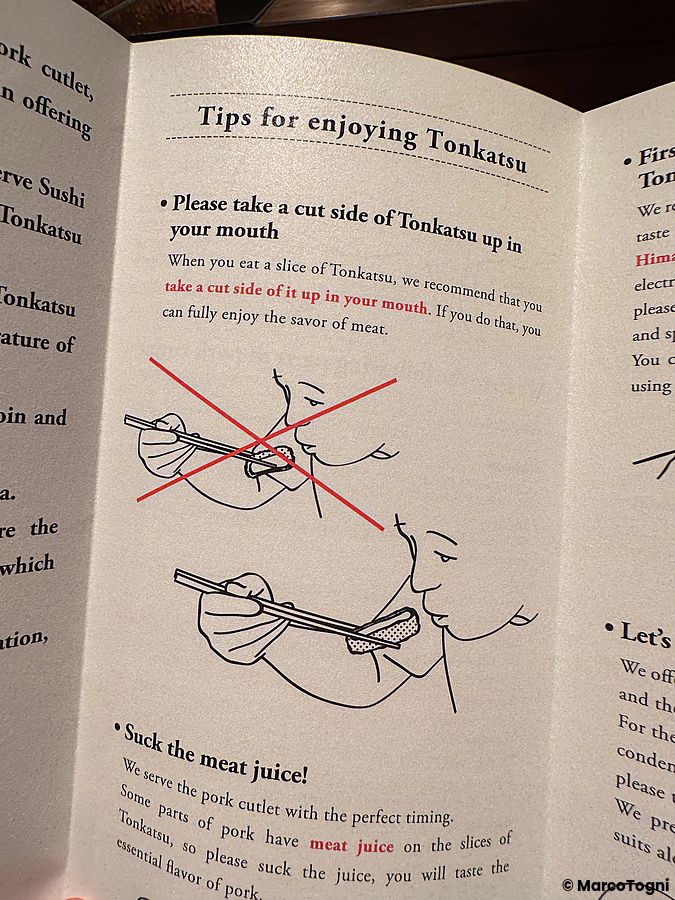
A page of the menu at Ginza Katsukami with illustrations showing the right way to eat tonkatsu.
The menu also has printed instructions for eating each bite the right way. Follow the steps so the juices of the fried meat don't go to waste.

At a glance

Pros:

  • Lots of different cuts of pork in one meal, each with its own condiment
  • Thin breading that isn’t greasy, and tenderloin cooked pink and tender
  • Thoughtful wine and sake pairings at dinner

Cons:

  • A hefty bill, the kind you save for special occasions
  • No single cutlet à la carte, only the full course

Best for: a special dinner for two in Ginza, or a lunch to treat yourself without paying dinner prices.

Atmosphere: few seats, low lighting, the chef frying at the counter in front of you, a slow, orderly pace.

Final thoughts

What stays with me after Katsukami is the sound: the breading crunching between your teeth while the chef, across the counter, lifts the next piece out of the oil. Go for the full dinner course, because that’s when you get the cuts other places don’t even put on the menu.
If you have to pick just one bite to remember, make it the zabuton with truffle butter. The meat is so marbled it melts, and the butter backs it up without masking it. Just go. It’s one of those dinners you’ll find yourself thinking about months later, over some ordinary cutlet.
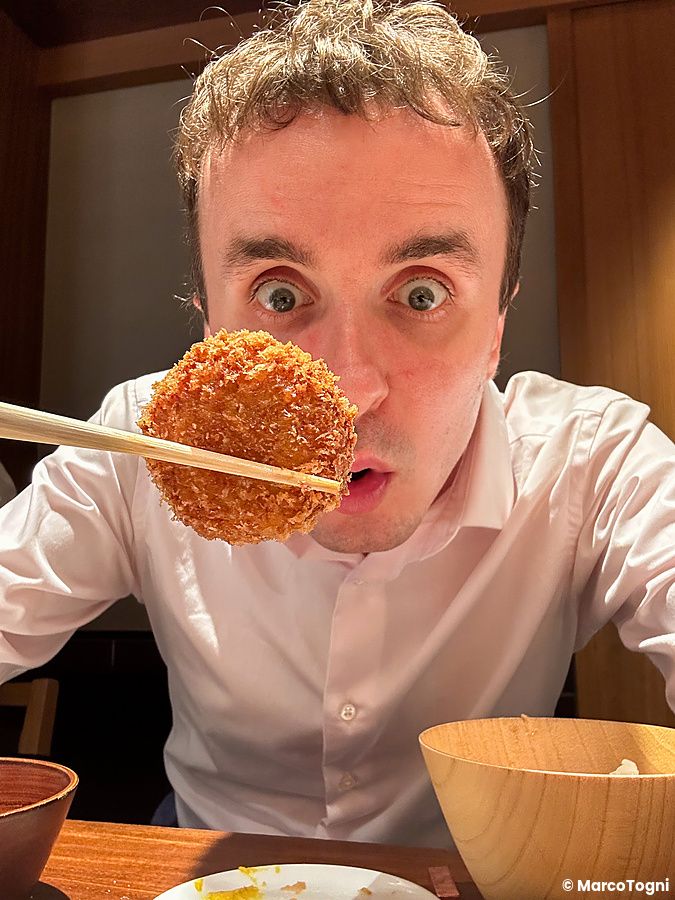
Marco Togni holds a piece of fried pork with chopsticks inside Ginza Katsukami in Tokyo.
On the first bite you notice the contrast between the scorching crust and the delicate pork. Let the sauces balance the flavor.
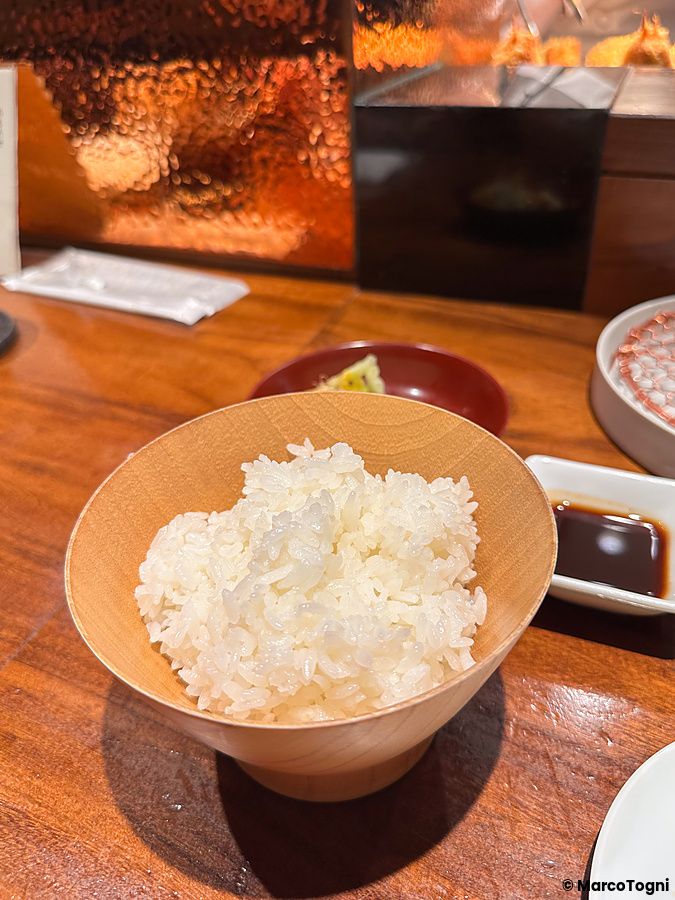
A wooden bowl of white rice on the counter at Ginza Katsukami.
The steamed white rice is a neutral base for the meal. It's served in wooden bowls that keep its temperature and moisture steady throughout the meal.

Getting There

The easiest way in is from Ginza Station. Take an exit toward Chuo-dori and you'll be there in three minutes on foot, on a side street in 5-chome just off the big intersection. The restaurant is on the fifth floor of the Ginza Miyako Building, and there's nothing at street level to catch your eye, so look for the building entrance and take the elevator.

If you're coming from Yurakucho or you're already making the rounds of the department stores in the area, allow about ten minutes on foot in total.

Useful Info

Name: Ginza Katsukami
Hours: Every day: 11:30–14:00, 18:00–21:30
Time needed: Lunch: about an hour - Dinner: 90 minutes, the length of a full seating
Closed: Closed only for the New Year break, from the last days of December to the first days of January.
Booking: Required for dinner and strongly recommended for lunch, since there are only thirteen seats. You book online through the official channels, and bookings open 60 days ahead, so book early if you want a weekend. Dinner runs in seatings and reservations are for at least two people. No children, even with a reservation.
Tips: If you can, go for the counter at dinner. That's when the rarer cuts come out, along with the wine and sake pairings, while the lunch course is shorter. And go easy on the rice in the early courses, because the richest piece comes at the end.
Getting there:
  • Ginza Station (Ginza, Marunouchi and Hibiya subway lines): about 3 minutes on foot
  • Yurakucho Station (JR Yamanote and Keihin-Tohoku lines, Yurakucho subway line): about 8 minutes on foot
  • Higashi-Ginza and Shimbashi stations are also close by
Address: Japan, 〒104-0061 Tokyo, Chuo City, Ginza, 5-chome−6−10 銀座ミヤコビル 5階
Website: Ginza Katsukami
Open in Google Maps

Map

MarcoMaps100% free

This place is on MarcoMaps

Ginza Katsukami

My map of Japan: over 4,000 places I've tried myself, each with photos, rating, and hours. Filter by category and rating, find veg-friendly spots and places near you with GPS. No sign-up, right from your phone.


  • 4,000+ places
  • Rating, photos, and hours
  • Veg friendly
  • Near me (GPS)
  • Favorites without login
  • Works offline
Open my map!
The MarcoMaps map of Japan with dozens of places markedThe map on a phone: a place's info card with photos, rating, hours and prices