226 m
Hanamikoji Dori226 m
The geisha street.
 ©Boris-B - Shutterstock
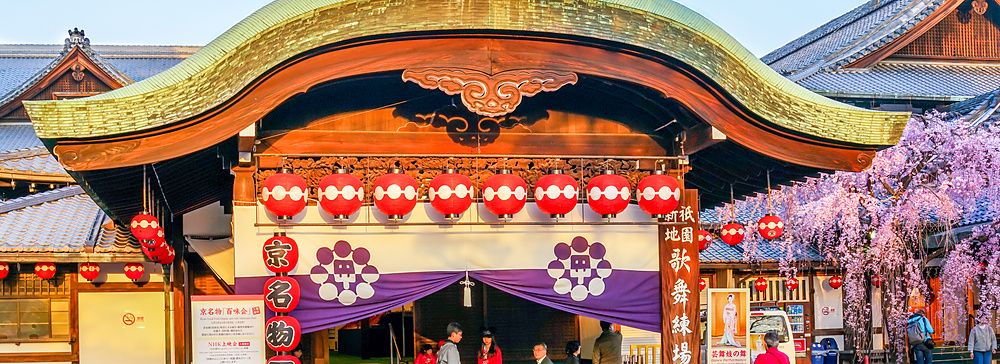
Founded in 1873, the Gion Kaburenjo Theater was created to host a traditional annual show performed by geisha, the “Miyako Odori.”
The dances take place in spring, in April. Because they coincide with the cherry blossoms, people often call the show “the cherry blossom dance,” but the name literally means “dance of the capital.” It was first staged a few years after the capital moved from Kyoto to Tokyo in 1869, a decision that left the people of Kyoto deeply unhappy, so the dance was also a way to reassert Kyoto’s identity as the capital and keep its traditions and atmosphere alive.
The Kaburenjo’s interiors are traditional in style, and inside there’s a beautiful Japanese garden. In spring it fills with pink cherry blossoms and with the azaleas that grow around the central pond, home to enormous carp. The garden also has a tea room where audience members can take part in a traditional tea ceremony if their ticket includes it. A beautiful traditional costume is on display at the entrance. Every year it’s replaced with a new one, handmade for that year’s show, and visitors can stand behind it for a photo that makes it look like they’re wearing it.
In the lobby there’s also the theater’s little gift shop, which sells all kinds of souvenirs, from food specialties to fabrics and kimono.
The theater you see today isn’t the original one. The current wooden building, entirely in traditional Japanese style, went up in 1913, when the Kaburenjo moved to this corner of Gion, and it’s now a registered cultural property.
It went through a very long seismic retrofit that made the big wooden beams safe again while reusing as much of the original material as possible. For several seasons the Miyako Odori had to move to other theaters in the city before it could return to its historic home. You notice the result as soon as you walk in: the woodwork, decorations and lamps feel like they’re from another era, but the auditorium is comfortable and modern.
About 150 years on, the Miyako Odori is still very popular with both Kyoto locals and tourists. Each performance lasts about an hour, and there are three shows a day, from early afternoon to evening, every day for the whole of April. It’s a unique chance to immerse yourself in Japanese tradition and discover some of its more unusual and curious sides. Every show has 8 scenes that portray different sides of Japanese culture, especially life in Kyoto’s geisha districts. These everyday stories aren’t set only in the former capital’s entertainment districts, but also at temples, shrines and in natural settings where people marvel at the way nature changes.
The dances are built on slow, graceful movements that have to be performed perfectly, with no room for mistakes. For a geisha, taking part means a lot of commitment and hard work, but it’s definitely an honor. And the show isn’t only dancing. The geisha also sing and act out short sketches, all accompanied by an orchestra playing traditional instruments. Beyond the performance itself, it’s a thrill to see the beautiful sets, the intricate costumes, the geisha’s hairstyles and makeup, and the richly decorated kimono and traditional clothing they wear, all made from fine materials. What strikes everyone is the way the dancers enter, along the two side walkways that run through the auditorium. The dance starts right there among the audience, with the maiko in identical kimono slowly making their way to the stage.
The musicians aren’t hidden in an orchestra pit either. Singers and shamisen players sit along the sides of the auditorium in kimono, in full view for the whole show.
There are two types of tickets, with different seating. A “first class” ticket gets you a seat in the orchestra section or the front rows of the balcony, or a spot in the tatami side boxes, where you sit on a cushion. “Second class” means the back rows of the balcony, at the very top. Seats sell out fast, since the show is so well known and only runs for a short time. You can sometimes still find tickets at the box office on the day of the show, but I wouldn’t count on it. The theater isn’t especially big, so wherever you sit you won’t be too far from the stage and you’ll have a great view of the performance.
If you can’t make it to Kyoto in April, you don’t necessarily have to miss out. In autumn the Kaburenjo hosts the Onshukai, the other big showcase for the geiko and maiko of Gion Kobu, and it’s far less touristy than the Miyako Odori.
In the adjoining theater, Gion Corner runs all year round. It’s a sampler show that packs kyomai dance, puppet theater, koto, ikebana and the tea ceremony into less than an hour. It isn’t the Miyako Odori, but it’s the easiest way to see a maiko dance without waiting for spring.
The same complex also has a museum devoted to geisha culture, with kimono, obi and the everyday things maiko use. In the warmer months the museum also opens the historic theater and the garden to visitors who don’t have a show ticket.
For an extra charge on top of the ticket price, you get a few added experiences, such as access to the theater’s Japanese garden before the show and to the small kimono exhibition on the building’s second floor, where you can get a close look at some of the most elegant and expensive costumes worn in the performances. The most expensive ticket also includes something special: a tea ceremony where a geisha serves you a steaming cup of hot matcha with some traditional sweets.
The theater is right in the middle of Gion, a short walk from Hanamikoji. From Gion-Shijo Station on the Keihan Line, take exit 6 and walk about ten minutes east along Shijo-dori, then head south.
If you're coming on the Hankyu, get off at Kyoto-Kawaramachi, exit 1. The route is the same, it just takes a few minutes longer.
From Kyoto Station the easiest option is bus 206, which takes about forty minutes to the Gion stop, in front of Yasaka Shrine. From there it's just a few minutes on foot.
This place is on MarcoMaps
Gion Kaburenjo Theater
My map of Japan: over 4,000 places I've tried myself, each with photos, rating, and hours. Filter by category and rating, find veg-friendly spots and places near you with GPS. No sign-up, right from your phone.


Gion Kaburenjo Theater - nearby you will find: