Eating Gluten-Free in Japan
You can eat well in Japan even if you’re gluten-free. Traveling with celiac disease, a wheat allergy or gluten sensitivity is always fairly complicated, but with some planning you won’t run into any major problems.
If you’re planning a trip, I’ll walk you through what to buy at conbini, which dishes are usually safe and which ones hide wheat flour when you’d least expect it. I’ll also cover breakfast and how to make yourself understood in restaurants, because the real challenge is almost always the language.
Contents
Can you travel to Japan with celiac disease?
Absolutely. You can visit Japan even if you have celiac disease or are gluten intolerant.
Keep in mind that not many people speak English in Japan, so the language could be the only barrier.
On my group tours I’ve taken thousands of people to Japan, and thousands of travelers have written to me over the years, some of them with celiac disease. Nobody who was gluten intolerant ever had any particular problem on my tours, and we always managed to find something to eat.
Travel cards and translations
I recommend carrying a travel card that says you have celiac disease and gives a complete list of the ingredients you can’t eat.
Conbini and snacks
Japanese food has a number of gluten-free options, but your best friends will definitely be the conbini, the small stores open 24 hours a day that sell a bit of everything.
Always check the labels (see below) and ask if you’re not sure. That said, conbini carry lots of foods that are generally gluten-free:
- Salads: go for the ones without dressing. Some have spaghetti inside, either boiled or fried, and obviously those are out, but don’t worry: the noodles are clearly visible through the packaging, not hidden.
- Yogurt: I’d go for plain ones.
- Boiled chicken: I really like it. It comes vacuum-packed, seasoned with just salt, with lemon or with herbs.
- Eggs: you’ll find hard-boiled eggs. Don’t pick the vacuum-packed ones, though, because they’re often seasoned with soy sauce.
- Nuts: usually fine, but some packs have peanuts with a crunchy coating that contains flour.
- Mochi: balls made from glutinous rice flour, which, as you probably know, has no gluten. Be careful, though, because mochi sometimes contain cornstarch, which is safe for people with celiac disease but could still be cross-contaminated.
- Ice cream: pick the plain ones, and obviously nothing with cookie pieces.
- Edamame: delicious soybeans boiled in the pod.
- Yaki Imo: roasted sweet potato, very popular in winter. You’ll also find it at some street stalls around temples.
- Onigiri: rice balls, but watch what’s inside, because sometimes there could be ingredients with gluten.
Sushi and sashimi
Sushi and sashimi are two of the best-known and tastiest Japanese foods, and they usually don’t cause problems for people who can’t eat gluten. Still, always tell the chef you can’t have gluten. Tuna may be marinated in soy sauce, and some pieces of sushi (eel, for example) may be topped with a sweet soy sauce.
Dishes to skip
Some of Japan’s most famous dishes are, unfortunately, ones you’ll have to pass on. Anything fried is risky: tempura, karaage and tonkatsu are coated in wheat flour or breadcrumbs. Korokke are too, and gyoza have a wheat wrapper.
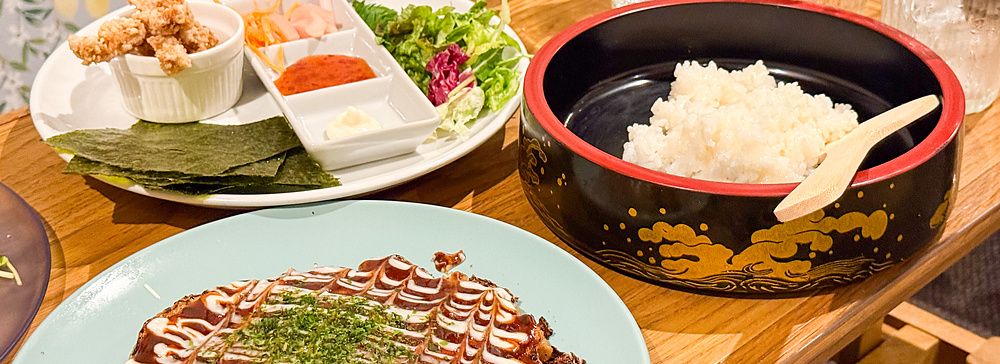
Ramen and udon are out too, since both are made with wheat flour, and so are okonomiyaki and takoyaki, which have flour in the batter. Even Japanese curry is off the list, because it’s almost always made with roux blocks that contain wheat. And remember that at places where everything is fried in the same oil, cross-contamination is practically guaranteed.
If you really can’t give up ramen, a few places in Tokyo make a gluten-free version with rice noodles, like Soranoiro on Ramen Street at Tokyo Station. They don’t have dedicated gluten-free kitchens, though, so always ask how they prepare it.
Supermarkets and depachika
Finding a supermarket in Tokyo or in other big cities isn’t easy. They’re sometimes tucked away and far from the main tourist areas, so if you need one, ask at your hotel’s front desk.
Department stores generally have a basement floor called depachika that’s entirely devoted to food, including sections that feel a lot like a deli.
Reading kanji
Japanese characters (kanji) are really hard to read for a beginner, and they can all look the same or very similar. You could spend 10 minutes trying to figure out whether an ingredient is on a label or not, and there’s a good chance you’ll get it wrong, so I recommend just asking and showing your travel card. It’s quicker.
If you still want to try, the kanji for wheat is 小麦, read komugi. The other one you should learn is 醤油, read shoyu, which means soy sauce. Of course there are many more you’d need to know, so as you can see, you’re much better off with a travel card.
Soy sauce
Soy sauce isn’t safe for people with celiac disease. In Japan lots of dishes are seasoned with it, even in tiny amounts, so you always need to be careful. Tamari is a type of soy sauce you can have if you’re gluten-free, but you’ll almost never find it in restaurants. The trouble is that soy sauce turns up everywhere: in powdered dashi, in tonkatsu and okonomiyaki sauces, in teriyaki, in ponzu and in nearly all ready-made sauces and seasonings. Miso can also be made with barley or wheat, so a regular bowl of miso soup is never a safe choice. In supermarkets and natural food stores, on the other hand, you can find tamari without much trouble, and buying a small bottle to carry around is the smartest move.
Breakfast
Breakfast in Japan is varied and you’ll find a bit of everything, but as you can imagine, a lot of it isn’t safe for celiacs. A traditional Japanese breakfast may contain soy sauce, and a Western-style breakfast almost always includes foods made with flour. Ask your hotel if they can make you something different, or else pick something up at a conbini the night before. Another good option is to get some fruit at a supermarket or try one of the many fruit parlors, like Kajitsuen, where you can have a nice plate of mixed fruit.
Soba
These are thin buckwheat noodles, so in theory they should be fine if you have celiac disease. Be extremely careful, though, because they usually aren’t! Most soba in Japan is made from a mix of buckwheat and wheat flour. There is, however, juwari soba, made with 100% buckwheat and not a single gram of wheat flour: at specialty soba shops it’s often the signature dish, and they’ll proudly tell you so. Even then, double-check, because in many kitchens soba is boiled in the same water as udon. Finally, watch out for tsuyu, the dipping sauce for soba, which is made with soy sauce.
Yakitori
These are tasty skewers made from all different parts of the chicken. They usually come with one of two seasonings: salt or sweet soy sauce. The seasoning usually goes on after they’ve been on the grill, so they could be safe, but be careful, because at no-frills places even the salt-only skewers could be cross-contaminated.
Izakaya
Restaurants in Japan often specialize in one thing and serve only a handful of dishes. As you may have guessed, that can be limiting if there are foods you can’t eat. If you’re traveling with someone who wants ramen, for example, you can’t go to a ramen shop together and expect them to make you grilled chicken, because they simply don’t have it.
Izakaya, on the other hand, serve a bit of everything, and the atmosphere is cheerful and welcoming. They’re mostly open in the evening, and since the menu is huge, you’ll almost certainly find something that works for you.
Beer, sake and other alcohol
At an izakaya the first toast is almost always with beer, but beer is made from barley and sometimes wheat too, so for you it’s off the table, and so are happoshu and non-alcoholic beers.
The good news is that sake is made only from rice, water and koji, so you can generally drink it without worrying, and the same goes for umeshu, the plum liqueur. Canned chuhai are usually fine too, but check the ingredients on the more elaborate flavors. Distillation doesn’t leave gluten in the final product, so whisky and shochu shouldn’t give you trouble either, but if you’re very sensitive, stick to sake or sweet potato shochu.
Green tea and barley tea
There are lots of kinds of green tea. The main ones are sencha and matcha, and neither contains gluten. There’s also a tea called mugicha, though, which is made from barley and so isn’t safe. You’ll recognize it because it’s brownish. Be especially careful with the free tea restaurants and hotels pour you: in summer it’s very often mugicha, so ask before you drink it. Hojicha, a roasted green tea that’s also brownish, is safe, and so is genmaicha, the one with puffed rice in it. Just be careful with flavored teas and bottled blends, where barley can show up among the ingredients.
Final thoughts
As you’ve surely figured out, eating gluten-free in Japan is no problem. And remember that Japanese people are generally very understanding and try to follow their customers’ requests to the letter.