Gotanda
Gotanda is one of those stops almost nobody puts on their list, and that’s exactly why I enjoy writing about it.
It’s in Shinagawa ward, on the Yamanote, the loop line that circles central Tokyo, one stop past Meguro and two past Ebisu. By day it’s all business: office towers, company offices, people with briefcases hurrying by. Then evening comes and a whole other Gotanda appears behind the facades, with alleys, neon signs and tiny places where people eat and drink elbow to elbow. I like it because it has two personalities and doesn’t dress itself up for tourists.
Contents
Restaurants

Shops

Nearby neighborhoods
Shinagawa
Meguro
East exit, west exit
The first thing to know is that the station has two different sides, and it’s best to take them one at a time.
Take the west exit and you come out by the Meguro River, the one famous for its cherry blossoms in spring. A shopping street starts there, with about fifty restaurants and shops. This is the quieter side, good for a daytime walk or a quick lunch.
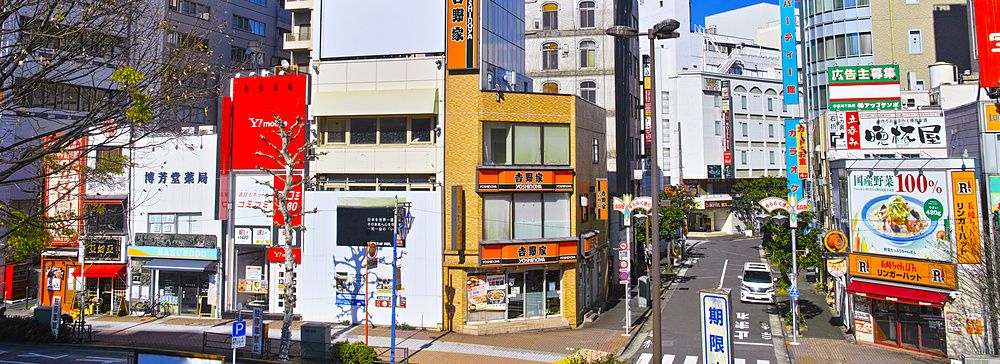
The east exit is a different story. Here you’ll find a Don Quijote that stays open late, karaoke, internet cafés and the tangle of little streets behind the main road. It’s the noisiest part, where the signs light up at night and the whole neighborhood changes.
If it’s your first time and you just want to get a feel for the area, I’d take the west exit and save the east side for after dinner.
After dark
Gotanda is at its best after sunset, when the offices empty out and people who are done with work go looking for a drink.
Under the tracks and in the alleys behind the main road, lots of small places are still hanging on, tiny izakaya and bars that seat a handful of people, and many of them only open in the evening. This isn’t an area built for tourists, so expect Japanese-only menus and places that barely fit ten customers.
Walking around at night, someone may try to lure you inside. These are the usual nightlife places, and my blunt advice is to keep walking and pick your own spot. The offices set the pace here: the counters fill up as soon as work lets out, and the best time is mid-evening, when the alleys are packed and the doors are open.
Later on the neighborhood empties out fast, because almost everyone has a train to catch. Show up too late and you may find more shutters down than signs lit.
Price-wise, Gotanda is one of the most reasonably priced places on the Yamanote loop. You can eat and drink well without breaking the bank, at prices more typical of an office district than a tourist area.
Up the hill to Ikedayama
If you’re in Gotanda in daylight and wondering what there is to see, the answer is on the hill behind the east side.
As you walk up, the noise of the main road fades and you find yourself among walled properties and quiet private homes, in one of the city’s most exclusive residential areas. Up here is Ikedayama Park, a Japanese garden with a pond, a small waterfall and paths. It started out as the garden of the Ikeda family residence, back when the Ikeda were the lords of the Okayama domain.
It’s small and almost always empty, but the contrast with the office towers below is worth the climb. A little farther on, another small public garden sits on the land where Empress Michiko’s family home used to stand.
How much time you need
Gotanda isn’t a half-day destination, and it doesn’t need to be.
I think it works best as one stop on a longer outing, maybe paired with a nearby neighborhood you can reach in a few minutes by train or on foot. Walking to Meguro takes about fifteen minutes, heading roughly in the direction of the river, and on the way you pass through a quiet residential corner of the city that few visitors see.
A couple of hours in the evening, with a stroll by the river and a stop for a drink, is about right.
Staying in Gotanda is more about practicality than romance. Being on the Yamanote gets you anywhere fast, and hotel prices are lower than elsewhere. Don’t expect postcard views or elegant streets. What you get is a good base for getting around all of Tokyo without overspending.
Getting There
Gotanda is on the Yamanote line, so you can get here without changing trains from Shibuya, Shinjuku or Shinagawa. It's the next stop after Meguro.
Once you arrive, pick a side of the station: the west exit for the Meguro River and the shopping street, the east exit for the alleys, the neon and the evening bars.
The Toei Asakusa Line also stops here, which is handy if you're coming from Nihonbashi or Asakusa on trains bound for Nishi-Magome.
Useful Info
Name: Gotanda
Time needed: A couple of hours, ideally in the evening
Closed: This is an office district, so many izakaya in the back alleys close on Sundays, and the nightlife gets a lot quieter on weekends.
Tips: In the evening, someone in the alleys behind the east exit will try to pull you into their bar. Keep walking and pick your own place, maybe one of the counters under the tracks. Expect Japanese-only menus and places that only fit ten people. That's exactly what makes it fun.
Getting there:
- Gotanda Station (JR Yamanote, Toei Asakusa): west exit toward the river, east exit toward the alleys
- Tokyu Ikegami Line: the line starts here, handy for the residential neighborhoods to the south
Map
MarcoMaps100% free
This place is on MarcoMaps
Gotanda
My map of Japan: over 4,000 places I've tried myself, each with photos, rating, and hours. Filter by category and rating, find veg-friendly spots and places near you with GPS. No sign-up, right from your phone.
- 4,000+ places
- Rating, photos, and hours
- Veg friendly
- Near me (GPS)
- Favorites without login
- Works offline

