Great Buddha of Kamakura
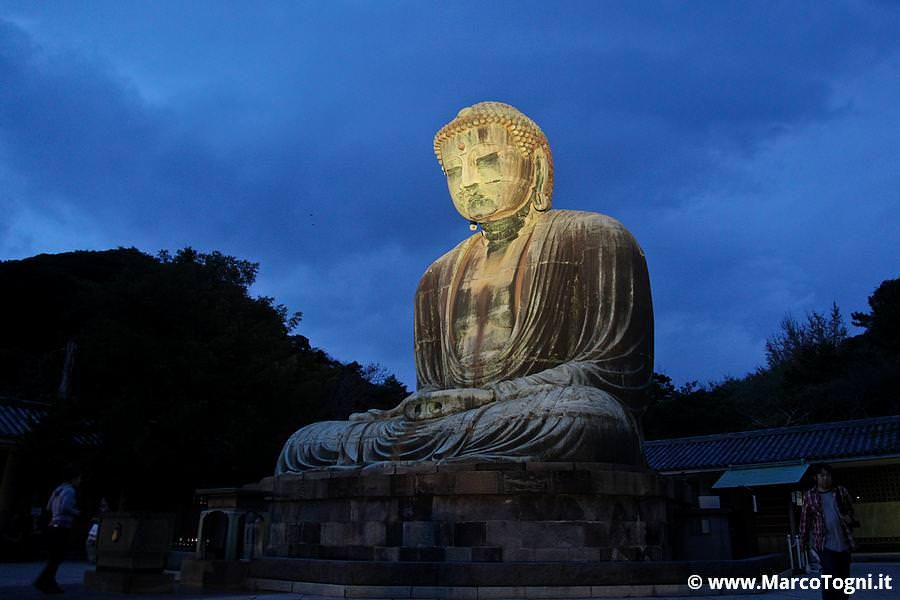
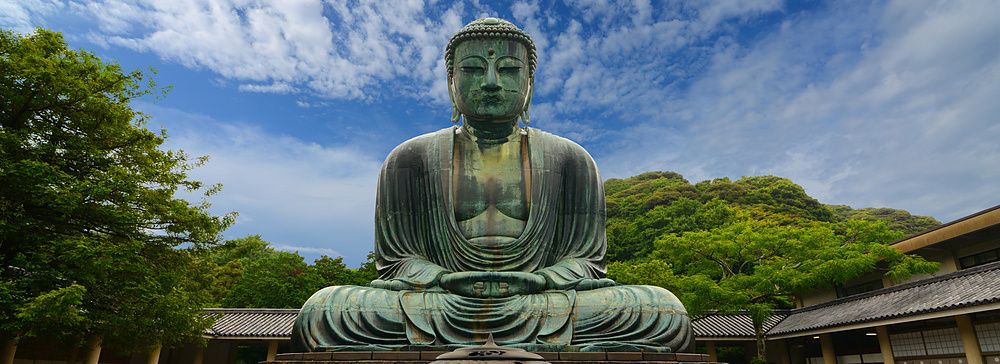
It’s impossible to stand in front of the Great Buddha of Kamakura and feel nothing. It hits you right away. You walk into the temple grounds and there it is, sitting motionless as it has for centuries, with that calm, mysterious expression. It’s more than a statue. It’s an incredibly powerful symbol, one of those sights that stays with you far longer than you’d expect.
Below I cover everything you need to plan your visit, along with why it’s really worth going, what to expect, and a few things not everyone knows. If you’re thinking about a trip out of Tokyo, Kamakura is worth the journey.
Contents
Where to find the Great Buddha of Kamakura
The statue is in Kamakura, a city in Kanagawa Prefecture about an hour by train from Tokyo, which makes it a perfect day trip if you’re visiting the capital. Kamakura actually has a lot more to offer than the Buddha, but there’s no question that this colossal bronze figure is the main attraction.
The statue stands on the grounds of Kotoku-in Temple, in a quiet area surrounded by greenery. Kamakura has become fairly touristy, but the area around the Buddha still has a calm, respectful feel, especially if you go at the right time of day.
How big the Great Buddha is
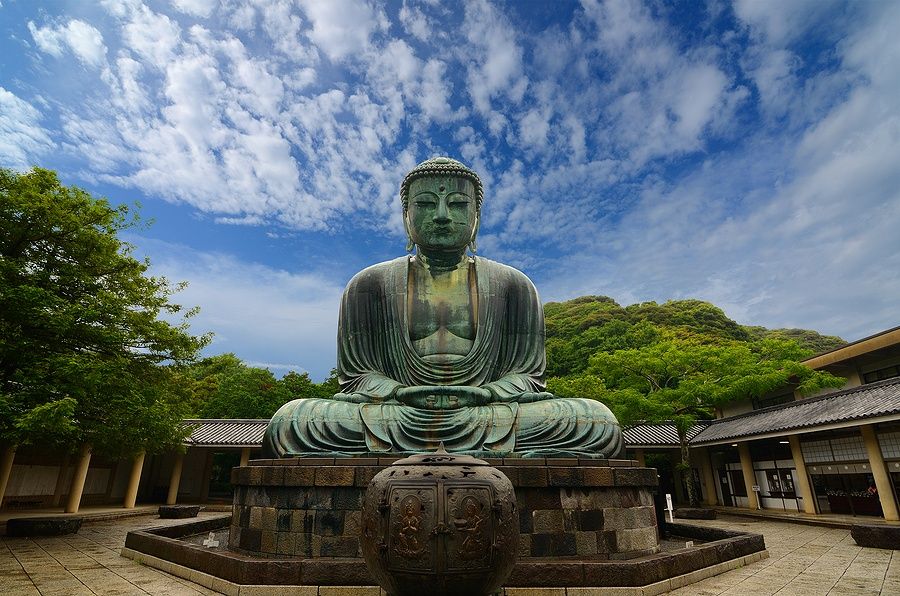
One thing that strikes you right away is the sheer size of the statue. It isn’t as tall as some of the modern statues you’ll find in other Asian countries today, but it’s far more captivating. The Great Buddha of Kamakura, also called the Daibutsu, stands about 11.3 meters tall, or 13.35 meters if you count the pedestal, and weighs over 120 metric tons.
It’s even more impressive when you consider that it’s a bronze statue dating back to 1252, which makes it more than 750 years old. Think about that for a second. It has survived earthquakes, fires, and tsunamis. The building that originally sheltered it was destroyed, but the statue stayed right where it was, motionless, watching the centuries go by.
Which Buddha it is
The Kamakura Daibutsu isn’t just any Buddha. It’s Amida Nyorai, the Buddha who, in Japanese tradition, welcomes the faithful into the Pure Land. You can tell from the hands, which rest in the lap with the thumbs and index fingers touching to form two circles. That’s the meditation gesture, and it’s why the face looks so contemplative.
It isn’t the largest Buddha in Japan, though: the one in Nara is taller by several meters. But this is the only sculpture in Kamakura designated a National Treasure, and unlike its counterpart in Nara, you see it with the sky behind it instead of inside a hall.
The best time to go
You can visit the Daibutsu year-round, but as with a lot of places in Japan, some seasons make the experience even more special. If you want my advice, these are the best times:
- Spring, especially during cherry blossom season. There are several sakura trees around, and seeing the statue with pink petals drifting down around it is truly special.
- Fall, when the leaves turn red and gold. The warm light of a fall afternoon gives the place an almost magical feel.
- Weekdays, early in the morning or close to closing time, to avoid the crowds.
If you can, avoid Japanese public holidays and midsummer weekends, when the place fills up with school groups and tourists.
What else to see
The statue is definitely the highlight of the visit, but don’t stop at the Buddha. Kamakura is full of temples, charming little alleys, traditional cafés, and small craft shops.
Close to the Daibutsu, I recommend:
- Hase-dera Temple, known for its Kannon statues and spectacular views of the coast.
- A walk along Komachi-dori, with its sweets, souvenirs, and street food.
- If you have time, a short forest trail that leads to Zeniarai Benten, where people wash their money for good luck.
Kamakura is more than a statue. It’s a small taste of traditional Japan, an hour by train from Tokyo.
A few lesser-known facts
One of the most interesting things is that you can go inside the Buddha. Literally. For a small extra fee (a handful of yen), you can step into the body of the statue and see the construction techniques used in the 1200s. It’s not especially roomy or well lit, but it’s fascinating to think about how they built it back then. What you’re actually looking at is the hollow interior of the bronze: the horizontal lines where each new pour was joined to the one before, the reinforcements added during restorations, and the patches applied after earthquakes. You climb a steep little stairway into a space that’s hot and very humid, so it’s not the best place if you’re claustrophobic. But once you realize that the statue is hollow, you look at it differently when you’re back outside.
The Buddha also wasn’t always out in the open. Originally it sat indoors, sheltered by a large wooden hall, but over the centuries storms and tsunamis destroyed the building more than once. After the last major disaster in the 15th century, they decided to leave it outdoors, and that’s how we still see it today.
Details worth a closer look
Take a few minutes to walk all the way around the statue, because you can’t see the best parts from the courtyard out front. In the right light, you can still make out traces of gold leaf on the right cheek. The Buddha was originally covered entirely in gold, and the little that’s left gives you an idea of how dazzling it must have been.
On the right side of the grounds hang two enormous straw sandals, nearly two meters tall. Children from a small town in Ibaraki donate them, so that the Buddha can set off on foot across Japan. Behind the statue you’ll find the Kangetsudo pavilion and a stone carved with a poem by Yosano Akiko. In the poem she calls the Daibutsu a handsome young man, though she mistakes him for Shakyamuni.
Getting There
The easiest way is to take the train to Kamakura and switch to the little Enoden line as far as Hase. From there the temple is a few minutes' walk up a gently sloping street lined with small shops and stalls selling sweets.
If you'd rather walk, it takes about 25 minutes from Kamakura Station.
You can also take one of the buses from the east exit of Kamakura Station, which drop you at the Daibutsu-mae stop, right in front of the entrance. It's the simplest option if you're traveling with kids or carrying luggage. Keep in mind that the temple has no parking.
Useful Info
- Hase Station (Enoden line): about 7 minutes on foot
- Kamakura Station (JR Yokosuka, JR Shonan-Shinjuku, Enoden): about 25 minutes on foot
- Daibutsu-mae stop: bus from the east exit of Kamakura Station, about 10 minutes
Map
This place is on MarcoMaps
Great Buddha
My map of Japan: over 4,000 places I've tried myself, each with photos, rating, and hours. Filter by category and rating, find veg-friendly spots and places near you with GPS. No sign-up, right from your phone.
- 4,000+ places
- Rating, photos, and hours
- Veg friendly
- Near me (GPS)
- Favorites without login
- Works offline


Video: Daibutsu, the giant Buddha of Kamakura