Great Fire of Meireki
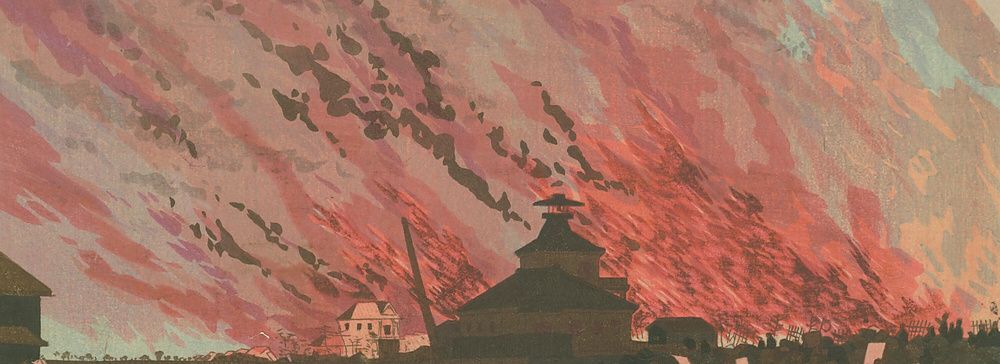
Part of the reason Tokyo looks the way it does is a fire from almost four hundred years ago. In 1657 Edo, as the city was called in the age of the samurai, burned almost entirely in three days.
When the survivors came back to the ruins, the Tokugawa military government made a decision I still find surprising today. It chose not to rebuild the city as it had been, but to build a different one. It laid out wider streets, moved whole neighborhoods elsewhere and put a new bridge across the Sumida River. That fire is called the Great Fire of Meireki, after the era it happened in. I’d recommend learning about it, because it explains a lot of places in Tokyo that would otherwise seem random.
Contents
Three days in March
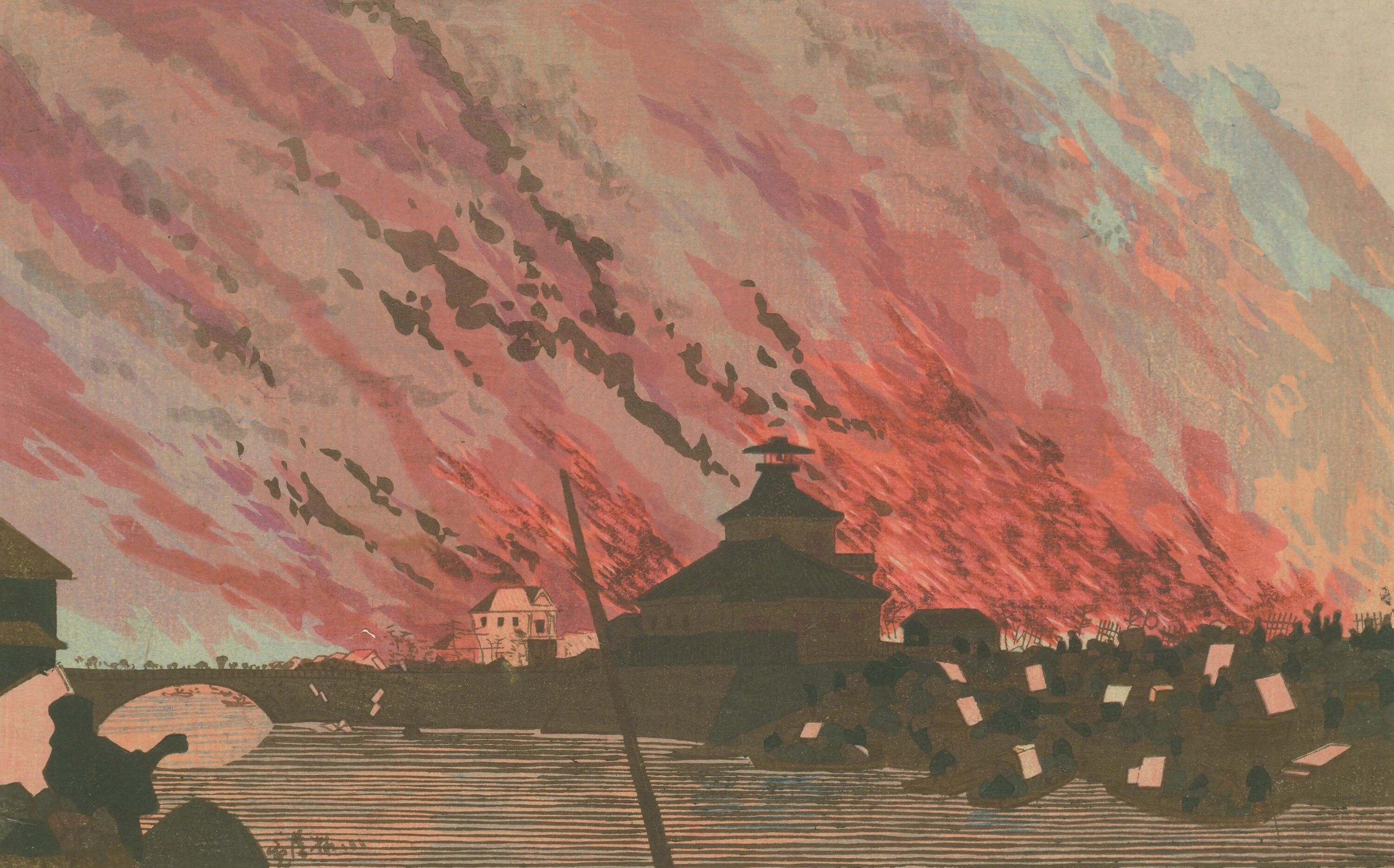
The fire broke out in the early afternoon of the eighteenth day of the first lunar month, which falls in early March. It started at a temple in Hongo, just north of the castle. The timing couldn’t have been worse. It hadn’t rained for nearly eighty days, and a strong wind was blowing from the northwest, the dry wind that sweeps down over the Kanto Plain in winter.
Edo was a city of wood and paper, with thatched roofs and narrow alleys, thrown up in a hurry for a few hundred thousand people. Once the flames got going, they moved south and tore through the merchant districts one after another.
The next day, just when the worst seemed to be over, two more fires broke out in other parts of the city, one in Koishikawa and the other around Kojimachi, west of the castle. So what we call the Great Fire of Meireki was really three separate fires in just over forty-eight hours.
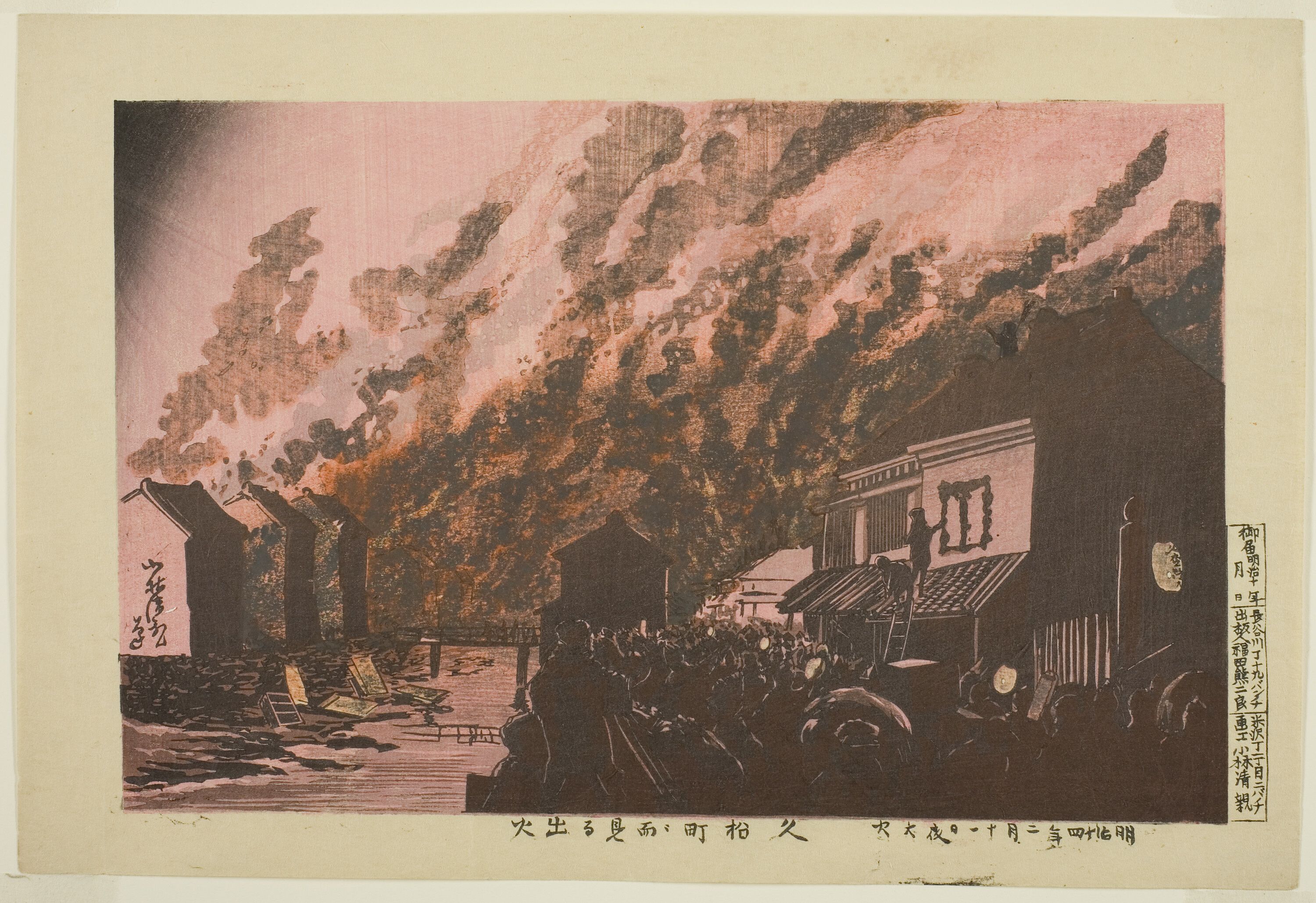
By the end, about sixty percent of the city had burned, which was pretty much everything inside the castle’s outer moat. Estimates of the death toll vary. They range from 30,000 to over 100,000, and one figure passed down over the centuries goes above 107,000. Then the snow came, and many people who had escaped the flames froze to death out in the open.
The cursed kimono
In Japan the disaster goes by another name, far better known than the official one: the Furisode Fire, after the long-sleeved kimono worn by unmarried young women. The story goes like this.
A sixteen-year-old girl falls for a young man she happens to see, falls ill with longing and dies. Her family buries her in her purple kimono, the temple sells it, and the girl who buys it also dies at sixteen. The third owner meets the same fate, and all three die on the same day of the year.
The monks decide to burn the kimono to purify it, but a gust of wind lifts the burning cloth onto the temple roof, and that’s where the fire that destroys Edo begins.
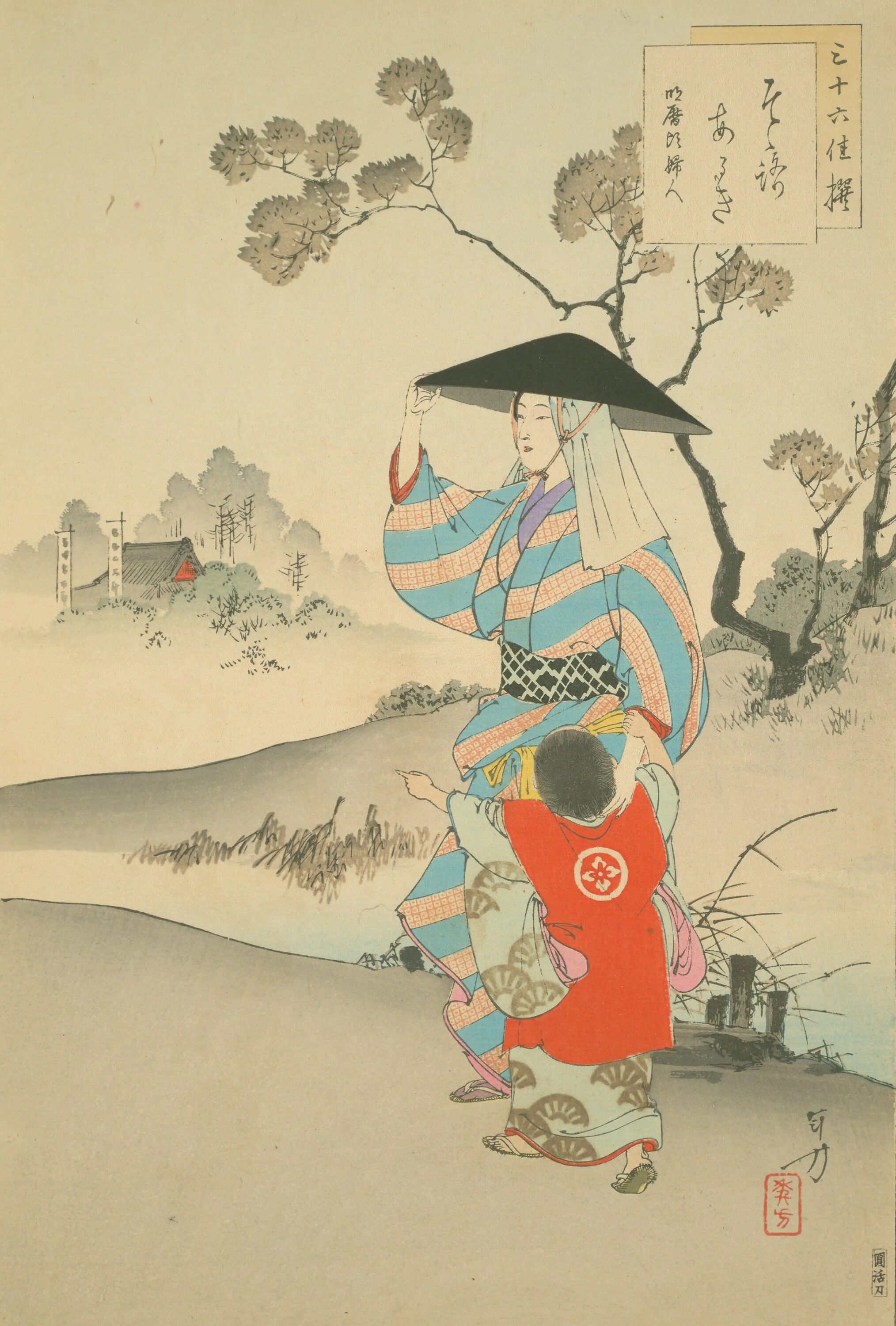
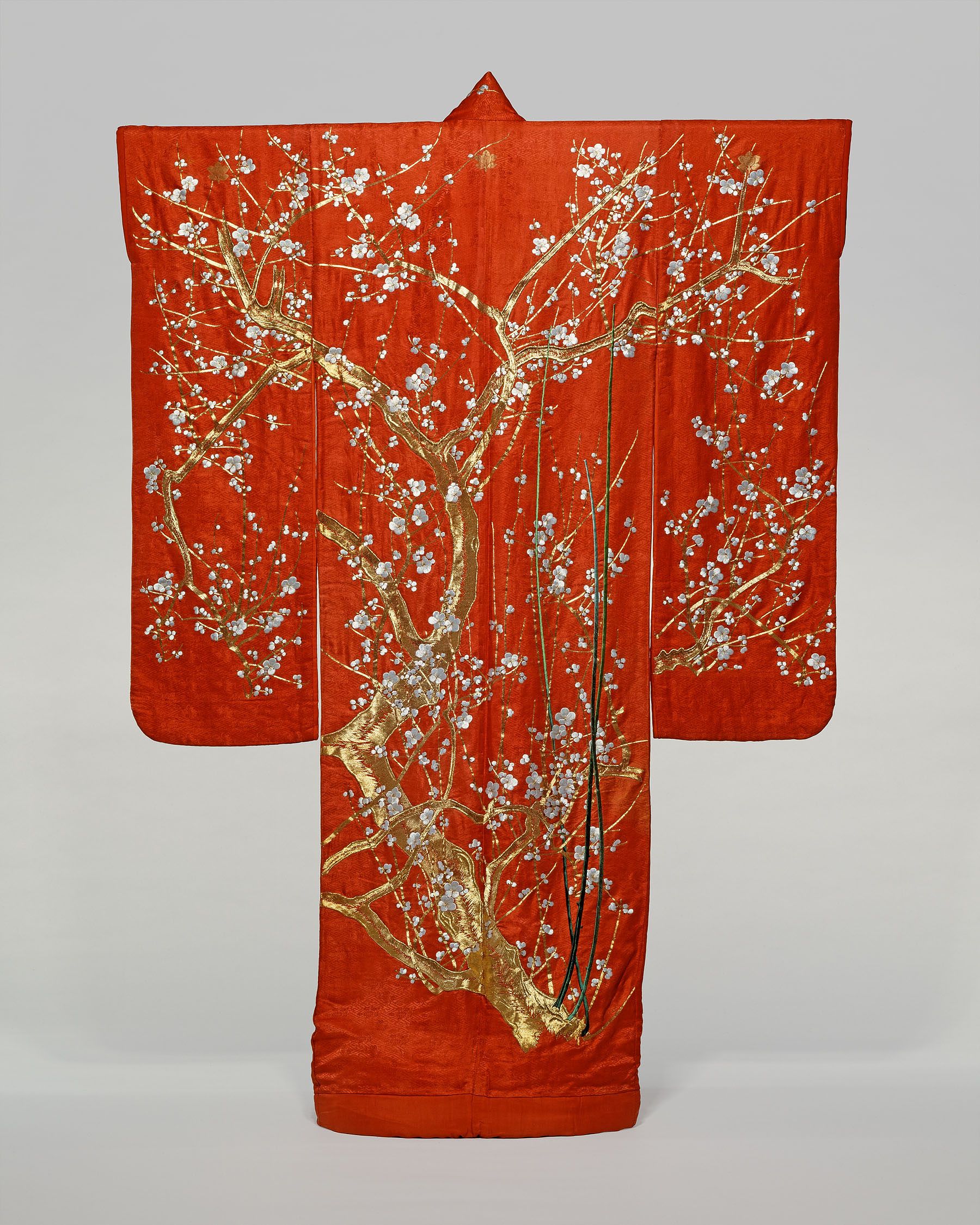
It’s a legend, obviously, and it owes most of its popularity to an illustrated book published a few years after the events, which told the story of the disaster like a popular novel. But I’ll be honest with you: this story is the reason the fire is still remembered today. Nobody remembers the dates, but everyone remembers the kimono.
Who started the fire
There are three explanations for what actually caused it, and none has been fully proven. The simplest is an accidental fire at the temple in Hongo, maybe from a brazier or a candle, on a windy day in the middle of a drought.
The second theory is that the fire really started at a feudal lord’s residence nearby, and that the temple took the blame to protect a powerful family. People who back this version point out that the temple, instead of being punished, kept receiving favors from the government.
The third is the most conspiratorial. It says the government started the fire itself, because it wanted to redesign a city that had become unmanageable and couldn’t do it without razing half of Edo. Honestly, I don’t find it very believable. The fire ended up destroying the castle too, and nobody burns down their own palace for the sake of urban planning. Still, the rebuilding was so fast and so well organized that it’s hard not to suspect some plan was already drawn up.
Trapped at Asakusabashi
The worst of it happened at a gate in the city walls that stood where Asakusabashi Station is today, on the Sobu Line between Akihabara and Ryogoku. Not to be confused with Asakusa, which is further north. This spot is on the Kanda River, where one of the city’s guarded checkpoints used to be.
Thousands of people were fleeing east to get across the river to safety. In the chaos, a rumor spread that prisoners had broken out of the jail nearby, and the guards shut the gate.
The people running for it found a wall in front of them and the fire closing in from behind. Many burned to death, and many more drowned trying to jump into the river. The records put the toll at more than 20,000 dead at that spot alone. Like every figure from that time, it should be taken with a grain of salt, but it gives you an idea.
Today the area is full of doll wholesalers and party supply shops, with trains rolling by every few minutes. Nothing there tells you what happened, and that’s exactly why I think it’s worth knowing before you pass through.
A castle without a keep
Among the things the fire destroyed was Edo Castle’s main keep, which in Japanese is called the tenshu. This was no ordinary keep. It was the tallest ever built in Japan, around sixty meters high, commissioned by the third shogun, Tokugawa Iemitsu, and finished less than twenty years before the fire.
It burned down and was never rebuilt. The year after the disaster the Maeda family, who ruled a wealthy domain on the Sea of Japan coast, rebuilt the stone base, but nothing was ever put on top of it.
The decision came from the man who was effectively running the government at the time, and his reasons were practical. A keep like that was there for show, not for defense, and the city needed the money. Japan had been at peace for decades, and nobody was about to lay siege to Edo.
That stone base is still there inside the Imperial Palace grounds, and you can climb it. It’s a few minutes from Tokyo Station, it’s free, and from the top you can see the Otemachi skyscrapers. Just so you don’t get your hopes up: there’s no castle to photograph, only a huge platform of squared stone blocks. But standing on the only thing left of Japan’s biggest castle is quite something.
The man who rebuilt Edo
The name to remember is Hoshina Masayuki, half-brother of the third shogun and guardian of the fourth, Tokugawa Ietsuna, who was barely more than a boy at the time. He was the one who handled the emergency and the rebuilding, and his decisions are the reason Edo was back on its feet in a couple of years instead of staying a field of rubble.
He had the castle’s rice storehouses opened and rice porridge handed out at several spots around the city for weeks. He also approved a huge sum of public money for ordinary townspeople who had lost their homes, over the objections of those who feared it would empty the treasury.
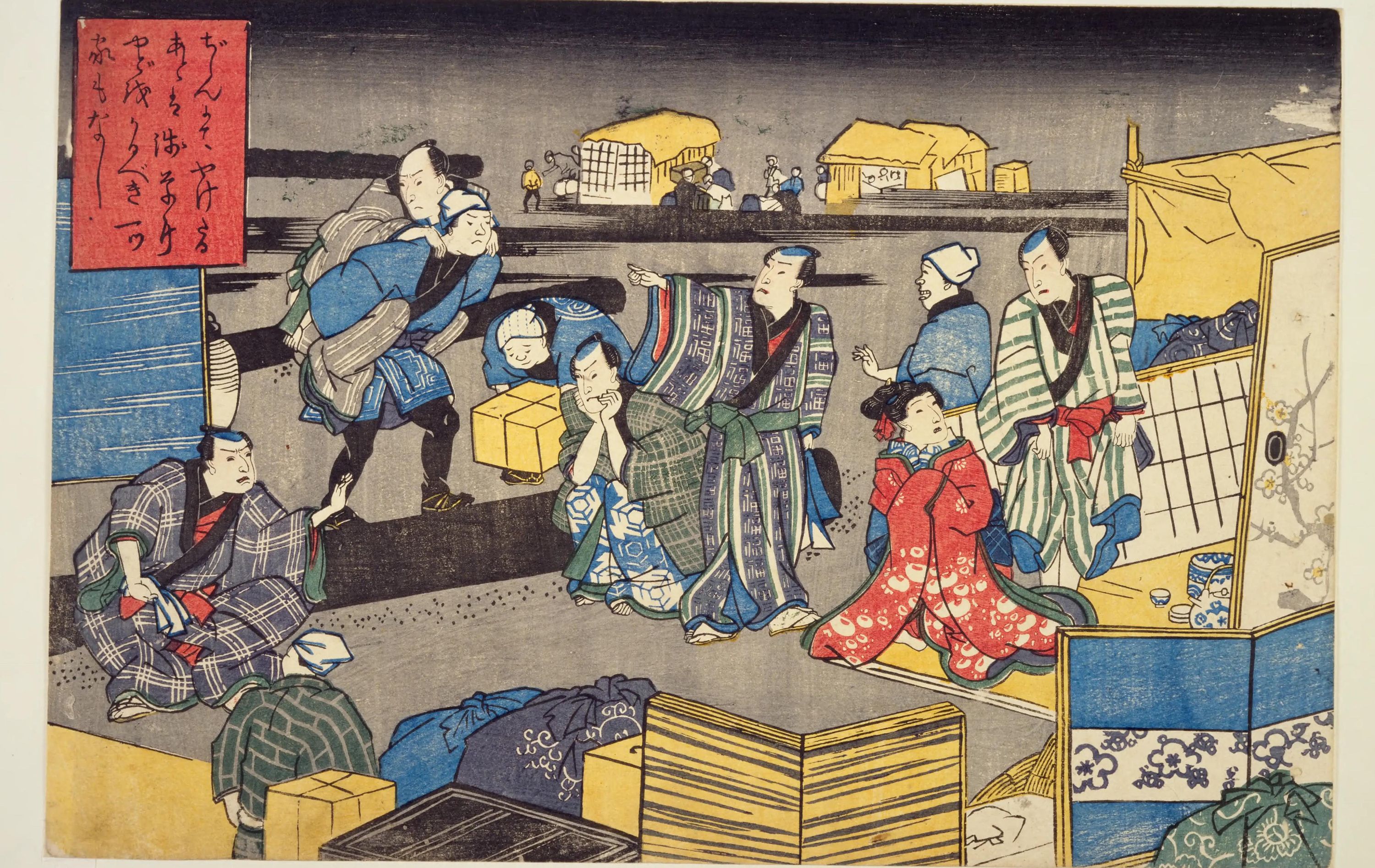
He also ordered that the gates leading out of the city stay open, the exact opposite of what had happened at Asakusabashi, and that anyone who wanted to flee be let through. In a military city, where control of the gates was sacred, that was far from an obvious call.
That’s why his name still comes up in Japan whenever people talk about rebuilding after a disaster: people first, monuments later.
Wide streets and open spaces
The rebuilt Edo looked nothing like the old one. The idea behind it was simple and brutal: if you can’t put the fire out, make sure it has nowhere to go. Two things came out of this, and both left their mark on the map of Tokyo.
The first were the hirokoji, streets widened on purpose to act as a barrier. They were tens of meters wide, kept clear and often had an earth embankment. The second were the hiyokechi, open spaces deliberately left empty in the middle of the city, where building was banned.
These were the main changes:
- Many temples and shrines near the castle were moved to the outskirts, toward Asakusa, Komagome and Mita, partly because their lanterns and incense made them a constant fire risk.
- The feudal lords’ residences, which took up the land around the castle, were moved farther away, freeing up space around the walls.
- The Yoshiwara pleasure quarter, which had been in the center, was relocated behind Asakusa, where it stayed until the twentieth century.
- The main streets were widened, and the markets selling timber and flammable materials were moved away from residential areas.
Over time, those empty spaces filled up with stalls, little theaters and makeshift venues, because they were the only places where you could set up without getting in anyone’s way. The word hirokoji lives on in the names of some parts of Tokyo, especially Ueno Hirokoji. If you’ve ever wondered why some intersections here are absurdly wide compared to the alleys around them, this story is often the reason.
A bridge over the Sumida
Before the fire, the Sumida River had pretty much just one bridge, much further north. That wasn’t an oversight. Leaving the river without bridges was a defensive choice that made it a natural moat east of the castle.
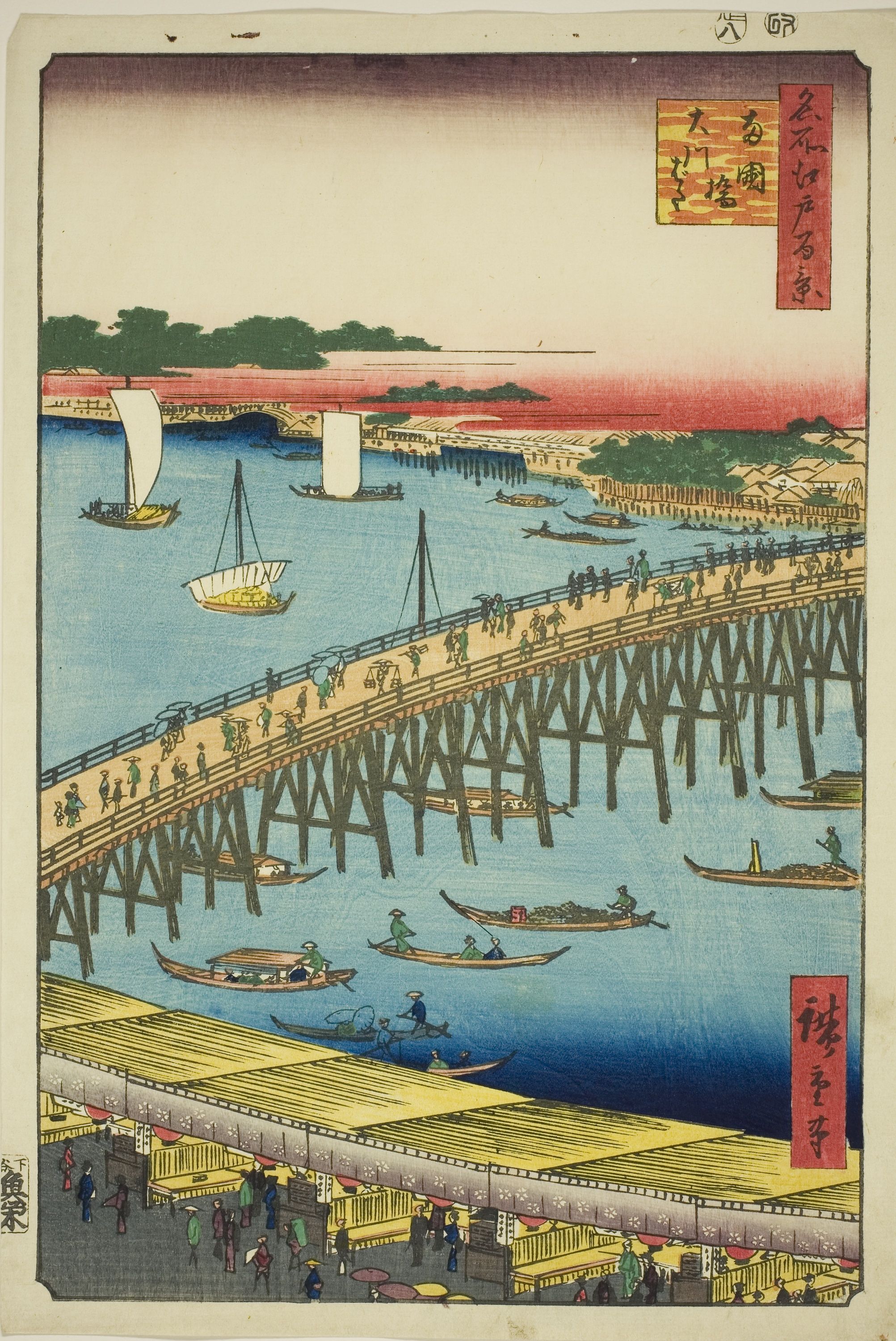
The fire proved that this defense killed more people than it saved, given how many had been trapped on the wrong bank. A few years later Ryogoku Bridge went up, and its name tells the story: it means two provinces, because it linked two different provinces.
With the bridge in place, the city spread east into what are now Honjo and Fukagawa, in today’s Sumida and Koto wards. Swampy land nobody wanted turned into neighborhoods full of craftsmen, warehouses and canals.
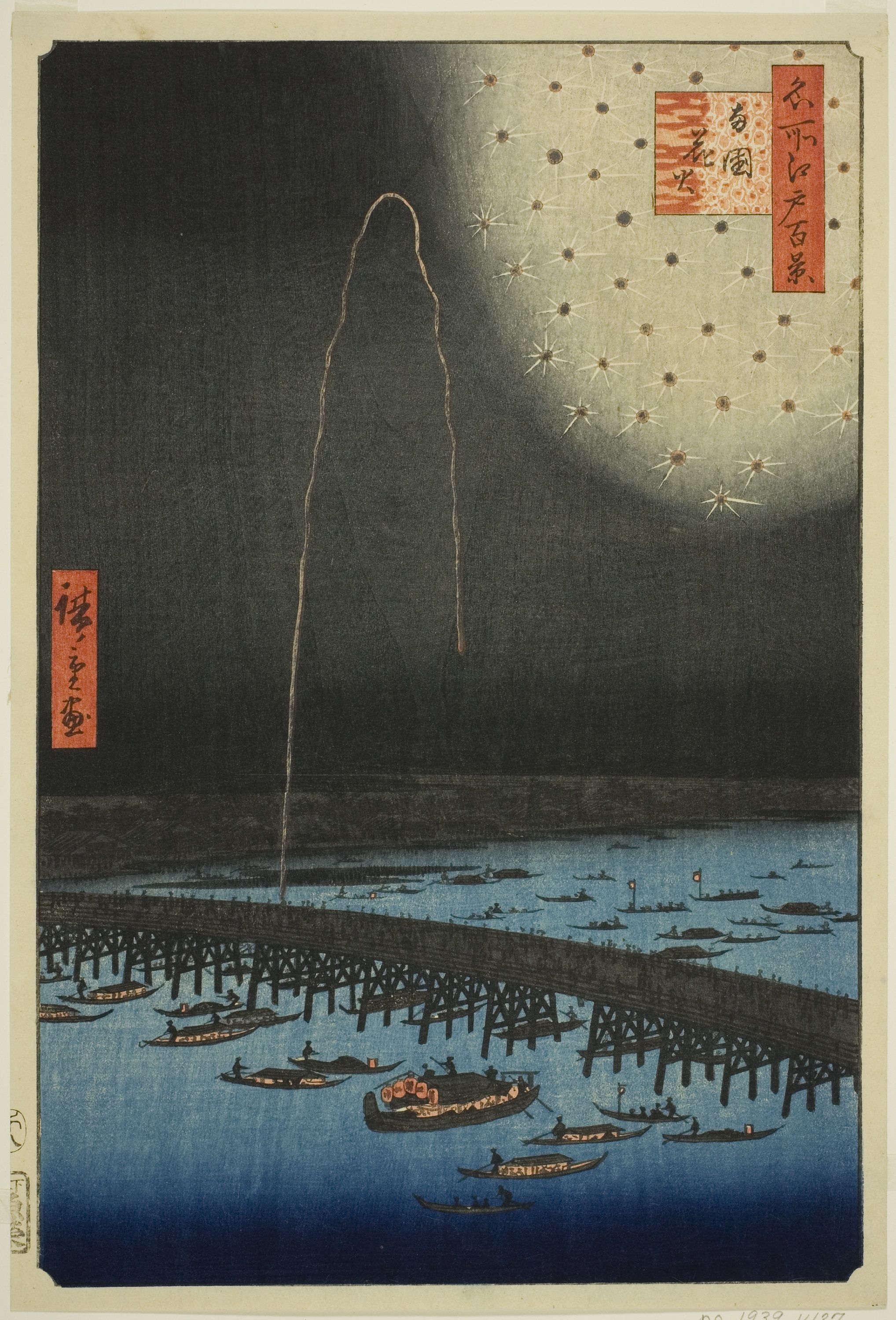
Two large open areas were left clear at either end of the bridge to stop the fire from spreading. Together they ended up as Edo’s most popular place for a good time, with street vendors, sideshows and the summer fireworks over the river that are still held today. A place created out of fear of fire became the place where people go to watch fire, and that’s exactly what I like about it. It’s the kind of thing only a city could pull off.
Tile roofs and a fire brigade
The government also rewrote the building rules. It pushed for tile roofs instead of thatch, and for storehouses with thick walls of earth and plaster, called kura, which you can still see in historic towns.
It also created the jobikeshi, a permanent fire brigade that answered directly to the government, with fixed stations in a few parts of the city and crews ready to go at any time. Until then, firefighting had been left to samurai households and handled haphazardly.
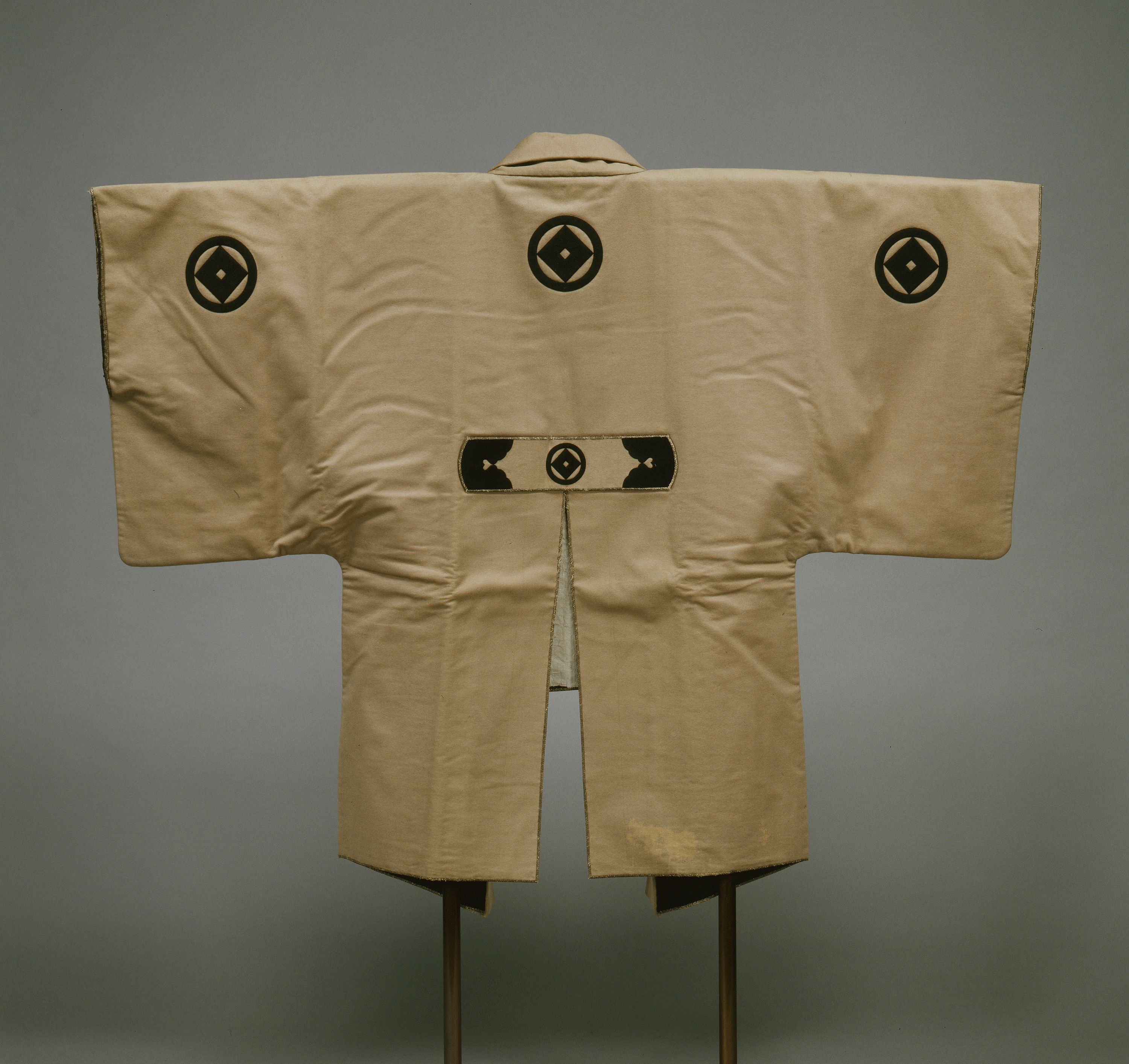
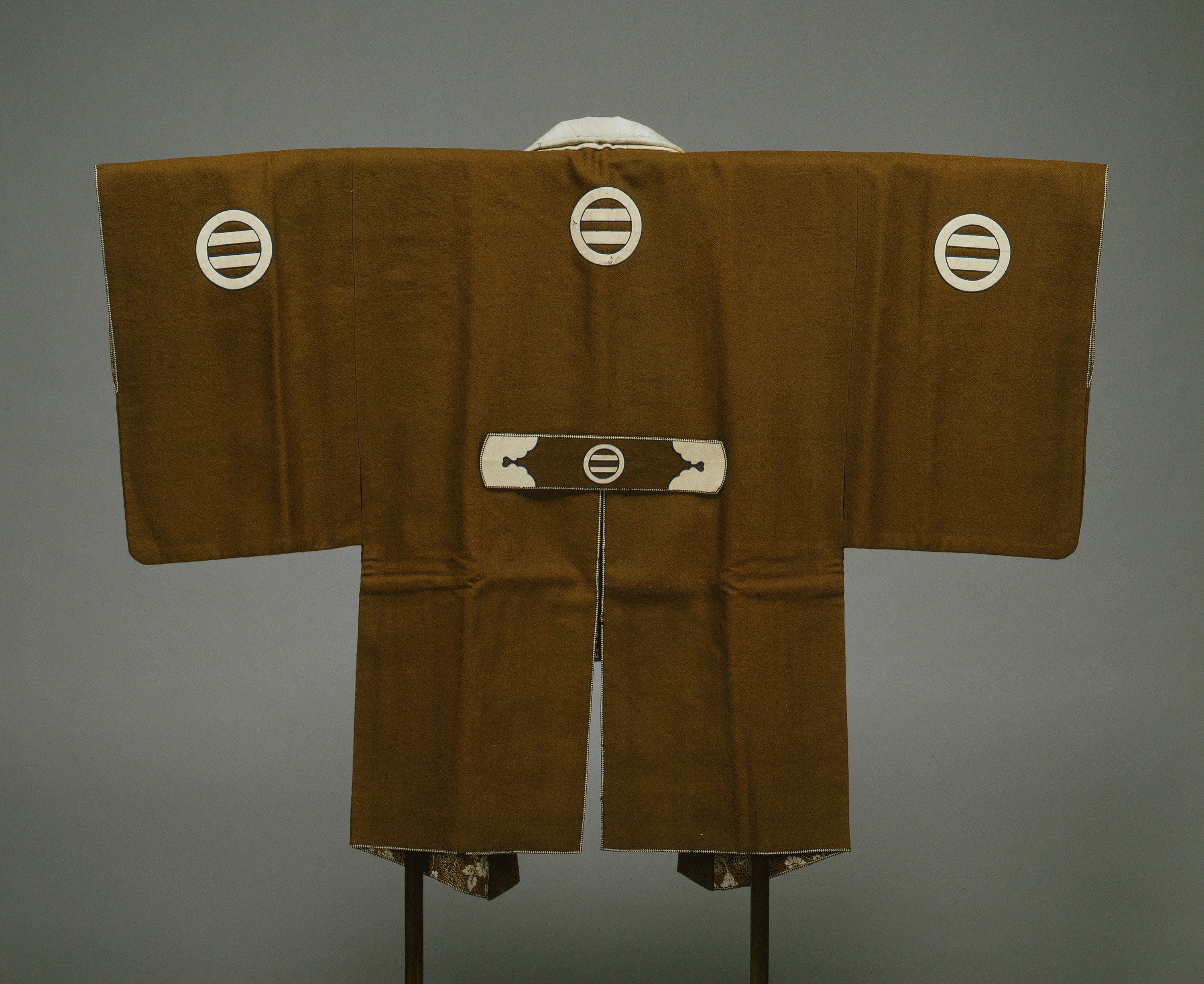
Those firefighters almost never put out a fire in the sense we mean today. Their hand pumps were a joke next to the flames, so the real job was to tear down the houses around the fire as fast as possible and leave it nothing to feed on. They showed up with hooks and levers, knocked everything down and left a gap.
The job became part of the Japanese popular imagination, along with the cloth banners they planted on rooftops to mark how far they would go. City history museums always have a few on display, and they’re worth a stop.
Who got rich
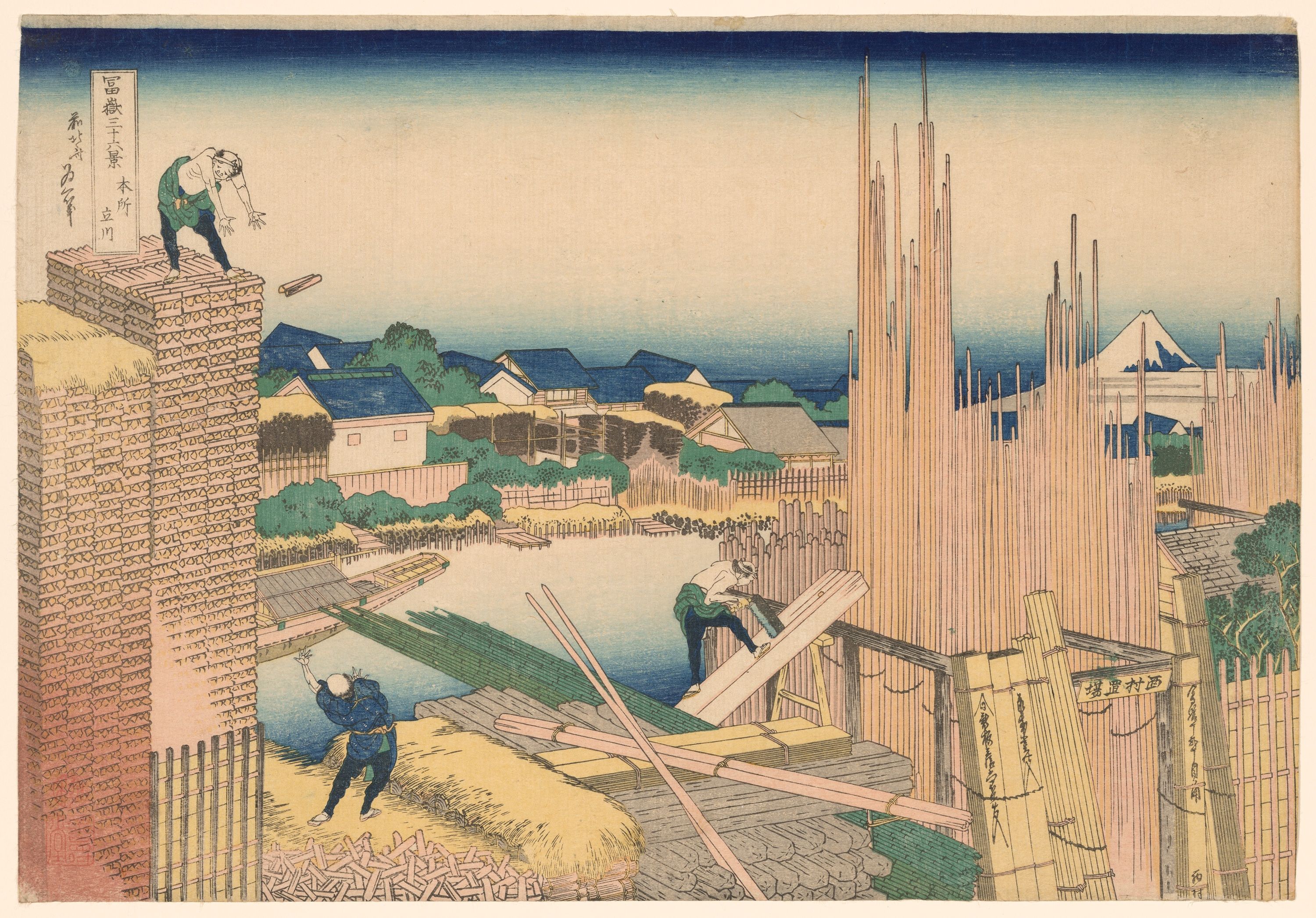
Every disaster makes somebody rich, and in this case it was Kawamura Zuiken, who had come to Edo from a poor farming family on the Ise Peninsula. After the fire he figured out before anyone else that rebuilding an entire city would send the price of lumber through the roof.
He headed for the Kiso mountains, the forest region in the middle of the country where the best wood came from, and bought up everything he could. He came back with a fortune. Then he started organizing shipping routes to bring rice and goods to Edo, and ended up as one of the most important figures in Japan’s seventeenth-century economy.
Ekoin in Ryogoku
The place where you can see this history up close is a temple called Ekoin, a short walk from Ryogoku Station on the east bank of the river. It was founded for a specific reason. Most of the bodies recovered after the fire couldn’t be identified and had no family to claim them, so there had to be somewhere to bury them all together.
The fourth shogun arranged for the land to be donated and ordered a large funeral ceremony. The mass grave got a name that says it all, the Grave of Ten Thousand, and the temple grew up around it.
Ever since, Ekoin has done the same for all the dead with no one to claim them: victims of other fires, earthquakes and famines, and even animals. For decades during the Edo period it hosted fundraising sumo tournaments, which is why the sumo arena, the Kokugikan, still sits in Ryogoku just a few hundred meters away.
On the grounds there’s a stone dedicated to wrestlers and the grave of a famous Edo-period thief, which people visit when they’re hoping for luck at gambling. Entry is free, and twenty minutes or so is enough to see it. It’s a working temple where people really do come to pray, so keep your voice down and don’t plant yourself in front of the altar with your camera.
Other traces of the fire
Tradition says the fire started at a temple that still exists, though not where it stood back then. It moved to Sugamo, the neighborhood east of Ikebukuro known for its shopping street popular with older people. In its grounds there’s a stone memorial to the fire’s victims, along with the graves of a few historical figures.
It’s a small place, with no ticket office and nobody to explain anything. I’d only go if you’re really into history, or if you’re already in Sugamo for the shopping street.
The other big trace is the one I mentioned earlier, the empty base of the castle keep in the Imperial Palace gardens. And then there are the traces that don’t look like traces: station names, the way certain streets suddenly widen, the clusters of temples in some areas and their complete absence in others.
Once you walk around Tokyo with this story in mind, you read the map differently, and details that used to look random start to make sense.
A walking route
If you want to tie it all together in half a day, the route I recommend starts in Ryogoku and ends at the Imperial Palace, half on foot and half by train.
- Start at Ekoin, right outside Ryogoku Station, to understand where the neighborhood came from.
- Walk across Ryogoku Bridge and see how wide the Sumida River is, the river thousands of people couldn’t get across.
- Follow the Kanda River toward Asakusabashi, where the closed gate stood.
- Take a train to Tokyo Station and climb up onto the base of the burned keep in the Imperial Palace gardens.
- Sugamo is there if you still have the energy, but it’s a long detour and I’d only suggest it if you love the details.
Plan on three or four hours at an easy pace. Wear comfortable shoes and bring a bottle of water, because there’s not much shade between the river and the gardens. The castle gardens are closed a couple of days a week, so check ahead before you build the whole route around that stop.
My advice
When people ask me what historic sights to see in Tokyo, they usually expect an old temple, and the truth is that very little of old Tokyo is left, because this city has burned down and been flattened dozens of times. The history is still there, though. It’s in the shape of the streets and in the places where nobody built anything.
The Great Fire of Meireki is when Edo stopped being an encampment around a castle and became a real city, with a plan. The price it paid is still shocking to read about.
If I had to pick just one stop, I’d go to Ekoin. It’s a short visit, and afterward you can grab something to eat in Ryogoku while sumo wrestlers walk by in kimono and wooden sandals. Then look at the river and try to picture it full of people trying to get across.