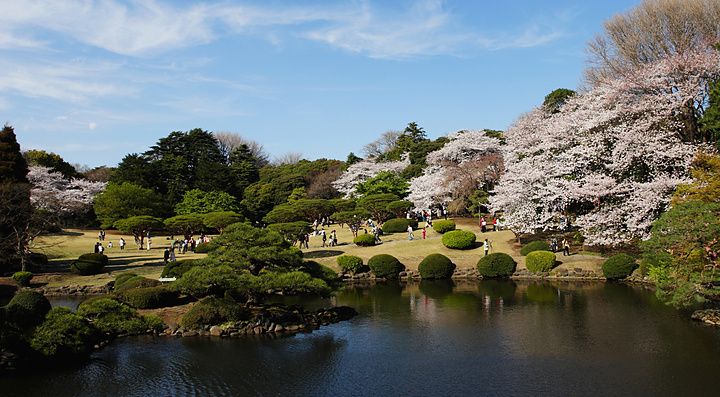
 232 m
Shinjuku Gyoen232 m
Beautiful, relaxing park.
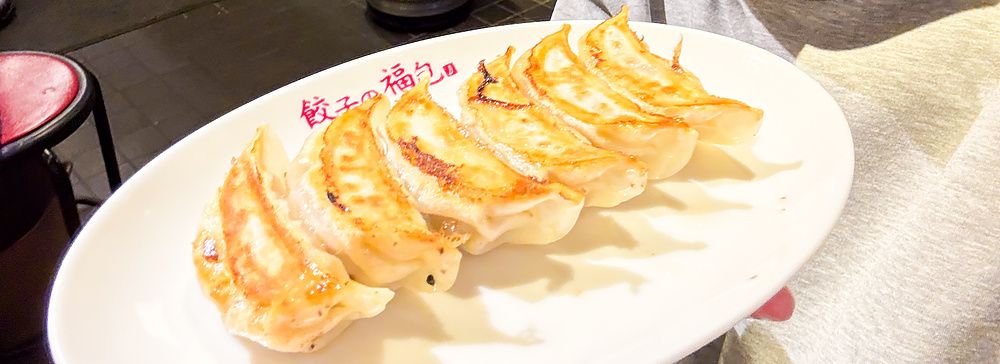
A chain of restaurants specializing in gyoza, with branches all over Tokyo and its main shop in Shinjuku, serving small dumplings with a thin skin and a filling packed with vegetables.
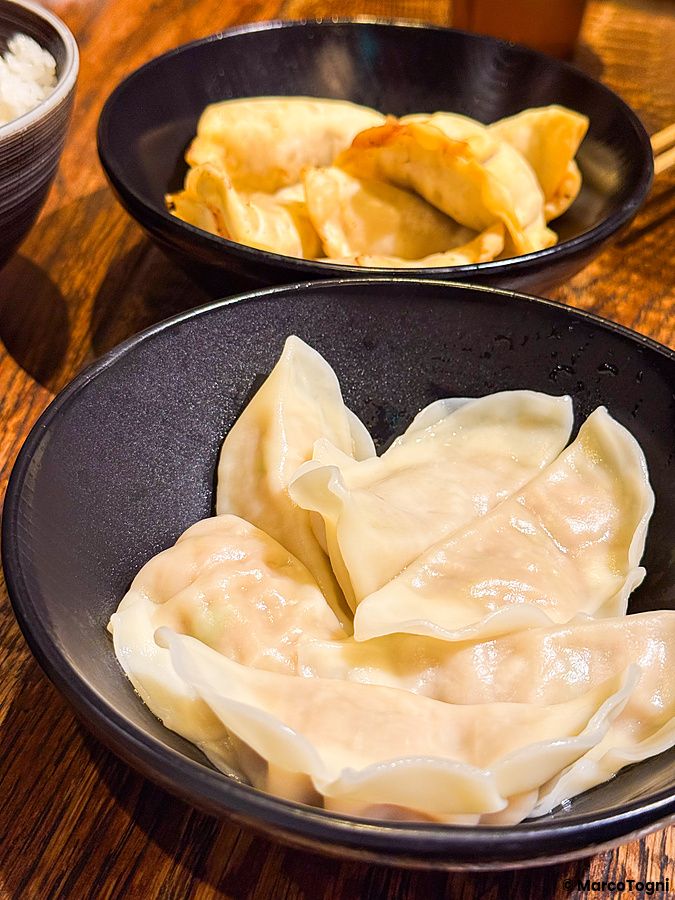
Gyoza no Fukuho cooks them three ways: pan-fried, boiled and deep-fried. You can order a plate of six, or a big platter of twenty, thirty or forty to share around the table. The most useful thing to know is that you can ask for them without garlic and without nira, Chinese chives.
It’s the right place for a quick lunch on your own, for dinner with friends with the platters in the middle of the table, and for anyone who wants gyoza as a proper meal, not just a side to their ramen.
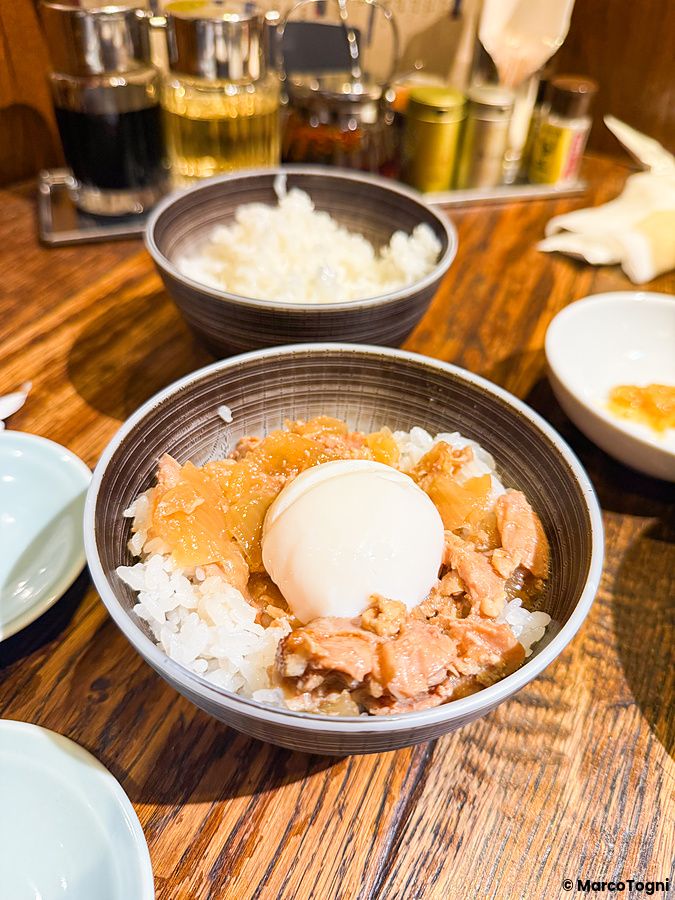
The menu is almost all gyoza: three cooking styles, a few cold side dishes, two rice bowls and a couple of desserts. The standard plates come with six pieces and they’re cheap, so instead of choosing, order three different ones and put them in the middle of the table.
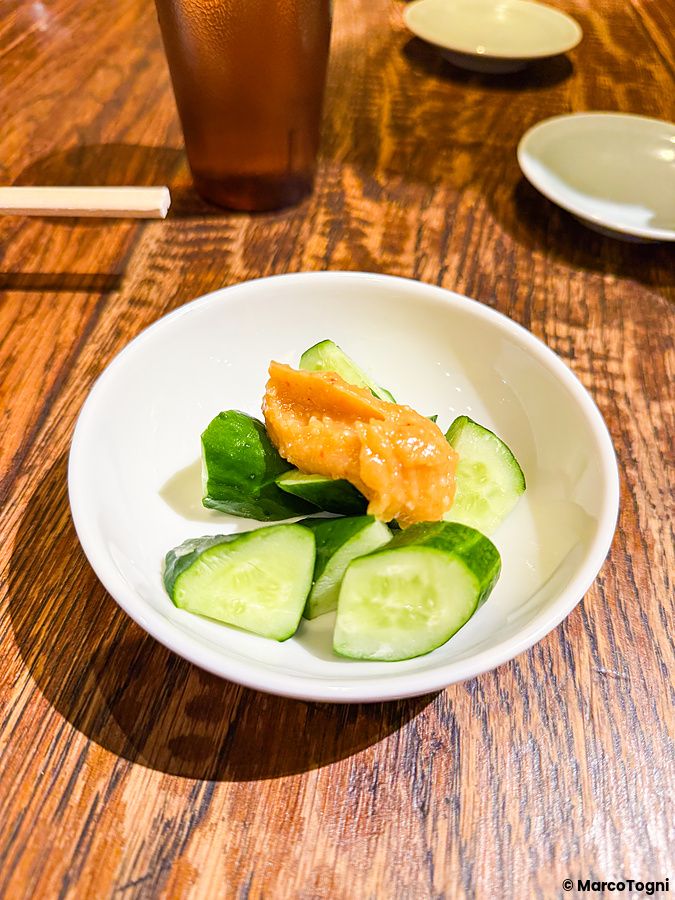
If there are three or four of you, the big platters of twenty, thirty or forty pieces are the most sensible way to eat here, and even the forty-piece one comes out cheap split four ways. The side dishes aren’t just filler. Cucumbers with miso, pickled cabbage, fried burdock and tofu in dandan sauce are there to break things up between plates. Get one or two to share, because they cleanse your palate and leave you hungrier for the third round of gyoza.
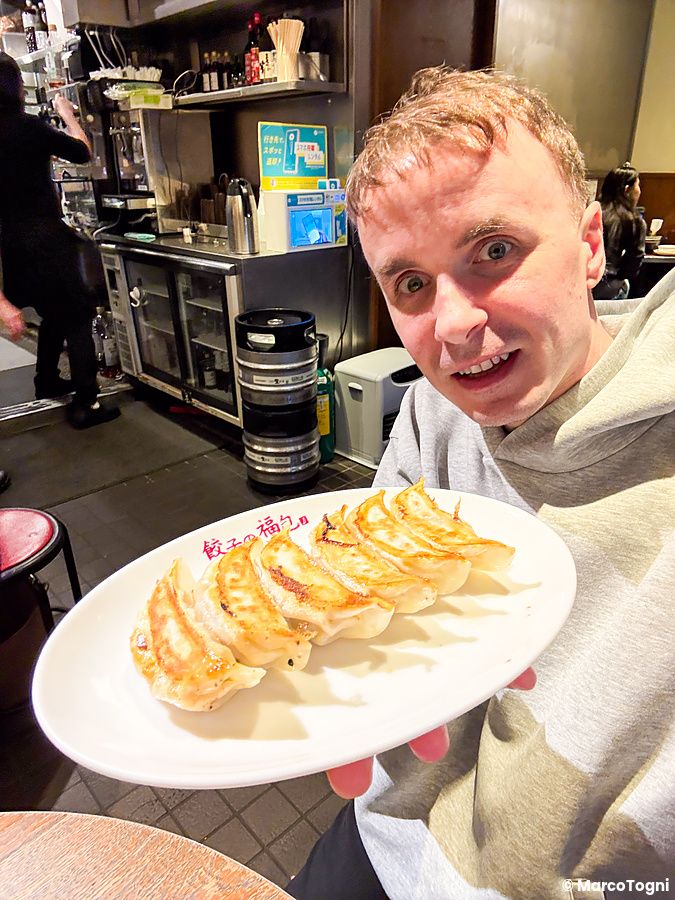
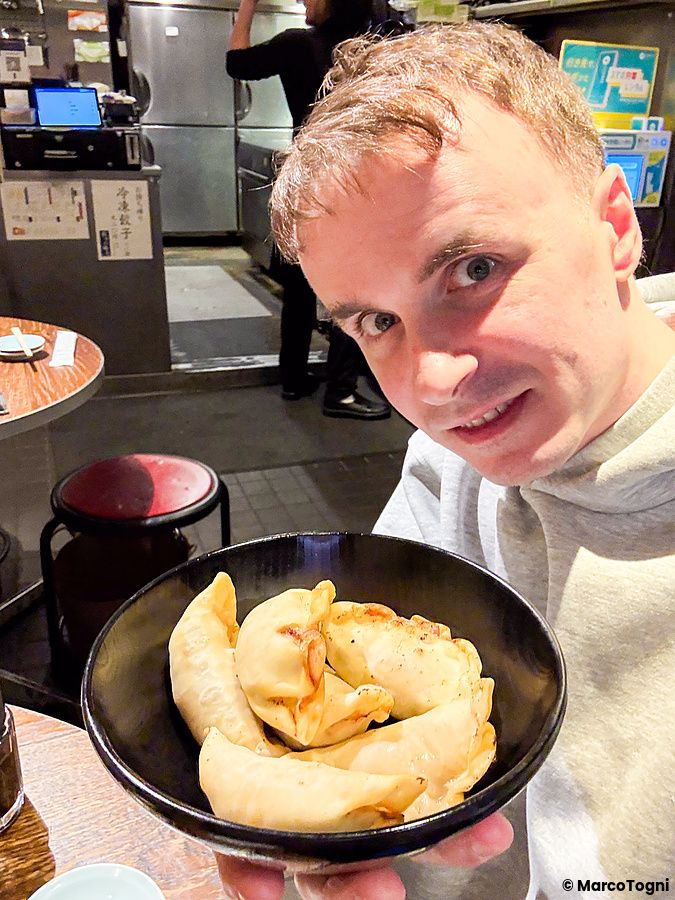
Know going in that these are small, bite-size gyoza, not the big ones loaded with ground meat you get at Chinese chains.
The filling leans more toward vegetables than meat, so the flavor is delicate and doesn’t linger. If you’re after a greasy, salty hit, you won’t find it here.
The deep-fried ones are the real surprise. It’s not what you’d expect from a gyoza place, yet regulars order them as a second round, and the skin turns into a crisp shell.
The value is hard to argue with: you don’t spend much for what lands on the table. Lunch comes to 600–1,000 yen per person thanks to the sets, and dinner with something to drink runs around 1,500–2,000 yen. And these are gyoza with thinly rolled skins, freshly cooked, not frozen stuff heated up in a hurry.
For what I pay, I can taste the difference between these and ordinary izakaya gyoza from the first bite. Whenever I’m craving gyoza it’s the first place that comes to mind, because for a little over 1,000 yen I can try all three styles.
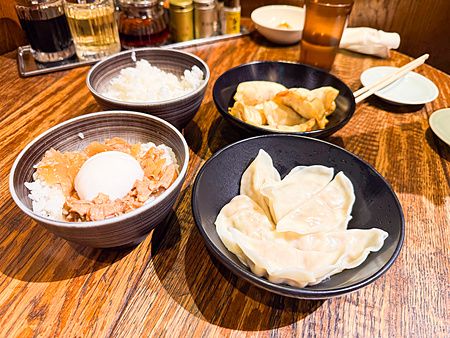
Being able to skip the garlic and nira is no small detail, and I think it’s the reason so many people keep coming back to this chain. When you order, the staff ask how you want them, and the kitchen makes the version you asked for.
It makes all the difference if you have to go back to the office, if you’re meeting someone afterward or if your hotel has thin walls: you can eat gyoza at lunch and nobody will notice.
The garlic-free version isn’t just the same thing minus the garlic. It loses that sharp kick that lingers in your throat, and the filling turns sweeter, with more vegetable flavor.
My advice is to try both at the same meal, one plate of each. Three bites are enough to tell the difference, and then you can decide which side you’re on.
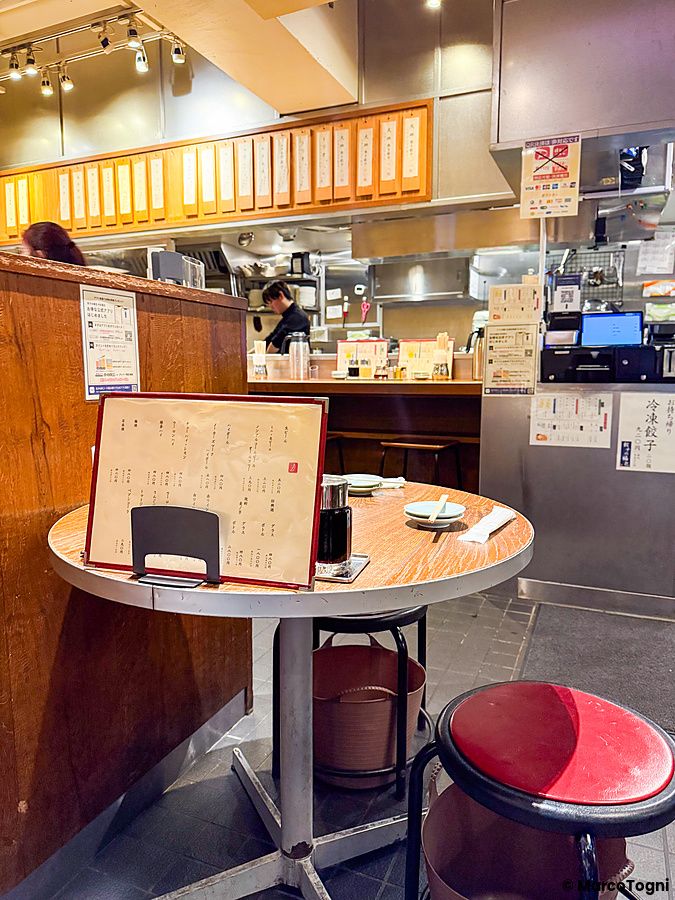
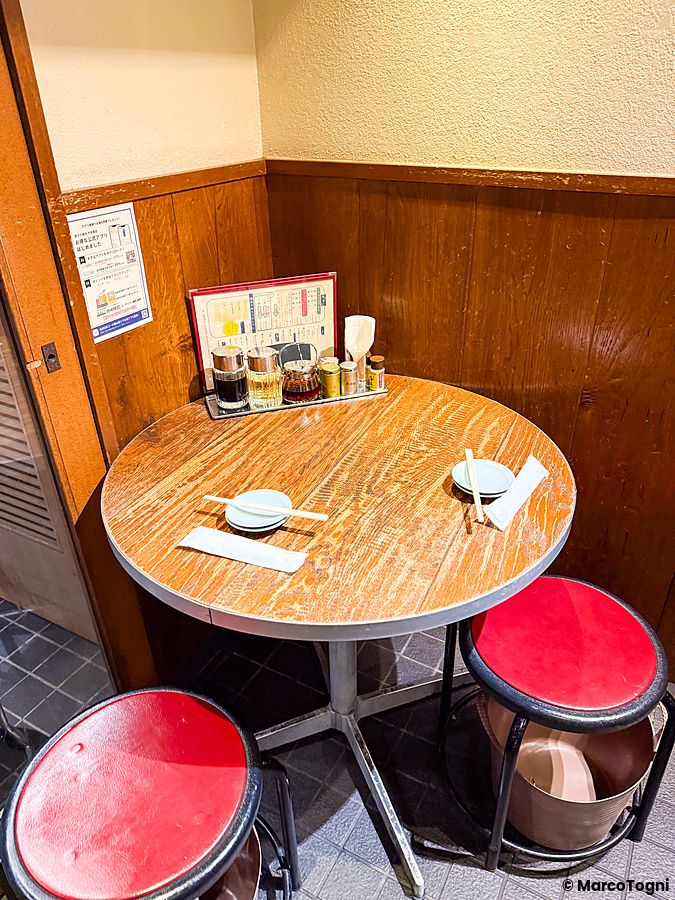
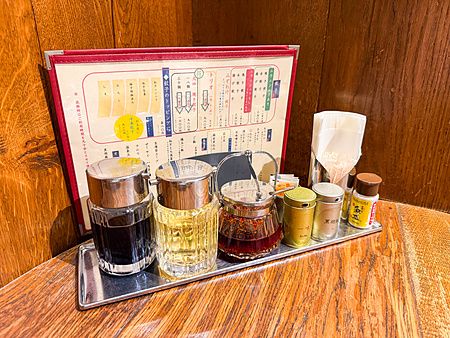
The chain’s restaurants all look pretty similar: a counter for solo diners, tables for two that get pushed together when a group comes in, white light and no decor worth photographing. They aren’t big, and you can hear the conversation at the next table.
The high ceiling helps, though. The air never gets heavy with the grease and smoke that stick to your shirt.
The service is fast but never rude. At some branches you order from a tablet on the table, at others you call the staff over, and the gyoza show up a few minutes later because the kitchen cooks them batch after batch.
There’s a menu in English too. At the Shinjuku branch, half the diners speak a language other than Japanese, while the other half are locals and office workers eating alone with a plate and a beer. Nobody will give you a dirty look if you stay at your table for half an hour, but nobody will tell you to take your time either. You eat, you drink and then you make room for whoever’s next.
Plan on waiting. Outside the door there’s a sign-up sheet where you write your name and whether you want the counter or a table, and then you stand and wait to be called.
At peak dinner hours the list can reach about twenty names, and it can take twenty or thirty minutes to get in.
The line moves quickly because the staff turn tables over without wasting a minute: as soon as a table frees up, they wipe it down and call the next name.
If there are two of you, the counter is the shortcut, and you’ll get in ahead of the groups waiting for a big table. And if you hate waiting on your feet, aim for a weekday lunch, when solo diners get a seat almost right away and the lunch-set crowd comes and goes fast.
Pros:
Cons:
Best for: a group dinner where you keep ordering without emptying your wallet, or a quick solo lunch at the counter
Atmosphere: a bright, noisy room, tables packed close together, a mix of locals and foreigners
What to order: one plate of each style, pan-fried, boiled and deep-fried, to find out which one you like best
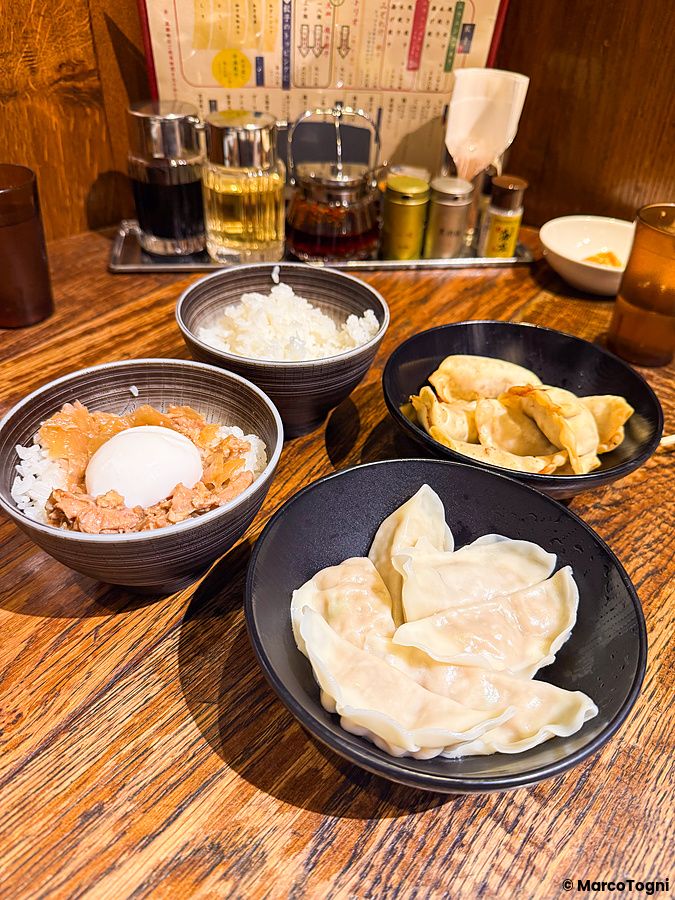
What sticks with you on the way out is the noise: tables pushed together, empty plates piling up, people raising their beers in a toast. Order the deep-fried ones last, when you’ve already found your rhythm. When they hit the table piping hot, with that crunchy skin, you get why the list outside the door keeps filling up.
If you’re on your own, sit at the counter and watch the griddle in action. If you’re with a group, get a big platter and put it in the middle so everyone can help themselves. Tokyo has hundreds of gyoza places, but this is the one I recommend without a second thought: go, and start with the pan-fried ones.
This place is on MarcoMaps
Gyoza no Fukuho Shinjuku Gyoenmae
My map of Japan: over 4,000 places I've tried myself, each with photos, rating, and hours. Filter by category and rating, find veg-friendly spots and places near you with GPS. No sign-up, right from your phone.


Gyoza no Fukuho Nakameguro - nearby you will find:
Gyoza no Fukuho Yoyogi Hachiman - nearby you will find: