 194 m
Mandarake194 m
Used anime and manga.
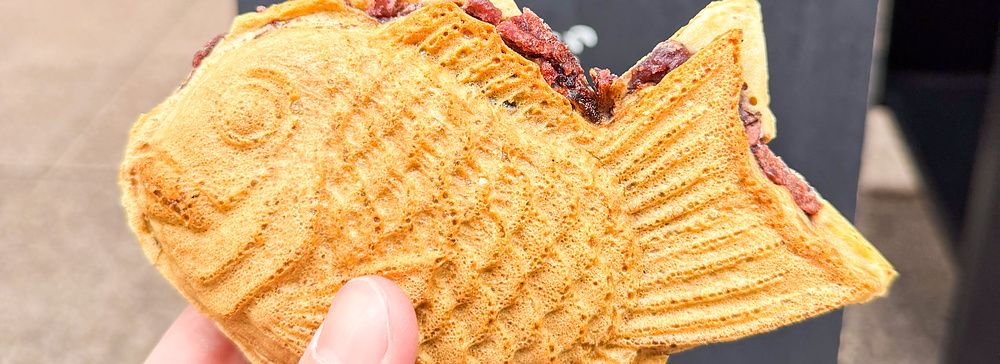
A taiyaki stand in Daimyo, Fukuoka’s shopping area next to Tenjin, that has made the little fish-shaped sweets its specialty. Hakata Hiiragi cooks the batter slowly, for a good half hour, and fills each fish with anko from head to tail.
Handy to know: they use no eggs or dairy, so if you’re vegan or have allergies, you can eat them without thinking twice. It’s a place for a quick snack or for picking up a box to give as a gift.
The menu is short on purpose. There’s one kind of anko, no custard and no white bean paste, and you just tell them how many you want. Here’s what they have:
A single taiyaki costs next to nothing, and even if you get a couple plus the ice cream, you’ll spend around 200–700 yen per person. It’s genuinely cheap, the kind of place where the bill barely registers.
Fresh off the griddle it’s scalding, because the batter holds the heat for a long time. Bite into it straight away and you’ll burn yourself, so give it a moment.
The anko is not very sweet and tastes more like beans than syrup. If you want something really sugary, the regular taiyaki will let you down. In that case get the Taiyaki-kun, which is a lot sweeter with the ice cream.
The shell stays crisp instead of turning chewy, which is rare for taiyaki, whose batter is often thick and mushy. Here it’s spread thin and the anko does most of the work.
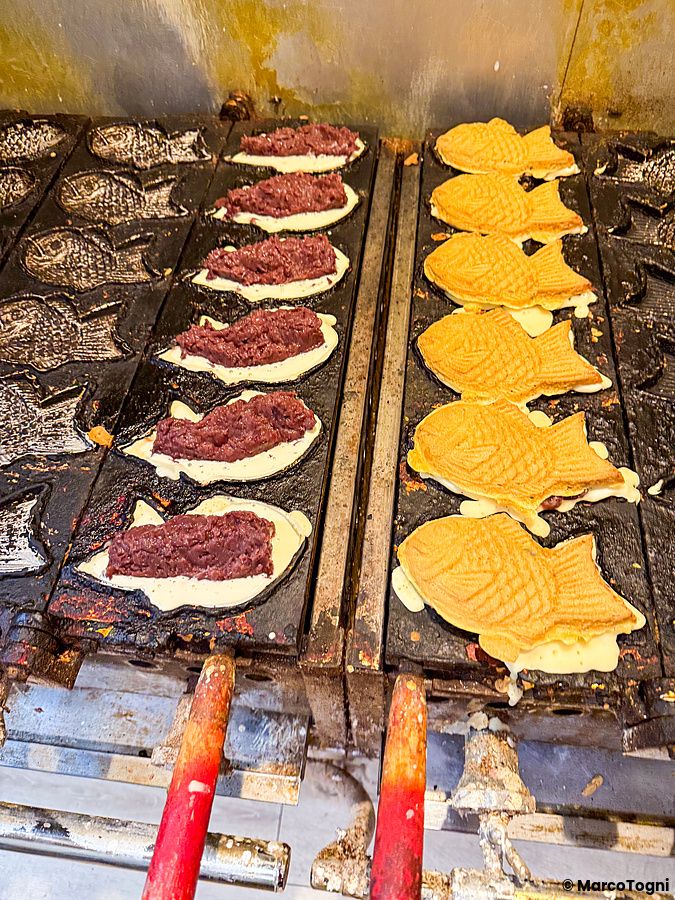
Part of the credit goes to the batter that spills out of the mold. As it cooks, it dries into a thin crust all around the fish, the bit that crunches on the first bite. That’s also why the taiyaki here should be eaten as soon as you get it: after a while in the bag the shell goes soft and you’re left with just the beans.
When I’m around Tenjin and want something sweet but not cloying, I stop by. For very little money I get a taiyaki straight out of the mold, and it’s hard to find anything better for the same price.
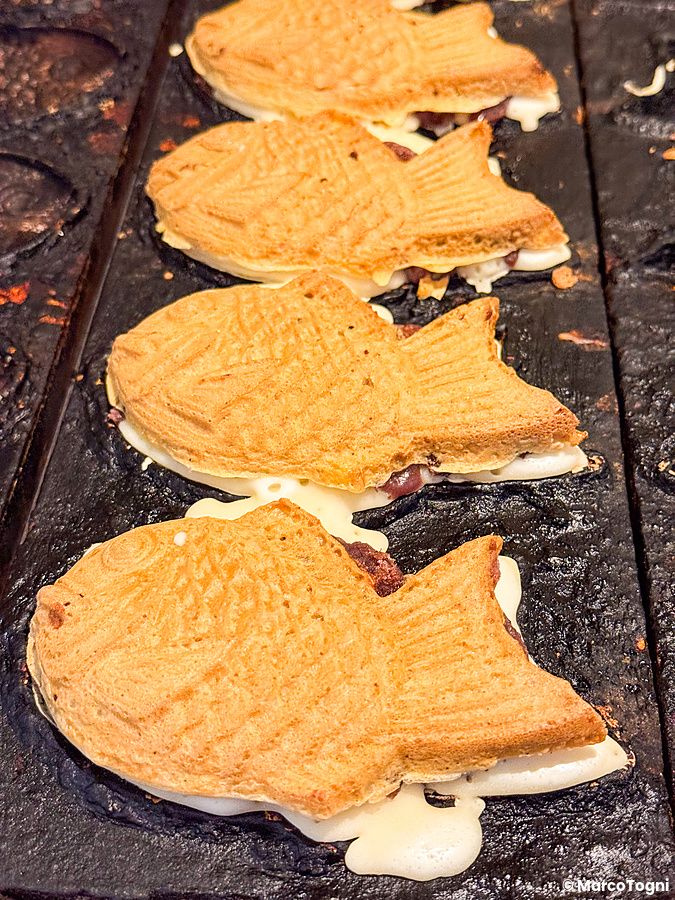
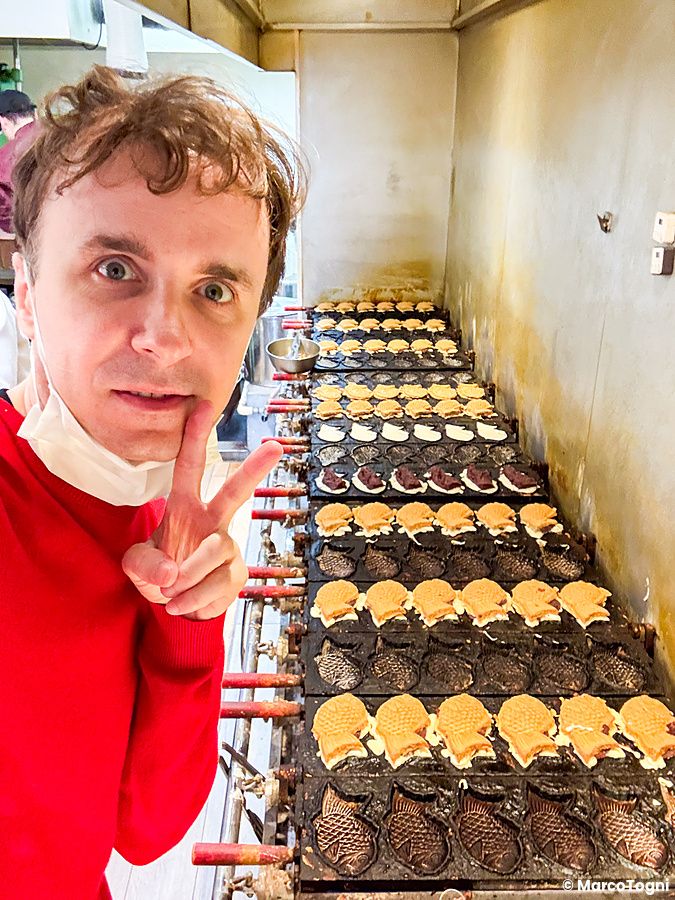
They make the anko in-house every day with Hokkaido azuki and raw Okinawan sugar. That’s why it isn’t too sweet, and it stays thick without turning pasty.
The batter is even simpler: flour, water, salt and a pinch of baking soda, and that’s it. There are no eggs, butter or milk, which is why the shell doesn’t have that buttery smell of packaged snack cakes. Each fish cooks in its own iron mold along the long row of griddles and gets flipped by hand one at a time, which is why you wait a few minutes at the counter.
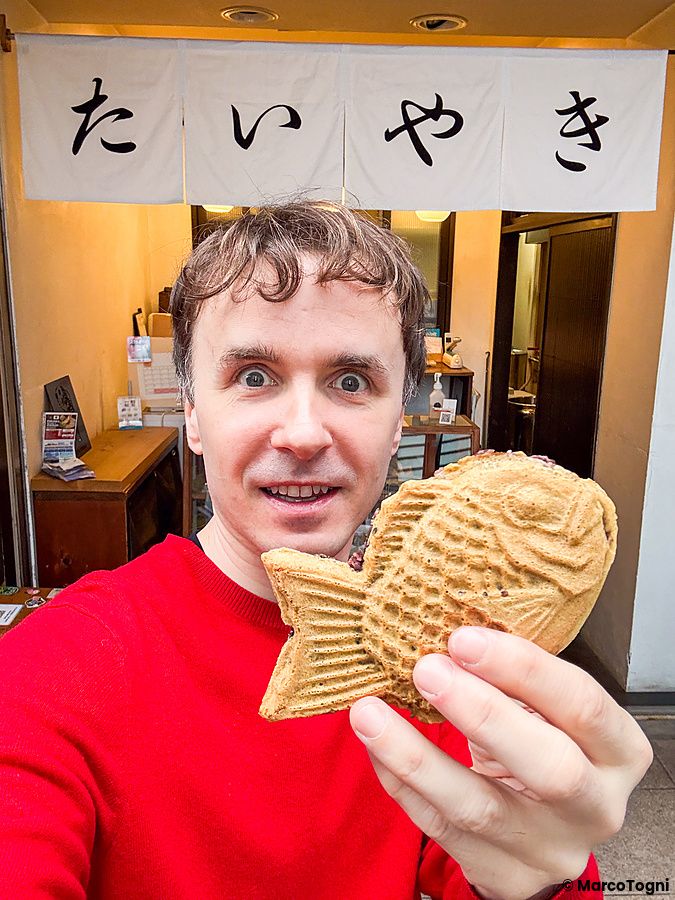
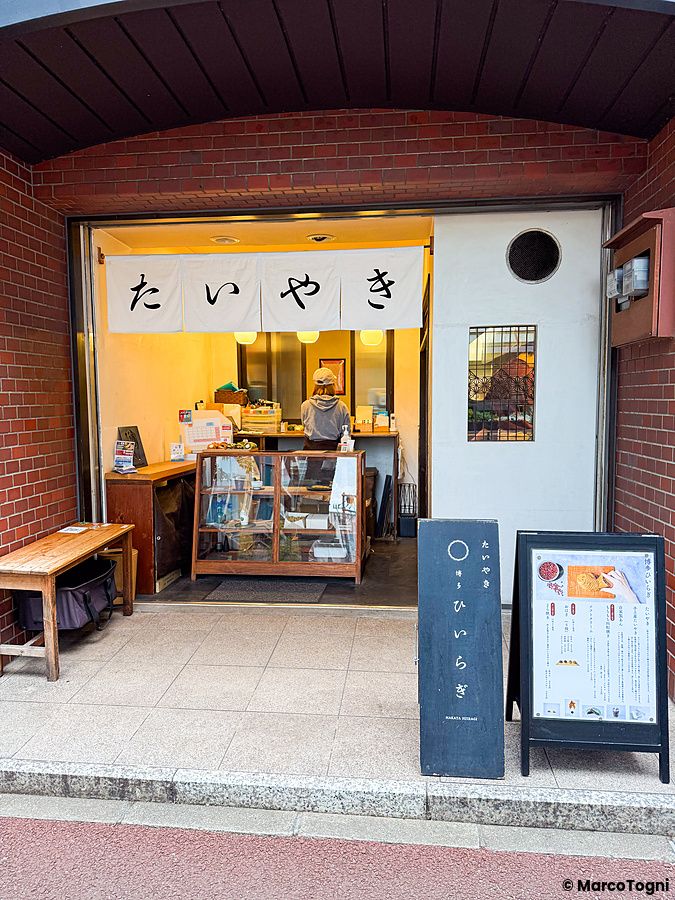
It’s a small place with only a few meters of storefront along the sidewalk, so if you’re not watching for the sign and the curtain, you could easily walk past it without noticing.
If you’re shopping in the area, it’s worth going a few blocks out of your way, given how little you pay for something made fresh.
It’s takeout only, with no seating inside. There are a couple of chairs and a bench outside, though, so you can eat it right there while it’s still hot.
At peak times a bit of a line forms, but it moves fast and you only wait a few minutes. If you’re buying them as a gift, there’s a five-piece box for a few yen more, and they put it in a fresh bag so it won’t mess up your own bag.
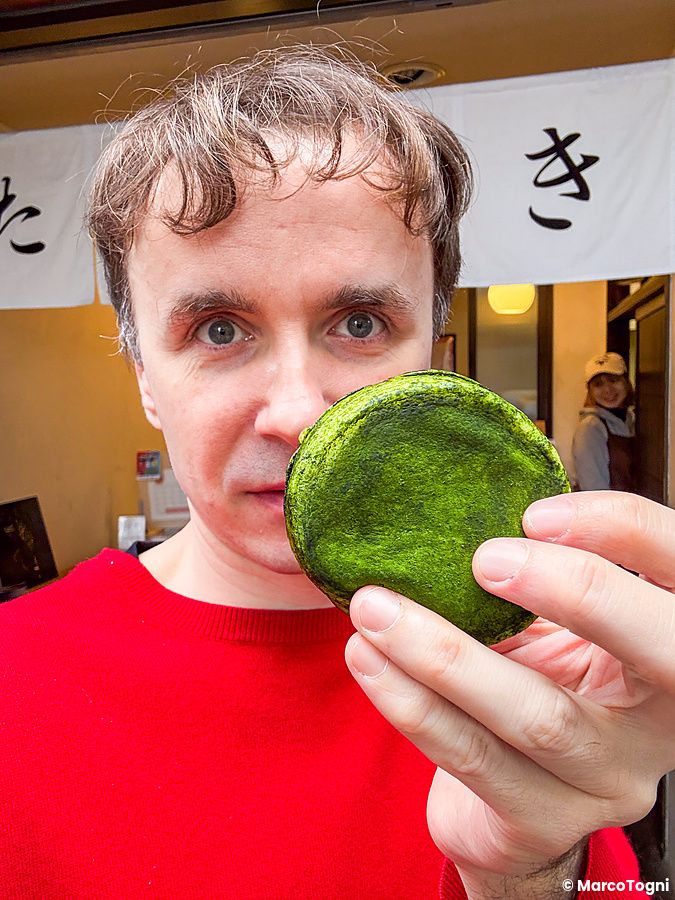
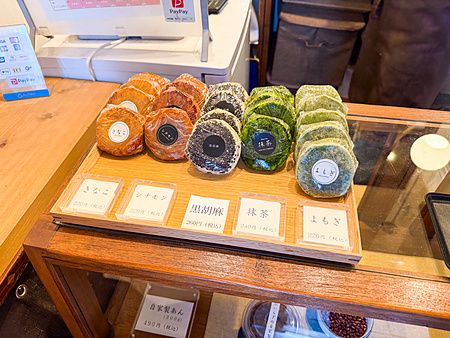
If the fish isn’t enough, the counter also has the manju mochi mochi range, kneaded there every morning. Besides the kinako one there’s a yomogi one, plus versions that change with the seasons, like sakura in spring.
They cost the same as a taiyaki and travel better, so if you need to take something back to your hotel or to someone’s house, they’re the smartest pick. They’re also vegan-friendly, like everything else on the counter.
Pros:
Cons:
Best for: a quick snack while you shop around Daimyo, or a box to give as a gift.
Atmosphere: a neighborhood stand on the main road, with a bench outside where locals stop to eat their fish while it’s still hot.
What sticks with me when I leave is the sound of the shell cracking on the first bite. Get two: a plain anko one to eat straight away on the bench outside, and another on top of soft-serve if it’s in season, because the contrast between the piping-hot fish and the cold ice cream is what you’ll remember about this place.
Stop by while you’re shopping in Daimyo. You’ll find plenty of taiyaki in Fukuoka, but far fewer that are flipped by hand one at a time like these.
The stand is in Daimyo, on Meiji-dori, the main road. It's a two-minute walk from Akasaka subway station, and since the entrance on the sidewalk is only a few meters wide, look for the sign and the curtain.
You can also walk the whole way from Tenjin, under ten minutes along the same street, which is handy if you're already shopping around.
This place is on MarcoMaps
Hakata Hiiragi Taiyaki
My map of Japan: over 4,000 places I've tried myself, each with photos, rating, and hours. Filter by category and rating, find veg-friendly spots and places near you with GPS. No sign-up, right from your phone.


Hakata Hiiragi Taiyaki - nearby you will find: