Haneda Airport to Tokyo
Haneda Airport is south of central Tokyo, less than 30 minutes away, and much closer than the city’s other airport, Narita. If you take a domestic flight during your trip to Japan, you’ll almost certainly fly from here, since Haneda handles more domestic flights than Narita, which is geared more toward international ones. With over 60 million passengers a year, it’s one of the busiest airports in Japan and in the world.
There are three terminals. Terminal 3 handles international flights, and Terminals 1 and 2 handle domestic ones, although some international flights also use part of Terminal 2. Free shuttle buses run between the terminals, and you have several ways to get into the city.
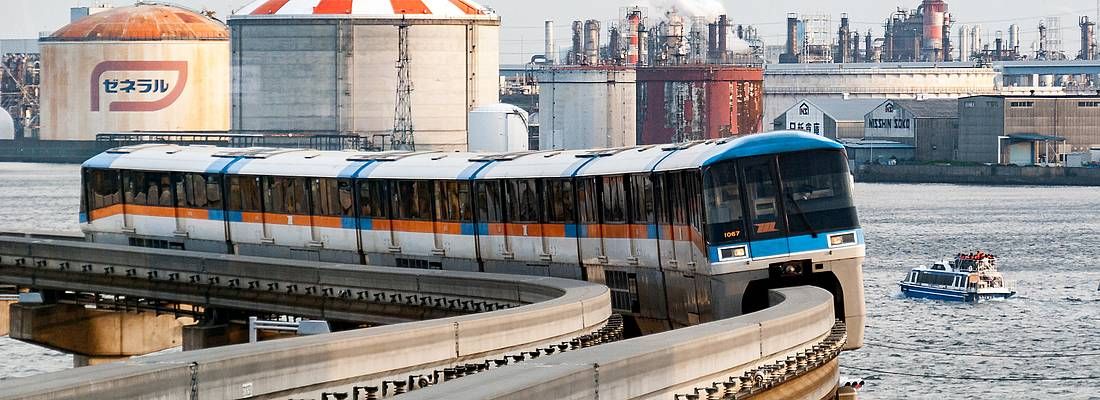
The Tokyo Monorail
The monorail runs from Haneda Airport to Hamamatsucho Station, where you can change to the JR Yamanote Line and reach the city’s major stations.
The ride to Hamamatsucho takes about 15 minutes and costs 520 yen. The monorail isn’t a JR line, but the ride is fully covered by these passes: Japan Rail Pass, JR Tokyo Wide Pass, JR East Nagano Niigata Area Pass, JR East Tohoku Area Pass and JR East South Hokkaido Pass. Check which train you’re getting on, though. Some monorail trains skip all the intermediate stops and go straight to Hamamatsucho, while others stop everywhere and take a few minutes longer. The ticket is the same, so if you’re in a hurry, look at the board on the platform and skip the local.
Keikyu Railways
The Keikyu line connects Haneda Airport with Shinagawa Station and the Asakusa Subway Line, and it continues on to Yokohama and other towns in Kanagawa Prefecture. The trip to Shinagawa takes about 15 minutes and costs 330 yen.
Airport buses
Several bus companies run shuttles to a range of Tokyo neighborhoods, stations and hotels. They’re convenient and direct, but keep traffic in mind, because it can slow you down. Getting to Tokyo Station, for example, takes about 40-50 minutes depending on traffic. Fares vary by company and destination.
Taxi
Finally, there are taxis. They can be handy if you have a lot of luggage or arrive at night, although they’re the most expensive option. A ride to central Tokyo usually costs between 5,000 and 11,000 yen, depending on where you’re going and the time of day. Late at night, for example, you pay a surcharge.
Which one to take
It mostly comes down to where you’re staying. If your hotel is on the east side of the Yamanote loop, around Tokyo Station, Ueno or Akihabara, the monorail to Hamamatsucho is the most straightforward route. If you’re staying in Shinjuku, Shibuya or Ikebukuro, you’re better off taking the Keikyu to Shinagawa and changing to the Yamanote there.
The Keikyu has one more advantage. Many of its trains run straight through onto the Asakusa Line without a transfer, so if you’re staying around Nihonbashi, Asakusa or Oshiage, you can stay in your seat all the way. The same goes if you’re heading to Yokohama.
If you’re traveling with a lot of bags or small kids, the bus is still the most stress-free choice. You put everything in the luggage hold and get off in front of your hotel, with no stairs and no transfers. A taxi mainly makes sense when there are several of you to split the fare.
Arriving at night
If you land in the middle of the night or very early in the morning, keep in mind that some services stop running around midnight. That’s the case with the monorail and the Keikyu line, for example. The bus companies usually run a few late services until 2:00 to places like Tokyo Station, Ginza, Shinjuku and Shibuya, but they cost more than daytime buses.
The first trains and monorails into the city usually leave around 5:00-5:30, and the first buses from 4:30. Of course, the only option that’s always available is a taxi, but given the cost and the night surcharge I mentioned above, think about whether it’s worth it.
Some hotels also don’t allow check-in after a certain time, so if you arrive in the middle of the night, it can be easier to stay at one of the places to stay around the airport and get some rest after your flight. You don’t even need to go far from the terminals: Terminal 3 has a hotel connected directly to it, which is the easiest option if you land in the small hours or fly out at dawn. Not far away, in the Kamata area, you’ll find cheaper options a few minutes away on the Keikyu.
If you only have a few hours to wait, remember that Terminal 3 stays open all night. It’s not exactly comfortable, but it saves you from paying for a room you’d only use for half the night.