Haruka Express
If you’re flying into Osaka, one of the things I recommend most is the Haruka Express, the express train that runs from Kansai International Airport to Osaka and Kyoto with no transfers. You board at the airport with your suitcase, sit down and get off right in the city. It’s a comfortable, relaxed ride at a fair price.
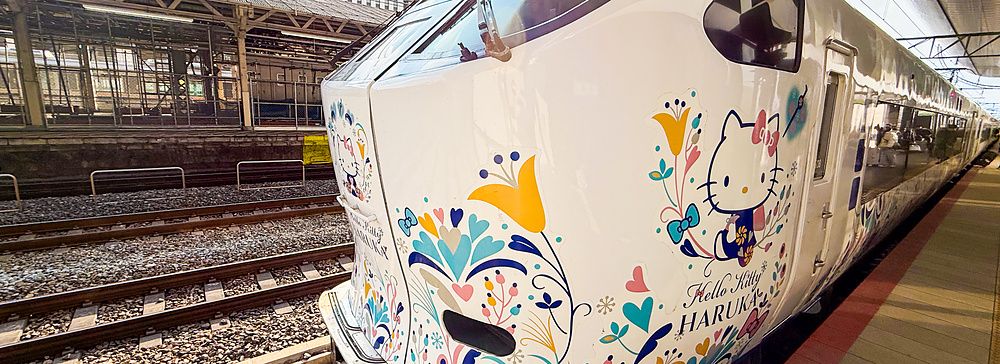
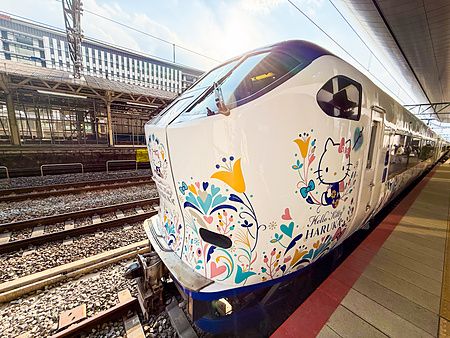
The discounted ticket for tourists costs far less than the full fare. On some runs you might even get a train covered in Hello Kitty, and plenty of travelers see that as a little attraction in itself.
Contents
About the Haruka
The Haruka is a limited express run by JR West, the company that operates the JR lines in western Japan. It started running in 1994, when Kansai Airport opened, specifically to carry people arriving by plane to the region’s big cities. In Japanese the name means roughly far away or distant, and it’s written in hiragana.
On its standard route the train goes from the airport to Kyoto Station, with stops along the way at Tennoji, Osaka Station and Shin-Osaka, the shinkansen station. Some trains continue past Kyoto to Kusatsu and Yasu, in Shiga Prefecture on the shores of Lake Biwa, but for a tourist the stretch that matters is usually the one between the airport and Kyoto.
During the day there’s a train roughly every half hour, about thirty a day in each direction from early morning to evening. You don’t need to obsess over the schedule, because if you miss one, the next comes along soon.
Here are the rough travel times:
- Tennoji is about half an hour from the airport, and it’s a convenient stop for southern Osaka and for changing trains toward Nara.
- Osaka Station, in the Umeda district, is around 45 to 50 minutes away.
- Shin-Osaka is about fifty minutes away, and it’s the stop you want if you need to catch the shinkansen right away.
- Kyoto is the last stop for almost everyone, and the trip takes about an hour and twenty minutes, a bit longer on the morning and evening trains that make a few extra stops.
Why I recommend it
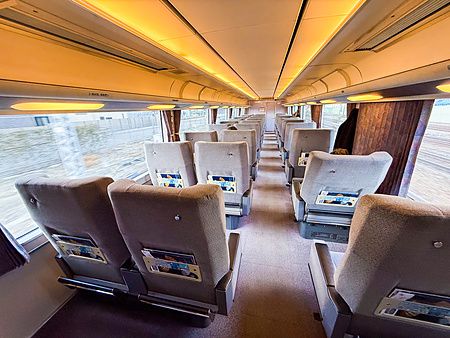
I’ll say it up front: for getting from Kansai Airport to Kyoto, the Haruka is in my opinion the best option, period. There’s no changing trains with your luggage, the seats are like the ones on long-distance trains, and the schedule doesn’t depend on traffic. If you’re coming off a long-haul flight completely wiped out, not having to change trains is what you’ll appreciate most, because after twelve hours on a plane the last thing you want is to drag a suitcase up and down the stairs of a crowded station.
There are alternatives, but each one has a specific drawback. The limousine bus to Kyoto is convenient if you have luggage, but it can get stuck in traffic on the expressway, and it takes about the same time anyway. Local JR trains cost a little less, but you’ll need at least one transfer and they’re packed with commuters. Osaka is a slightly different story: if your hotel is in Namba, Nankai’s Rapi:t is the better pick because it goes straight there, while the Haruka is at its best for Umeda, Tennoji and of course Kyoto.
What I like about it is that it’s a train designed for travelers. Every car has a luggage area for large suitcases near the doors, there’s free JR West Wi-Fi, and the seats are wide and recline.
You also get a nice view for part of the ride. Right after leaving the airport, the train crosses the long bridge that links the artificial island to the mainland, and you can see the sea from the window. Sit on the side facing the sea and enjoy those few minutes, because after that it’s city outskirts for quite a while.
Hello Kitty Haruka
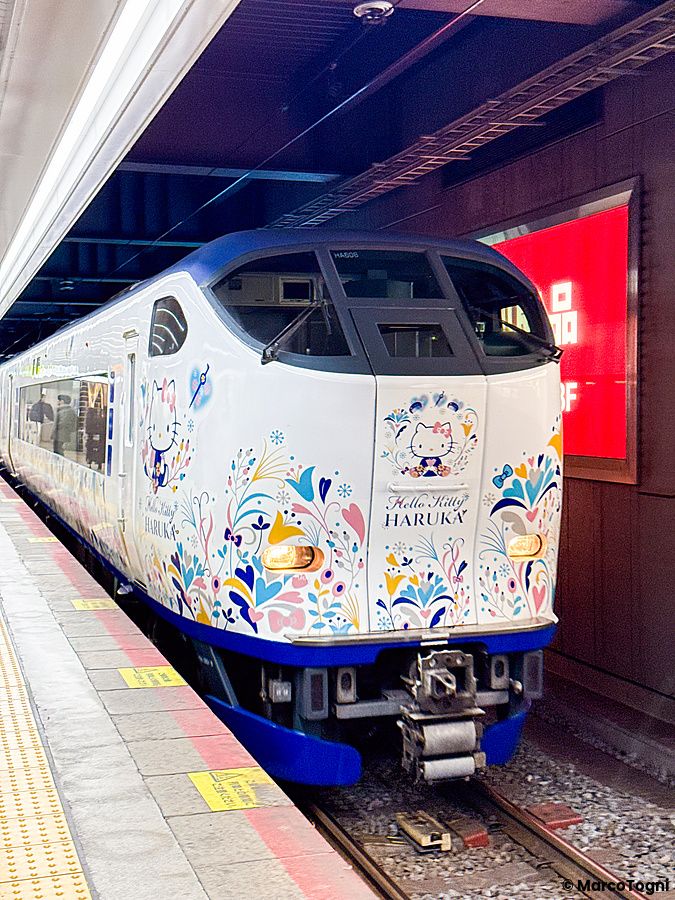
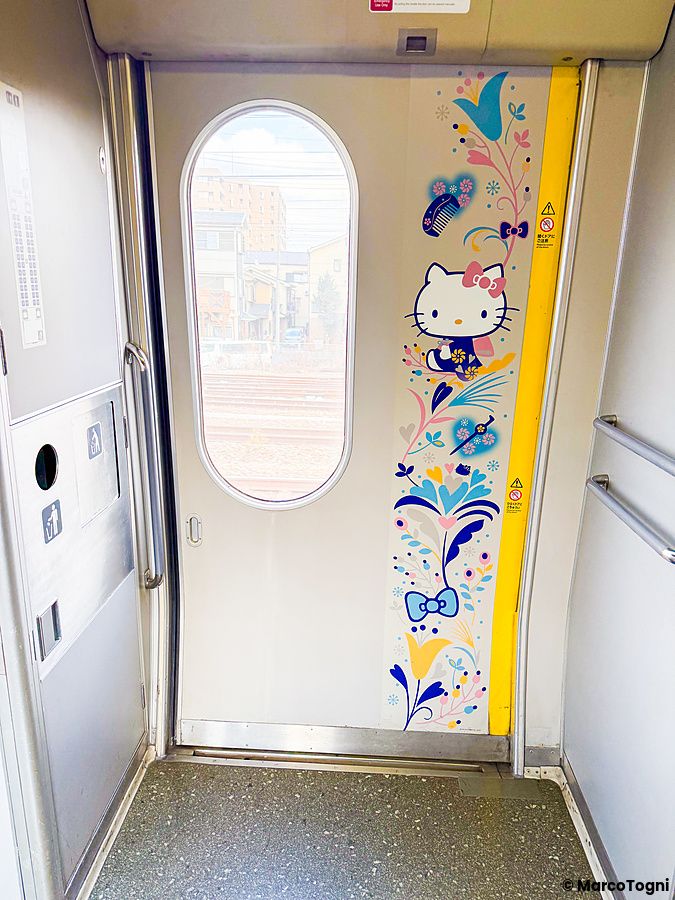
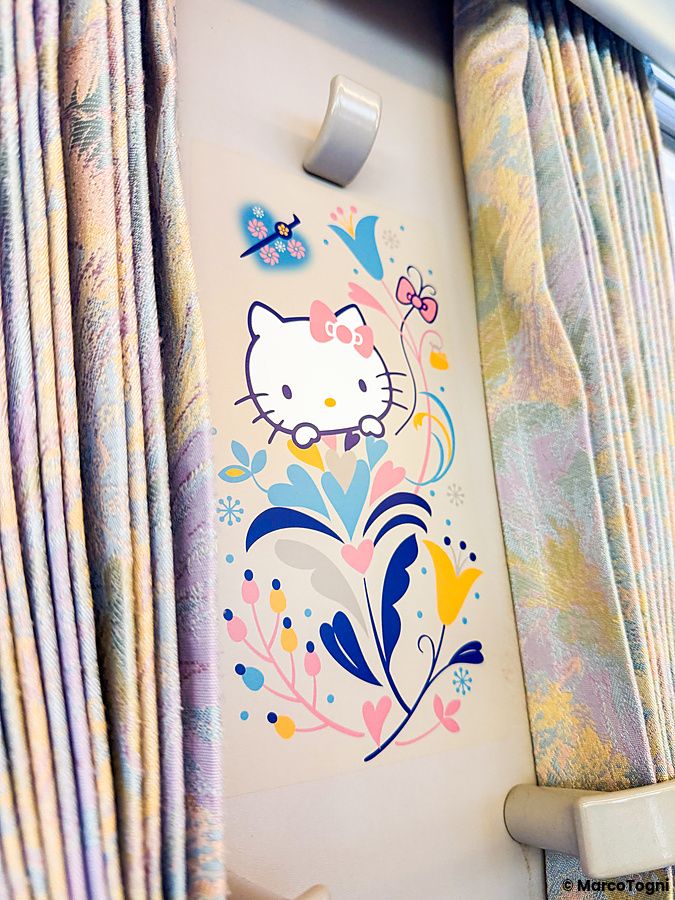
Some Haruka trains are decorated from end to end with Hello Kitty, the Sanrio character. A lot of people call them the Hello Kitty Haruka, and they run in regular service just like the others, on the same route and with the same ticket.
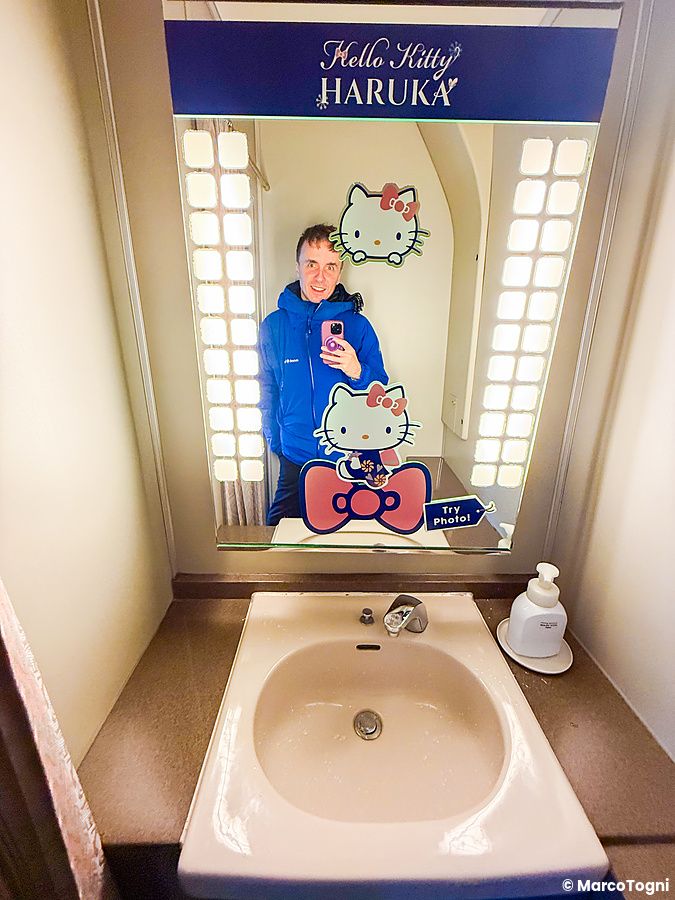
The theme of the design is Japanese-style hospitality. Over the Haruka’s usual dark blue you’ll find Hello Kitty in a kimono, along with butterflies, flowers and traditional patterns. The character shows up inside too, on the headrests and some of the panels for example, so it’s more than just an exterior wrap.
You can’t choose the Hello Kitty train when you buy your ticket, because these trains rotate with all the others. If you get one, great, and if not, oh well. I often see families with kids and Sanrio fans waiting on the platform to take a photo as it pulls in, and in person it looks pretty impressive.
Wraps like this in Japan don’t last forever, and sooner or later the Hello Kitty one will come off the Haruka too. If it’s a big deal for you, check JR West’s website before you go to see whether it’s still running.
Tickets and fares
A regular Haruka ticket comes in two parts: the basic fare for the trip plus the limited express surcharge. If you buy it that way, the ride from the airport to Kyoto costs quite a lot, over 3,000 yen, and almost no tourist actually pays that.
That’s because JR West sells a discounted one-way ticket, the Haruka One-way Ticket, to anyone entering Japan as a tourist on a foreign passport. The price depends on where you’re going, and roughly comes to:
- About 1,600 yen to Tennoji, the closest stop to the airport.
- Around 1,900 yen to Shin-Osaka and Osaka Station.
- About 2,700 yen to Kyoto, where the discount makes the biggest difference.
Children 6 to 11 pay half. These figures are approximate, so check the current prices before you leave.
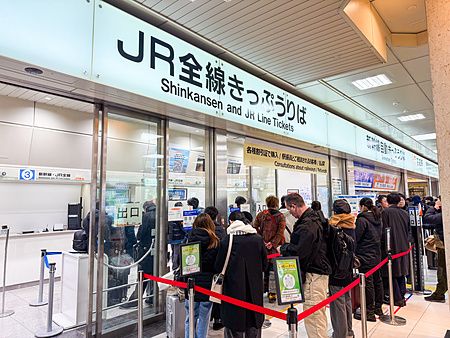
You buy the ticket online on JR West’s booking site with a credit card, up to a month in advance, or through a travel agency. Once you’re in Japan, you pick it up from the ticket machines or the JR counter at the airport by showing your passport, and you need to keep the passport on you during the ride too. You have to buy it before you leave for Japan, because the discounted ticket isn’t sold in Japan, so at the airport all you can do is pick it up.
There are a couple of rules to know. The discounted ticket works for both reserved and non-reserved seats, but it doesn’t let you stop off along the way. If you buy it to Kyoto, you can’t hop off in Osaka to look around and then get back on.
You’ll still see the ICOCA & Haruka mentioned here and there, a combo that bundled the discounted ticket with the rechargeable ICOCA card. The ticket to look for is the Haruka One-way Ticket, and you can easily buy an ICOCA card separately or just use the one on your phone.
Rail passes
If you have the Japan Rail Pass, the Haruka is covered and you don’t pay anything extra. The same goes for the Kansai Area Pass and JR West’s other regional passes that include Kansai Airport.
Before you buy a pass just for this ride, though, do the math. The discounted ticket to Kyoto is cheap, and activating a pass on day one only makes sense if you’ll actually use it over the following days, say for JR trips to Nara, Himeji or Kobe.
I often tell readers who write to me that they don’t necessarily need the Kansai pass. It depends on how many JR trips they’ll take on the days it covers. If you’re staying put in Kyoto and getting around on foot and by bus, a single Haruka ticket is all you need.
Seats and cars
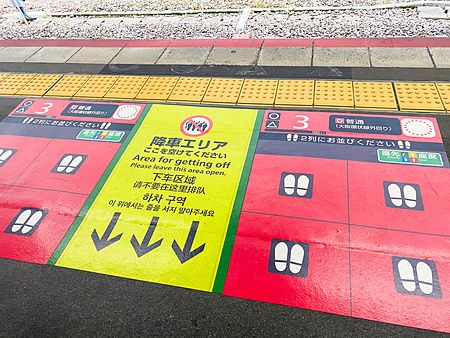
The Haruka has reserved cars, non-reserved cars and a Green Car, Japan’s version of first class, with roomier seats. The non-reserved cars are usually 5, 6 and 7, and markings on the platform show where each car stops, so you just line up in the right spot.
The airport is the end of the line, so the train pulls in empty and finding a non-reserved seat there usually isn’t a problem. It’s a different story heading back to the airport from Kyoto at busy times like cherry blossom season, fall foliage season or the end of a holiday period. That’s when the non-reserved cars fill up, and anyone boarding at Shin-Osaka or Tennoji may end up standing for part of the way.
My advice is to reserve a seat, at least for the trip back to the airport, when you have a flight to catch and don’t want any surprises. With the discounted ticket you can reserve online when you buy it, or after picking it up at the machines or the counter, at no extra charge. With the Japan Rail Pass, reservations are free.
When the train is crowded, the luggage spaces by the doors fill up fast. If you have a big suitcase, board early or keep it by your seat if there’s room. Only some cars have power outlets, and not every train has them, so a charged power bank is a good idea.
The Haruka platform in Kyoto
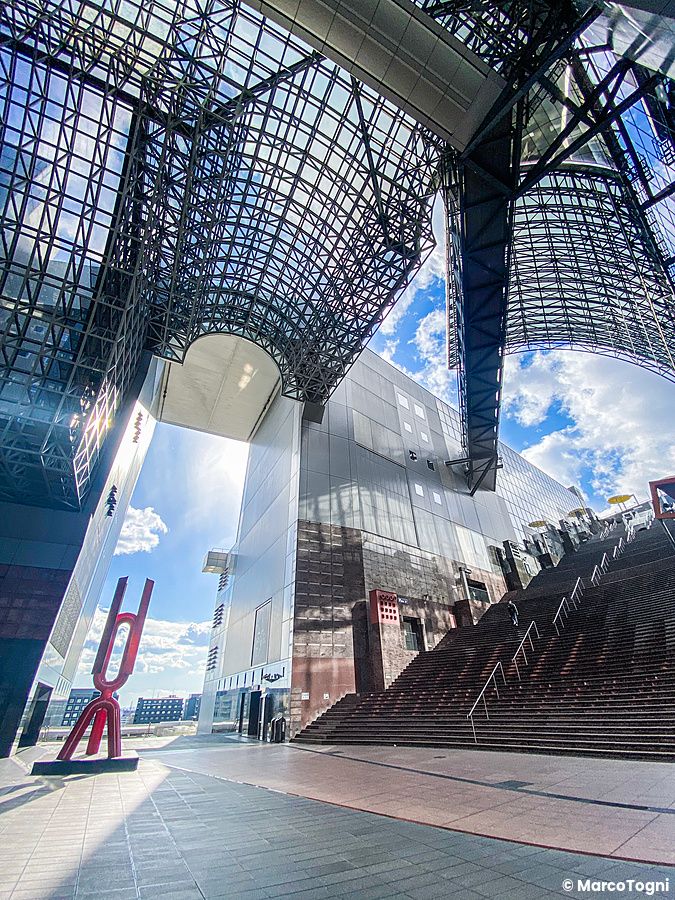
At Kyoto Station the Haruka usually leaves from platform 30, which is a bit out of the way compared with the other JR platforms. It’s on the west side of the station, so if you’re coming from the main entrance or the shinkansen area, allow for a few extra minutes of walking.
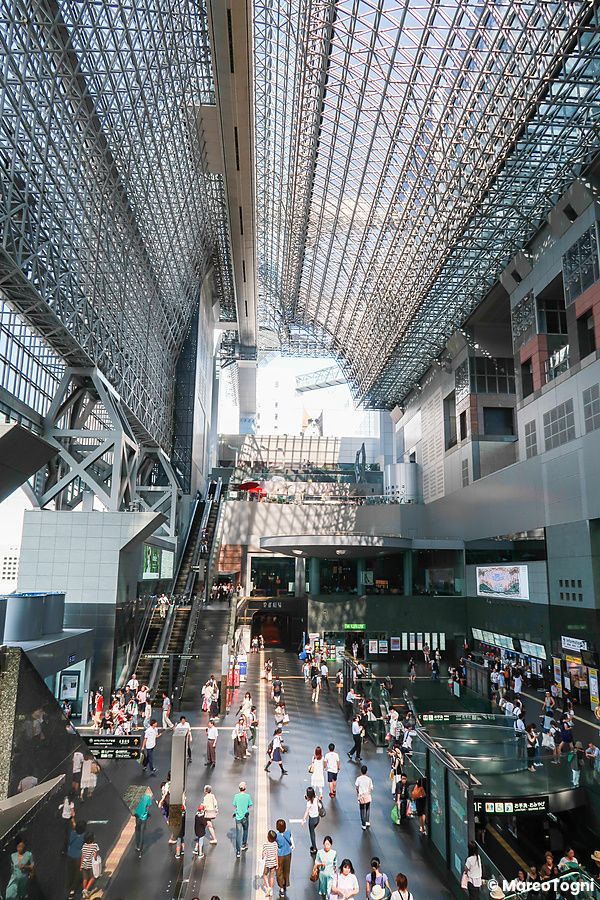
People who don’t know this often end up racing at the last minute with their suitcase through the crowds, and Kyoto Station is always packed. I’d get there with at least 20 to 30 minutes to spare, especially if you still have to pick up your ticket or reserve a seat.
Going the other way, when you get off the Haruka in Kyoto you’re in that same area, and from there you can head to the main exit, the bus stops or the subway. If your hotel is near the station, you’re basically there.
In Osaka, the Haruka stops at Osaka Station on an underground platform at the north end of the Umeda complex. It’s clearly marked, but it’s a bit of a walk from the main exits, so allow a few extra minutes there too.
Practical tips
There’s no food or drink service on board, so if you’re hungry or thirsty, buy something before you get on. There are convenience stores and shops near the station at the airport, and near the stations in Kyoto and Osaka too.
These are the things that I think really make a difference:
- Buy your ticket online before you leave home. When you land, all you have to do is pick it up and get on the first available train.
- Keep your passport handy. You need it to pick up the ticket, and staff may ask for it when they check tickets on board.
- On the way to the airport, don’t count on finding an unreserved seat, especially during peak tourist season and on weekends.
- Check the train’s destination on the departure board. Lots of trains run through Tennoji and Shin-Osaka, and not all of them go to the airport.
One thing that confuses a lot of people is that Haruka trains are sometimes coupled to other JR trains. Just follow the car numbers marked on the platform and you won’t get on the wrong one. The Haruka cars are always clearly marked, in English too.
The ticket check is simple as well. You put your ticket through the automatic gates, and once you’re on board, staff members come by now and then to check it. You don’t have to do anything else.
Is it worth it?
Yes, and not just for Kyoto. Between the punctuality, the discounted ticket, and the room for luggage, it’s hard to find a more relaxing way to leave the airport.
The only time I wouldn’t take it is if you’re staying in Namba or in a part of Osaka better served by the Nankai lines. In every other case, especially if your trip starts or ends in Kyoto, it’s the simplest and most sensible choice.
If I were choosing for you, I’d use the discounted ticket on the Haruka on the way in and reserve a seat for the way back, and I’d get to Kyoto Station a little early so there’s time to walk to platform 30. And if the Hello Kitty train pulls in, go ahead and take a picture. You don’t see that every day.