 243 m
Sushi Ginza Onodera243 m
Chain with excellent sushi.
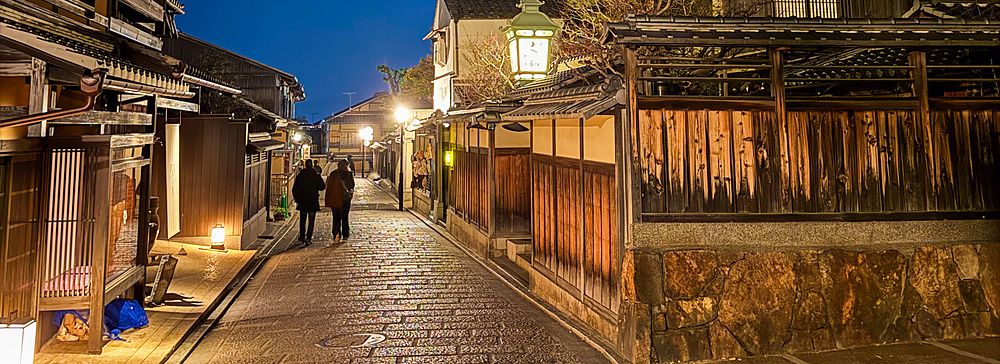
A Kyoto neighborhood on the city’s east side, at the foot of the hills, where you walk uphill along stone-paved lanes between dark wooden houses and a pagoda pops up at the end of the street. Higashiyama is the area almost everyone pictures when they think of Kyoto: the Sannenzaka and Ninenzaka stairways, Yasaka Pagoda, the lanes between stone walls and, at the very top, Kiyomizudera.
It’s a good fit if it’s your first time in Kyoto and you want to see a lot on foot, without taking transit. During the day, though, it’s always packed, and when you go makes almost all the difference.
Higashiyama is less a list of sights than an uphill walk that starts in the Gion area and ends at Kiyomizudera, with detours into the side lanes. Here are the parts I think matter:
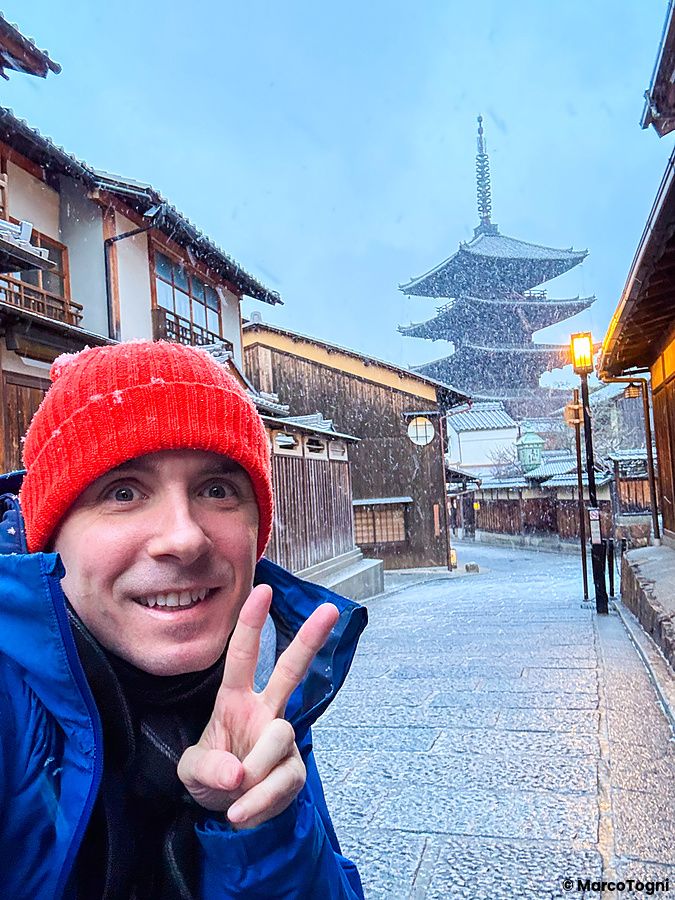
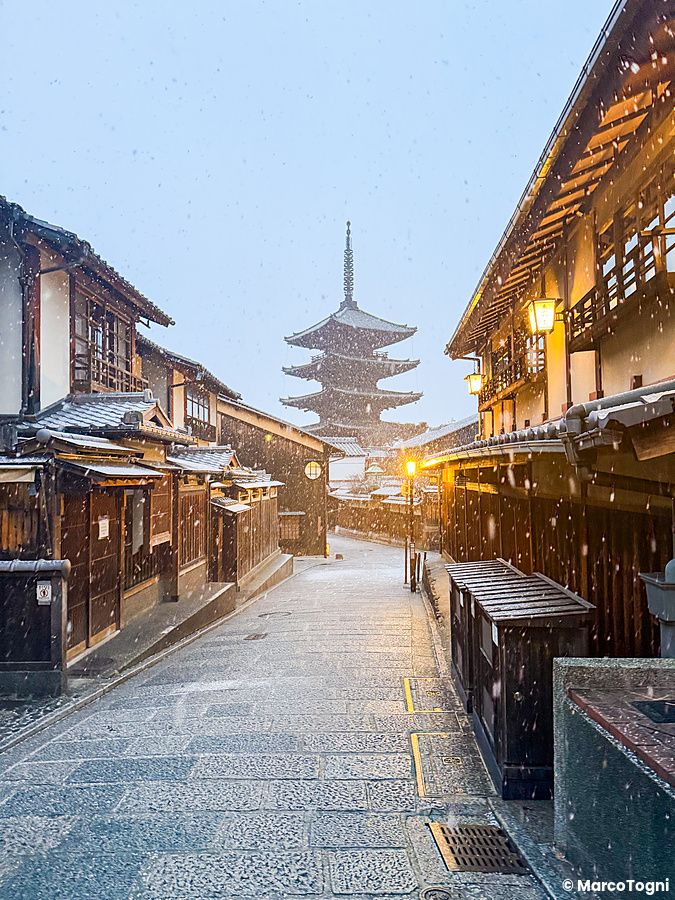
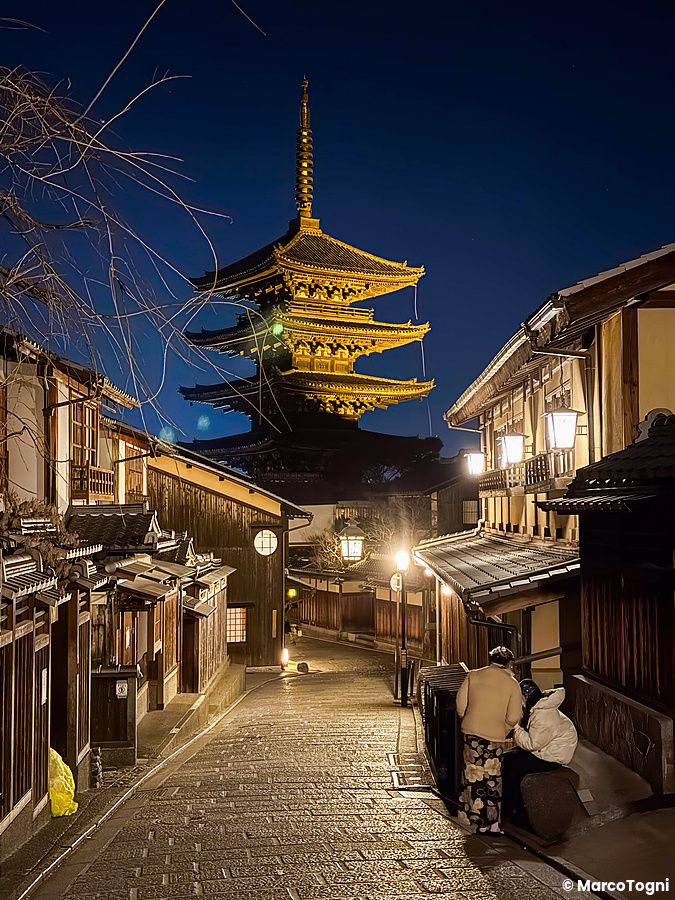
You can only go inside Yasaka Pagoda on certain days, with no fixed schedule, and either way it’s something you look at from outside. The point is the view up the street as it climbs toward the pagoda. During the day, the stretch with the best view is full of people standing still in the middle of the road for a photo, and they have to step aside whenever a taxi comes through.
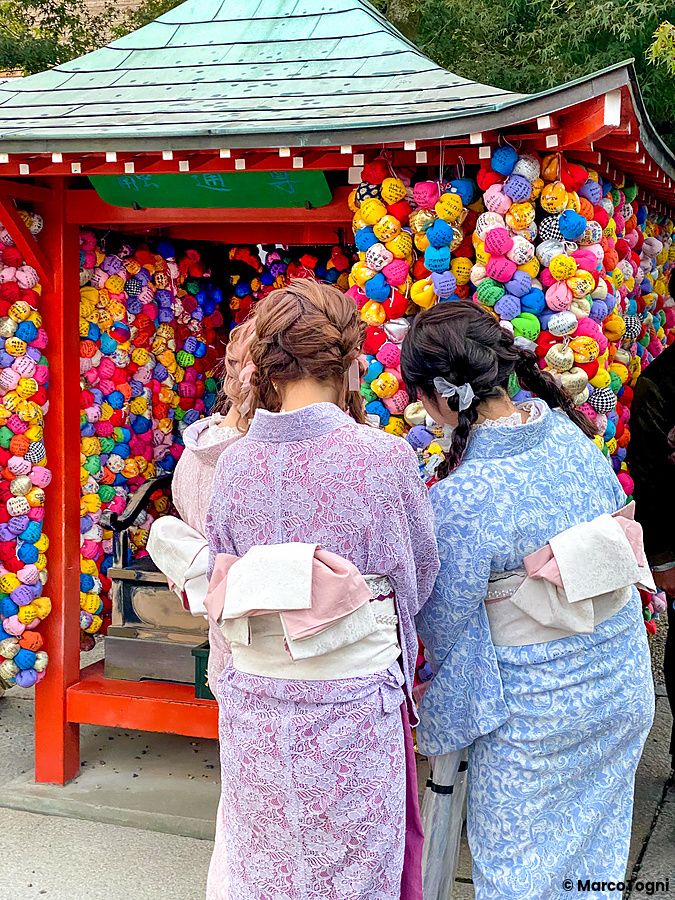
Yasaka Koshindo looks bigger in photos. It’s really a tiny courtyard, and by midday it’s taken over by girls in rented kimono waiting their turn to pose in front of the colorful balls. Across the whole neighborhood, you’ll see dozens of people in rented kimono.
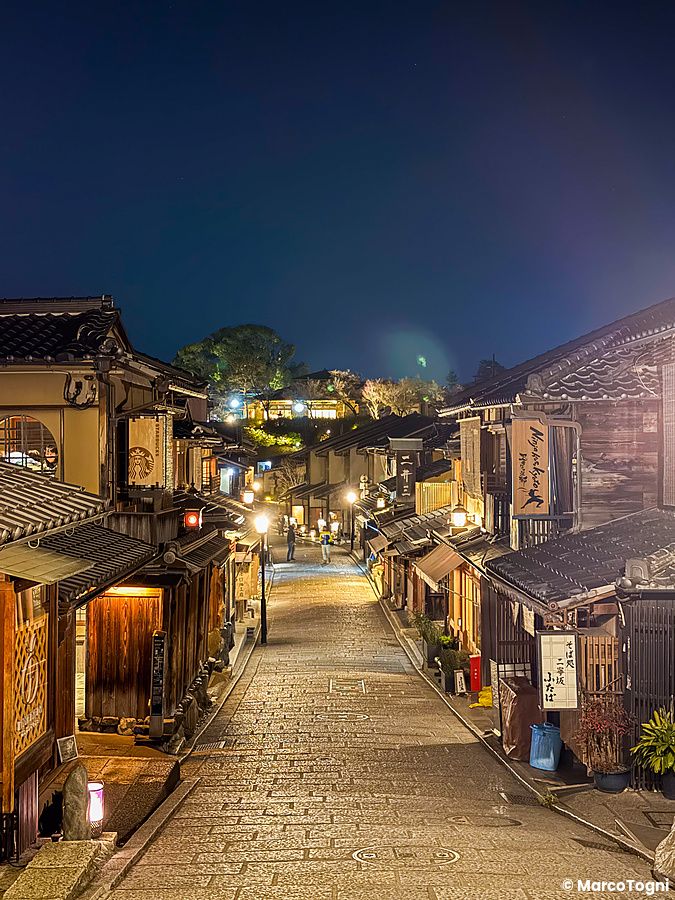
Sannenzaka and Ninenzaka are basically one long row of shops. If you’re looking for houses people actually live in, and some quiet, you won’t find them there. The side lanes, like Ishibe-koji and the backstreets toward Nene no Michi, are what stays with you, and most people never set foot in them because they just follow the flow toward Kiyomizudera.
At Kiyomizudera, everyone crowds onto the wooden terrace, including school groups on field trips in their yellow caps. The red gate and the steps in front of it are better spots for looking around.
Compared with its reputation, Higashiyama gives you less calm than the photos promise and more walking than you’d expect, but there’s real substance behind it. It’s one of the few places in Japan where an entire street of traditional houses is still standing, and the area is protected for exactly that reason.
I go back whenever I have friends from Italy on their first trip to Kyoto, because everything they expected from Japan is all there in one place: dark wood, tile roofs, small shops, and a pagoda at the top of the climb.

At dawn, no question. Before the shops open, the stairways are just stone and closed shutters. All you hear is footsteps and a shopkeeper or two sweeping outside their door, and you share the pagoda with just two or three photographers.
From mid-morning to mid-afternoon it’s the opposite. On Sannenzaka you move up and down at a crawl, you wait in line to get into the shops, and on weekends the tour buses pull in.
In the evening it’s pleasant again. Once the shops close, the pagoda stays lit, the lanterns outside the houses come on, and only a few people pass through: a few couples sitting at the edge of the street, and people heading back for dinner.
The cherry blossom and fall foliage seasons are the most beautiful times of year, and also when the neighborhood is packed to bursting with school trips and tour groups. Winter is the surprise. When it snows, the tile roofs turn white, the streets empty out, and the pagoda in falling snow is the most beautiful sight I know in Kyoto. When it rains, on the other hand, the streets fill up with umbrellas.
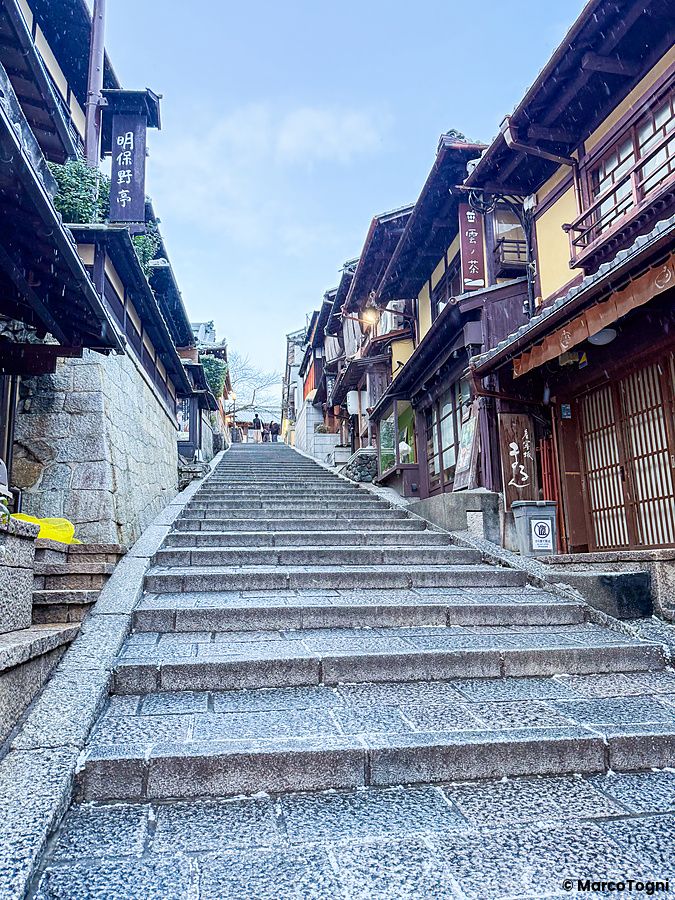
You can only get around the neighborhood on foot, and almost always uphill. Sannenzaka is a real staircase with uneven stone steps, and after that you still have the climb to Kiyomizudera, with more wide steps in front of the gate.
With a stroller it’s tough. You can take a longer route along the sloping streets, but you can’t avoid the stairs completely. Wearing comfortable shoes isn’t just standard advice: on wet steps or in snow, you really do slip. There’s also an old local superstition that anyone who falls on Sannenzaka will have bad luck for years, so watch where you step.
There isn’t much shade, because the houses are low and the streets are narrow. In summer, after noon, the heat and the crowds make the climb hard going, so it’s a good idea to break it up by sitting down for a while in a teahouse or on the tatami at Starbucks.
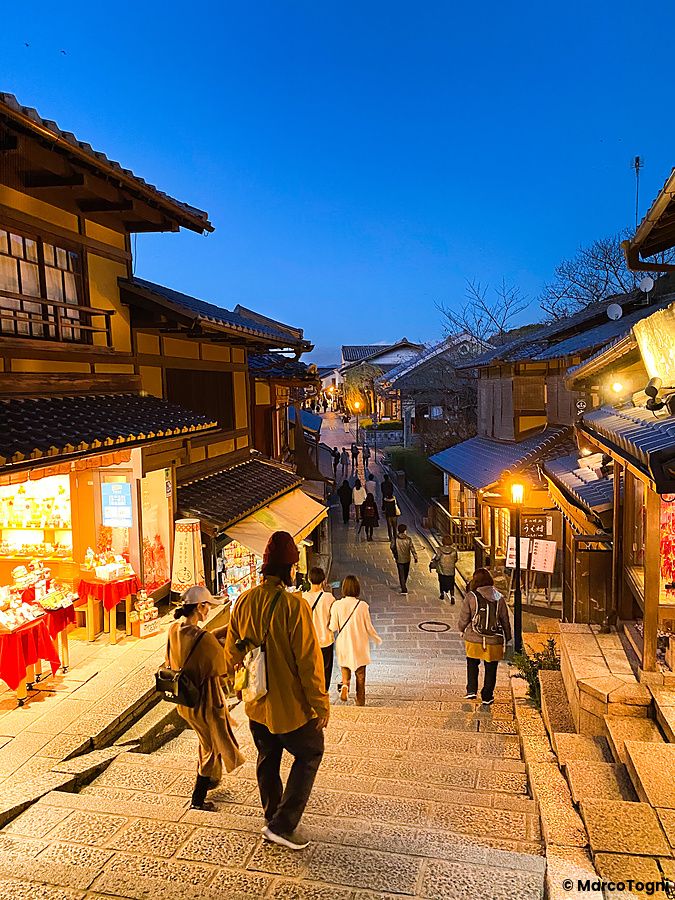
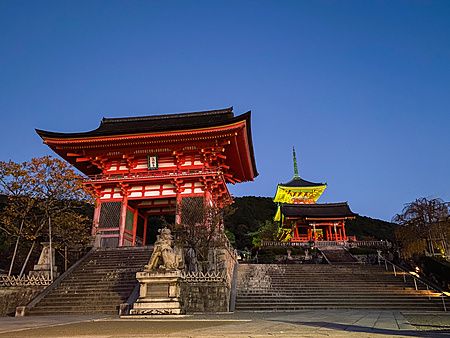
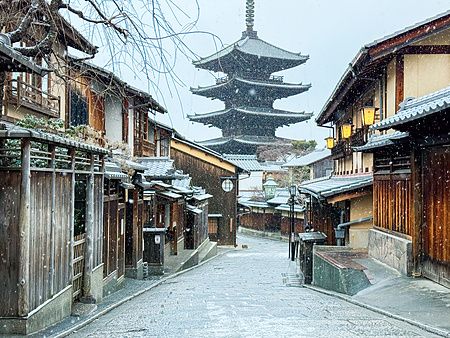
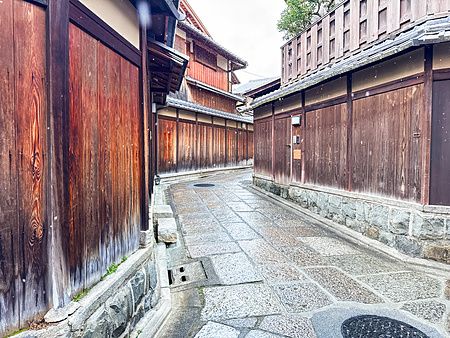
You don’t visit Higashiyama for one particular building but for the street as a whole, and that street looks completely different depending on the time of day. If you get there at midday, you’ll mostly see shops and the backs of people’s heads. If you get up early or come back after dinner, you get the stone lanes and the pagoda the way you’d pictured them.
On a first trip to Kyoto, setting an alarm for dawn pays off. If you hate crowds and don’t feel like starting your day early, though, skip the main stairways and stick to the side lanes.
This place is on MarcoMaps
Higashiyama
My map of Japan: over 4,000 places I've tried myself, each with photos, rating, and hours. Filter by category and rating, find veg-friendly spots and places near you with GPS. No sign-up, right from your phone.