Historical Village of Hokkaido
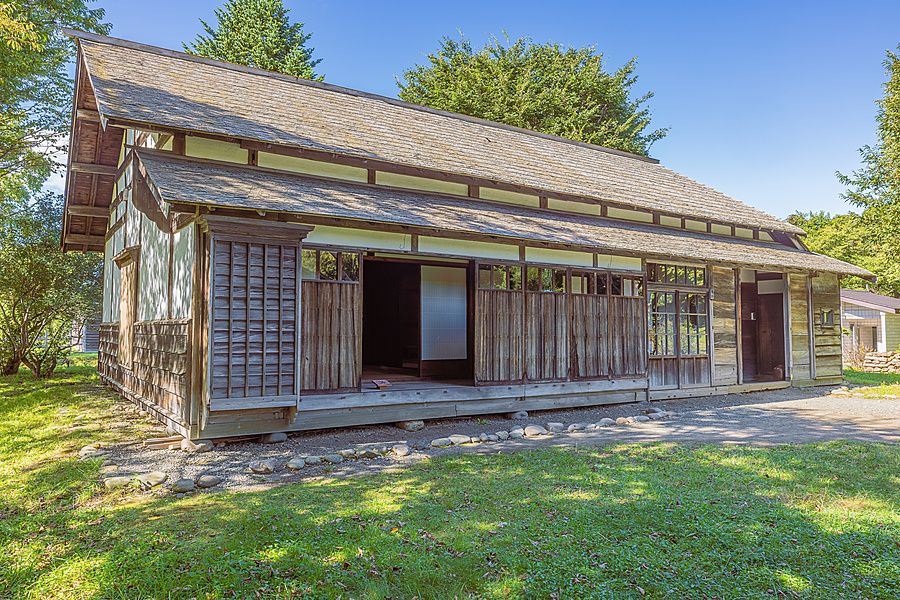
An open-air museum the size of a small town, in the Nopporo forest on the outskirts of Sapporo, with fifty-two real houses — shops, offices, a school, farms, loggers’ cabins — brought in from all over Hokkaido and reassembled side by side along dirt roads.
You explore the Historical Village of Hokkaido on foot, going into one building after another, while a horse-drawn trolley runs on rails down the middle of the main street.
If you don’t mind walking, it’s the best thing to do in Sapporo, in my opinion. If you’d rather have a comfortable museum with everything under one roof and a bench every ten meters, you’ll be miserable here.
Contents
What you’ll see
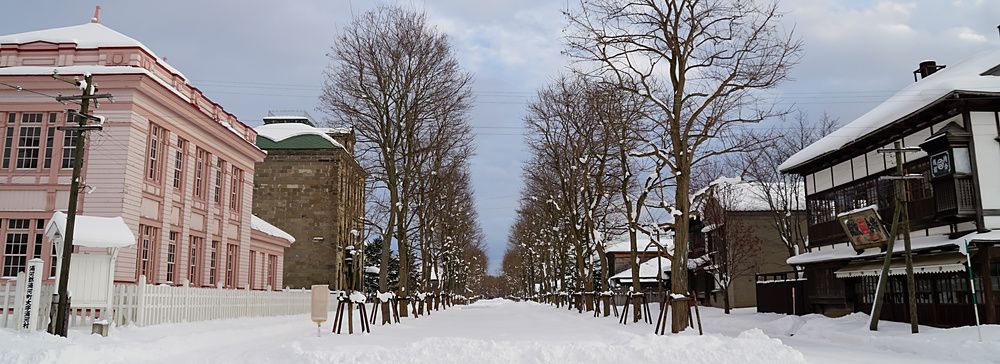
The entrance is the old Sapporo Station, rebuilt here and used as the gateway. You walk through it, and as soon as you come out the other side there’s a wide street in front of you, lined with houses on both sides. The village is split into four areas: the town area, the fishing village, the farm village and the mountain village.
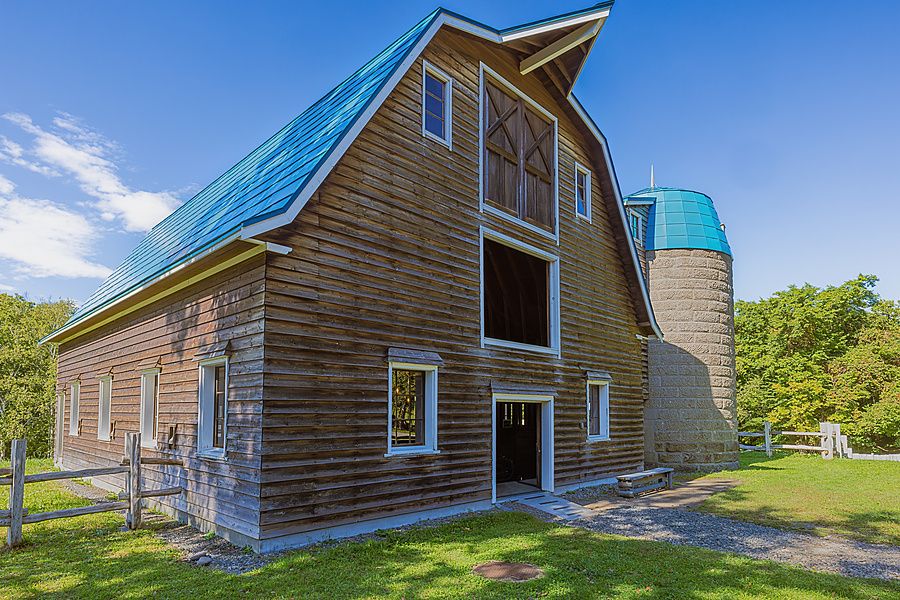
The town area alone has more than thirty buildings. The other three are scattered through the forest, and you reach them on foot along a one-way loop.
- The old Sapporo Station: rebuilt a little smaller than the original. From the front steps you can see straight down the whole main street.
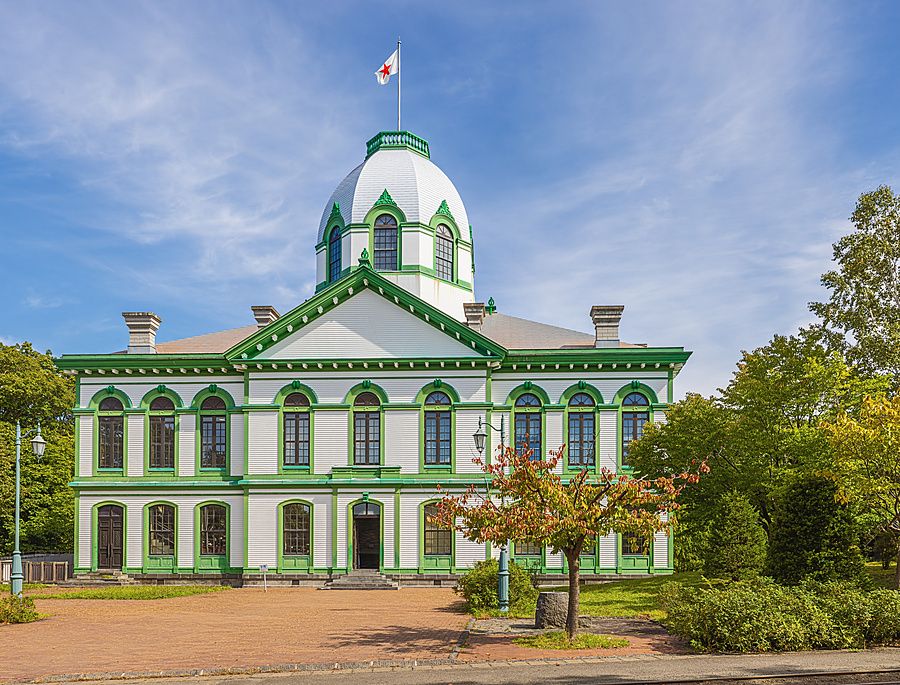
- The town area’s main street: this is where most of the houses are, one after another like in a real town — the district office painted candy pink, the Otaru newspaper office, the dye shop with its hanging lengths of fabric, the sake shop, the inn, the middle school.
- Yamamoto Barbershop: one room, a swivel chair, razors and bottles lined up on the shelf. Look in from the doorway and it’s as if the barber just stepped out for a smoke.
- Hirose Photo Studio: upstairs is the portrait room, with a large glass panel that lets light in through the roof, and it’s instantly clear why photographers back then worked up there rather than on the ground floor.
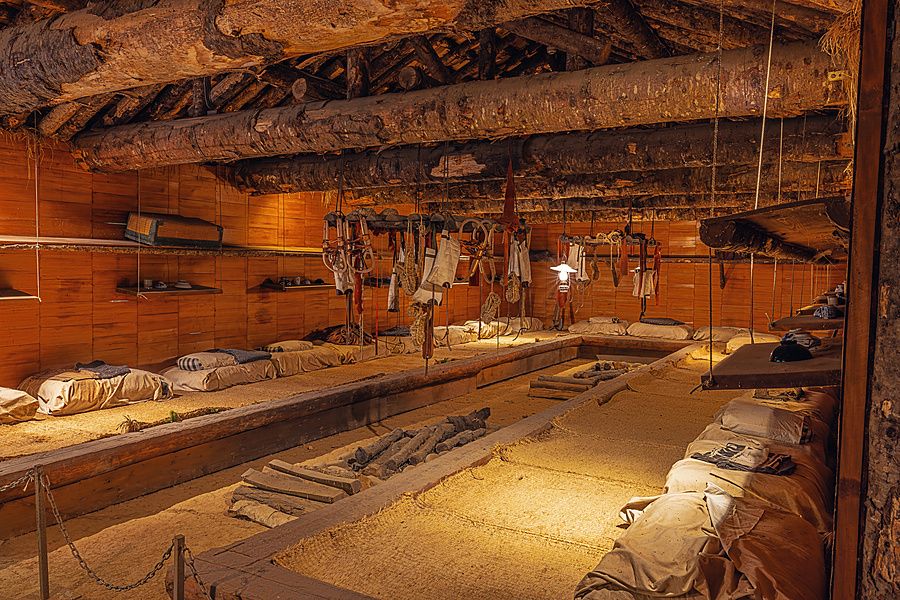
- The Aoyama family fishing house, in the fishing village: for me the single best building on the loop. It has a hearth in the middle of the room, and right next to it the big bare room where the men who came to fish for herring slept.
- The mountain village, at the far end among the trees: the loggers’ hut with plank platforms instead of beds, the dome-shaped charcoal kilns, the sawmill.
You can go inside almost every building, and in many of them you take your shoes off: slippers at the door, socks on display, shoes off and on dozens of times in one afternoon. Wear slip-on shoes. It’s the difference between enjoying the houses and starting to skip a few because you can’t be bothered.
Inside, there are no display cases or labels, just the furniture, the cast-iron coal stoves, the ledgers on the counter, the boxes in the shops, and you wander from room to room as if you were in someone’s home.
People who don’t feel like walking much tend to stop at the town area and turn back, and they miss the part that makes all the difference for me: the fishing village and the mountain village, where the straight streets end and you’re left with rough wood, dirt and trees all around you.
Crowds bunch up in the first two or three buildings past the entrance, then thin out. The farther you go, the more often you find yourself on a street with no one else on it.
It’s not a theme park. There are no actors in character and no scheduled shows. In the warmer months, though, some of the houses have volunteers who live nearby and tell you what life was like here, and they’re kind to visitors who don’t speak Japanese: they mime, they point, they pull out objects to show you.
When someone visits me and has a free day in Sapporo, this is where I take them before anywhere else in the city, because it’s where you understand how Hokkaido came to be. It’s a region of people who came from elsewhere to build wooden houses in the middle of the snow, and these are those very houses, not copies.
When to go
In the morning, as early as you can. Head from the entrance into the town area and for a good while you’ll have the main street almost to yourself, with the wood creaking and horses you hear before you see them. After noon the tour groups arrive by the busload, and the first part of the loop turns into a constant back-and-forth.
Weekdays are quieter. Weekends are busier, but it’s never the crush you get at the famous spots. Even when it’s full, this village is still a place where you can hear your own footsteps.
The seasons really matter here, because everything is outdoors. In spring and early summer the green of the forest comes right up to the roofs, and the street is pale and dry.
Autumn, with red and yellow trees around the wooden houses, is the best time of year for photos, and the horse trolley is still running.
In winter it’s a different place entirely: white on white, roofs heavy with snow, a frozen pond, a sleigh instead of the trolley and hardly anyone around. It’s beautiful for one specific reason — the packed-snow streets between the dark houses, deserted — but the cold sets the pace, and after a while you start hopping from one heated building to the next: twenty steps outside, in to warm up, back out again.
When it rains you can still salvage the visit, because you spend half the time inside the houses. But you have to open and close your umbrella at every door, and that gets tiring. If it’s pouring and you can push your visit back a day, do it.
What the visit is like
You walk a lot more than the map at the entrance suggests. The ground is gravel and packed dirt, with a few rough stretches, and the fatigue hits all at once toward the end, when you’ve already walked in and out of thirty doorways.
The horse trolley is the smart way to rest your legs. It holds about fifteen people per ride, moves at a walking pace to the clip-clop of hooves and crosses the village from one end to the other. It’s not a kiddie ride; it’s part of the place.
Watch out for the stairs: the two-story buildings have narrow, steep steps, and the best parts — the portrait room, the attics — are upstairs.
Strollers and wheelchairs manage fine on the main streets, and you can borrow them on site, but getting them into the houses, with shoes to take off and steps at the door, is a two-person job. With a small child, plan on seeing only half the interiors and spending more time outside.
There’s a corner where older kids can try old-fashioned games, from bamboo stilts to spinning tops, and parents tend to linger there too.
The village has a cafeteria serving simple local food: imomochi, mashed potato cakes seared on a griddle with soy sauce, and soba with herring. It’s not a place you come to for the food. It’s where you catch your breath halfway around.
Golden Kamuy and photos
Golden Kamuy is a manga set in Hokkaido’s pioneer days, with bears, soldiers and gold hunters, and its artist came here for the backgrounds. Many of the fifty-two buildings show up in its pages, and at the entrance they hand you a sheet listing which house appears in which chapter.
So among the families and grandparents you’ll run into readers holding a volume and comparing the page with the door in front of them. The barbershop and the photo studio are where little clusters of people form.
Even if you know nothing about the manga, this is one of the places where you’ll take some of the best photos of your whole Hokkaido trip, and the reason is simple: there are no power lines, modern signs or cars in the frame.
The two shots I recommend are the view from the station steps, with the street running straight ahead between the houses, and a side view of the horse trolley going by, taken from the dirt sidewalk. Other than that, just turn a corner and look for the low light of late afternoon on the wood.
At a glance
- Highlight: the town area’s dirt street with its original wooden houses, plus the fishermen’s and loggers’ homes deep in the forest.
- When to go: in the morning, before the groups; autumn for the colors, winter for the snow and the silence, weekdays rather than weekends.
- Best for: people with a full day in Sapporo who enjoy walking, fans of wooden houses and photography, Golden Kamuy readers, families whose kids can walk on their own.
- Atmosphere: wide empty streets, few voices, horses’ hooves, the smell of old wood and smoke, slippers at the door of every house.
Final thoughts
You don’t come here for a single monument. You come for the whole thing: the houses side by side, the rooms still furnished, the forest closing in around you as you reach the charcoal kilns. That’s what makes it worth the trip out of central Sapporo, along with the fact that it’s one of the rare places in Japan where history isn’t behind glass: you walk on it in your socks.
The catch is your legs. If walking is hard for you, your knees are bad or you’re pushing a stroller, you’ll see only part of what’s here, and then it’s less worth the detour. If you walk without giving it a second thought, though, I recommend it without reservation.
Useful Info
Map
This place is on MarcoMaps
Historical Village of Hokkaido
My map of Japan: over 4,000 places I've tried myself, each with photos, rating, and hours. Filter by category and rating, find veg-friendly spots and places near you with GPS. No sign-up, right from your phone.
- 4,000+ places
- Rating, photos, and hours
- Veg friendly
- Near me (GPS)
- Favorites without login
- Works offline

