
Hongo
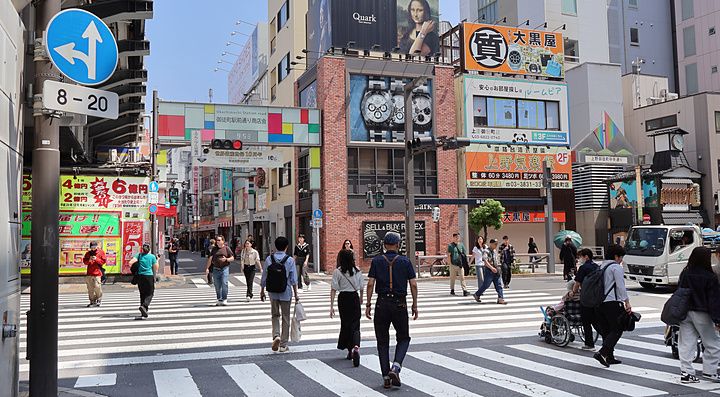
Hongo is the part of Tokyo that studies quietly.
The neighborhood has one reference point, the University of Tokyo campus, and everything else revolves around it: small bookstores, old wooden boarding houses, slopes that still go by their old names. This is Bunkyo, the ward with the word “literature” in its name, and you can feel it. There are no flashing signs and no crowds shoving past you, just students with backpacks and women heading home with their groceries. That’s exactly why I like it. It’s a break from the noise of the rest of the city. I’ll tell you how to get around, what’s different once you’re on campus, and why these streets were home to a long line of writers.
Contents
Nearby neighborhoods
Suidobashi
Inside the campus
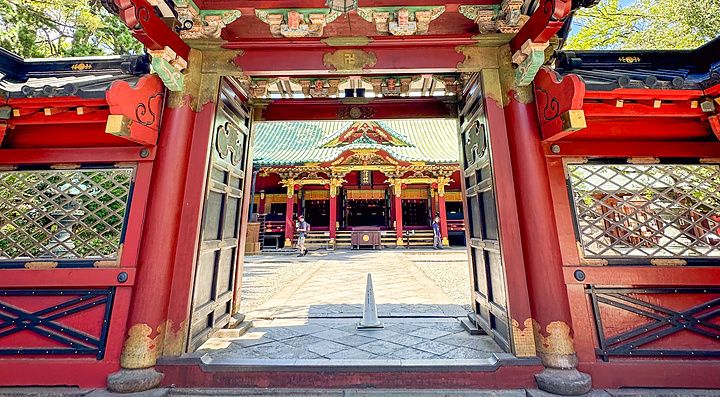
The Akamon is what’s left of the Maeda clan’s residence. The Maeda were the lords of Kaga, and their gate is one of the few gates of its kind still standing in Tokyo. You won’t get to walk through it, though. It’s been closed since 2021 over concerns about its earthquake resistance, and the restoration work will keep it covered in scaffolding until fall 2027. Walk in through any of the other gates and life still moves at a different pace, with ginkgo-lined avenues, brick buildings and bikes parked everywhere.
The spot I send everyone to is Sanshiro Pond, tucked away behind the medical school. It’s named after the Natsume Soseki novel, and it has a small waterfall and dense trees that block out the street noise. In summer it’s one of the few places around here with real shade. Its real name is Ikutokuen Shinjiike, and the pond is shaped like the character for heart. It’s the only part left of the garden the Maeda had built in the 17th century. You can walk the path around it in just a few minutes, past a small island, stone steps and steep, tree-covered banks. It’s easy to lose your bearings and end up climbing out somewhere else on campus.
The campus is open and free to enter, but it’s still a place where people study and work. Weekends are quieter, while on class days you’ll be walking among students on their way from one lecture to the next. In the evening the campus empties out fast and the side gates close, so save the pond and your photos for the afternoon light.
The ginkgo avenue and Yasuda Kodo
A straight avenue of ginkgo trees runs a couple hundred meters from the main gate, and in late fall those towering trees turn into a yellow tunnel. The ginkgo leaf is also the university’s symbol, and once you’re standing under those trees you’ll see why. In front of the first engineering building there’s a huge, crooked ginkgo that’s said to be two hundred years old, which means it was already here when this was still the Maeda garden.
Yasuda Kodo stands at the end of the avenue. It’s the 1925 auditorium with the clock tower, and it’s the face of the university in every movie and on every TV news report. In January 1969 it was at the center of the clashes involving the students who had occupied it, a story everyone in Japan knows. You can only go inside during events, but it’s worth the walk just to see it come into view beyond the trees.
Where the poets lived
Outside the gates, toward Kikuzaka, Hongo turns into a tangle of narrow streets that wind up and down and look stuck a century in the past. Many Japanese writers lived here between the late 1800s and the early 1900s, from Higuchi Ichiyo and Ishikawa Takuboku to Miyazawa Kenji, and you still come across plaques and wooden houses in the quieter corners.
The area used to be full of student lodgings, more than a hundred of them, and a few of those wooden boarding houses are still hanging on. Staying in one costs little and has its appeal, but expect thin walls and noise from the neighbors. It’s for people who want the charm of old wood, not the comforts of a hotel. The one everyone knows is Homeikan. It opened in 1898 as a boarding house for students and today is spread over three wooden buildings between Hongo and Morikawa, all of them protected heritage buildings. Its polished hallways, lattice windows and tatami rooms made it through the 1923 earthquake and the air raids. Even just walking past gives you a sense of what the neighborhood was like when lodgings here numbered in the dozens.
Don’t come to Hongo for shopping or a night out, because there’s nothing like that here. You come here to wander slowly, and I think it’s at its best when you pair it with the areas around it:
- Nezu and Yushima: shrines and quiet streets where you can slow down.
- Ueno and Ueno Park: ten or fifteen minutes on foot to the east.
- Ochanomizu, a hill lined with shops: the way to go if you want to head back toward central Tokyo afterward.
An afternoon is more than enough to get a feel for the place. But if you have a soft spot for books and old streets, you’ll happily spend half a day here.
Getting There
Your station is Hongo-sanchome. From there it's a ten-minute walk to the main gate, slightly uphill along Hongo-dori. Keep in mind that the Marunouchi and Oedo stops are two separate stations with the same name, so to change lines you have to exit and go back in.
If you're on the Namboku Line, get off at Todaimae, which leaves you right outside a campus entrance. From Nezu or Yushima on the Chiyoda Line, you come in from the pond side.
The Akamon, the red gate, is closed for restoration, so head for the main gate instead.
Useful Info
Name: Hongo
Time needed: A couple of hours for the campus and the streets around it, half a day if you stop to browse the bookstores and look at the wooden houses.
Closed: The campus is closed to visitors on entrance exam days, in mid-January and late February.
Tips: You can eat on campus. The central cafeteria under Yasuda Kodo is open to visitors too, but from 11:30 to 13:30 it's reserved for students and staff. Go after 14:00 and you'll find a seat, a quiet room and student prices.
Getting there:
- Hongo-sanchome (Metro Marunouchi, Toei Oedo): 10 minutes on foot
- Todaimae (Metro Namboku): right outside one of the campus entrances
- Nezu and Yushima on the Chiyoda Line are also in the area
Map
MarcoMaps100% free
This place is on MarcoMaps
Hongo
My map of Japan: over 4,000 places I've tried myself, each with photos, rating, and hours. Filter by category and rating, find veg-friendly spots and places near you with GPS. No sign-up, right from your phone.
- 4,000+ places
- Rating, photos, and hours
- Veg friendly
- Near me (GPS)
- Favorites without login
- Works offline

