Honmaru Goten Palace
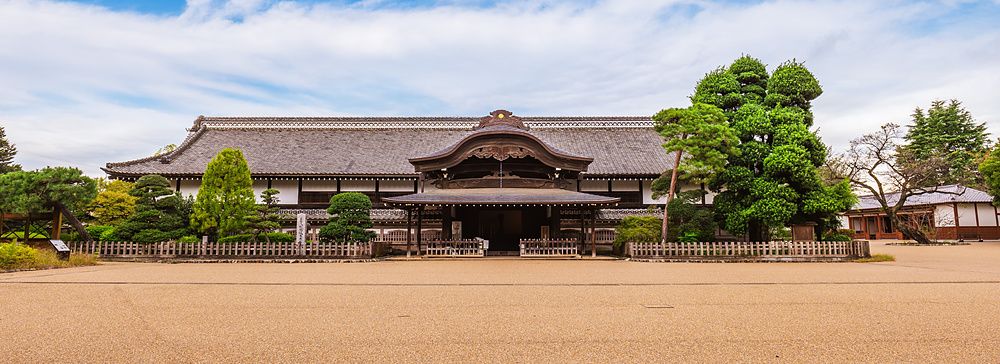
Part of a real castle in Kawagoe, with the wood-and-tatami rooms where the local lord received guests and his officials did their work. Honmaru Goten Palace is all that’s left of the city’s castle: an entrance under a big curved roof, a hall with painted cedar doors, a room where mannequins sit in a meeting, and a garden you look out on from the edge of the floor.
It’s the place to go if you’re spending a day in Kawagoe and want to see an original building besides the warehouse street, or if every castle you’ve seen in Japan so far has been a concrete rebuild.
What you’ll see
What strikes you right away is that nothing here was rebuilt for tourists. The floors you walk on, the beams around you and the roof over your head are the same ones that were there when the palace was in use. You leave your shoes at the entrance, and from then on you’re in your socks, moving over tatami and polished wooden boards.
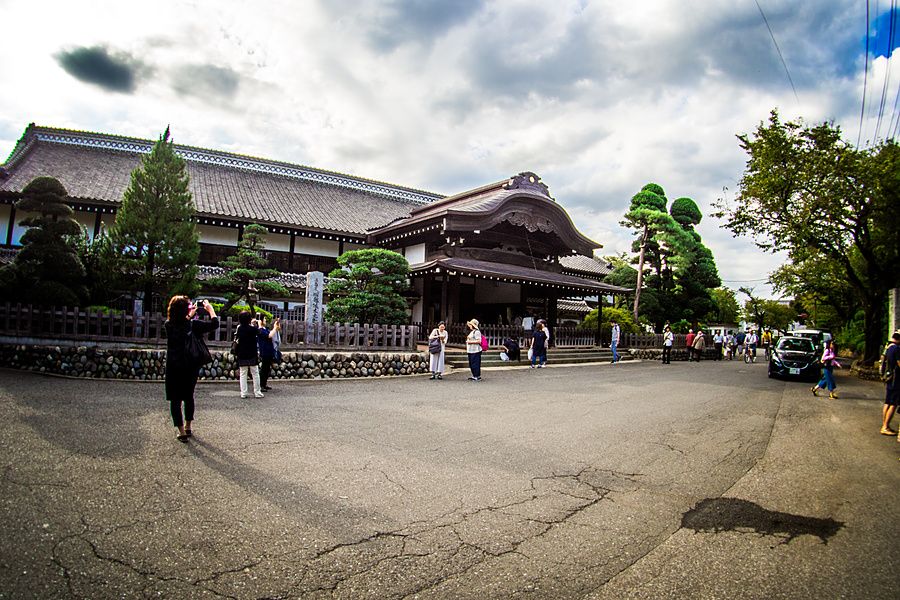
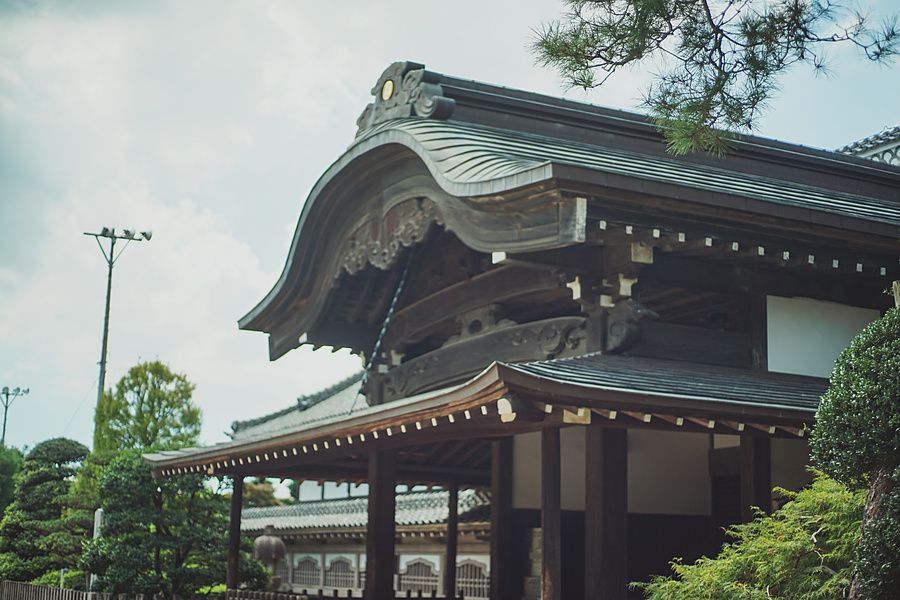
- The main entrance: a wave-shaped roof, with the curve typical of important residences, over a very long facade. It’s the first thing you see when you arrive, and it’s also the photo everyone takes.
- The corridors: wide and wood-floored, they run around the rooms, and they’re how light gets into the whole interior.
- The main hall: an empty thirty-six-tatami room, meant for receiving the lord’s guests. It gives you a sense of how much space it took just to keep people waiting.
- The painted cedar doors: wooden panels with pine trees painted on them by the domain’s official painter. They’re worth a close look.
- The councilors’ room: a separate building, taken apart and put back together here next to the palace, with a few mannequins in period clothing sitting as if in a meeting. It’s the most unusual part of the palace.
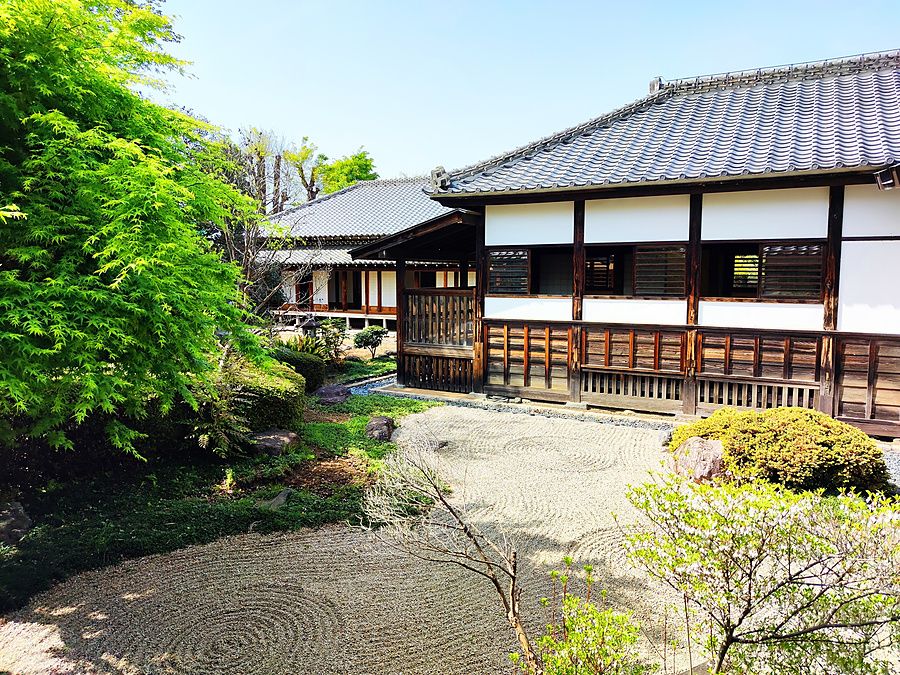
- The garden: you sit on the outer edge of the floor with your legs dangling and look out at it, and in summer there’s a tree with pink flowers.
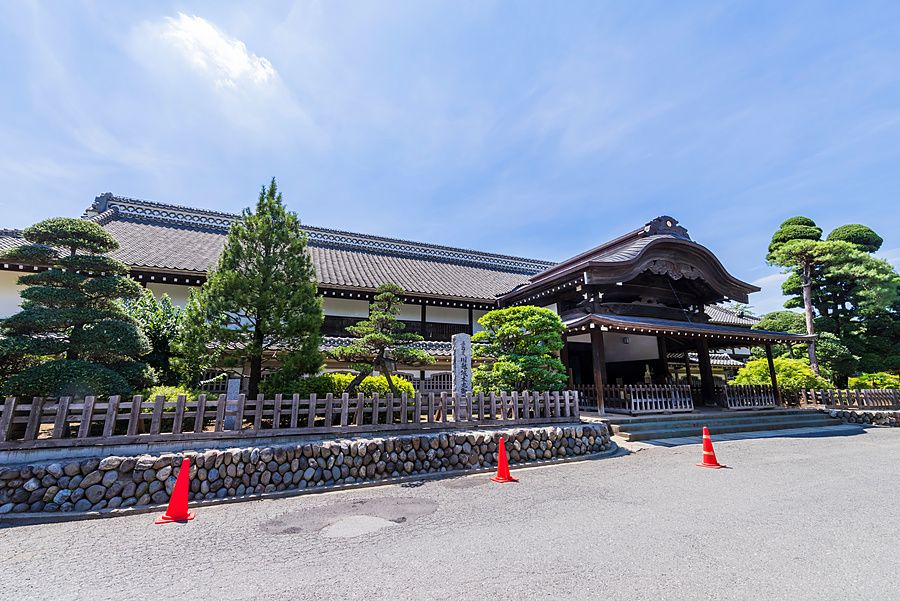
The palace is small, much smaller than the word “castle” suggests. There used to be sixteen buildings, and today only an entrance, a hall, the corridors and the councilors’ room remain. There’s no keep, no walls and no upper floors.
On the plus side, it’s easy on the legs, since everything is on one level with no stairs.
The mannequins in the councilors’ room are better made than you’d expect, and your first glance from the corridor gives you a little jolt, because they look like real people who’ve been sitting there for hours. It’s the corner where people linger longest.
The signs and the items on display, mostly documents and pictures about the castle’s history, are in Japanese only. If you don’t read Japanese, feel free to skip them: the palace makes perfect sense just from looking around.
Only two palaces of this kind, where a castle lord lived and governed, have survived anywhere in Japan: this one and the one in Kochi. All the others were torn down or burned.
Being here is the opposite of visiting the famous castles. There’s nothing to admire from a distance; you’re inside the rooms, walking on old wood. When people come to visit me and want to see Kawagoe, I bring them here, because after the warehouse street, packed with people and stalls, it’s the only place in town where you can sit on a floor almost two centuries old and hear nothing but the boards creaking under your feet.
Nobody expects pine trees painted in such detail on cedar doors, and in the end they’re what stays with you more than anything else.
How it survived
The palace you see today was built in 1848, when the lord of Kawagoe, Matsudaira Naritsune, had it rebuilt after a fire. Back then it was a huge complex of sixteen buildings, and the whole domain was governed from here.
When the samurai era ended, the castle was almost entirely dismantled. The entrance and the hall survived only because they were still useful: over the years they served as prefectural offices, a public hall, a martial arts hall and, after the war, even a junior high school.
The councilors’ room had ended up in a private home and was only brought back later, which is why it doesn’t stand exactly where it used to.
When to go
Early in the morning the palace is nearly empty. You can sit on the tatami in the main hall with no one around, and the corridors are quiet. Around noon on weekends, people who’ve finished walking around Kawagoe start showing up here too, and you wait your turn to see the mannequins in the councilors’ room.
Even on the busiest days, though, it never gets as crowded as the warehouse street, because the only people who come are the ones who actually want to see the castle.
The seasons mostly change what you see when you look out at the garden. In summer the tree in front of the rooms blooms pink, while in spring all of Kawagoe fills up for the cherry blossoms along the river, and on weekends you feel it here too.
Rainy days are perfect, because everything is under cover and the sound of the rain on the roof keeps you company as you walk around.
With kids
It’s an easy place for families, since there are no stairs and nothing dangerous. Small kids get bored with the documents, but the mannequins in the councilors’ room keep them hooked for a while, and they enjoy sitting at the edge of the floor and looking out at the garden too.
Strollers stay at the entrance along with your shoes, and inside you walk on smooth wood.
At a glance
- The highlight: the cedar doors with painted pine trees, in the thirty-six-tatami hall.
- When to go: in the morning, on a weekday; rainy days work great too.
- Best for: anyone spending the day in Kawagoe who wants to walk through an original palace after the warehouse street.
- Atmosphere: dark wood, tatami, few people, a creaking floor.
Final thoughts
You don’t come here for the size or for a keep to photograph from afar, because there isn’t one. You come to spend time inside a real palace, one of only two left in all of Japan, and to walk in your socks where the castle’s officials once walked.
If you’re in Kawagoe, it’s always worth the detour, even just for the painted doors and the garden. If you’re after a tall castle with walls and a view, you’ll be disappointed: for that you’ll have to go somewhere else.