Oku Nikko Hotel Shikisai
A ryokan in Oku Nikko, near Lake Chuzenji, where the onsen water is milky white and there’s nothing but the forest of Nikko National Park all around. Oku Nikko Hotel Shikisai has Japanese-style rooms, many of them with a private bath facing the trees, and a traditional dinner of many small courses that include yuba, the soy milk skin that’s Nikko’s specialty.
I recommend it to couples and families who want a couple of days away from Tokyo, and to anyone looking for a real mountain onsen without giving up a comfortable room.
Contents
Rooms
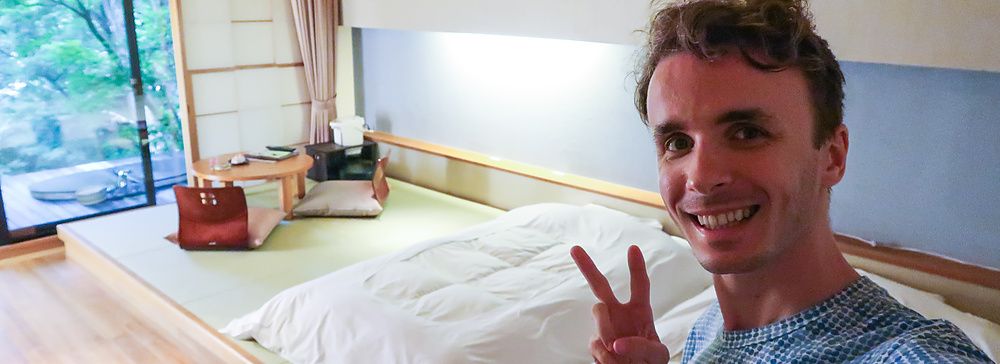
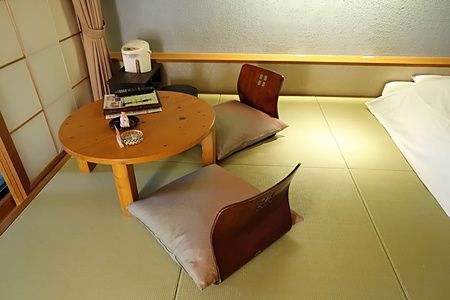
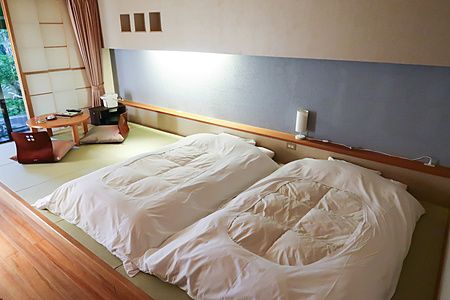
I stayed in the Japanese-style room with the outdoor bath, and I’ll say it up front: get that one if you can. You walk into a tatami room with a low table and floor cushions set by the big window that looks out on the greenery. In the evening the staff lay out futons on the tatami, topped with thick white comforters.
The bath is outside on the room’s terrace, set on a wooden deck. There are no buildings or other windows in front of it, just dense trees.
When you get in, the forest is right there next to you and you can hear the birds. Bathing like this, in your own room with nobody around, is my favorite part of the whole hotel.
These are the room types you can choose from:
- Japanese room with kotatsu: tatami and a table set over a hollow in the floor, so your legs go under the table as if you were sitting on a chair, plus windows onto the trees; it’s the simplest option and works even for a group of five.
- Room with panoramic bath: comes in a Japanese-style version or one with Western-style beds, with a private bath that has a window onto the forest; couples choose it when they want a bath with a view but don’t want to pay for the outdoor one.
- Western-style double room: two wide beds plus a sofa bed; it’s the largest room and the right choice if you’d rather not sleep on the floor.
- Room with semi-outdoor bath: a tiled tub that’s sheltered but open to the outside, and some of these tubs have jets; the room also has a sofa.
- Room with outdoor bath: the bath sits on the terrace in the forest, and the room comes in a tatami version or a mixed one with two Western-style beds and a tatami area where you can sit or add futons.
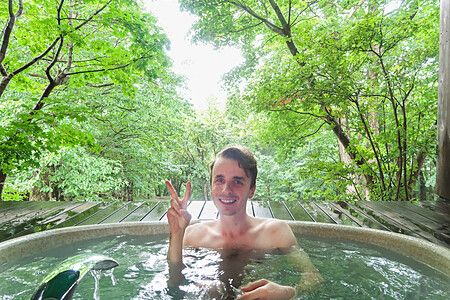
The private baths use regular hot water, not hot spring water, so for the real onsen you go to the shared baths. It doesn’t make much difference, because the point of a room with an outdoor bath is being able to soak outside whenever you like, even late at night or as soon as you wake up.
If you’re not used to sleeping on tatami, you can book one of the rooms with beds. They’re low and sit on the tatami, but they’re real beds. In the room you’ll find a kettle with green tea, a fridge, a yukata, and basic toiletries.
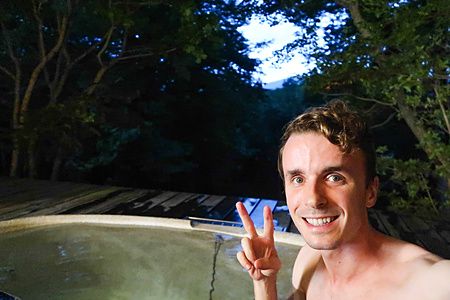
At night the forest outside the window is pitch black. You don’t hear a sound, and there’s no light from signs or streetlights. You sleep like you’re in the mountains, because you are. Lake Chuzenji is over 1,000 meters up and the evenings are cool even in midsummer, so pack a sweater.
When you book, ask for the exact room type you want. There are only a few rooms with an outdoor bath and they sell out first, especially in fall, when the woods around the lake change color and the area fills up. If you can, avoid fall foliage weekends, Golden Week, and Obon.
Price-wise, it’s an upper-mid-range ryokan. The kotatsu room is within a lot of people’s budgets, while the room with the outdoor bath costs more. In return you get everything a ryokan offers: the long dinner, the onsen, and the lounge with drinks.
When someone asks me where to spend a night at an onsen near Tokyo, Oku Nikko Hotel Shikisai is one of the first places I suggest. You come here to really rest. You take your time over dinner, soak in your own tub looking at the forest, and leave the next morning with a clear head.
The onsen
The water comes from Yumoto, the hot spring area higher up, and it’s sulfurous. It’s clear when it comes out of the spring, then turns milky white once it meets the air, and the shade changes slightly from day to day.
You smell the sulfur as soon as you open the door, and to me that’s a sign the water is good. After a soak your skin feels smooth.
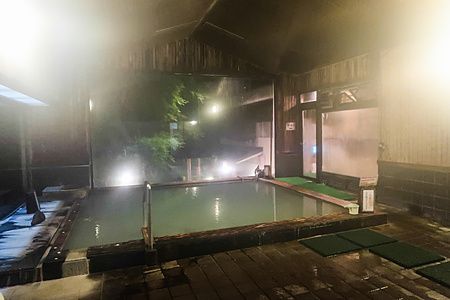
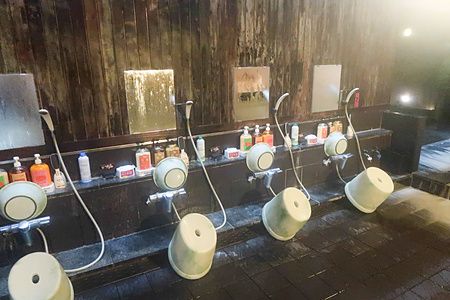
The indoor bath has a large rectangular tub, dark wood on the walls, and a wide window onto the forest. You wash before getting in the water, and the washing area has a row of stations along another wooden wall, each with a mirror, a handheld shower, and a stool. Nothing is modern or showy, just wood, stone, and milky water.
Outside there are two stone tubs under a wooden shelter with a sloped roof. You can soak even when it rains, and in winter you’re surrounded by snow. In the evening the tubs are lit with low, warm lights that reflect off the water, while the trees behind them stay black.
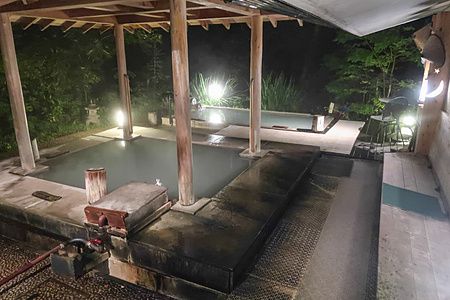
The best time to go down is after dinner. You go in your yukata, shower sitting on the stool, and then head out to the outdoor bath with the steam rising into the cold air. You stay out there for ten minutes, go back inside where it’s warm, and then head out again.
Hotel guests can use the shared baths at no extra charge, and there are no private baths to book separately. The only private tubs are the ones in the rooms.
Dinner and breakfast
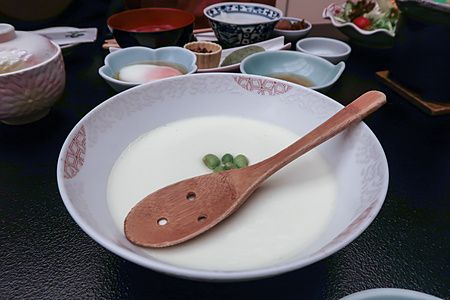
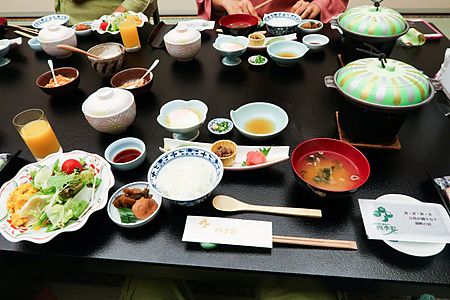
Dinner is kaiseki, a long series of small dishes brought out one after another, and the evening’s menu is printed on a card at your place. The table is dark and lacquered. It slowly fills up with colorful ceramic bowls, little plates, and small lit burners for the dishes that are cooked at the table.
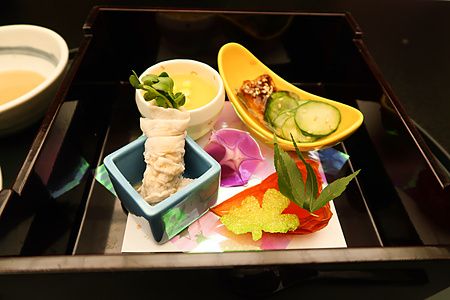
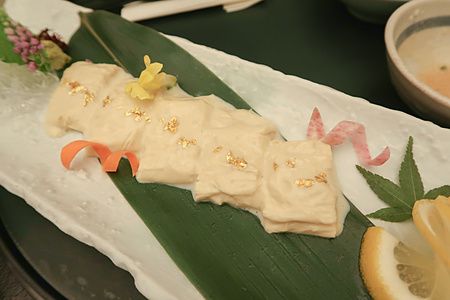
Yuba shows up in lots of forms. One is rolled up on a green leaf with a few gold flakes on top, another is a cream in a little bowl with a dark sauce, and it also goes into the hot dishes. Then the sashimi arrives with salmon, tuna, white fish, and a raw shrimp, decorated with flowers and seaweed. Other courses include a bowl of soba in clear broth, a white fish soup with a hint of salted plum, and grilled fish served in a small metal pot to keep it warm.
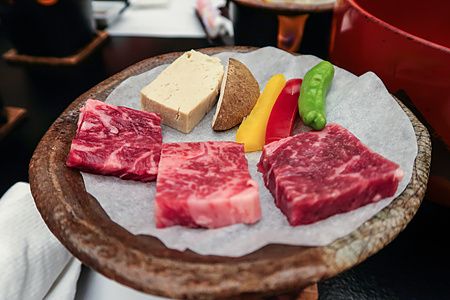
The main meat dish is cubed beef that everyone cooks on a hot stone plate at their own seat, along with a piece of tofu, a shiitake mushroom, and peppers. The meal ends with rice, miso soup, pickles, and umeboshi, and finally a small, simple dessert: two grapes on a little red plate, plus a small glass jar.
You can choose from several versions of the kaiseki, from the lightest one up to the one with Tochigi beef. It’s an unhurried meal, one course at a time.
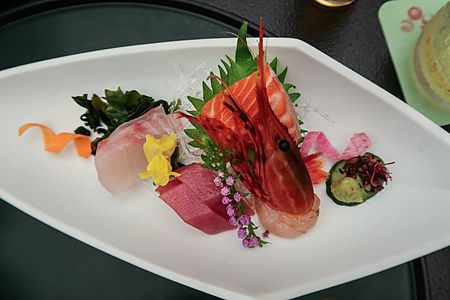
I had dinner with some of my family, and one of them is vegan. We all asked for an all-tofu menu, and the kitchen made lots of good dishes, each one different from the last: tofu in broth, cold tofu, and yuba done every way you can think of. None of us missed meat or fish.
If someone at your table is vegan or vegetarian, tell the hotel when you book. The hotel is careful about allergies and wants to know everything ahead of time, but between tofu and yuba, Nikko’s cuisine has everything it needs.
Breakfast is Japanese and served at the table. A small pot heats up in front of you with Tochigi pork, leeks, and egg. You also get grilled salmon, tofu with yuba sauce, a fresh egg, and Tochigi rice.
The kitchen is proudest of the miso soup, and once you taste it you understand why. If you’re a coffee-and-croissant person in the morning, know before you go that there are no pastries or sweets, apart from a yogurt with berry sauce.
The lounge and the area
Next to the lobby there’s a lounge with big windows onto the forest, a fireplace, and a bookshelf. Drinks are included for hotel guests, and there are lots of different kinds. Before dinner you can sit there with tea or coffee and look outside, at the red leaves in fall or the snow in winter.
The restaurant has the same windows and an even higher ceiling. The shop sells Nikko sweets, packaged yuba, and local sake.
The staff wear ryokan uniforms and speak softly. They bring tea to your room and explain every course. The service feels more like a ryokan than a big hotel, with all the bowing and courtesy that comes with it. The guests are mostly Japanese: couples, families with grandparents, and groups of friends who’ve come for the onsen.
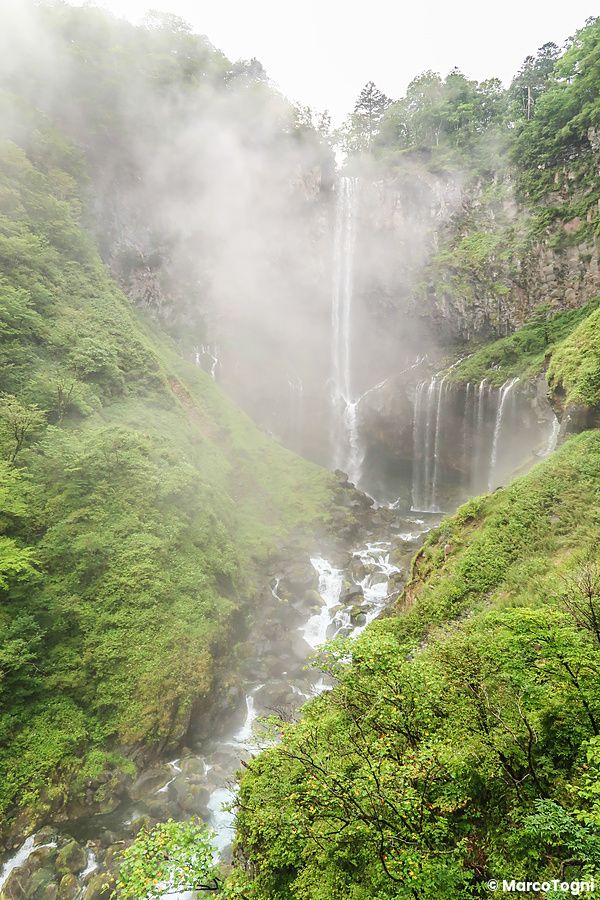
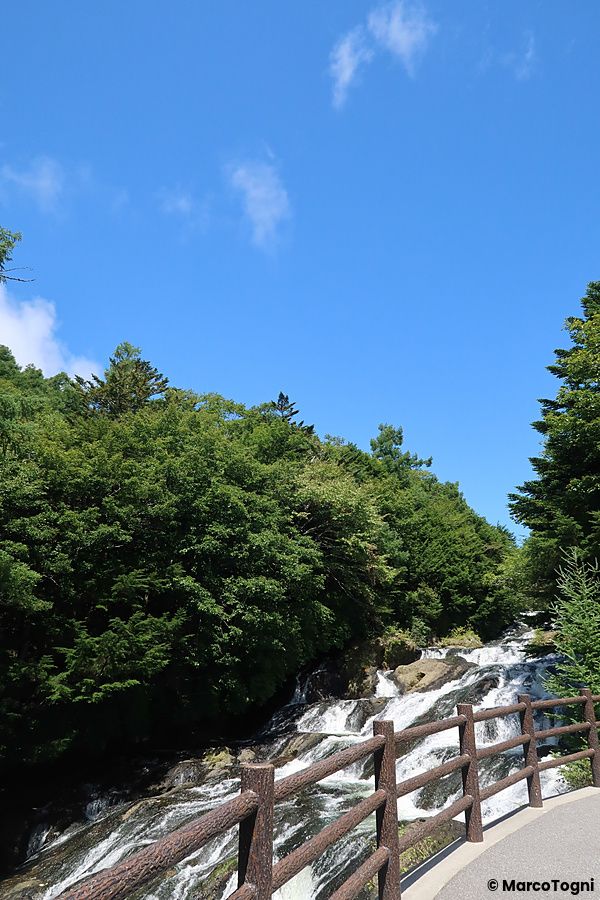
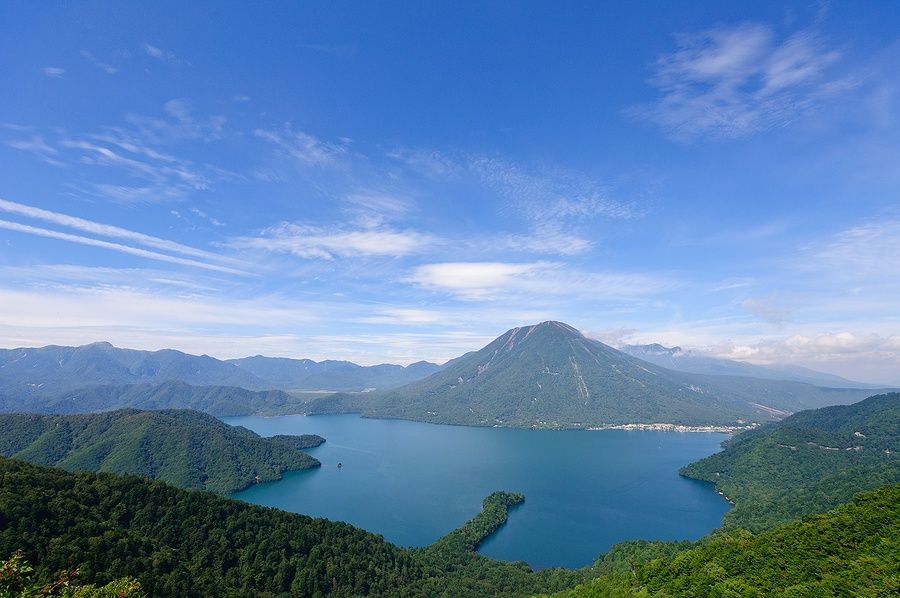
In the evening there’s nothing going on around the hotel. There are no bars or restaurants, the lakeshore empties out early, and outside all you hear is the forest. If you want to go out for dinner or take a walk after your soak, this isn’t the place. During the day you can head out to Lake Chuzenji, Kegon Falls, and the trails nearby, and in the surrounding woods you might see deer.
At a glance
Pros:
- private bath on the terrace, right in the forest
- sulfur onsen with milky-white water and outdoor baths under the shelter
- kaiseki with yuba, and an all-tofu menu if you don’t eat meat or fish
Cons:
- nothing around in the evening, so you stay in
- there are only a few rooms with an outdoor bath, and you need to book early
Best for: a couple or family who want two days of onsen and quiet away from Tokyo
Room to ask for: the Japanese-style one with the outdoor bath
Atmosphere: dark wood, tatami, and steam and forest wherever you look
Final thoughts
What sticks with you as you leave is your room’s terrace in the morning light, the water in the tub still warm and the damp forest all around. You walk down to the lake with your skin still smelling faintly of sulfur, and you already want to come back.
Get the room with the outdoor tub, take your last soak in the onsen after dark, and let dinner stretch out over the whole evening. One night here is enough to unwind, so go ahead and book it.
Getting There
From Tokyo, take the train to Nikko Station. You can use either the Tobu station or the JR one, which are a short walk apart.
In front of the stations, catch the Tobu bus bound for Lake Chuzenji and Yumoto. It takes about 45–50 minutes to climb the hairpin turns up to the Oku Nikko Hotel Shikisai Iriguchi stop. From there it's another 10–15 minutes on foot up a steep road, and that road is dark in the evening.
The hotel's free shuttle bus is easier. It leaves the JR and Tobu stations once a day in the early afternoon and takes you back down the next morning.
Useful Info
- Tobu-Nikko Station (Tobu Nikko Line) and JR Nikko Station (JR Nikko Line)
- Oku Nikko Hotel Shikisai Iriguchi stop (Tobu bus to Chuzenji and Yumoto): 10–15 minutes' walk uphill
- Hotel shuttle: free, from both Nikko stations, reservation required
Map
This place is on MarcoMaps
Oku Nikko Hotel Shikisai
My map of Japan: over 4,000 places I've tried myself, each with photos, rating, and hours. Filter by category and rating, find veg-friendly spots and places near you with GPS. No sign-up, right from your phone.
- 4,000+ places
- Rating, photos, and hours
- Veg friendly
- Near me (GPS)
- Favorites without login
- Works offline

