How Many Days in Kyoto
Kyoto is the perfect base for exploring classic Japan, but how many days in Kyoto do you actually need?
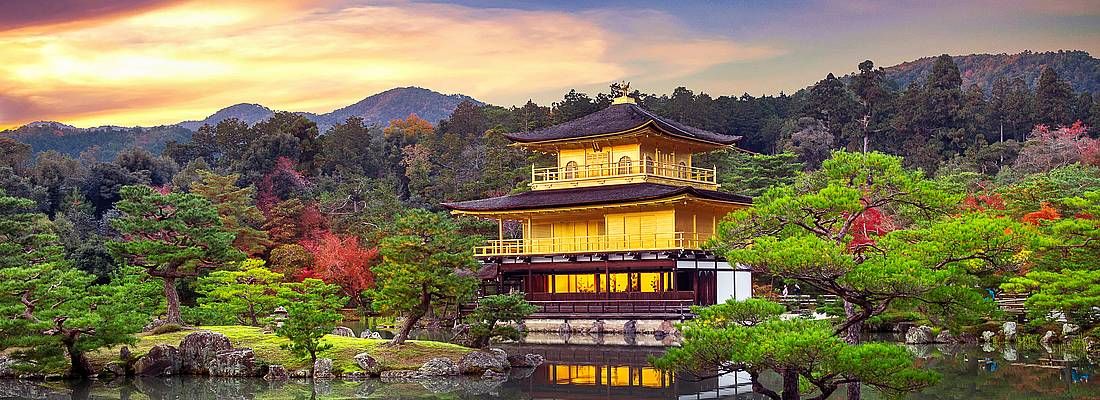
Two days are enough for the main sights: the Golden Pavilion, Nishiki Market, Kiyomizudera and Gion on day one, then Fushimi Inari and the Bamboo Forest on day two. As with Tokyo, though, a lot of people get it wrong when they plan their trip. Kyoto is centrally located and well connected by shinkansen, so you can take plenty of day trips from here.
That’s why the number of nights depends mostly on how long you’re in Japan.
Contents
Days in Kyoto by trip length
Since Kyoto makes such a good base for seeing other places, here are a few suggestions on how long to stay:
- 10 days in Japan: stay at least 3 days in Kyoto and spend one of them in Nara. If you like, you can stay 4 days, which gives you time for a day trip to Hiroshima and Miyajima.
- 7 days in Japan: stay at least 3 days in Kyoto and spend 1 of them in Nara. That said, if it’s your first trip and you know you’ll be coming back to Japan, you can also spend all 7 days in Tokyo and skip Kyoto.
- 14 or 15 days in Japan: 4 days in Kyoto is the minimum, with 2 for the city itself, 1 for Nara and 1 for Hiroshima and Miyajima. As I’ve written in my various itineraries, the options are endless, but you could easily add a day on mystical, wonderful Mount Koya, for example.
Is one day in Kyoto enough?
If you only have one day, Kyoto is still worth the detour, but you’ll have to choose. In one day you can comfortably do Fushimi Inari in the morning, while there’s still nobody under the torii, then walk up to Kiyomizudera and down toward Gion in the afternoon. The two areas are close together, so you’ll have some breathing room.
What doesn’t work is trying to fit everything in. The Golden Pavilion and the Bamboo Forest are on the other side of the city, and the travel alone eats up half a day. With only one day, it’s three places seen properly that stay with you, not six you rushed through.
Day three and beyond
If you decide to stay longer than two days, make the extra time count. The classic two-day itinerary leaves out quite a lot: the zen gardens at Ryoanji and Daitokuji, Nijo Castle, the thousand statues of Sanjusangendo, the Philosopher’s Path and all of Arashiyama beyond the Bamboo Forest.
The real payoff from day three on, though, is that you can slow down. You can spend half an hour inside a temple and head back to Gion in the evening, after the tour groups have gone. If it’s your first trip to Japan, keep in mind that every extra day in Kyoto is a day taken away from something else.
Add a day in spring and fall
The two peak seasons change the math. During cherry blossom season, usually between late March and early April, and fall foliage season, which generally reaches Kyoto in November, the most famous temples fill up and getting around downtown is much slower. What you’d cover in two days at a quiet time of year takes almost three.
If you’re traveling in those weeks, an extra day isn’t a luxury. You’re also better off heading out early, because by mid-morning the best-known places are already packed.