 60 m
Naki Vegan Sweets60 m
Vegan, gluten-free bakery.
Hozenji Temple is one of the best surprises in Osaka.
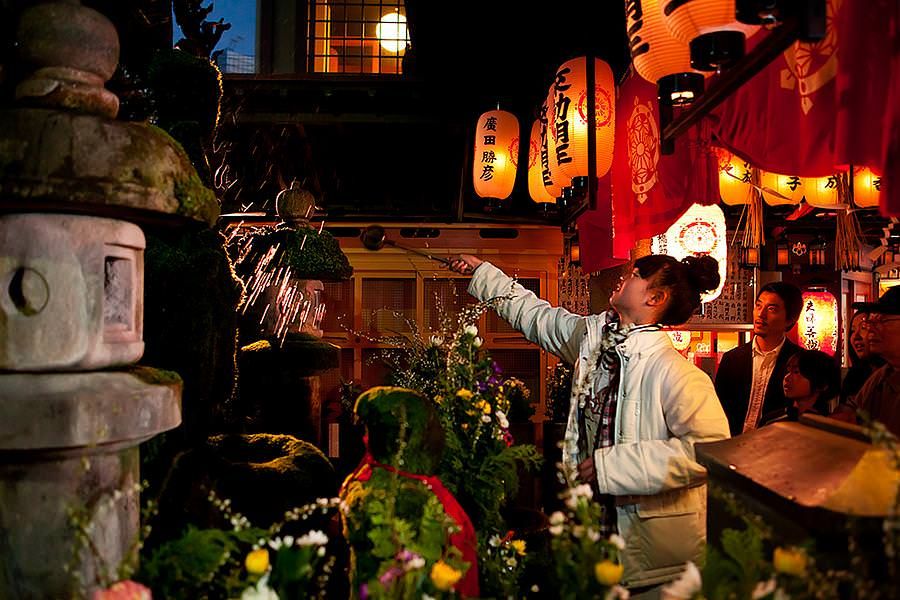
It’s a tiny pocket of calm squeezed in among Namba’s buildings and neon signs, and the star here is a statue of Fudo Myoo covered in moss. Worshippers ladle water over it as they pray, hence the name Mizukake Fudo, the Fudo splashed with water.
The temple has been here since 1637, and it’s what gave the Sennichimae neighborhood its name. Right around it is Hozenji Yokocho, a stone-paved alley of izakaya and small restaurants that has been rebuilt twice after fires. It’s a slice of old Osaka just steps from the chaos of Dotonbori.
Creative Commons Lost in Japan, by Miguel Michán
From Namba Station, take exit 14 and you'll reach the alley in three or four minutes on foot. The entrance is easy to miss, so look for the wooden sign where the narrow stone-paved lane begins.
If you're coming from Nihonbashi, take exit 2 and walk five minutes west.
If you're already wandering around Dotonbori, the temple is right around the corner. Just head down from Dotonbori-dori toward Sennichimae along one of the side streets and you'll end up in Hozenji Yokocho.
This place is on MarcoMaps
Hozenji Temple
My map of Japan: over 4,000 places I've tried myself, each with photos, rating, and hours. Filter by category and rating, find veg-friendly spots and places near you with GPS. No sign-up, right from your phone.


You’ll spot the Mizukake Fudo as soon as you walk in. It’s a statue of Fudo Myoo that’s green with moss from head to toe, so thickly covered that you can barely make out its features. Next to it are buckets and wooden ladles: you scoop up some water and splash it over the statue while you say your prayer.
The traditional way is to splash the central Fudo three times, then the two small attendants on either side once each, and finish with one last splash on the big statue. Nobody will give you a dirty look if you get the order wrong, but it’s one of those things worth getting right.
People come here to pray for healing, success in business, and love, and that’s why the moss never stops growing: somebody is splashing the statue practically every hour of the day.
Hozenji moved here from Uji, just outside Kyoto, in 1637, when this area was still on the outskirts of Osaka. The monks chanted the nenbutsu for a thousand days straight, so people started calling it the thousand-day temple. That’s where Sennichimae gets its name: it simply means “in front of the thousand-day temple.”
The temple burned down several times over the centuries, but the worst blow came with the 1945 air raids, which leveled all of Minami. In the rubble, only the statue of Fudo was left standing, and the neighborhood was rebuilt around it. First came shacks and stalls on the temple grounds, then the bars and restaurants that grew into Hozenji Yokocho.
The water-splashing tradition started in those same years, when a woman, on impulse, poured the offering water over the Fudo as she prayed. People have been doing it ever since.
The temple opens onto Hozenji Yokocho, two lanes less than three meters wide and about 80 meters long, paved with stone and lit by the lanterns of kappo, izakaya, and tiny bars with only a handful of seats. The paving went down in 1982, using stones from the old Hankai tram lines.
At each end of the alley there’s a wooden sign with its name, written in 1985 by two legends of Osaka entertainment: comic actor Fujiyama Kanbi at one end and rakugoka Katsura Harudanji at the other. Take a good look at Fujiyama’s sign, because one of the characters is missing a stroke. It isn’t a mistake. Whenever someone pointed it out, he’d say that his own character was missing a stroke, too.
Then the alley burned twice within a few months, in 2002 and 2003. Residents collected more than 300,000 signatures to rebuild it as narrow as it had always been, instead of widening it to four meters as fire regulations required. That’s why your shoulders almost brush the walls as you walk through it today.
For Japanese people, Hozenji is more than a temple. It’s a place with deep sentimental value, and it owes that to literature. In 1940 Oda Sakunosuke set Meoto Zenzai here, the messy story of an Osaka couple who go through ups and downs but never split up, and the alley came to stand for that very Osaka way of sticking together no matter what.
The title comes from the dessert you can still eat right next door, at a place that opened in 1883: azuki bean soup with mochi, served in two bowls instead of one. It’s a single portion split in half, because tradition says couples who share it stay together.
A song about the alley came out in 1960, and ever since, generations of Japanese people have come here purely out of nostalgia.
Hozenji Temple - nearby you will find: